

Good day, esteemed Hub Community.
A year ago, there was a spring day exactly like today. As usual, I was taking public transport to work, experiencing all those wonderful feelings familiar to anyone who commutes during rush hour. Behind me, the barely closing bus door pressed me. Hair from a girl arguing emotionally with a middle-aged lady kept getting in my face, as she twisted her head every half a minute. Adding to the scene was a strong smell, reminiscent of a cheese shop somewhere in the south of France. Yet the source of the smell, a lover of Roquefort and Brie de Meaux, a follower of Louis XIV in bathing practices, was peacefully asleep on the bus seat. That day, I decided it was time to abandon public transport in favor of a personal vehicle.
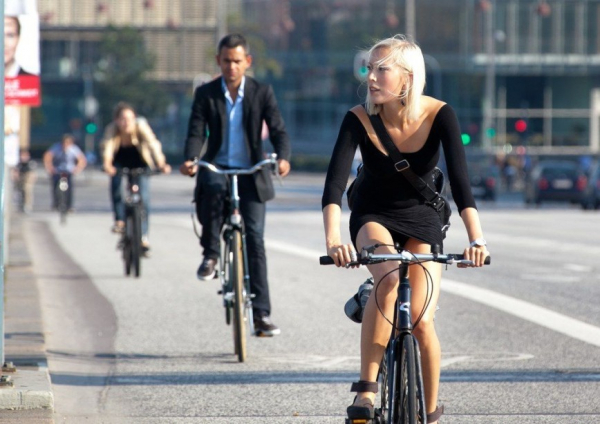
In the article below, I want to share how I came to the decision to use a bicycle as my means of transport for the route between home and work, touch on the gear needed for cycling, both essential and non-essential, and also share tips on road behavior while on two wheels.
How and why I ended up on two wheels.
With a strong desire to give up public transport while staying within the family’s annual budget, I found myself facing a difficult dilemma. The parameters were as follows:
- Expenditures on public transport were about $1.50 a day, or approximately $550 a year.
- The maximum distance that needed to be covered: 8 km from home to work + 12 km from work to training + 12 km from training to home. In total, about 32 km a day. There was quite a long climb (about 2 km with an incline of 8-12%) and a stretch of uneven road through an industrial area.
- I wanted to move between points as quickly as possible.
Options I immediately ruled out:
- Taxi/own car/carsharing — no matter how clever the schemes, they wouldn’t fit the budget.
- Hoverboards, unicycles, and scooters cannot provide a combination of speed and safety on the section of the route that passes through the industrial area, where the road is just a name and a sign 1.16 Uneven Road. They also likely wouldn’t manage the uphill.
- Using my own legs — too slow. I tried walking from work to home. It took an hour and a half. With my current work schedule, I didn’t have time to walk to training, even running.
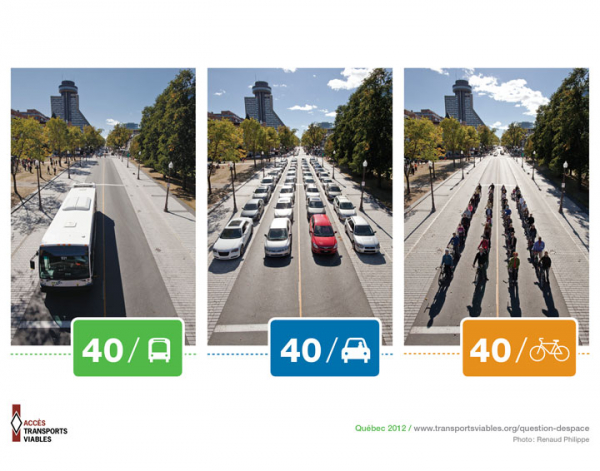
There are two options left: a scooter/motorcycle and a bicycle. Unfortunately, no matter how much I racked my brain, I couldn't figure out where to leave the motorcycle at night. It was either too far, too expensive, or unsafe.
In the end, it's a bicycle. It seems like the decision is made, but doubts linger, as I hadn't had a bicycle for about 15 years, and that was an old Aist on which I used to ride around the yard with the neighborhood kids. However, during a trip to visit friends in Europe, I had the chance to ride a good bicycle in a European suburb, and it turns out that the saying is true: you only learn to ride a bicycle once, and it stays with you for life.
Analyzing the possibility of cycling
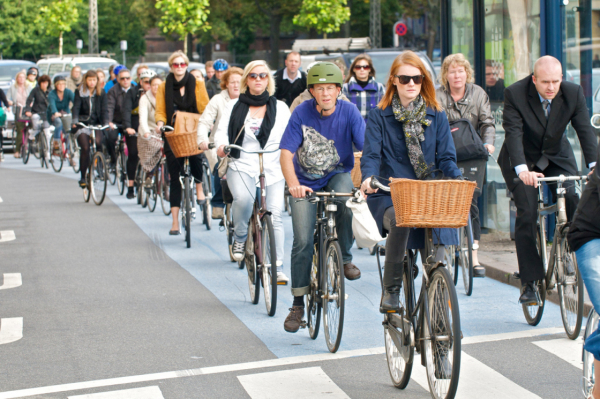
Let me say right away that I don't quite understand why there is so much promotional effort surrounding bicycles, claiming that a bicycle is the solution to all problems. In my opinion, that's not the case. If you approach it systematically, despite all its advantages, a bicycle is generally a convenient mode of transport from point A to point B under quite limited usage conditions. I divided the conditions into several categories.
Necessary conditions:
- short distances. A bicycle as daily transport is unlikely to be suitable for people who travel more than 50 km a day, though there are exceptions. Research in Copenhagen shows that most bike rides are around 5 km one way. As I mentioned earlier, I cover a bit more than that, but I don't really feel tired.
- no need to run errands during work hours or drop off kids/spouse at school/nursery/work. I'm lucky here — I work in an office for 8 hours. I bring lunch from home.
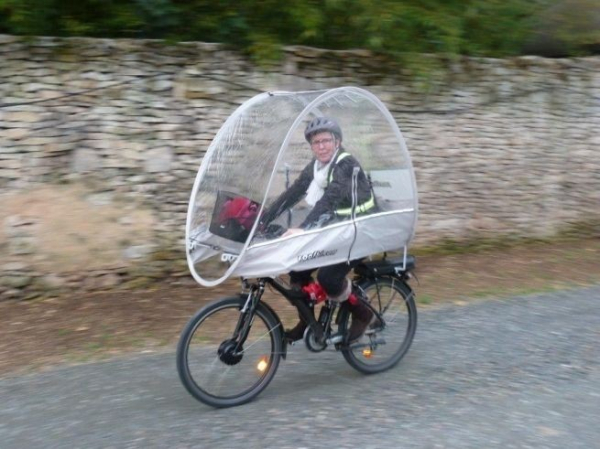
- Seasonality and weather conditions should contribute to comfortable riding on two wheels. I want to say that everything is relative here. If there is a desire, no weather can stop you, but still, my two-wheeler spent the entire winter in a box behind the cabinet.
Desirable conditions
- Availability of cycling infrastructure. The situation with bike paths is not so straightforward; in CIS countries, bike paths are being built, but riding on them can be difficult. Sudden obstacles in the form of people, manholes, drains, poles, and potholes on bike paths practically negate their existence.
- Bicycle parking, changing rooms, and showers at work. Bicycle forums suggest that it's possible to ride without sweating or to wipe yourself down with a wet towel in the restroom. It’s also said that if there’s no bike parking, you can ask security to keep an eye on it or leave it in storage rooms. But I was very lucky here—my employer provides bicycle parking and a shower.
- Storage space for a bicycle at home. It may not be immediately obvious, but it’s a crucial condition for both the security of the bicycle and the comfort of household members. On workdays, I leave home the earliest and return the latest, so the bicycle is kept in the hallway just behind the front door. If guests are expected, or the weekend is approaching, I take the bike onto the balcony. I’ve packed it in a box and stored it behind the wardrobe for winter.
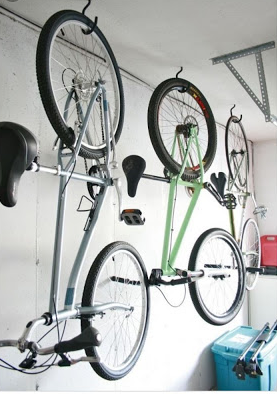
It seems like everything is in place, it’s time to buy. The nuances of choosing a bicycle, tips on selection, and a thorough study of bicycle forums regarding questions like whether 27.5"+ is better than 29" will be left out of this article, or perhaps I’ll write a separate one if the topic is of interest and fits well on Habrahabr. I’ll just mention that I chose a mountain hardtail 29er (with larger wheels) for $300. It arrived in a cardboard box, and in one evening, I assembled and adjusted it to my needs. That’s it; tomorrow I’m biking to work, although wait a minute, I think I forgot something…
Equipment
After reading the traffic regulations, I was quite surprised to learn that the minimum required equipment for a bicycle is just a white reflector in front, a red one in the back, and orange reflectors on the sides. And, of course, a front light at night. That’s all. Nothing about a blinking red light at the back or a helmet. Not a word. After reviewing dozens of websites with advice for beginner cyclists and watching several hours of reviews, I came up with the following list of what I take with me every day:
- Bike helmet
The most controversial piece of cycling gear. From my observations, more than 80% of cyclists in my city ride without helmets. The main arguments for riding without a helmet, as I perceive it, were formulated by . During my trips across Europe, I also noticed that people mostly ride without helmets in the city. However, as one cyclist friend told me: Beginners and professionals wear helmets for a reason. I decided that since I am a beginner, my first purchase along with the bike was a helmet. Since then, I always ride with one.
- Lighting
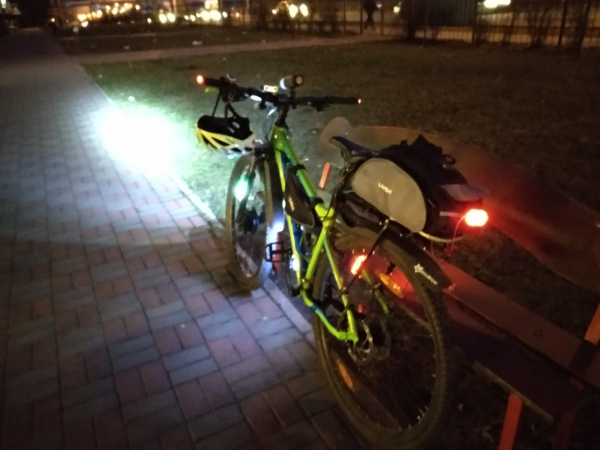
Since I ride in the dark about 50% of the time, I tried a variety of lights/strobes. In the end, the final set looked like this:

Two headlights in front — one with a wide beam, the other with a bright spot.Four small reflectors — two white on the fork and two red near the rear wheel.
Two red reflectors at the ends of the handlebars.
A piece of white LED strip under the frame.
Two red reflectors at the back — one stays on constantly, the other blinks.
All this lighting equipment used batteries or had its own small built-in rechargeable batteries, which lasted for one and a half to two hours. Therefore, I decided to power all the lights from one source. Said and done. It took about three evenings. Disassemble the case, solder the wires, reassemble, repeat. Now everything is powered by a single USB 5 Volt and 2.1 A battery with a capacity of 10 Ah. According to measurements, it should last for about 10 hours of continuous light.
Additionally, to signal turns, I attached an orange 3W LED to my bike glove. I powered it from a 3V CR2025 battery and sewed a button near my index finger. It is noticeable even during the day.
- Bike Lock
Another accessory that I bought immediately after getting the bike, since it is left in the office parking lot during working hours. I spent a long time choosing a bike lock, but I came to the conclusion that protecting a $300 bike with a $100 lock is somewhat excessive, so I settled on a mid-range combination lock.
- Clothing and Bike Glasses
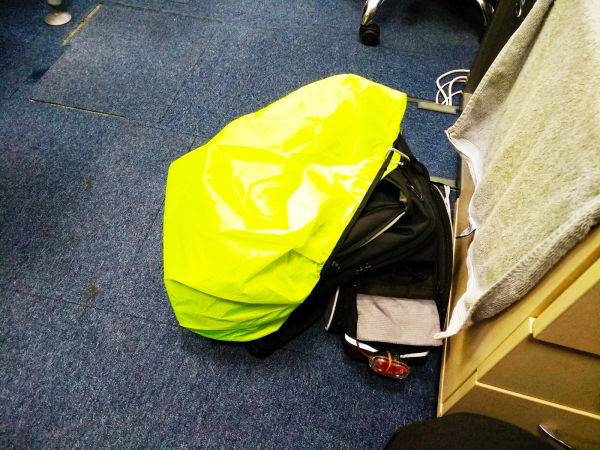
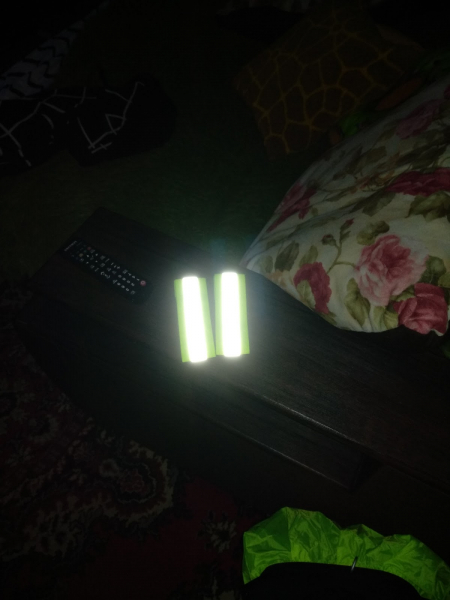
The clothing is just a regular bright T-shirt and pants/shorts. To be more visible — a bright cover for my backpack.
And reflective materials for my arms.
Bike glasses are necessary when riding along the road, when dust and various bugs are flying. I definitely wouldn't recommend getting a maybug in your eye, even at a speed of 25 km/h. Additionally, fingerless bike gloves are handy — they prevent hands from sweating and slipping on the handlebars. - Water
If you're not traveling far, a bottle of water will just be extra weight. However, if the journey is longer than 5 km, an energetic cyclist loses fluids quickly, so you need to drink often. Take a couple of sips every fifteen minutes. At first, I had a regular one-liter bottle of water in my backpack. Then I got a bottle holder on the frame — it perfectly fit a half-liter bottle of iced tea. Now I've bought myself a hydrator, but I'm not using it actively yet, as in the cold, I don't feel as thirsty and half a liter is enough for the whole trip.
- Repair tools
Throughout all the time I've been cycling in the city, I've only adjusted the gears a couple of times with hex keys, but I always carry a pump (a small bike one), a spare tube, a set of hex keys, a small adjustable wrench, and a knife. In theory, all of this might come in handy someday.
- Bike bag, another one, and another for personal bike gear
At first, I bought a small bag to fit in the triangle of the frame for a spare tube and keys, but after giving up on disposable batteries and switching to a power bank, space became scarce. So, another bag appeared, and then another along with a rack. But I carry so many things every day that there's still not enough space, and I end up taking a backpack too.
- Bike computer
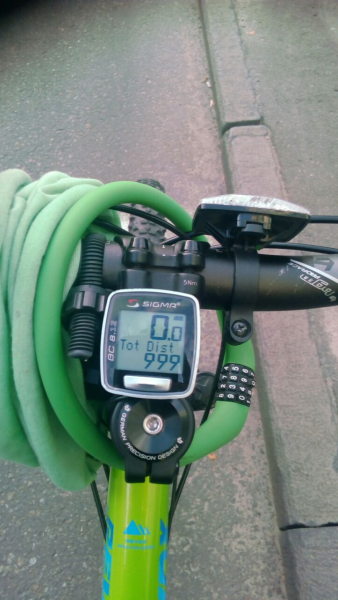
A bike computer is not essential, but it's nice to be able to say that you've traveled exactly 2803 km in 150 hours. And that your maximum speed was 56.43 km/h, while your average speed on the last trip was 22.32 km/h. And those first 999 on the bike computer will be remembered forever.

- Fenders for the bike
They help you ride during and after rain. Clothing and shoes don't get as muddy. And in dry weather, they're not unnecessary, because you can't predict whether the road will turn into a river after a water main break on your path.
Route
At first, my route ran along the major city highways, as it seemed to me that the road was smoother and somewhat shorter and faster there. It's a separate pleasure to ride alongside cars stuck in traffic. The time taken to get from home to work shrank from 60-90 minutes on public transport to a steady 25-30 minutes on a bike + 15 minutes for a shower at the office.
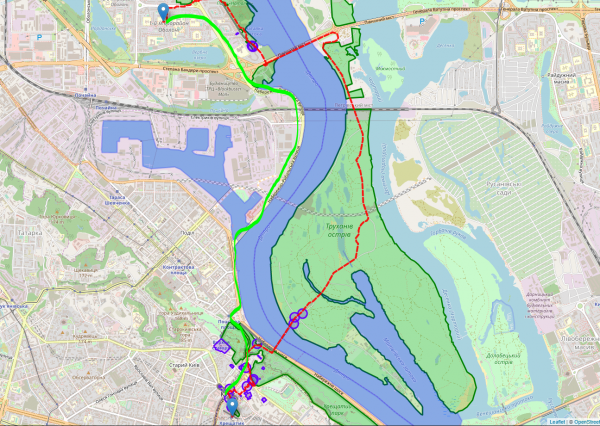
But once I stumbled upon an article on Habr about . Thank you . In short, the service builds routes through interesting attractions and parks. After playing around with the map for about 3-4 days, I created a route that is 80% made up of small streets with slow traffic (speed limit 40) or parks. It took a bit longer, but subjectively, it feels much safer since now I have cars that are coming from courtyards and driving at most 40 km/h, rather than minibuses that speed at 60 km/h while changing lanes three or four times in two minutes. The next piece of advice would be — build your route along small streets and courtyards. Yes, there are specific aspects like marginal elements, dogs, and suddenly appearing children in courtyards. But with each of these
commuting by bike in a big city. Survive at any cost.
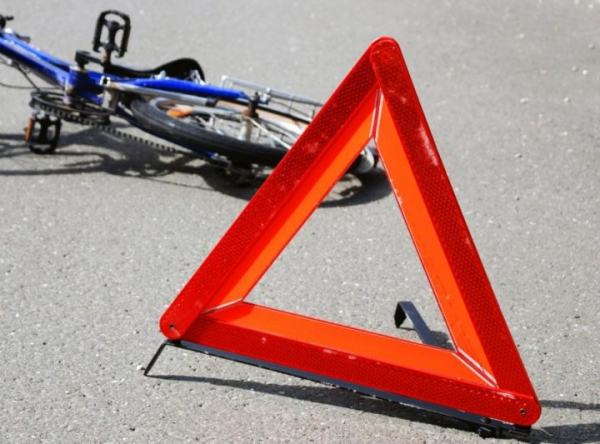
As the saying goes, it's better to learn from others' mistakes, so I spent several hours watching videos about bike accidents. Subjectively assessing the videos regarding the compliance of road participants with traffic rules, I concluded that in about 85-90% of cases, the cyclist is to blame in accidents. I understand that the videos on YouTube are not representative, but they have formed some behavioral patterns for me on the road. The main rules I would advise to follow on the road are:
- Be visible on the road. During the day — wear bright clothing, at night — have as many lights and reflective elements as possible. Believe me, this is important. Even Uber's autopilot couldn’t recognize a cyclist in black clothing at night. I also almost hit a fisherman in camouflage clothing on a bike without reflectors and lights once. I saw him literally a few meters away. And if my speed had been more than 25 km/h, I definitely would have caught up with him.
- Be predictable. No sudden lane changes (if there's a pothole ahead — slow down, look around, and only then change lanes). When changing lanes — signal your direction, but remember that even if you signal the turn, it doesn’t guarantee that others understood/seen you — always look around and ensure the maneuver is safe. Better to check twice.
- Follow the traffic rules — no comments needed.
- Try to anticipate the movement of cars. If traffic on the left is slowing down, someone coming from the opposite direction ahead might be turning and is being waved through. At intersections, even on the main road, slow down until you see that the driver exiting from the secondary road notices you.
- There's a separate issue with parked cars — the doors of such cars may open suddenly and people can exit very quickly. While drivers might glance in mirrors before opening doors, passengers tend to fling the door open wide and fast. Also, a parked car might decide it’s time to move into the future and start driving without indicators or any finesse. Moreover, people with strollers often emerge from parked cars, with the stroller rolling out first, followed by the person. And children often dart out, sometimes with pets... In general, stay as alert as possible and expect anything.
- Don't rush. Even if you are running late, always leave room for maneuvering.
In conclusion.
Last year, I traveled just over two and a half thousand kilometers on urban roads. I hope this article will be useful for those who decide to try their hand at this endeavor. Not just once a year for a bike-to-work day, but at least four days a week for six months a year.
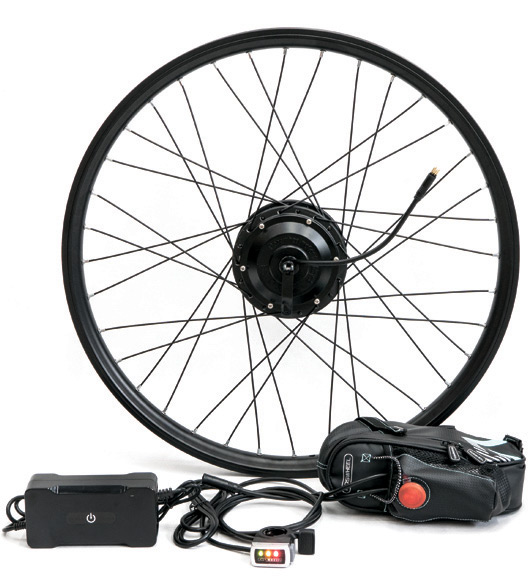
Also, at the beginning of February, I bought and installed a 350W front motor wheel. I've already traveled about 400 km on it. But that’s a completely different story, which I can tell you in the next article.
Source: habr.com
