

It is difficult to give a universal definition of the role and responsibilities of a product manager: each company has its own, so transitioning to this position can be a challenging task with unclear requirements.
Over the past year, I have interviewed more than fifty candidates for the junior product manager position and noticed that most of them have no idea about what they do not know. what they do not know. Candidates have significant gaps in their understanding of the role and responsibilities of a product manager. Despite a high level of interest in this position, they are usually unsure about where to start and what areas to focus on.
Therefore, below I present six areas of knowledge that I believe are the most important for a product manager, along with relevant sources. I hope these materials will help clarify the situation and point to the right path.
Translated in
1. Study how startups operate
Eric Ries, author of "The Startup Way," defines a startup as an institution designed to create a new product in conditions of extreme uncertainty.
The fundamental tasks and actions of a startup founder and a product manager at the early stage largely overlap. Both aim to create a product that meets people's needs, which requires 1) launching the product (feature), 2) communicating with customers – to understand whether the offering meets their needs, 3) obtaining feedback from them, 4) iterating the cycle.
A product manager must understand how successful startups create products, find their niche in the market, communicate with customers, prioritize potential features, and deliberately do things that do not scale.
Resources that will help study startup methodologies:
- How to manage a startup and grow a business at maximum speed: , by Eric Ries.
- , by Sam Altman.
- A lecture on how to communicate with users: , Emmett Shear.
- Why regular non-scalable actions are the secret sauce of a successful startup: , Paul Graham.
- Fundamentals of user behavior evaluation methods in the product: , Dave McClure.

Photo – , platform
2. Understand Why Flexibility is Important
Product managers often face challenges without ready-made solutions — particularly in an uncertain and constantly changing environment. In such conditions, creating strict is a venture doomed to fail.
Software development process planning and management must align with such an environment — you need to act quickly and easily adapt to changes, deploying features continuously and in small increments. The benefits of this approach include:
- Unsuccessful decisions can be identified earlier — and turned into valuable experience.
- Achievements motivate people in the early stages and point the way forward.
It’s crucial for product managers to understand why flexibility in planning and work matters greatly.
Resources to help explore flexible software development approaches:
- and .
- on Spotify's technical culture, which has inspired many teams around the world (and helped it surpass Apple Music).
- about what flexible software development means. Remember, there are no specific rules of 'flexibility' — every company applies this principle in its own way (and even differently across various teams within a single company).
3. Enhance Technical Literacy
"Is it necessary to have a computer degree?"
"Is programming a requirement?"
Above are two primary questions I get from those looking to pursue product management.
The answer to these questions is "no": product managers do not need to be able to code or have a computer degree (at least, in the case of 95% of job positions on the market).
However, a product manager should develop their own technical literacy — to be able to:
- Generally understand technical constraints and the complexity of potential features without needing to consult developers.
- Facilitate communication with developers through an understanding of fundamental technical concepts: API, databases, clients, servers, HTTP, the product's technology stack, etc.
Resources to help improve technical literacy:
- A course covering the basic concepts of essential technical principles: , Team Treehouse (has a free 7-day trial).
- Course on software components: , Khan Academy (free).
- Stripe is known for its — by familiarizing yourself with it, you'll gain insight into how APIs work. If any terms are unclear, just Google them.
4. Learn to make data-driven decisions
Product managers don't write the actual product, but they play a crucial role in significantly impacting the team's workings — making decisions.
Decisions can be minor (like increasing the height of a text field) or major (what the specifications of a new product prototype should be).
In my experience, the simplest and most effective solutions have always been based on data analysis results (both qualitative and quantitative). Data helps identify the scale of the task, choose between different versions of design elements, decide whether to retain or remove a new feature, track performance, and much more.
To simplify your life and provide greater benefits to the product, it's important to consider fewer opinions (and biases) and focus more on facts.
Resources that can help you learn to make data-driven decisions:
- A course that will provide fundamental knowledge in statistics: , Udacity (free).
- A course on the basics of extracting useful information from databases and real-time analysis: , Datacamp (has a free trial).
- The Booking.com platform is one of the pioneers of A/B testing. discusses their testing approach.
- An article about experiments at Airbnb:
- Introduction to machine learning: , Adam Geitgey.
5. Learn to distinguish good design
Product managers and designers work together to ensure the best user experience.
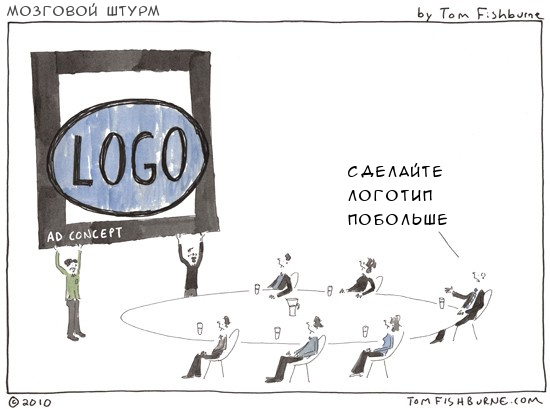
A product manager doesn't need to handle design, but must be able to distinguish good design from mediocre and provide useful feedback. It's important to go beyond suggestions like 'make the logo bigger' and intervene when things start to get complicated and design becomes excessive.
Resources that can help you understand what good design is:
- A book about what makes a product user-friendly and intuitive: , Steve Krug.
- Check out the guides (from Apple, for iOS) and (from Google, for Android) and try to find the constructive patterns described there in your applications.
- Lesson , Garry Tan.
6. Read technical news
Songs, paintings, philosophical concepts… the new is always a combination of existing ideas. Steve Jobs didn't invent the personal computer (), nor did Sony invent the first digital camera (). Renowned companies repurposed existing innovations, borrowed, utilized, and adapted already articulated ideas — and this is a natural process of creating something new.
To create means to connect many pieces together. If you ask a creative person how they did something, they will feel a bit guilty because in their mind, they did nothing but simply saw a picture.
— Steve Jobs
Product managers need to constantly keep an eye on trends, learn about fast-growing startups and failures, be the first to adopt cutting-edge technologies, and listen to new trends. Without this, it will be impossible to maintain creative power and an innovative mindset.
Resources for periodic reading, listening, and viewing:
- Product news and internet trends for every day: and
- Daily tech news: , and .
- Subscribe to : host Jason Calacanis periodically invites entrepreneurs to share their experiences.
- Leaders in the tech field and authoritative experts on Twitter: , , , , ,
About the translator
The translation of the article was done at Alconost.
Alconost specializes in , into 70 languages. Native-speaking translators, linguistic testing, a cloud platform with API, continuous localization, project managers 24/7, any formats of string resources.
We also create — for websites, sales, promotional, educational, teasers, explainers, trailers for Google Play and the App Store.
→
Source: habr.com
