

Surely, each of us has pondered what a dream team really looks like. Is it Ocean's cool crew? Or perhaps the French national football team? Or maybe a team of developers from Google?
In any case, we would like to be in such a team or even create one ourselves. Amidst all this, I want to share with you a bit of experience and my vision of that dream team.

The stars have aligned, and my dream team operates with agile methodology, so everything I write here pertains more to agile teams. But who knows, maybe this article will help those with great imagination who don't even need any agile.
What is your dream team like?
I want to focus on three fundamental links that I consider must-haves for a team: self-organization, collaborative decision-making, and mutual support. We won’t consider factors like team size or roles within it at this point. Let's assume our team is just fine in that regard.
Self-organization. How do you know if you have achieved it or how can you achieve it?
If your team doesn't have a wicked Buratino with a whip, and you all manage to complete your tasks together, then you can move on to the next point.
I believe the key to achieving this goal lies, firstly, in the personal acceptance of the team's atmosphere (its rules and customs), and secondly, in working on the self-organization of each participant. Perhaps this direction can be fostered through team initiation, regular team-building activities, and various incentives (not just for nothing, of course). The main thing is not to overdo it and demotivate your teammates.
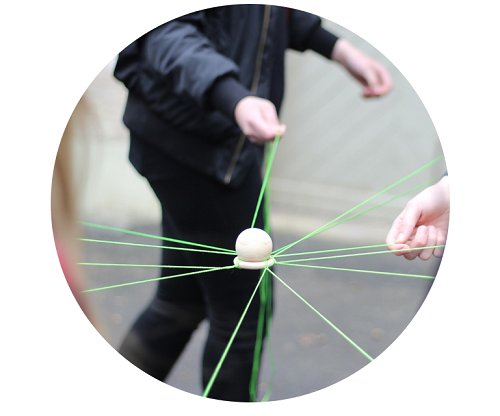
By the way, I know a couple of great games that will help strengthen self-organization within the team: and . These games require at least two teams — preferably, include an external team. In the first game, time is given to build a stable structure that lifts the marshmallow as high as possible above the table. In the second game, you need to iteratively (from sprint to sprint) increase the number of balls produced in your factory. I’ve had the chance to play these games, and it’s quite a good experience!
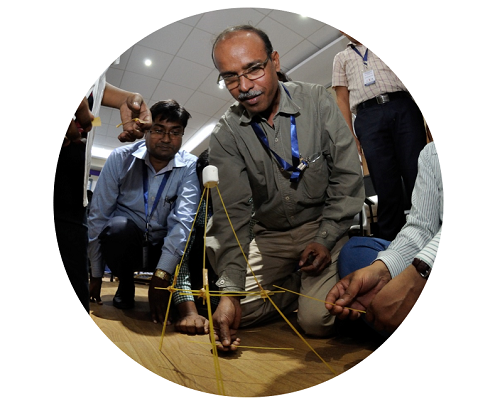
In the Marshmallow Challenge, our team didn't take first place, but I was pleased with how we played. Here’s what interesting I observed during the game:
- During the planning stages, we made efforts to consider everyone's opinions in pursuit of our common goal;
- We did not have a leader who assigned tasks or divided powers;
- We reached a level of self-organization and self-awareness where everyone took initiative and tackled tasks from our mental backlog.

In the Ball Point Game (aka the Ball Factory), our team won, producing about 140 balls in a couple of minutes (rumor has it there’s a team that made around 300 balls). Self-organization didn’t happen at the push of a magic button. It emerged intuitively and was based on our shared goal of 'more balls in the same time.' We experienced a significant drop in performance during the penultimate sprint (we spiraled into storming), sacrificing it for a radical improvement, which ultimately allowed us to win.
Collaborative Decision-Making. What is it?
It’s when a team, while making decisions, at least takes into account each member's opinion. Even if someone isn't yet fully competent, they can still explain the direction we’re heading. Don’t overlook mutual respect. In case of deadlocks, we can always play the good old scrum poker.
Mutual Support.
Let’s agree that when you join a new team and no one explains anything, it creates a silly feeling of hopelessness (followed by thoughts like 'maybe I should just give up...'). To prevent this from happening, I think we need two important components here:
- "shouting SOS" when you need help, rather than staying silent and waiting for someone to figure it out;
- Fostering healthy empathy towards your teammates and not standing aside.
So, do you already feel how awesome your team is? No worries, let's see what can help us.
Catalysts for a Positive Atmosphere in the Team aka Team Incubator
Location.
Yes, yes, an incubator. More specifically – one single location. In my opinion, the most important thing to start 'squeezing' the team is their close proximity to each other. Even better if it’s a separate room where no one from the huge space can disturb you. First of all, minor problems can be resolved 'on the fly' rather than postponed indefinitely. Having a teammate within arm's reach is far more beneficial than waiting for answers via Skype. Secondly, the room fosters a collaborative atmosphere. You feel you’re contributing to the project, and the colleague sitting and working next to you feels the same. It's somewhat like when we, as kids, formed a crowd to build a snowman or made a snow fort by digging it out of a huge snowdrift. Everyone brought their own improvements, and it felt good for everyone involved.
I spent 9 months working away from my team. It was extremely inconvenient. My work dragged on. My tasks lingered in an In Progress state longer than most tasks of my teammates. It felt like they were already on their fiftieth snowman together while I was still here trying to carve out a carrot for the first one. Overall, my productivity was at a snail's pace.
But when I moved closer to the team, the situation changed drastically. I felt like I was 'on the front lines.' Within a couple of weeks, I closed more tasks than I had in a month. I even dared to take on a mid-level task!
Empathy and a shared atmosphere.
Not sitting on the sidelines when a teammate is in trouble. Mutual respect, and simply good relations with each other, are also a kind of key to success. Ideally, there should be joy in a teammate's achievements and pride in one’s team — and that already serves as good motivation for further advancement.
It reminded me of a video where a crowd of passersby managed to push parked cars that were blocking an ambulance. They did it together, and they were able to move two cars that were on the handbrake. That’s really cool. And I think after their success, everyone felt their own contribution to the process and realized they played a part in providing more significant help.
For me, the worst nightmare is when there's an awkward atmosphere in the team and almost everyone is afraid to say a word, fearing they might make a mistake or seem foolish or awkward. This should not be the case. I understand that everyone has a different personality, but each team member should feel comfortable within it.
An antidote to the situation described above, and a good preventive measure, would be communication with the team in an informal setting. It’s about communication, not just spending free time where everyone is glued to their smartphones. It would be beneficial to gather the team in the evening to play board games, or to go together to an escape room, or for paintball. Fight for your team’s atmosphere!
Team facilitator. What kind of Pokémon is that?
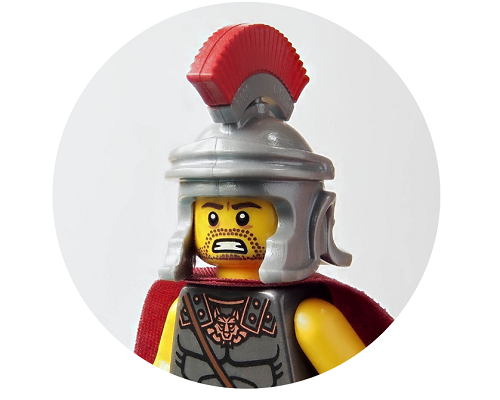
It seems that it should be a leader. However, there’s a thin and slippery line here. The interests of a team facilitator do not include leading the team. They strive to enhance the motivation of the entire team and maintain a comfortable atmosphere, acting as an excellent ‘resolver’ of intra-team conflicts. Their goal is to ensure high team performance.
Ideally, this should be someone from outside. Each team goes through stages of its formation according to . So, if a facilitator is introduced into the team during the Forming stage, the team will navigate the Storming stage more easily and will reach the Norming stage faster than without one. However, ideally, by the Performing stage, a facilitator is no longer needed. The team can manage on its own. Yet, as soon as someone leaves the team or joins it, they will fall back into the Storming stage. And then: 'Facilitator, I summon you!'
It would be an added bonus if the facilitator could sell the idea to the team. I think that if they can ignite a spark in their teammates and infect them with the idea of shared success in the future that we should all strive for, it could significantly enhance team motivation.
A fierce killer of conflicts.
I really hope that in the dream team Conflicts will never escalate. We are all kind and can respond appropriately to jokes, extraordinary situations, and we do not seek conflict ourselves. Right? But I know that sometimes a clash is inevitable (especially during the Storming stage). In such moments, you need to quickly throw a Poké Ball at the opponent to call in a facilitator! However, often the teammates are already aware of the situation in the team and are ready to bombard both with Poké Balls. It's very important to curb the conflict as soon as possible to avoid lingering misunderstandings and suppressed grievances.
Joint Planning.

In joint planning, the team should thoroughly assess current and upcoming work. I think this is a great opportunity to evenly distribute the workload among teammates. Everyone should communicate everything to their team (difficulties, suggestions, etc.). Otherwise, the team might overload a quiet member with more tasks, which could lead not only to despair but also to harboring resentment – and that's dangerous for a dream team! Constant and open dialogue is key to effective planning.
Transparency is as vital for planning as a magic potion is for Asterix. Transparency is needed for more effective work and decision-making. When we see the full picture of what is happening, we can always make a good decision, which will later prevent us from wasting time figuring out the reasons behind poor performance or failure.
Daily Meetings.
Daily meetings are team gatherings aimed at understanding and acknowledging the current work status. It’s the cherry on top of the dream team cake. Especially if these daily meetings happen not over Skype, but over a cup of coffee and in an informal setting. I've had the chance to participate in such daily meetings a few times, and honestly, returning to my workspace makes me want to work and create even more! Haha! Seriously, guys. Daily meetings, when organized correctly and when teammates are open with each other, achieve several goals at once. It's transparency, joint planning (I know there’s a retrospective, but here you can learn about issues much faster), collaborative decision-making, team bonding, and simply spending time together with the team!
So let's build this dream team!
I would like to believe that each of us works in a dream team. Then everyone would be happy. There would be no queues or delays because a dream team can handle everything, and there would be no negativity since the dream team loves their work, etc.
Personally, I take pride in and am inspired by my team. To say that I work in a dream team would probably be incorrect, as dreams are meant to be unattainable, creating something to strive for.
Source: habr.com
