

In the Middle Ages, dark humor was cherished. This is why the art of epitaphs became so popular. Philosophical or amusing sayings were composed for one’s gravestone even during their lifetime, and often the services of professional epitaphists were used.
The tradition of writing epitaphs has continued into our time. However, while they are written quite rarely in our country, it is the norm in English-speaking countries to write something sentimental or humorous on a grave.
Today, we will tell you about the epitaphs on the graves of famous individuals that can truly be called art.

Why are epitaphs even written?
From a psychological perspective, an epitaph is an attempt by relatives to slightly ease their pain from the loss of a loved one. And if it was crafted by the deceased themselves (when they were still alive, of course), it's a kind of attempt to leave something behind—be it amusing, philosophical, or peculiar.
In the post-Soviet countries, epitaphs have not taken root. Even if they are written, they are mostly prayers or excerpts from the Bible. This tradition is more European and American.
Many famous individuals who left their mark in history were also not averse to composing their own epitaphs. Others had them composed by relatives. In any case, let’s not stretch the introduction, let’s get to the point.
William Shakespeare

The legendary poet and playwright rests in Great Britain, in the town of Stratford-upon-Avon. His burial site is a true tourist Mecca. However, today we will look at the epitaph that is not on a grand memorial, but rather the quatrain written by Shakespeare himself that is found on his grave.
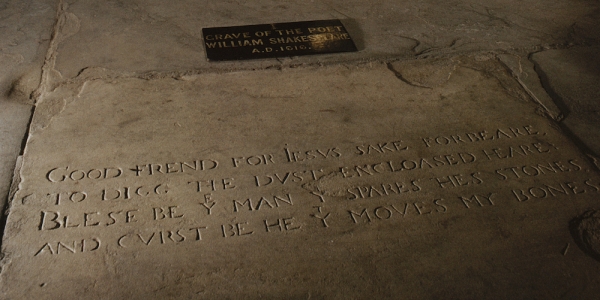
There is a legend that Shakespeare was so afraid of his grave being desecrated that he himself devised an epitaph that cursed anyone who dared to touch his ashes.
Good friend for Jesus' sake forbear,
To dig the dust enclosed here.
Blessed be the man that spares these stones,
And cursed be he that moves my bones.Here is a literary translation (translator A. Velichansky):
Friend, for the Lord's sake, do not dig
The remains taken from this earth;
He who leaves them untouched shall be blessed throughout the ages,
And cursed be he who touches my dust.
The quatrain is interesting to both linguists and historians. Many philologists, however, consider this epitaph rather mediocre from a poetic standpoint. There is even a hypothesis that the epitaph was not written by Shakespeare, but by someone else. Nevertheless, researchers have seemingly found , that the author is Shakespeare himself.
Some even more adventurous researchers believe that there might be a hidden . This is, of course, unlikely, but studies are still being conducted.
Let's break down the epitaph from a linguistic perspective.
Have you noticed that the letter V completely replaces the letter U? The thing is, the letter U did not officially exist at that time. Depending on its position in a word, the letter V also represented sounds that are now assigned to the letters U and W.
And although some writers of the 16th and 17th centuries already used the letter U, Shakespeare wrote the epitaph in the old-fashioned way.
You also surely noticed the abbreviations the — ye, that — yt, where one letter is written above another. This style of writing articles was quite common in the 16th century — printers often used these forms. And while we're at it, also look at the combined spelling of letters in the words the, heare, thes — this was also extremely common.
"Blese be the man" — here the phrase should be understood as "May the man be blest".
"cvrst be he" — similarly, "may he be cursed."
In fact, there are even , which draw parallels with ancient inscriptions, including those by Ovid. But we won't delve that far. Let's move on.
Mel Blanc
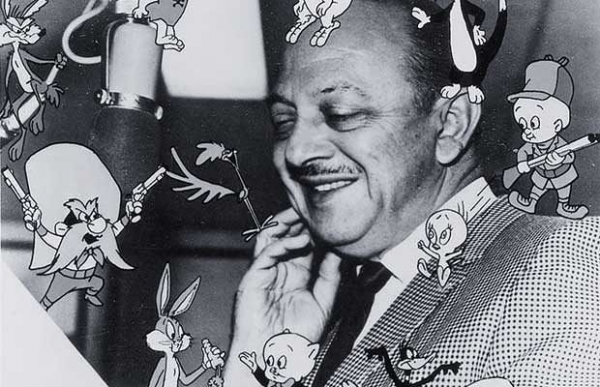
You may not know the name of this person, you may not know what he looked like, but you’ve definitely heard his voice. Because many animated characters from Warner Bros. were voiced by him.
"The man of a thousand voices" — that’s how his colleagues referred to him. His voice is that of Bugs Bunny, Porky Pig, Tweety Bird, Wile E. Coyote, and a huge number of other characters.
The epitaph on his grave is an iconic phrase that ended every cartoon from the Looney Tunes series by Warner Bros. "That’s all folks" — "That’s all, friends."

Mel Blanc clearly stated in his will that this phrase should serve as his epitaph. Honestly, it sounds both like excellent self-irony and an acknowledgment of his own merits. It's cool.

Jack Lemmon
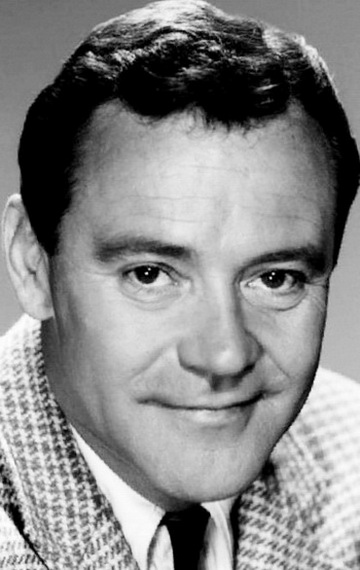
An American actor who was nominated for an Oscar eight times and won the award twice.
Lemmon was considered one of the best actors in the U.S. during the 70s and 80s. He starred in over a hundred films, but Russian-speaking film lovers are most likely to know him from his role in 'Some Like It Hot' (1959).

Lemmon has a substantial list of awards. In addition to two Oscars, he has 2 Cannes Palme d'Ors, 3 BAFTAs, 3 Golden Globes, and a whole bunch of smaller awards.
The epitaph on Lemmon's gravestone is quite brief — Chekhov would be pleased. It contains just three words, two of which are the actor's name.
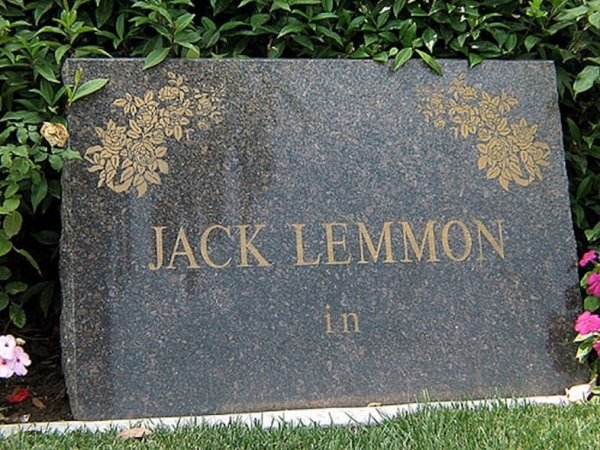
The joke is that the inscription looks exactly like a shot from a film's credits. As if the title of the movie would appear in the next moment. The inscription should be understood as 'Jack Lemmon in the film...'.
At the same time, the inscription can be understood literally: 'Jack Lemmon in [the ground]'. A great epitaph for a movie artist.
Robert Louis Stevenson
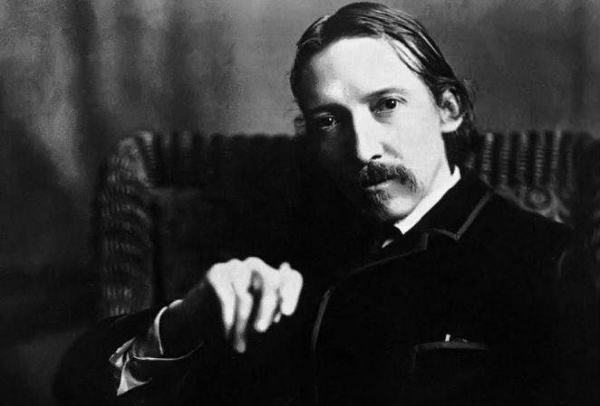
Among poets and writers of the past, it was quite prestigious to write one's own epitaph.
Robert Stevenson, the author of the legendary 'Treasure Island' and several dozen other nautical-themed books, also wrote a requiem for himself.
In 1884, he fell seriously ill. The writer was already preparing for death and created a short poem, bequeathing it to be inscribed on his gravestone. However, it was only used ten years later, in 1894.
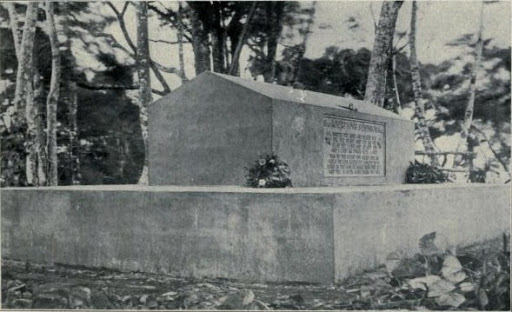
Stevenson is buried in the Samoan Islands. His wish was fulfilled, and his 'Requiem' adorns his grave.
Under the wide and starry sky,
Dig the grave and let me lie.
Glad did I live and gladly die,
And I laid me down with a willThis be the verse you grave for me:
Here he lies where he longed to be;
Home is the sailor, home from sea,
And the hunter home from the hill.
'Requiem' features a rather interesting rhyme scheme of aaab cccb, where the three lines of each stanza share a common rhyme, while all fourth lines rhyme with one another.
The "Requiem" is considered quite a challenging work to translate. Partly due to the rhyming, partly due to the rhythm. There are quite a few translation variants into Russian, but there is no universally recognized one. Here is one of the most successful, in our opinion (translator - Mikhail Lukashevich):
Under the vastness of the sky, where the star is high,
Let the grave board receive me,
I lived joyfully, and death is light to me,
My last command is thus.Carve the verse on my grave:
Here he lies at his own will,
The sailor has returned home from the seas,
The hunter descended from the hills.
Interestingly, the poem actually consists of three stanzas, but only two are on the tombstone. It turned out that the writer's literary executor removed the second stanza from the work. It is still unknown whether this was done at the writer's request or if it was the executor's own decision. Many researchers believe that it was indeed the second one.
Here is the second missing stanza:
Here may the winds about me blow;
Here the clouds may come and go;
Here shall be rest for evermore,
And the heart for aye shall be still.
Charles Bukowski
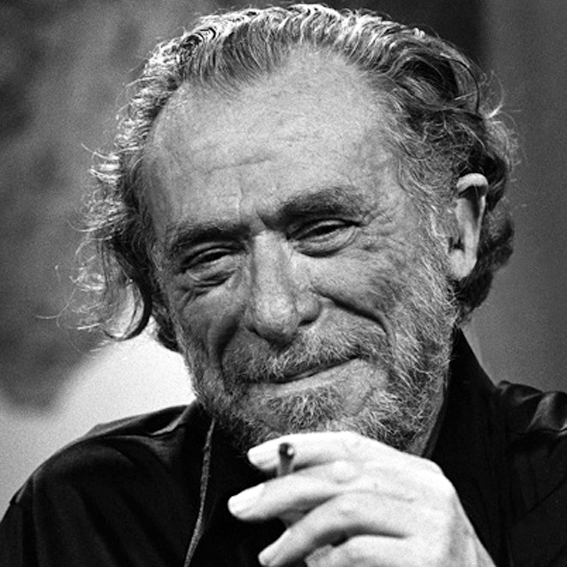
Bukowski had a profound influence on contemporary American literature. He authored six novels, over two hundred short stories, and approximately a thousand poems.
As a representative of "dirty realism," he highlighted the sordid and harsh realities of American society in his works. Bukowski's stories have been adapted for film multiple times.
Bukowski is a figure of rather tough underground literature, so his works did not receive awards, but he occupies a strong place in American culture.
Bukowski's epitaph is maximally simple: "Don’t try." But in reality, its meaning is not as pessimistic as it may seem at first glance.
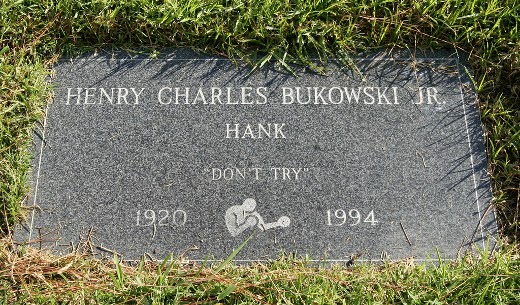
The phrase "Don’t try" became a sort of life credo for the writer. In letters to friends and in his works, he often repeated the same thought:
"We work too hard. We try too hard. Don’t try. Don’t work. It’s there. It’s been looking right at us, aching to kick out of the closed womb. There’s been too much direction. It’s all free, we needn’t be told. Classes? Classes are for asses. Writing a poem is as easy as beating your meat or drinking a bottle of beer."
"We work too hard. We try too much. Don't try. Don't work. It's all here. It looks right at us and desperately longs to break free from the closed womb. We have too many guides. All this is free, we don't need to be taught it. Learning? It's for fools. Writing a poem is as easy as jerking off or drinking a bottle of beer."
The writer's entire philosophy of life is summed up in one simple sentence. "Don't try, just be yourself and do what you love." For those uninitiated in Bukowski's views, the epitaph sounds like "Don't try," but for those who understand what the writer meant, it transforms completely: "Don't try what doesn't speak to your soul."
Bonus: An epitaph for oneself
The second meaning of the word "epitaph" is a funeral oration. Last year, a video appeared on Reddit where a humorous recording of the deceased's voice played at the funeral. It made the attendees laugh and lightened the somber mood of the relatives.

"Hello? Hello? Let me out! Where the fuck am I? Let me out! It’s fucking dark in here! Is that a priest I can hear? This is Shay, I’m in the box. And I’m dead… Hello again hello, I just called to say goodbye."
Hey! Hey! Let me out! What the fuck, where am I? Let me out! It’s fucking dark in here! Is that a priest talking over there? This is Shay, I’m in the box. And I’m dead. Hello, hello again. I just called to say goodbye."
The last phrase the man sang in the style of . Only the last "hello" was replaced with "goodbye."
P.S. Did you notice the classic Irish accent in the video? Fucking [ˈfʌk.ɪŋ] becomes [ˈfɔːk.ɪŋ] with a distinct "o" sound.
It's simply amazing how a few phrases can change people's moods. Here they were grieving, and in a second they were already chuckling. To truly feel the power of the English language not in translation but in the original, learn it properly.
The online school EnglishDom.com — inspiring you to learn English through technology and human care
Exclusively for Habr readers ! When purchasing classes, receive up to 3 lessons for free!
Get a full month of premium subscription to the ED Words app for free.
Enter promo code deathart or directly . The promo code is valid until 02/11/2021.
Our products:
Source: habr.com
