

Igalia, a company known for its involvement in developing open projects such as GNOME, GTK, WebKitGTK, Epiphany, GStreamer, and freedesktop.org, has introduced a new open web browser called Wolvic, designed for use in virtual reality systems. The project will continue the development of Firefox Reality, which was previously maintained by Mozilla but has not been updated for about a year. The code for Wolvic is written in Java and C++ and is distributed under the MPLv2 license. The first beta builds of Wolvic are available for the Android platform and support 3D headsets such as Oculus, Huawei VR Glass, HTC Vive Focus, Pico Interactive, and Lynx. Work is underway to port the browser for Qualcomm and Lenovo devices.
The browser uses the GeckoView web engine—a version of the Mozilla Gecko engine packaged as a separate library that can be updated independently. Control is achieved through a fundamentally different three-dimensional user interface that allows navigation of websites within the virtual world or in augmented reality systems. In addition to the interface designed for control via a 3D headset that permits viewing traditional two-dimensional pages, web developers can utilize the WebXR, WebAR, and WebVR APIs to create specialized three-dimensional web applications, with interactions taking place in virtual space. It also supports viewing spatial videos shot in 360 degrees in a 3D headset.
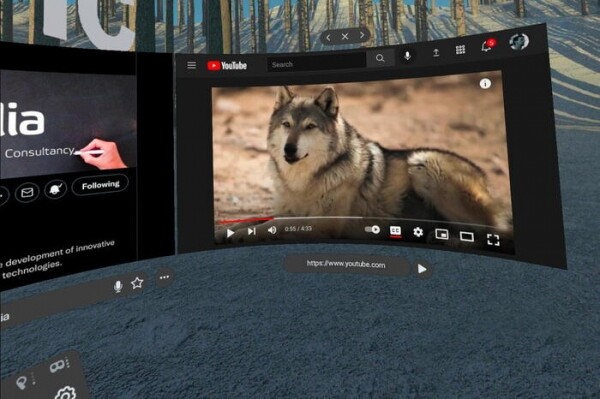
Management is conducted through VR controllers, and data entry in web forms is done via virtual or real keyboards. Among the supported advanced user interaction mechanisms, the voice input system stands out, allowing users to fill out forms and submit search queries using the speech recognition engine developed at Mozilla. The browser offers an interface for accessing favorite content and navigating a collection of games, web applications, 3D models, and spatial videos that are adapted for 3D headsets.

Source: opennet.ru
