

Out of ten projects in the Russian industrial market today, only two are new constructions, while the others are related to the reconstruction or modernization of existing facilities.
To carry out any project work, the client chooses a performer from among companies that are quite difficult to compare linearly due to very subtle yet significant differences in the structure and organization of internal processes. The two main competing forces in the Russian design market are the traditional design organizations and engineering companies, which carry out design work either as a standalone task or as part of comprehensive projects that also include construction and commissioning works. Let’s analyze how companies of both types are structured.
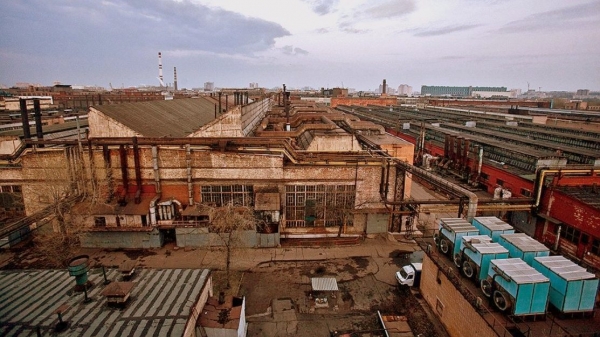
Key Market Players
New construction of industrial facilities always involves huge investments and a long payback period. Therefore, any owner is always interested in maximizing the lifespan of their facility.
However, during this time, physical wear and tear of structures is inevitable, changes to current regulations may need to be made, and it is quite likely that there will be a need to increase production capacities and expand the technological capabilities of the enterprise.
Extending the 'life' of production and ensuring its compliance with modern efficiency standards can be achieved through reconstruction, technical re-equipment, and modernization. Designing such projects is currently in high demand. The reasons are that they require significantly lower investments than new construction, and there are numerous industrial facilities in our country that are over 20-30 years old (many of them were built during the Soviet era).
Due to the decline in the number of large-scale projects, the composition of participants in the project services market has changed.
It is economically unfeasible for design institutes to engage in projects with small volumes and, consequently, with low work costs. Therefore, the number of project "giants" has diminished; those remaining are mostly departmental institutes of large companies (like AK Transneft, Rosneft, Gazpromneft, RusHydro, etc.). The number of small and medium-sized design organizations with teams of designers from 5 to 30 specialists has increased.
Engineering companies are relatively new players in the market. Typically, they deal with:
- the technical and economic justification of the project;
- planning financial flows, securing funding;
- comprehensive management of the project or its parts;
- designing, modeling, and designing;
- working with suppliers and contractors;
- ensuring commissioning works;
- arranging transportation;
- auditing, licensing, etc.
It would seem that the choice between an 'orchestra company' and an organization with a narrow specialization is obvious. However, it's not that simple.
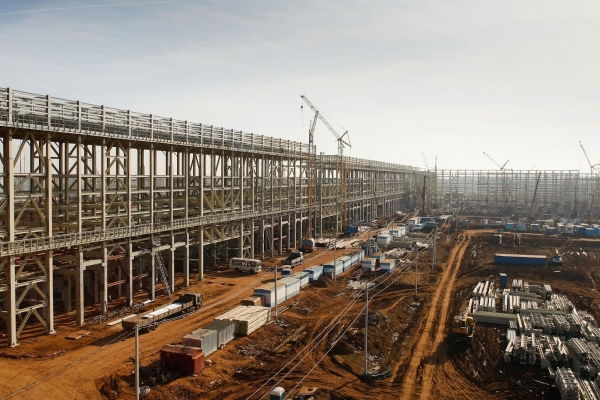
Assessing the task — selecting the executor
Tasks addressed during reconstruction and technical re-equipment generally do not require a large team of designers but are extremely demanding on the executor, whose level of competence must be 'above average.'
Each specialist on the team in such a project must understand the methodology and have significant design experience, be knowledgeable about installation and construction technologies, possess a broad understanding of equipment: know the manufacturers represented in the market and comprehend the features of their equipment in terms of operational and functional suitability for a specific project, durability, maintainability, and, importantly, cost.
If the decisions made to achieve technical indicators and safety require attracting funds exceeding budget expectations or client constraints, the project is unlikely to be realized. Consequently, there is a high probability that the work paid for by the client will end up in the trash, and the assigned task will remain unresolved.
This is where so-called 'turnkey projects' come into play, where a single contractor performs all the work, starting from the feasibility study and ending with the commissioning of the entire facility. The maximum cost of work is agreed upon before the project and working documentation is completed, as it is possible to calculate construction and operating costs for technical re-equipment and reconstruction projects with the right approach without developing working documentation.
The classic methodology for designing/implementing a project, where there are multiple contractors for design, equipment supply, and installation, does not allow for accurate cost estimation without developing working documentation in the rapidly changing market of equipment, materials, and construction methods.
When it comes to re-equipment and modernization projects, the classic design method experiences breakdowns: projects are executed 'conceptually' without the necessary level of detail, leading to increased CAPEX and construction timelines.
For EPC projects, a compact team of designers is needed, who, in addition to core design skills, can conduct surveys of existing engineering systems, closely collaborate with the client's services during data collection, approval of working documentation, and author supervision over implementation, as well as with suppliers of main and auxiliary equipment, logistics divisions, and production-technical departments of installation units.
My colleagues and I from the company '' tried to compare the approaches of design organizations and engineering companies. The results are shown in the table below.
| Design Organization | Engineering Company |
|---|---|
| Formation of costs for developing project and working documentation | |
| — Base-index method using base price catalogs (BCP). — Resource method. The possibility of applying the base-index method is limited for solving non-trivial tasks without previously completed analogs. | — Resource method. At the same time, the engineering company in EPC projects has the opportunity to determine the cost of the design phase at cost price due to a comprehensive approach. |
| Selection of equipment used in the project | |
| — Carried out based on the project specifications provided by manufacturers. — Conducted by specialists familiar with the equipment's characteristics, but lacking experience in its installation or operation. | — Executed based on the project specifications stated by manufacturers. Additionally: — The selection of equipment is based on an evaluation of the manufacturer; the engineering company assesses the supplier's production capabilities and experience, and has partnerships with several manufacturers that provide additional benefits; — Project team members possess practical experience in the installation/operation of the equipment, allowing for expert evaluation; — Equipment selection takes into account real delivery timelines and conditions; — Considers requirements and restrictions related to installation work. |
| Formation of the construction schedule | |
| Based on: — The technological sequence of work production; — The normative labor intensity of types of work defined by the Basic Rates Compilation (SRC). | — Based on the technological sequence of work production. — The timelines for stages are determined based on the development of the work production project by the production and technical department. — Considers the timelines for possible/planned shutdowns of installations or production. — Accounts for delivery timelines of required materials to the construction site. |
| Possible range of tasks addressed during the project's implementation | |
| — Execution of project and working documentation. — Support during the expert examination of project and working documentation. — Author supervision during the construction phase. | — Technical and economic justification of the project. — Conducting expert assessments of existing engineering systems. — Execution of project and working documentation. — Obtaining necessary technical conditions from external network organizations. — Working with equipment suppliers. — Support during the expert examination of project and working documentation. — Author supervision during the construction phase. — Start-up and adjustment works. — Ensuring transportation. The wide range of engineering companies allows the client minimize the costs of maintaining an in-house project team that coordinates specialized contractors at various stages of implementation and oversees them. |
I invite blog readers to share their experiences in the comments about working with project organizations and engineering companies on industrial sites and to participate in a short survey.
Only registered users can participate in the survey. , please.
1. Rate the share of technical upgrade and reconstruction projects you have participated in relative to the total number over the last 5 years:
up to 30%
from 30% to 60%
more than 60%
3 users voted. 1 user abstained.
2. From your practice, what is the average time allocated for the development of working documentation in technical upgrade projects?
less than 3 months
from 3 to 6 months
more than 6 months
3 users voted. 1 user abstained.
3. At what stage of the technical upgrade project was the final decision made about its implementation:
after the completion of the technical and economic justification stage
at the stage of signing the Terms of Reference for the development of working documentation
after the development of working documentation and cost estimates
after determining the suppliers of the main equipment, developing the documentation and cost estimates
2 users voted. 1 user abstained.
4. What share of technical upgrade projects was implemented under EPC contract schemes relative to the total number:
up to 30%
30-60%
more than 60%
2 users voted. 1 user abstained.
5. Was there a need during the procurement stage of equipment, construction, and installation works, commissioning work to involve a contractor for working documentation to make changes, agree on deviations, and conduct author supervision?
yes, during the procurement of equipment
yes, during the construction and installation, and commissioning work
yes, during the procurement of equipment, during the construction and installation, and commissioning work
no, it was not required
2 users voted. 2 users abstained.
Source: habr.com
