

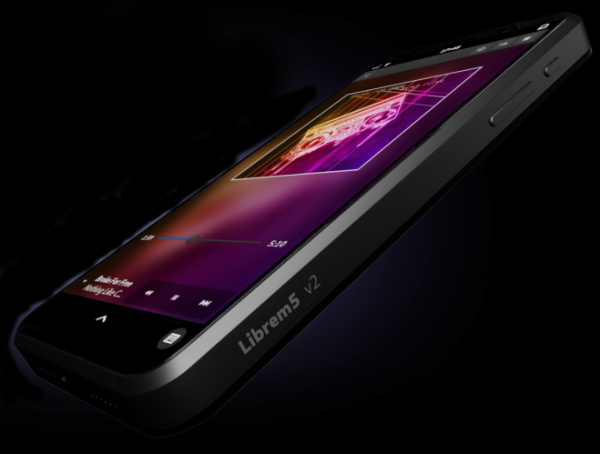
Purism has announced the second version of the Librem 5 smartphone, which has been in production since 2020 and aims to provide users with complete control over their device. The new version is notable for its transition to using the SpacemiT K1 SoC with an 8-core RISC-V architecture processor (the original Librem 5 featured the ARM64-based i.MX8M SoC). The Librem 5 v2 will come with open firmware and the PureOS Linux distribution, recognized by the Free Software Foundation as fully free. The user environment is built on the Phosh shell, developed with GNOME technologies and the GTK library.
To block attempts at tracking and collecting user information, the device is equipped with hardware switches that disconnect the camera, microphone, GPS, Wi-Fi/Bluetooth, and Baseband module at the circuit level. Additionally, the Wi-Fi/Bluetooth chip and the Baseband module for cellular network connection are implemented as removable cards. Development and manufacturing funding will be sought through crowdfunding. The device will be priced at $1599, with initial shipments expected in May 2028. The developer kit (DevKit) is anticipated to be available 6-7 months after the completion of the crowdfunding campaign.
campaign.
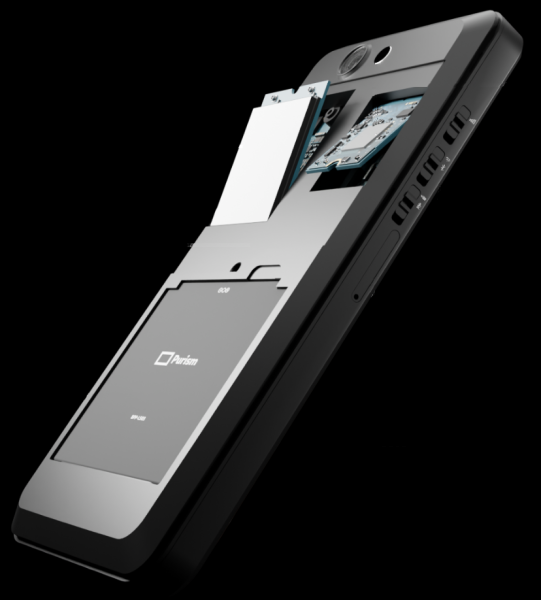
The device will come with a removable battery (4500mAh), two SIM card slots, and ports for SD cards and headphones. The Librem 5 v2 will utilize the same modular body, cameras (8 and 13 megapixels), and 5.7-inch display (720 x 1440) as the original Librem 5. The RAM will be upgraded from 3GB to 8GB, and the Flash storage from 32GB to 128GB. Plans include developing attachable modules with a 5G modem and NFC.
An emulator will be provided to run applications previously built for the Librem 5, allowing ARM64 programs to operate within a RISC-V environment. For running Android applications, Waydroid is intended to be utilized. There will be the possibility to boot arbitrary operating systems from an SD card. To unify application functionality between smartphones and PCs, the libhandy and Libadwaita libraries based on GNOME technologies will be employed. By connecting the smartphone to a monitor, users can access a standard GNOME desktop with the same set of applications.
Support for fingerprint scanners and face recognition authentication will fundamentally not be added, as case law in the USA permits the forced application of biometrics, but requires explicit consent for unlocking with a password.
Source: opennet.ru

 Russian
 Italian
 German
 Polish
 Estonian
 Albanian
 Bulgarian
 Croatian
 Czech
 Danish
 Dutch
 English
 Finnish
 French
 Hungarian
 Latvian
 Lithuanian
 Norwegian
 Portuguese
 Romanian
 Slovak
 Slovenian
 Spanish
 Swedish