

When I came across a video on one of the informational portals titled something like "Internet speed in Madagascar is higher than in France, Canada, and the UK," I was genuinely surprised. It's worth mentioning that the island nation of Madagascar, in contrast to the aforementioned northern countries, is geographically located on the outskirts of the not-so-fortunate continent — Africa. At the same time, the economic situation in the country is breaking records for being unfavorable, which also provides no explanation for such an intriguing claim about the high achievements of this African republic in terms of internet access standards.
The homeland of those "meme" lemurs, almost the only place in the world still struggling unsuccessfully with the plague pandemic, a country of amazing baobabs, dire poverty, and high-speed internet? Is this assertion true, or are we witnessing another example of "fake news"? In the following article, we'll try to understand what the situation really is with internet access on the island of Madagascar.

According to the islanders, according to one method of calculation, are among the poorest people on Earth. About 77.6% of the population lives on less than $1.9 per day. This situation explains why the island is still struggling unsuccessfully to combat that the rest of the world has already begun to forget. The country, increasing its population from 5 million in 1960 to 27 million in 2019 while being in the midst of a political and economic storm, appears to have surpassed most countries in the "Old World" in terms of high-speed internet access; so where's the catch? It turns out there is one, but let's discuss everything in order.

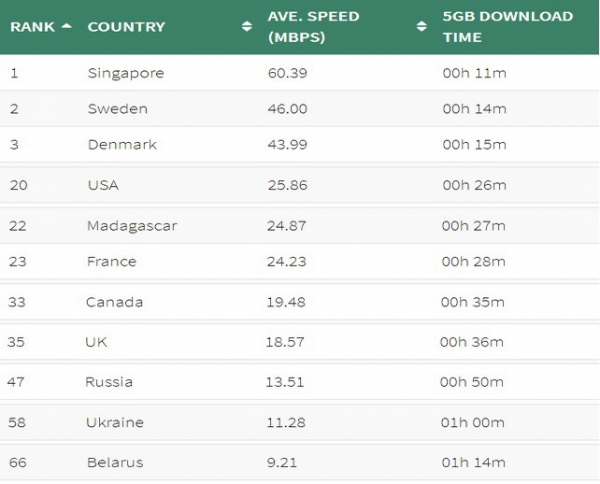
Not long ago, the world was presented with by a non-governmental organization. According to the methodology indicated, the Republic of Madagascar indeed ranks 22nd among countries worldwide for internet speed, thus outperforming many quite successful "peers," including the mentioned UK, Canada, and France, as well as most post-Soviet countries.
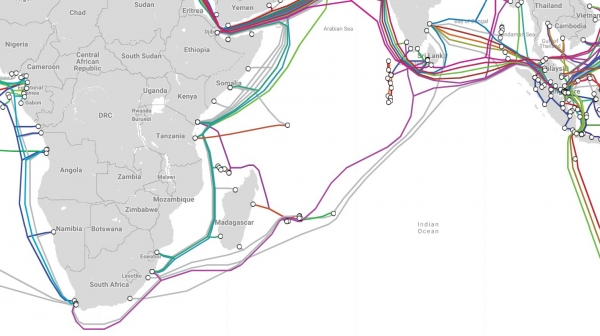
Despite its remoteness from recognized IT infrastructure centers, the island of Madagascar has several quite 'broad' internet channels connecting it to the world. This has been facilitated by pan-African projects aimed at digitalizing the continent. Thanks to relatively cheap and reliable undersea cables, which, at least from a preservation standpoint in this economically and politically unstable region, bypassed Africa without missing Madagascar, by 2010 one of the poorest countries in the world had fiber optic connections with a throughput capacity of 10 Tbps. Furthermore, its proximity to the most economically developed country on the continent — South Africa — has inadvertently made Madagascar a transit point in the IT infrastructure communication lines between the Republic of South Africa and the considerably distant Southeast Asia, with its technological potential and all the resulting positive implications for connectivity in the island Republic.
Yes, this is all good, but compared to the countries of Western Europe, surrounded not only by undersea cables (in the case of the United Kingdom) but also by an endless number of land-based fiber optic lines, this all seems trivial. The situation becomes clearer when we take a look at the following picture. network access services in the aforementioned countries.
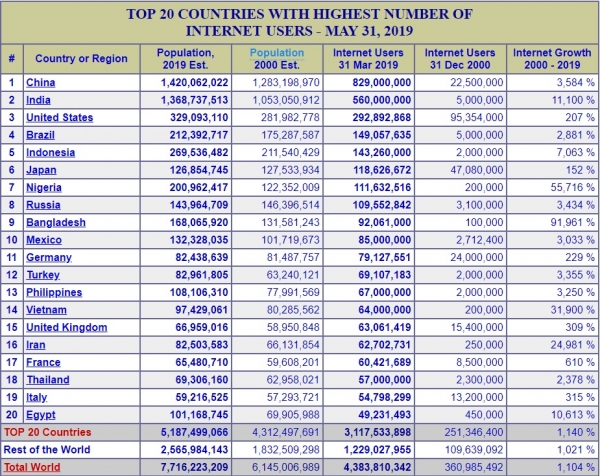
At the same time, according to , the portion of the population covered by the internet in Madagascar is only 7%, which in absolute terms amounts to less than 2 million active users, compared to nearly 80 million in Germany (ranked 25th in speed) or just over 60 million in France (23rd place) and the United Kingdom (35th place).
The situation is indeed somewhat absurd. With , via a dedicated line, in Madagascar at $66.64, this service remains an unaffordable luxury for the vast majority of the population. After all, even those 7% of fortunate users who can afford to be on the 'World Wide Web' through low-speed 2G networks or dial-up technology will not be able to create a significant load on the existing highways connecting this amazing, diverse island.

Thank you for staying with us. Do you enjoy our articles? Would you like to see more interesting materials? Support us by placing an order or recommending us to your friends. 30% discount for Habr users on a unique entry-level server designed by us for you: (options available with RAID1 and RAID10, up to 24 cores and up to 40GB DDR4).
Dell R730xd for half the price? Only with us in the Netherlands! Dell R420 — 2x E5-2430 2.2GHz 6C 128GB DDR3 2x960GB SSD 1Gbps 100TB — from $99! Read about how
Source: habr.com
