

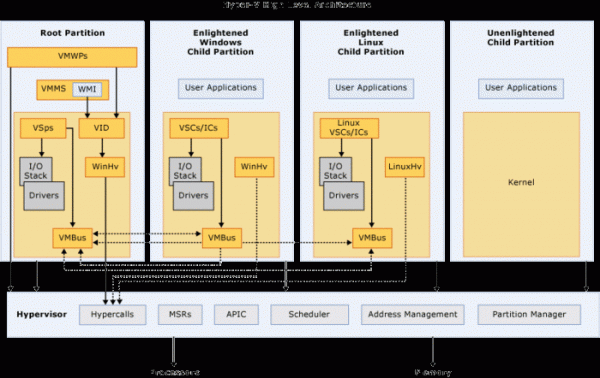
Microsoft has proposed to include the first series of patches related to operating as a host environment (Dom0, root partition) for the Hyper-V hypervisor in the main Linux kernel. The host environment is responsible for managing the hypervisor, organizing the startup of guest systems, allocating resources, and ensuring interaction between virtual machines and hardware.
Initially, the ability to use Linux as a host environment for the Hyper-V virtualization system was introduced in 2020 and is already being used in Microsoft's infrastructure, but until now has developed in the form of separate patches. The new initiative aims to integrate these patches into the main kernel. The need to use Linux for managing the Hyper-V hypervisor arises from the desire to simplify maintenance and increase performance servers, servicing Microsoft's cloud systems, given that since 2018, the number of guest systems running Linux in the Azure cloud service has exceeded the number of environments with Windows.
The initial set of patches is currently limited to adding header files used in the Hyper-V hypervisor, which supplement those previously included in the kernel and used in drivers for guest systems. The SPEC file of the package with kernel 5.15, which includes the implementation of the host environment for the Hyper-V hypervisor, can be found in the Azure Linux distribution repository, but the use of the device /dev/mshv for managing Hyper-V is not yet documented. Hyper-V drivers for guest systems were added to the Linux kernel in 2009 and have been shipped since the 2.6.32 release.
Source: opennet.ru
