

How would you describe 2018? Did it turn out the way you expected?
We would answer that question rather negatively. Starting from particularly devastating natural disasters to a record number of women stepping up to vote, 2018 turned out to be full of surprises. Looking back, we evaluate the world quite differently than we saw it in forecasts a couple of years ago.
The advantage of surprises is that they often serve as a call to action. People may be troubled by the fact that reality did not match their expectations. Some surprises help people realize that the status quo needs to change. Some surprises highlight the fact that transformations have already begun.
Twenty-five years ago, we read an article stating that hundreds of thousands of children in poor countries die from diarrhea. This surprise helped shape our perspective on real values. We believe in a world where innovations are accessible to all, where children do not die from diseases that can be cured. Yet we see a world still dependent on inequality.
This discovery became one of the most significant steps on our path to charity. We were shocked, then we became furious, and then we started to take action.
There were also pleasant surprises. When we first began to learn about malaria, we thought that the world would not gain real benefits until someone invented a long-lasting vaccine. However, thanks to insecticide-treated nets and other measures, malaria mortality has decreased by 42% since 2000.
In this annual message, we describe nine more things that surprised us on our journey. Some of them concern us. Others inspire us. And all of them urge us to take action. We hope they will also inspire you to act, as that is the only way to make the world better.
1. Africa is the youngest continent
Its median age is the lowest in the world
Bill: the world continues to age, while Africa's age remains nearly the same. This may be confusing, but it all makes sense when you delve into the details.
Overall, the median age globally is rising. People around the world are living longer. More children are reaching adulthood, and women are having fewer children than ever before. As a result, the global population is gradually creeping towards a higher average age.
Except in Africa. The median age of its residents is 18 years. In North America, it is 35 years [ / прим. перев.]. И в ближайшие десятилетия ожидается рост количества молодых африканцев.

There are many reasons for this. One of them is that the annual number of newborns is increasing in the poorest parts , while it is declining in other parts of the continent. This can be either an asset or a source of instability. Melinda and I believe that the right investments can unlock incredible potential. Young Africans will shape the future not only of their individual communities but of the entire world.
Melinda: Economists, when describing the conditions for the prosperity of countries, particularly emphasize a factor called 'human capital' – this refers to the fact that the future depends on access to good healthcare and education for young people. Health and education are two parts of the same engine of economic growth.
If Black Africa invests in its youth, the region could double its share of the global workforce by 2050, providing a better life for hundreds of millions.
Among the major forces shaping the planet is the education of girls. Educated girls have better health. They are wealthier. If all girls worldwide received 12 years of quality education, women's lifetime earnings would increase by $30 trillion, an amount greater than the entire economy of the United States. Their families benefit from this as well. The more education a woman has, the better she is equipped to raise healthy children. UNESCO estimates that if all women in lower and middle-income economies completed high school, child mortality would be halved.
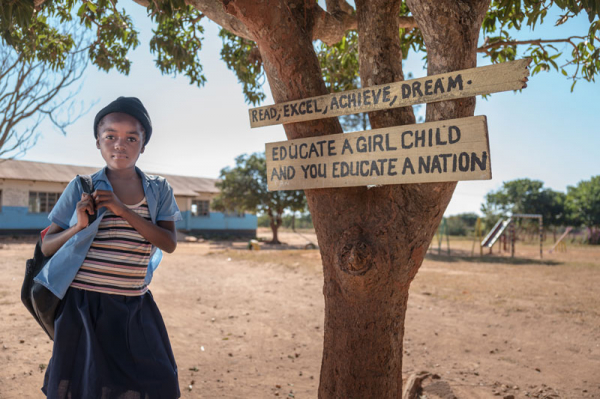
The boom of a healthy, educated, and empowered African youth, promoting girls instead of leaving them behind, would be the best indicator I can imagine.
2. DNA tests based on samples collected at home can aid in the search for serial killers and also prevent premature births.
Scientists have found a potential link between premature births and certain genes.
Bill: when the police used genetic test results to catch the "" last year, this news made headlines around the world. However, this is not the only discovery made thanks to home DNA tests. After studying 40,000 samples submitted by volunteers to the 23andMe website, researchers found a between premature births and six specific genes – including one that regulates the body's use of selenium.
Some people carry a gene that prevents them from properly processing selenium. A 23andMe study (funded by our foundation) found that pregnant women with this gene have an increased likelihood of giving birth prematurely. This suggests that selenium plays a role in determining the onset of labor.
Understanding what leads to premature births is extremely important. Every year, 15 million infants are born this way. Such births occur among mothers worldwide – although the frequency in certain groups can be higher (as Melinda will explain), and infants born too early in poorer countries have a greater chance of dying.
This year, a study will conclude on how exactly this mineral affects the risk of premature births. But if this connection proves solid, selenium could one day become an inexpensive and straightforward solution to prolonging pregnancy.
This connection is one of several breakthroughs we have made in recent years. Improved tools and data sharing finally allow us to understand why infants are born prematurely and what we can do to prevent it. I particularly like the for the risk of premature births developed by a team from Stanford. It can indicate when a baby will be born, giving the woman the opportunity to work with her doctor to take all measures to minimize the risk.
Melinda: despite the promising discoveries described by Bill, I am still amazed at how little we know about premature births. I can't think of anything else that affects 10% of people all over the world and yet receives such insignificant attention.
For the majority of premature births, the cause remains unknown, and we do not understand why certain groups of women are at higher risk. For example, it remains a mystery why taller women have longer pregnancies. In the U.S., there is the puzzle of why Black women born there are more likely to experience premature births than women who emigrate from African countries. There is a sociocultural theory suggesting that racism and discrimination against Black women in America elevate their stress levels, which adversely affect their health. Another theory posits that women raised in the U.S. have a different set of microorganisms. But for now, we know nothing for certain.
What we do know is that the nature of premature births is complex. How early a baby is born matters greatly: 36 weeks is much better than 34 weeks. Our goal is not to completely prevent premature births, which is likely impossible. We need to work on extending pregnancies, bringing the timings closer to normal. And we are finally starting to fill in the gaps in our knowledge about how to achieve this.
3. We will build an entire New York every month
For 40 years! The amount of construction materials in the world will double by 2060
Bill: I wish more people understood what needs to be done to prevent climate change. You probably have read about some progress regarding electricity thanks to the decreasing cost of renewable energy. But electricity accounts for only a quarter of the greenhouse gases emitted worldwide.
Production is lagging behind only slightly, accounting for 21%. Most people envision production as gadgets crawling on an assembly line, but it also includes materials used in construction. Producing cement and steel consumes a lot of energy from fossil fuels, and carbon is released into the atmosphere as a byproduct.
In the coming decades, urban population growth will continue, and by 2060, the quantity of construction materials in the world will double — it's roughly as if we were building a new New York every month. That's an enormous amount of cement and steel. We need to figure out how to manage all this without worsening climate change.
Production isn't the only source of greenhouse gases. Agriculture accounts for 24%. This includes cattle, which emit gases from both ends. (This was a surprise to me — I never thought I would write about cow belching.)
Overall, if we want to tackle climate change, we need to bring greenhouse gas emissions to zero across all sectors — agriculture, electricity, manufacturing, transportation, and construction. I consider these five areas the biggest challenges in the fight against climate change.

One shouldn't assume that people will simply stop using fertilizers, transporting goods on container ships, building offices, or flying on airplanes. It would also be unfair to expect developing countries to curb their growth for everyone else's sake. For many people in low- and middle-income countries, cattle are a necessary source of income and nutrients.
Part of the solution lies in investing in innovation across all five sectors so that we can operate without destroying the climate. Each of them requires breakthrough inventions.
I can report some progress. The European Commission recently decided to invest in research and development in these five areas. The $1 billion fund 'Breakthrough Energy Ventures' [Breakthrough Energy Ventures, BEV], with which I am affiliated, uses these five challenges to guide our investments in clean energy companies. BEV operates separately from the stocks our fund organizes, helping farmers adapt to climate change.
However, we need to communicate emerging problems much better to people. It would be good if media coverage matched their depth. Solar panels are great, but they also need to discuss trucks, cement, and how cows belch.
4. The data can be sexist.
Do girls do housework more than boys? To what extent?
Bill: I spend quite a bit of time studying data related to health and development. It’s surprising how little data we have on women and girls. I think the main reason is that we create an artificial divide, where some issues are considered 'women's' and others are not, and women's issues are not studied as deeply. This blocks progress for everyone. You can't improve anything if you do not know what is happening to half the population. There is no excuse for this when technology makes it so much easier to collect all data.
Melinda: How much money did women in developing countries earn last year? How much property do they own? How much more time do girls spend on household chores compared to boys?
I don’t know. And nobody knows. This data simply doesn’t exist.
Bill and I could easily fill the entire annual letter with discussions about the role of data in advancing progress for the poorest people on the planet. Data helps make the right decisions and policies. It helps us set goals and measure progress. It helps advocate for views and hold people accountable.
Therefore, the absence of data on the lives of women and girls causes such great harm. It prevents us from helping to improve their lives.
The problem is not just that some women are completely absent from statistics. Additionally, the data we do have—which policymakers rely on—are very poor. They could even be called sexist. We like to think of data as objective, yet the answers we get often depend on the questions we ask. When the questions are biased, the data turn out to be biased as well.
For instance, the scant data on women in developing countries that we do have mainly pertains to their reproductive health—this is where researchers focus in places where women's primary roles are seen as mother and wife. But we lack data on how much these women earn or what they own, since in many countries income and assets are counted by household. Since the husband is considered the head of the household, all contributions from a married woman are attributed to him.
When you have nothing but such incorrect data, it’s easy to underestimate women’s economic activity — and measure whether their economic situation is improving.
Three years ago, our foundation made a significant contribution to filling some of these data gaps. We are part of a network of organizations accelerating the gender data revolution — providing data collectors with new tools and training them to break down existing datasets by gender to seek out new insights.
Such data collection and analysis work may seem tedious. However, using them to enhance the opportunities for millions of women and girls is anything but dull.
A few years ago, when I was in Kenya, data collector Christina allowed me to join her as she visited homes studying the lives of women in the poorest parts of Nairobi. She told me that most of the women she encounters for her work have never been asked about how they live. Christina says that when she knocks on a woman’s door and explains that she came to learn more about her, it makes them feel valued, that someone cares about them.
I think her point is quite important. What we choose to measure depends on what society values. Therefore, the world cannot accept 'I don’t know' as an answer to questions about the lives of women and girls.
5. A lot can be learned about managing one’s anger by studying teenage boys.
MelindaLast fall, Bill and I spent a day in a Georgia state prison. We tried to learn more about the connection between poverty and mass incarceration. As we wrote in last year’s letter, our foundation is expanding its work beyond education, so we are examining poverty in the U.S. from many angles.
What stood out to us was the conversation with a small group of inmates. If we had any notion of what a person who commits a violent crime should be like, they didn’t fit that mold. During our meeting, they were funny, friendly, and thoughtful.
We talked about their plans for life after release and the circumstances that led to their arrest. Although we didn’t discuss their offenses in detail (some of which were serious violent crimes), most of them said they considered themselves generally good people who fell under bad influence and did something terrible in a moment of intense stress. They take responsibility for what happened, and if they had a second chance, they would do everything differently. But at the crucial moment, they made the wrong decision.
Every day in different parts of the U.S., people find themselves in similar situations — interacting with circumstances that can lead to violence or death. A growing body of research suggests that working with youth to improve their control over their impulses can help them navigate such situations more safely, allowing them to stay in school and avoid trouble. This is where programs like 'Becoming a Man' [Becoming a Man, BAM] come into play.
BAM helps young people living in high-crime areas with significant gang activity to listen to their emotions and hone their decision-making skills. Its success has garnered considerable attention: a study by the University of Chicago found that BAM reduces arrests among participants by about half.
Last year, Bill spent time in the program and met with a group of high school students. When he returned home, I could immediately tell how moved he was by the experience. 'I didn’t just watch the BAM group work,' he told me. 'I was part of it.'
Bill: I heard about BAM as our foundation begins investing in programs that help children grow socially and emotionally. I was surprised at how effective this approach could be and wanted to see it in action. I couldn’t have imagined how much it would touch me.
I attended one of the small meetings where students participating in this program communicate with a consultant twice a week. After the students invited me to join them – and you need to be formally invited – I sat in a circle with five boys, freshmen and sophomores. They took turns expressing their opinions on the topic of the day. Anger was discussed in my presence. When was the last time you got angry? How did you deal with it, what could have been done differently?
While some guys talked about typical teenage frustrations – unfair treatment from a teacher, constantly dying in video games – others had tragic stories. One had recently witnessed a family member being sent to jail. Another recounted how his friend was shot.
In turn, I gave an answer that was different from the others. I talked about how I got angry at a meeting when I learned that the number of polio cases was rising. I’m lucky that I can worry about such issues. What troubled the teenagers in the circle that day was much more personal. Polio was probably not on their list of priorities, and I understand why.
But although our situations were vastly different, we all can understand the desire to learn how to manage our anger. It’s an important skill and part of growing up. As I grew older, if I felt that my parents were being unfair to me, I could be very harsh with them. At Microsoft, I was tough on colleagues. In some cases, it helped our success, but I’m sure I overdid it at times.
So it was great to see young people working on this skill at such a younger age than I did, especially in challenging circumstances. They were engaged in the conversation and discussing good and thoughtful questions with each other. They handled serious difficulties with remarkable resilience.
At the end of the session, I stayed to chat with them a bit. We took selfies and joked about the "Xbox versus PlayStation" debates. I said that everyone in our family loves Xbox, which didn’t surprise anyone.
This group in BAM had been meeting for a year, and it showed. I was touched by the respect they had for one another and how open they were. I left thinking: such feelings should be felt in every great room in the world.
6. There are nationalist arguments in favor of globalization.
Countries like the USA invest in helping others, which leads to
Melinda: In our time, we increasingly hear the word 'nationalism.' It is also one of the most multifaceted concepts in 21st-century politics. While it may mean different things to different people (with various shades and nuances), nationalism fundamentally holds that a country should primarily care for itself. Many of us may agree with certain aspects of this concept.
Bill and I love our country. We believe in its values. We agree that our leaders have an obligation to protect it. For these reasons, we consider global actions our patriotic duty.
And we are not alone. Twice, when the White House threatened to significantly reduce the budget for helping other countries, some of the most vocal opponents of this were found in Congress and among U.S. military leaders, asserting that these investments are vital to protecting U.S. interests.
The reason countries like the USA invest in helping others is that it increases both stability abroad and security at home. Strengthening healthcare in other countries reduces the likelihood that deadly pathogens like Ebola will become a global epidemic. Ensuring that parents around the world have the means to raise educated and healthy children safely diminishes the chances that they will, out of desperation, seek a better life elsewhere.
The desire to prioritize one's own country is not inherently linked to the need to turn one’s back on the rest of the world. In fact, it is quite the opposite.
Bill: We will argue this viewpoint time and again in the coming years, as we are at a critically important juncture in global health, and the approach described by Melinda of fighting alone could lead to regression.
In 2019, governments will need to return to funding the Global Fund [to fight AIDS, tuberculosis, and malaria], one of the largest health projects in the world. Meanwhile, Gavi, the Global Alliance for Vaccines and Immunization, will need to raise funds in 2020.
The good deeds done by these projects around the world are hard to overestimate. Since 2002, the Global Fund has saved 27 million lives in partnership with others. Since 2000, Gavi has provided basic vaccinations to 690 million people. This is comparable to vaccinating nearly all residents of Europe.
In my opinion, these are remarkable results. They demonstrate what can be achieved when we understand that we all have an interest in improving the health and well-being of the poorest people. It's also very cost-effective: the wealthiest countries spend about 0.1% of their budget on medical assistance.
But I am concerned that wealthy countries are turning away from the world and may adopt a narrow view, deciding that these efforts are not worth the expense. Or, for example, everyone may agree on the importance of aid, but due to differing political views, take no action.
This would be a disaster. Today, more than 17 million people living with HIV receive medication from the Global Fund. Without it, they will die.
This is one of the reasons Melinda and I always talk about successes. At a time when shocking events dominate the news headlines, we want to remind people that for millions of residents in the poorest countries, life is improving, particularly thanks to sensible investments in healthcare. Even if you only care about the health of your own citizens, these investments will be an extremely smart allocation of resources. Progress benefits everyone.
7. When was the modern flush toilet patented?
Alexander Cumming patented the modern flush toilet in 1775, although it only went into mass production in the mid-19th century.
Bill: Almost eight years ago, Melinda and I challenged engineers and scientists around the world to reinvent the toilet. More than 2 billion people worldwide lack access to proper sanitation. Their waste often ends up in the environment, leading to the deaths of nearly 800 children every day. Exporting solutions from the wealthy part of the world won't help, as they require a sewage system that consumes a lot of water, which is very expensive to build.
Last year in Beijing, we held a toilet fair where I personally met many toilet projects. , and even spoke on stage with a jar of .
Some companies are already ready for production. Their inventions meet almost all requirements: they kill pathogens, keep up with rapid urban growth, and do not require sewage, external water sources, or a constant electricity supply. They currently only fall short on cost—this is why our foundation invests in research and development to make them accessible for the poor.
So what do the toilets of the next generation look like? At first glance, they don’t look much different. They don’t resemble something out of a science fiction story.
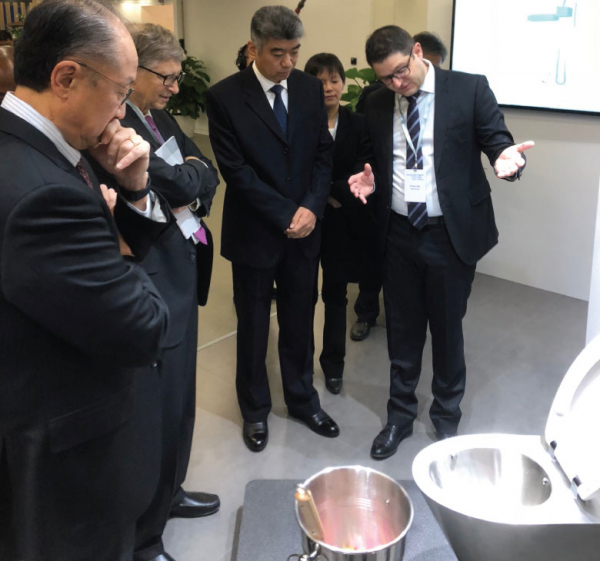
All the magic is hidden from sight. Unlike today’s toilets, the toilets of the future are autonomous. They are tiny processing stations capable of killing pathogens and safely processing waste on their own. Many even convert waste into useful products, like fertilizers for plants and water for handwashing.
They may not be the most exciting inventions in the world, but the toilets of the future will save millions of lives.
Melinda: And they will also improve lives, especially for women. Living without a toilet is hard for everyone, but women and girls suffer the most.
Bill and I met women whose kidneys were damaged because they didn't go to the bathroom at night to avoid the dangers associated with public facilities. We met others who could only relieve themselves in open fields, resulting in them eating less and waiting for darkness to avoid being seen. There is also evidence that girls are more likely to miss school during their periods if there are no decent toilets at school.
If you’re like me, I doubt that toilets are among your favorite topics of conversation. But if you advocate for girls to be able to attend school, women participating more actively in the economy, and being better protected from violence, then we need to muster the courage to talk about toilets.
8. Textbooks are becoming outdated
Software is finally changing the learning process
Bill: I've read enough textbooks in my life. However, this is a very limited way of learning. Even the best text cannot understand which concepts are clear to you and which ones you need help with. And it definitely cannot tell your teacher how well you grasped the previous homework.
But now, thanks to software, the individual textbook is becoming a thing of the past. Imagine studying algebra in high school. Instead of just reading a chapter about solving equations, you watch an engaging online video that shows how it’s done, and then play a game that reinforces the concepts. Then you solve a couple of problems online, and the software generates new questions for a test specifically on the topics that you don’t yet fully understand.
All of this complements the work of teachers, rather than replacing it. Your teacher receives a detailed report on what you’ve read and viewed, which problems you solved correctly, and which ones you struggled with, along with the areas where you need help. By the time you arrive in class, your teacher already has a wealth of specific information and advice to make your time together as effective as possible.
In our previous letters, we discussed this software from a theoretical perspective. Now I am ready to share that such tools are already being used in thousands of classrooms across the U.S., from preschool to high school. Zearn, i-Ready, and LearnZillion are examples of digital textbooks used by students and teachers in the U.S. Over 3,000 schools are teaching through a free digital course. , which I fund. It uses software to provide students with immediate feedback on their written work.
What’s next? The same basic development cycle as for other software: we gather extensive feedback on existing products, collect data on what works well, and improve the products. This cycle is gaining momentum as more states and districts increasingly embrace digital textbooks. I hope this trend inspires more major textbook publishers who are hesitant to offer such tools.
In the meantime, I have yet to hear anyone missing their heavy and expensive textbooks.
Melinda: in addition to the ability to adapt to students' knowledge, these tools also hasten the arrival of a new approach to education that adjusts to what the students themselves represent.
By 2019, a college student is no longer the stereotypical teenager living in a dorm and finishing school after four years with breaks in warm places. Nearly half of today's students are over 25. More than half of them are working. Over a quarter have children of their own.
These "non-traditional" students often lack the time or resources to effectively navigate an ineffective and rigid educational system that wasn't designed for them. This is why two out of five students starting college either take a break or drop out.
Digital translation tools can help students tackle these challenges and make college more accessible, convenient, and effective.
A study found that using open courses allowed students to save on average between $66 and $121 per course. Over an academic year, this can amount to a savings of $1000, which can influence the decision of whether to stay in school or drop out. Another study revealed that students utilizing digital learning for introductory courses achieved better grades compared to those studying the subject in a traditional way. Additionally, the former students had more options. The fact that students do not have to be physically present in a classroom at a set time is significant when they are trying to balance study, work, and family responsibilities.
Putting this together, it turns out that students spend less money on more convenient courses where they achieve better results. In short, we now have the tools to change education to meet the needs of modern students.
9. Mobile phones provide the most benefit to poorer women
Mobile phones give women the opportunity to build an entirely new life
Melinda: in wealthy countries, mobile phones simplify tasks we already perform—sending an email instead of traditional mail, navigating the world without battling with a paper map, hailing a taxi without waiting for a car in the rain. However, for the poorest women, a mobile phone does not just make life easier; it can help them create an entirely new life. Connectivity solves this issue.
If a woman has never been to a bank, mobile banking offers her support in the formal economy and a chance at financial independence. If she is tasked with cooking, cleaning, and taking care of a child, her income can potentially increase as she gains the opportunity to connect with clients, training courses, and professional organizations right from home. If she finds it shameful to buy contraceptives at the local clinic, online shopping delivery can help her regain control over her body and future.
In other words, women not only use mobile phones to access services and opportunities. They use them to challenge social norms and confront power structures that maintain gender inequality.
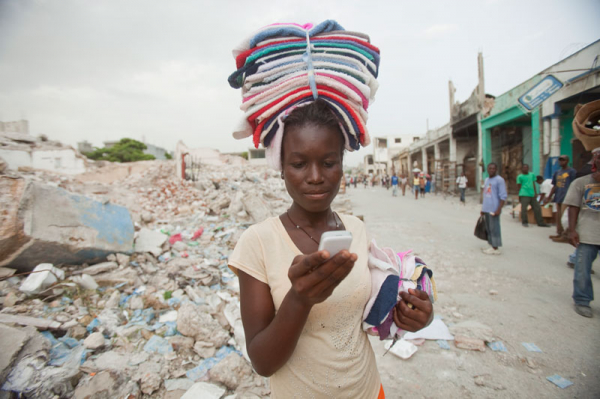
The problem is that the gender gap in mobile phone and mobile internet usage remains significant. A recent study across ten countries in Africa, Asia, and South America revealed that, regardless of age, education, income, or location, the likelihood of a woman using the internet is 40% lower than that of a man.
There are many reasons for this gap. The main ones include cost, literacy (both digital and traditional), and social norms. In response, mobile operators eager to tap into this market are creating business strategies targeted at women. In Kenya and Nigeria, such programs are refocusing efforts on training women in digital literacy. We have partnered with the Harvard Kennedy School initiative to pilot solutions aimed at overcoming barriers related to social norms.
When I think about why it's so important to put more mobile phones in the hands of women, I think of Nikma, a woman I met in Indonesia last October. Nikma told me that for years she struggled to raise her children while earning a living by selling vegetables, but she could never make ends meet. Her situation became even more difficult when she left her abusive husband.
Today, Nikma is among more than a million Indonesians who earn through Go-Jek, a popular mobile platform for rides, food delivery, and other services. The app gives her access to a steady stream of customers and income, and she is paid through a mobile bank, allowing her full control over her earnings. Now she can provide for her children without relying on her abusive husband. With her phone, she has created a network of other women offering services, and together they pool money to support each other in case of emergencies or health issues.
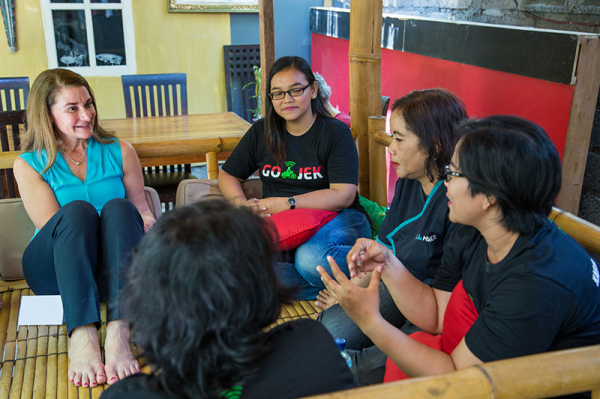
Nickma told me, "Life is like a wheel. Sometimes you're at the bottom, sometimes you're at the top." For women like her, who have spent much of their lives at the very bottom, mobile technology creates new opportunities to fight inequality and rise up. We can help women seize these opportunities by ensuring that inequality does not hinder their access to technology.
And finally,
Recently, we have often been asked whether our vision of the future remains positive. We say: absolutely. One reason is that we believe in the power of innovation. An even greater reason is that we see firsthand that for every challenge described in letters, there are people dedicating their ideas, resources, and even lives to solving them.
When we feel overwhelmed by the news headlines, we remind ourselves that none of us have the right to relax and expect the world to get better on its own. We must push it in that direction ourselves.
In this sense, we have found that optimism can be a powerful call to action. And it has a multiplicative effect: the more optimists work to improve the future, the more reasons there are to be optimistic.

Source: habr.com
