

In the release of Google Chrome 76, the company a problem that allowed websites to track whether a visitor is using incognito mode. Unfortunately, the fix did not resolve the issue. There were two other methods that can still be used to track this mode.

Previously, the capabilities of the Chrome File System API were used for this purpose. In simple terms, if a site could access the API, then the browsing was in regular mode. If not, it was incognito. This was used to view paid articles and bypass paywall systems.
Google changed the mechanism by moving data from disk to RAM. However, this turned out to be insufficient. It was found that Chrome allocates filesystem storage in temporary memory. The maximum volume is 120 MB, which allows for quite accurate tracking of incognito mode activity. Websites have already started using this method.
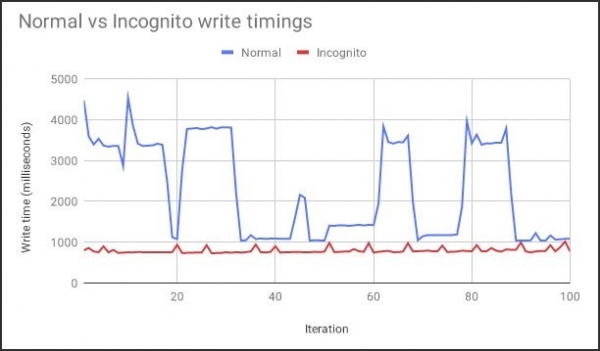
The second method is based on speed. As is known, RAM provides faster data exchange than HDD and SSD, so writing data to the browser's filesystem will be quicker. Based on this, a website can theoretically determine if the browser is in incognito mode. Although tracking speed and calculating differences may take some time.
Google stated that they are working on fixing issues with any other current or future methods of detecting incognito mode. The war continues.
Source: 3dnews.ru
