

More than 100 years ago, scientists were interested in the possibilities of the brain and tried to understand if it was possible to influence it in any way. In 1875, English doctor Richard Caton managed to register a weak electrical field on the surface of the brains of rabbits and monkeys. Since then, there have been many discoveries and studies, but it was not until 1950 that Yale University physiology professor José Manuel Rodríguez Delgado invented the 'Stimosiver' device, which could be implanted in the brain and controlled via radio signals.
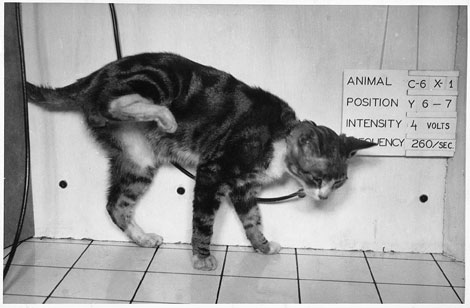
Training was conducted on monkeys and cats. For instance, stimulating a specific area of the brain with an implanted electrode made a cat lift its hind leg. According to Delgado, the animal showed no signs of discomfort during such experiments.
Thirteen years later, the scientist conducted — he implanted stimulators in the brain of a bull and controlled it with a portable transmitter.
Thus began the era of neurointerfaces and technologies capable of enhancing human biological abilities. By 1972, a cochlear implant was released that converted sound into electrical signals, transmitted them to the brain, and effectively allowed people with severe hearing impairments to hear. In 1973, the term 'brain-computer interface' was officially used for the first time. In 1998, scientist Philip Kennedy implanted the first neurointerface in a patient — musician Johnny Ray. After a stroke, Johnny lost the ability to move. However, thanks to the implant, he learned to move the cursor just by imagining the movement of his hands.
Following scientists, major corporations and startups picked up the idea of creating a neurointerface. Facebook and Elon Musk have already announced their intention to develop a system that will help control objects through thought. Some place hope in neurointerfaces — the technology will allow people with disabilities to restore lost functions and improve the rehabilitation of those who have suffered a stroke or traumatic brain injury. Others are skeptical of such developments, believing that their use poses legal and ethical problems.
Nevertheless, there is a sufficient number of major players in the market. If we are to believe , some developments have already been discontinued, but the others are quite popular and available.
What is a neural interface and how can it be useful?
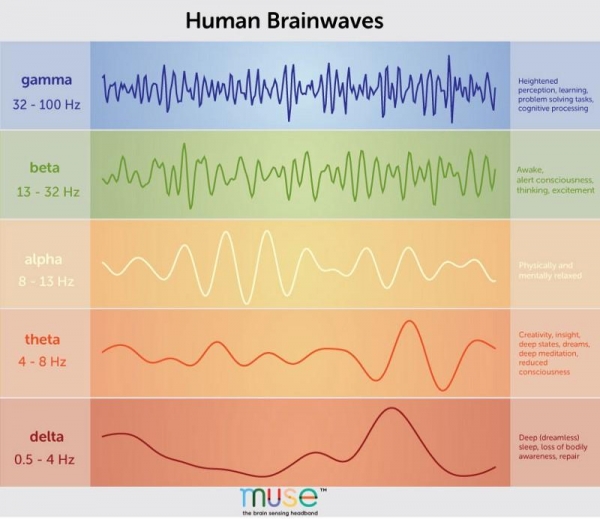
Types of brain waves
A neural interface is a system for exchanging information between the human brain and an electronic device. This technology allows a person to interact with the outside world based on the registration of electrical activity in the brain—electroencephalography (EEG). A person's desire to perform an action is reflected in changes in EEG, which is then interpreted by a computer.
Neural interfaces can be unidirectional or bidirectional. The former either receive signals from the brain or send them, while the latter can send and receive signals simultaneously.
There are several methods for measuring brain signals. They are divided into three types.
- Non-invasive. Sensors are placed on the head to measure the electrical potentials generated by the brain (EEG) and the magnetic field (MEG).
- Semi-invasive. Electrodes are placed on the exposed surface of the brain.
- Invasive. Microelectrodes are placed directly into the cerebral cortex, measuring the activity of a single neuron.
A key feature of the neural interface is that it allows direct connection to the brain. What can this practically provide? For example, neural interfaces can ease or radically change the lives of paralyzed individuals. Some are unable to write, move, or speak. However, their brains are fully functional. A neural interface would allow these individuals to perform specific actions by reading intentions through electrodes connected to the brain.
Another application of the neural interface has been devised by American scientists who developed a cyber-prosthesis capable of enhancing human memory by 30%. The device generates nerve impulses that help the patient form new memories and remember the faces of relatives. It is expected that this development will aid in battling age-related dementia, Alzheimer's disease, and other memory issues.
In addition to health, neurointerfaces can be used for personal development, work, entertainment, and interaction with others. So, what interesting opportunities can neurotechnology offer in these areas?
Self-improvement
Perhaps the most popular application of neurointerfaces and various applications is the development of human abilities. This includes a variety of training programs, mental ability development systems, behavior modification systems, stress prevention systems, ADHD management, and systems for working with psycho-emotional states, and so on. There is even its own term for this kind of activity: 'Brain Fitness.'
What is the essence of the idea? Through numerous studies, certain proven insights have emerged about how specific brain activities correspond to states of human consciousness. Algorithms have been developed to determine levels of attention, concentration, meditation, and mental relaxation. Add to this the ability to read EEG and electromyography (EMG), and we get an understanding of a person's current state.
When a person needs to learn how to evoke a specific psycho-emotional state, they train themselves using a device connected to a neurointerface. There are a large number of EEG visualization programs and psycho-emotional state applications, and we will not describe them all. The training for eliciting the desired state of consciousness is performed using the EEG biofeedback technology.
How does this look in practice? Parents want to improve their child's academic performance and overcome ADHD (Attention Deficit Hyperactivity Disorder). To do this, they use a special program (for example, from ), selecting presets for training necessary states: attention, concentration, relaxation, meditation, and prevention of hyperconcentration. They choose a concentration training program and start it.
The program offers the child a training exercise where they need to keep their Alpha and Beta wave levels above a certain threshold. The waves should not drop below a specified level. Meanwhile, a video material chosen by the parents plays in the program window, such as a favorite cartoon. The child simply watches the cartoon, monitors the Alpha and Beta wave levels, and does nothing else. Then, the BOS comes into play. The child's task is to maintain the Alpha and Beta levels throughout the training session.
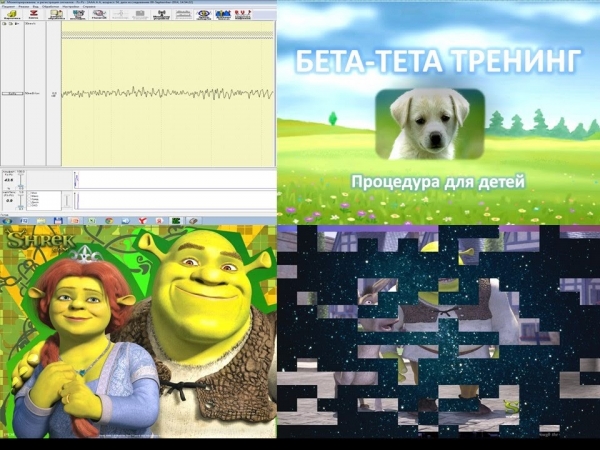
If one of the levels falls below the required threshold, the cartoon stops. In the initial sessions, the child will try to return to the desired state intentionally to watch the cartoon. But after some time, the brain will learn to return to this state automatically when it drops out of it (as long as the cartoon is interesting to the child and the viewing state is 'comfortable' for the brain). As a result, the child develops the ability to invoke the required state of concentration and maintain concentration at a certain level.
It may sound a bit daunting, but don’t rush to panic and call child protective services. There are simpler solutions based on games. For example, by NeuroSky. The player's task is to make the ant push an object towards its anthill. But to keep the ant moving without stopping, the player needs to maintain a certain concentration level above a specific mark on the corresponding scale.
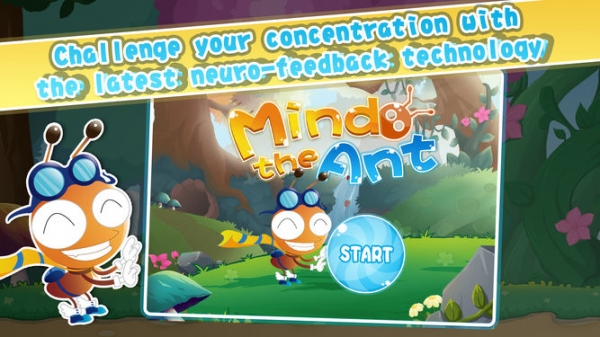
When you focus on the process, the ant pushes the object. As soon as your concentration level drops, the ant stops, and you lose time, worsening your result. The game becomes more challenging with each level as the required concentration level increases. Additionally, more distracting factors come into play.
As a result of regular training, the user develops the ability to maintain a level of concentration and attention on the task at hand, regardless of distracting external or internal factors. It's like in sports; you can't achieve a fit body by visiting the gym a couple of times or eating a can of protein. Research in the field of EEG biofeedback has shown that the results from such training only emerge after 20 days of regular sessions lasting 20 minutes each.
Entertainment

Neuroheadsets also provide opportunities for entertainment. However, all games and recreational applications simultaneously serve as tools for self-development. Playing games through a neurointerface allows you to use the conscious states of your mind to control characters. In doing so, you learn to manage them.
The multiplayer game Throw Trucks With Your Mind made quite a splash at its time. Character control follows the standard first-person shooter scheme, but battling other players can only be done through mental effort. The game's display shows the player’s concentration and meditation parameters.
To throw a box, truck, or any other object from the game environment at an opponent, you must lift it into the air using your mental power and then throw it at the enemy. You can also be hit, so in a skirmish, the one who effectively utilizes their ability to concentrate and meditate wins. Battling real opponents with the power of the mind was quite engaging. More recent games include from MyndPlay.
Manufacturers also offer more tranquil game options. For example, of several popular gaming applications. It’s also worth mentioning the game MyndPlay It's simple: you need to make three shots with a bow and score the maximum number of points. For each shot, you can earn up to 10 points. Using the video sequence, the game immerses you in its environment, after which your character can start aiming at the target. A concentration level indicator appears in the player window. The higher the concentration, the closer the arrow will hit to ten. For the second shot, you need to enter a meditative state to hit the target. In the third shot, concentration will be required again. This is how the game visually demonstrates the interesting possibilities of neurointerfaces.
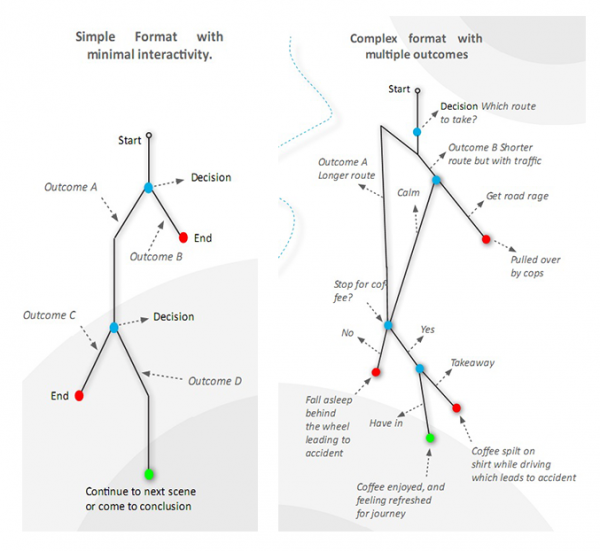
In addition to games, there are interactive neurofilms. Imagine: you sit on the couch, put on the headset, and start an interactive film about skaters. At some point, there comes a moment when the skater accelerates and is about to jump. At this moment, you must become the skater yourself, to focus on the jump and maintain a level of consciousness concentration until the character completes the jump. With sufficient concentration (comparable to real life and the level that will be needed in reality), the skater in the film will successfully make the jump, and the plot will proceed to the next interactive fork. If the concentration was not good, the skater will fall, and the film will follow a different storyline.
Similarly, an action movie has already been filmed The simple and branching logic of plot development
Application in work
In addition to training and entertainment programs, developers have created a large number of applications designed for professional use. For example, there is the MindRec program, which is designed for medical, sports, and general psychologists, as well as psychologists working with representatives of law enforcement.
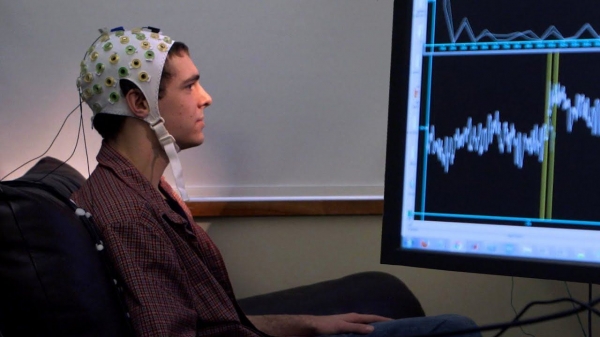
In addition to training and entertainment programs, developers have created a large number of applications intended for professional use. One example is the MindRec program, designed for medical, sports, and general psychologists, as well as psychologists working with representatives of security forces.
How is it used? A person puts on the neuro headset, the psychologist launches the program, and the session begins. During the session, monitoring and recording of the following information is performed in the computer's memory: concentration level, attentiveness, meditation level, raw EEG signal, in several types of visualizations simultaneously, in the range from 0 to 70Hz. Signals are divided by frequency ranges that make up the main signal spectrum. The division is performed into 8 ranges: Delta, Theta, Low Alpha, High Alpha, Low Beta, High Beta, Low Gamma, High Gamma. If necessary, audio and video recording of the patient's actions by the psychologist is done.
The recorded material can be reviewed, showing everything that was displayed in real-time during the session. If the psychologist missed something immediately, they can examine changes in the brain’s wave reactions upon reviewing the session or training, comparing them with audio-visual information. This is a very valuable tool for any specialist in this field.
Another option is neuromarketing. The neuro headset allows for marketing research as it shows a person's emotional response to specific marketing stimuli. This is much more effective because during surveys and questionnaires, people are not always honest in their answers. Neuro research helps to see the real response, honest and impartial. By gathering a focus group and conducting testing with the neuro headset, one can obtain results that closely match reality.
Interaction with external devices
Another interesting direction of work with neuro headsets is the remote control of external devices. Racing games, which allow competition between two, three, or four participants, are quite popular among children. Here is a well-known example of such games:

Do you want to play around with something else? Here are other developments that have also become popular.
Puzzlebox Orbit Helicopter
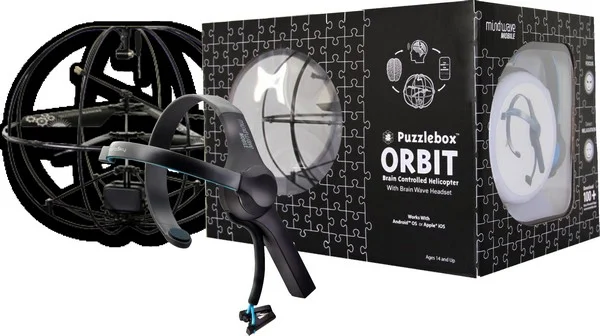
A toy helicopter controlled by thought. The standard version allows you to control the helicopter's altitude, but there are many add-ons that transform this toy into a powerful brain fitness trainer. Overview .
Zen Lamp
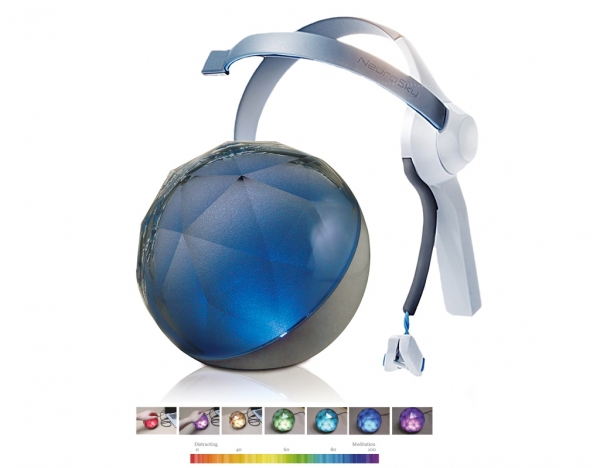
The lamp reflects your psycho-emotional state through the glow of a specific color. Perfect for developing meditation skills.
Force Trainer II
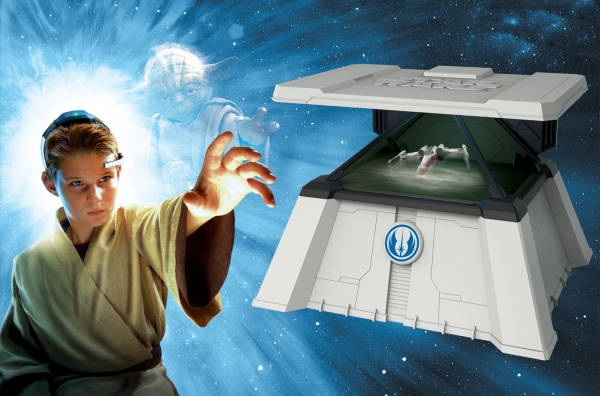
A remarkably amusing device. It creates a holographic image of the gaming environment and objects inside a transparent pyramid. The player uses brain commands to control these objects.
Necomimi

These adorable cat ears became a global hit. The device is fully self-contained and does not require a connection to a computer or smartphone. The user puts on the ears, turns them on, and can express their mood (psycho-emotional state) by moving the ears. By the way, a similar product, , did not become popular even in its homeland, Japan. You can imagine where the headset would have been inserted.
Neuroheadset — a fun gadget or a useful tool?
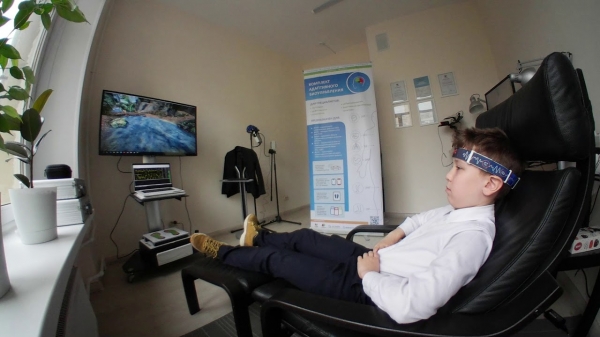
While reading this article, it may seem that neurointerfaces and headsets are mainly designed to entertain or boost one's ego. However, this is far from the case. A neuroheadset, along with the appropriate software, can help develop limbs after severe injuries and reduce the negative effects of traumatic experiences. Thus, scientists are actively using neurotechnology to assist people.
For instance, in 2016, American scientists from Johns Hopkins University created a neurointerface that helps control individual fingers of a biomechanical prosthetic limb. A year later, their Austrian colleagues from Graz University developed a system for composing music using the power of thought. It is designed for musically talented individuals with disabilities.
Experts from the University of California, using a neurointerface, neuromuscular stimulation, and suspension , paralyzed from the waist down, to walk. Brazilian researchers, along with colleagues from the USA, Switzerland, and Germany, were able to partially for patients using a neurointerface, virtual reality, and exoskeleton. There are also developments underway to interact with patients suffering from 'locked-in syndrome'. This technology will help identify such patients, communicate with them, and regain control over their bodies.
Facebook has started working on a non-invasive neurointerface that will allow users to type text without a keyboard. Nissan has developed a 'brain-machine' interface to read thoughts while driving, reducing reaction time. Elon Musk even aims to connect the brain to a computer to prevent a world takeover by artificial intelligence.
Russian companies cannot boast a significant number of achievements in the field of neurotechnology yet. However, recently, Rostec presented a pre-production prototype of a device that will facilitate information exchange between the brain and external devices. The helmet was developed by the Institute of Electronic Control Machines (INEUM) named after I.S. Bruk. It is expected that the neurointerface will allow control of electronic and electromechanical devices: prosthetics, vehicles.
What’s in store for the neurointerface market
According to , the global market for computer interfaces is expected to reach $1.72 billion by 2022. Currently, the primary application area for neurointerfaces is medicine, but entertainment, military, and industrial sectors are also developing rapidly. A neuroheadset for controlling a combat robot is no longer just a sweet fantasy of high-ranking officials, but a fully solvable task.
Due to the fact that neuroheadsets offer an open environment that can be used to create custom software, private neuroprogramming is also evolving. For example, from one of the market leaders, NeuroSky, is available to developers completely free of charge. As a result, more applications using the capabilities of this platform are emerging.
It should be noted that the initiative to widely implement neurointerfaces and brain chips faces not only support but also criticism. On one hand, neurointerfaces could enhance the treatment of traumatic brain injuries, paralysis, epilepsy, or schizophrenia. On the other hand, such technologies could exacerbate social inequality.
There are concerns that there is currently neither legal nor ethical basis for implementing electrodes in healthy individuals. Additionally, the neurointerface could make a person's brain an object that governments, advertisers, hackers, reptilians, and others might want to penetrate, which normal individuals would likely find unsettling. Overall, the neurointerface and headsets could alter human characteristics, impact mental health and behavior as individuals, and distort the perception of people as physiological beings.
It is generally understood that neurotechnologies will continue to evolve. However, predicting when they will become truly accessible and even more effective is impossible.
What else is interesting in the blog
→
→
→
→
→
Source: habr.com
