

It so happens that those manufacturers of solid-state drives who still do not have their own controller development teams but do not want to miss out on the SSD enthusiast market have very little choice today. The only suitable option that allows for the creation of truly high-performance NVMe drives is offered by just one company – Silicon Motion, which is ready to supply comprehensive solutions consisting of its controller and ready-made firmware to anyone interested. There are public basic chips for assembling NVMe drives available from other companies, such as Phison and Realtek, but Silicon Motion has taken the lead in this area by offering partners not only more functional but also significantly faster solutions.
At the same time, among the vast variety of NVMe drives built on Silicon Motion controllers, not all models may be of interest to enthusiasts. This company produces a wide range of chips with fundamentally different performance levels, but only select platforms can provide performance worthy of SSDs for advanced or maximum configurations. In particular, last year we spoke very highly of the SM2262 controller: by the standards of 2018, it indeed appeared quite attractive, allowing drives based on it to compete on equal terms with the best consumer NVMe SSDs from top-tier manufacturers, including Samsung, Western Digital, and Intel.
However, this year the situation has changed somewhat, as leading manufacturers have updated their high-end mass-market models. In response, Silicon Motion has begun offering partners an improved version of last year's controller, the SM2262EN, which also promises performance enhancements – primarily in write speed. Thus, it is the drives based on this chip that should attract buyers today who seek a modern and fast NVMe drive while not wanting to overpay for an A-brand product.
Until recently, not many manufacturers used the new SM2262EN controller in their products. There were essentially two options: ADATA XPG SX8200 Pro and HP EX950. However, now there is a third drive based on this chip – the company Transcend has started production of it. We will get to know this novelty, named Transcend MTE220S, in this review.
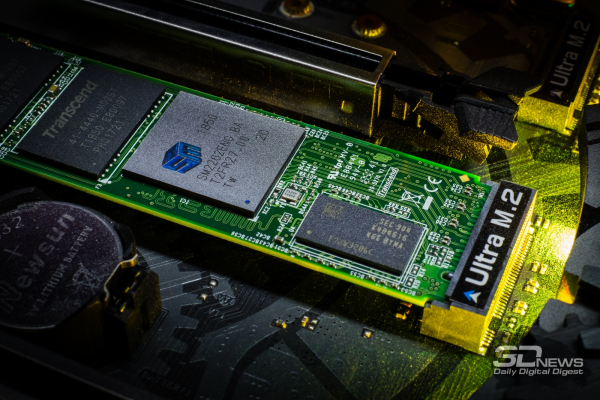
The introduction to this acquaintance is as follows. The HP EX950 is not available in Russia, and did not demonstrate any special advantages in our recent testing, offering performance comparable to drives with the previous SM2262 controller. This means that, despite the emergence of a new version of the Silicon Image controller, we have yet to see any NVMe SSDs that would compete with the new . Whether the Transcend MTE220S will be more interesting compared to the ADATA XPG SX8200 Pro option is what we intend to find out in this review. However, it should be noted right away that even if this SSD does not shine in speed parameters, it may still be quite interesting. After all, Transcend plans to sell it at an amazingly low price — at least low for a full-fledged drive with PCI Express 3.0 x4 interface, DRAM buffer, and three-dimensional TLC memory.
Technical Specifications
We have already discussed what the SM2262EN controller is like when we got acquainted with the ADATA XPG SX8200 Pro. Technically, this chip is built on two ARM Cortex cores, uses an eight-channel interface to manage flash memory, has a DDR3/DDR4 interface for buffering, and supports a PCI Express 3.0 x4 bus with the NVM Express 1.3 protocol. In other words, it is a modern and fully functional solution for NVMe drives, which also has quite decent theoretical performance indicators and supports advanced error correction methods.
The SM2262EN controller was initially introduced back in August 2017, alongside the 'basic' SM2262, but it was presented as its 'advanced' version, with shipments planned to start later. It seems that Silicon Motion intended to hold it back until the market saw the arrival of 96-layer TLC 3D NAND, in order to offer accelerated integrated solutions alongside denser flash memory. However, this plan fell apart due to changing market trends: NAND chips began to rapidly decrease in price, and memory manufacturers decided to delay the implementation of new technologies. Consequently, Silicon Motion became tired of waiting and released the SM2262EN as an update for the SM2262 within a platform aimed at working with 64-layer TLC 3D NAND.
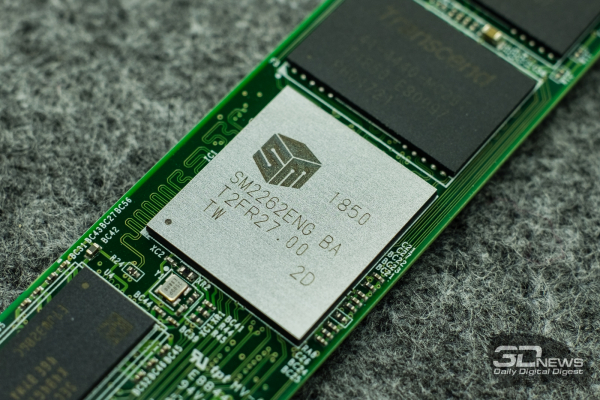
Nevertheless, if we believe the formal specifications, the platform version with the SM2262EN controller still promises performance improvements: up to 9% in sequential reading, up to 58% in sequential writing, up to 14% in random reading, and up to 40% in random writing. However, if one is to trust these figures, it should be done with caution. The developers are quite clear – there are no alterations in the hardware structure of the SM2262EN; it utilizes exactly the same architecture as the standard SM2262. All advantages rely on changes in the software aspect: platforms with the new controller use more sophisticated writing and SLC caching algorithms. In other words, it's an attempt to cut corners, rather than a breakthrough in mechanism operations.
What this means in practice was demonstrated when we tested the ADATA XPG SX8200 Pro based on the SM2262EN controller. This drive proved faster than its predecessor with the SM2262 chip only in benchmarks, offering no significant improvements in real-world performance. However, the story is somewhat different with the Transcend MTE220S. This drive has no close relatives in the model line, making it an entirely new model for Transcend. Given that previously the manufacturer only had entry-level NVMe SSDs in its lineup, the specifications of the MTE220S appear quite impressive.
| Manufacturer | Transcend | ||
| Series | MTE220S | ||
| Model Number | TS256GMTE220S | TS512GMTE220S | TS1TMTE220S |
| Form Factor | M.2 2280 | ||
| The PerformanceResourceTiming | PCI Express 3.0 x4 – NVMe 1.3 | ||
| Capacity, GB | 256 | 512 | 1024 |
| Configuration | |||
| Memory chips: type, interface, process technology, manufacturer | Micron 64-layer 256-Gbit TLC 3D NAND | ||
| Controller | SMI SM2262EN | ||
| Buffer: type, size | DDR3-1866, 256 MB | DDR3-1866, 512 MB | DDR3-1866, 1024 MB |
| Performance | |||
| Max. Sustained Sequential Read Speed, MB/s | 3500 | 3500 | 3500 |
| Max. Sustained Sequential Write Speed, MB/s | 1100 | 2100 | 2800 |
| Max. Random Read Speed (4 KB blocks), IOPS | 210 000 | 210 000 | 360 000 |
| Max. Random Write Speed (4 KB blocks), IOPS | 290 000 | 310 000 | 425 000 |
| Physical Specifications | |||
| Power Consumption: Idle/Read-Write, Watts | N/A | ||
| MTBF (Mean Time Between Failures), million hours | 1,5 | ||
| Write endurance, TB | 260 | 400 | 800 |
| Dimensions: LxWxH, mm | 80 × 22 × 3.5 | ||
| Weight, g | 8 | ||
| Warranty period, years | 5 | ||
Interestingly, the claimed performance of the Transcend MTE220S is somewhat lower than the speeds promised for its similar drive based on the SM2262EN controller by ADATA. This is likely because, although the MTE220S uses the same hardware and software platform, its design differs from the reference model. For its drive, Transcend designed its own printed circuit board, opting to use a more economical 16-bit connection instead of a 32-bit DRAM buffer interface to reduce costs. As a result, the maximum random read and write speeds decrease, which is particularly noticeable in the 512 GB version of the drive.
Nonetheless, SLC caching on the Transcend MTE220S operates exactly the same as on other drives with the SM2262EN controller. The cache uses a dynamic scheme, where part of the TLC memory from the main array is converted to a fast single-bit mode. The cache size is adjusted so that about half of the available flash memory operates in SLC mode. Therefore, at high speeds, the MTE220S can write a data volume approximately equal to one-sixth of the available SSD space, after which the speed will significantly decrease.
This can be illustrated with the following graph, which shows how the performance of sequential write operations changes on an empty 512 GB Transcend MTE220S.
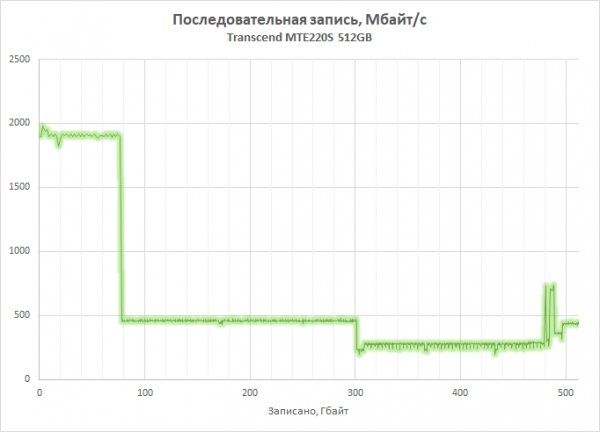
In accelerated mode, when writing occurs in SLC mode, the 512-gigabyte version of the MTE220S delivers performance at a rate of 1.9 GB/s. In TLC mode, the flash memory array operates significantly slower, and after the SLC cache runs out of free space, the speed drops to 460 MB/s. The chart also shows a third speed option of 275 MB/s. This drop in performance during sequential writes occurs when there is no free flash memory left, necessitating the controller to first convert the cells used for the SLC cache back to regular TLC mode to accommodate any additional data. Consequently, the average continuous write speed of the Transcend MTE220S 512 GB from start to finish is about 410 MB/s, and filling this drive with data requires at least 21 minutes. This is not a very optimistic figure— for instance, the Samsung 970 EVO Plus can be completely filled in just 10 minutes.
The SLC cache of the Transcend MTE220S shares the same unique feature that we found in the ADATA XPG SX8200 Pro. Data is not transferred to the regular memory immediately, but only when it is filled more than three-quarters. This allows for increased read speeds when accessing files that have just been written. This feature holds little relevance in practical SSD use but greatly benefits the drive in synthetic benchmarks that practice scenarios like "write—read."
The practical implications can be appreciated in the following graph of random read speeds when accessing a file immediately after its creation, as well as when additional information has been written to the SSD following that file.
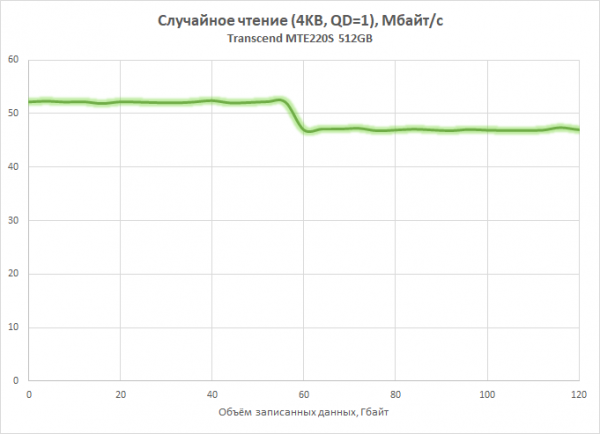
Here, it is very clearly illustrated when the controller moves a test file from the SLC cache to the main flash memory, as the speed of small block reading drops by about 10% at that moment. Users will primarily deal with this reduced speed because there are no algorithms for moving data back from TLC memory to the SLC cache in the Transcend MTE220S firmware, and files can only remain in the SLC cache if the drive is kept free for more than 90 percent during operation.
In other words, the operation with the SLC cache of the Transcend MTE220S is not much different from other drives based on the SM2262EN controller. However, this does not mean that it resembles the ADATA XPG SX8200 Pro in all aspects. The Transcend offer has a significant advantage: higher permitted rewrite volumes according to warranty conditions. Without losing its integrity, the drive can be completely rewritten 800 times, and the 256 GB version can be rewritten more than 1000 times. These declared resource indicators give hope that the MTE220S uses flash memory of the highest quality grade, which means that its actual reliability will satisfy even those users who still regard TLC 3D NAND with considerable distrust.
Appearance and Internal Structure
For a detailed introduction, the Transcend MTE220S model with a capacity of 512 GB was traditionally selected. It did not present any surprises in its appearance; it is a standard drive in the M.2 2280 form factor, operating via the PCI Express 3.0 x4 bus and supporting the NVM Express version 1.3 protocol. However, the packaging design and the included accessories of the MTE220S evoke strong associations with cheap consumer goods. Even the budget bufferless SSD MTE110S was sold in a full box, whereas the considered newcomer, positioned as a higher-level solution, was packaged in a blister that contains nothing but the M.2 board itself. This strongly resembles how microSD cards are marketed and seemingly serves to reduce overhead costs. However, it is hardly the case that anyone still chooses an SSD based on packaging.
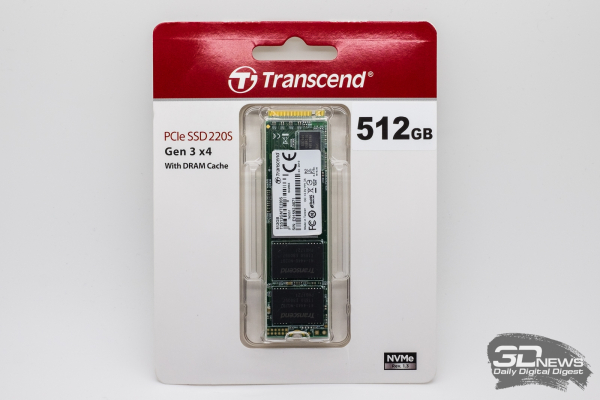
The SSD in question is not particularly striking in appearance. Its design lacks any heat sinks, and the label does not feature a layer of thermally conductive foil. Overall, the Transcend MTE220S has a more OEM-like look than that of a product intended for enthusiasts. This impression is reinforced by the green circuit board, which appears somewhat outdated, and the purely utilitarian label that contains only operational information without any design elements.
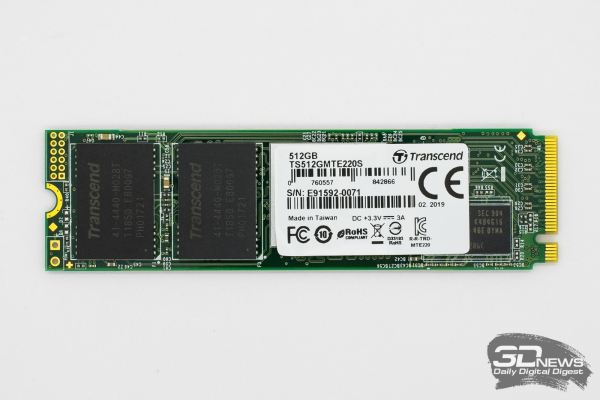
The layout of the MTE220S board cannot be described as typical; it seems that the Transcend engineers modified it for specific purposes. At least, the previously reviewed ADATA XPG SX8200 Pro, despite using a similar hardware platform, looked quite different. However, the new Transcend retains the dual-sided component placement, which means it might not fit in 'low-profile' M.2 slots commonly found in thin laptops.
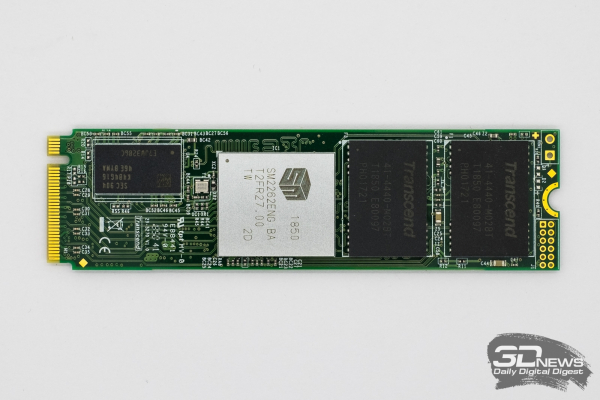 | 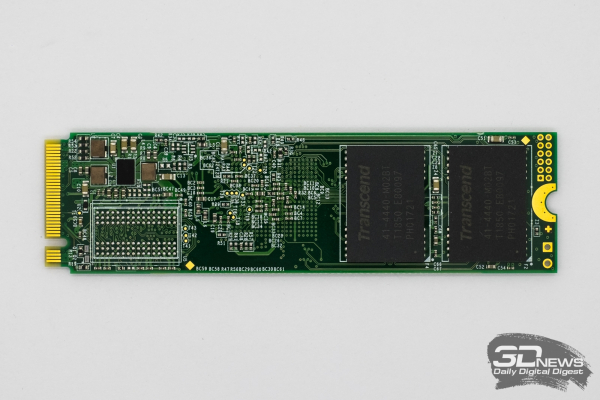 |
The flash memory array on the MTE220S 512 GB consists of four chips branded with Transcend's own markings. It is known that each of these chips contains four 256-gigabit die of second-generation Micron TLC 3D NAND with 64 layers. Transcend purchases this memory from Micron in the form of complete wafers but handles the cutting, testing, and packaging of the silicon chips into packages, allowing them to achieve additional manufacturing cost savings.
Attention should also be drawn to the DDR4-1866 SDRAM chip located next to the base controller chip SM2262EN. It acts as a buffer for storing a copy of the address translation table, but what's important here is that this drive only has one such chip, produced by Samsung, with a capacity of 512 MB. We specifically highlight this because other SSDs with the SM2262EN controller usually have a fast DRAM buffer consisting of a pair of chips each with half the capacity. As a result, in the Transcend MTE220S, the interaction with the DRAM buffer occurs via a 16-bit bus instead of a 32-bit bus, which theoretically could slightly harm performance during small block operations. However, the impact of this factor should not be exaggerated: a 32-bit memory bus is a unique feature of the SM2262/SM2262EN platform, while other SSD controllers use a 16-bit bus for the DRAM buffer and do not suffer from it at all.
Software
To service its in-house produced drives, Transcend offers a special utility called SSD Scope. Its capabilities are almost typical for software products in this class, however, some familiar functions are not supported for some reason.
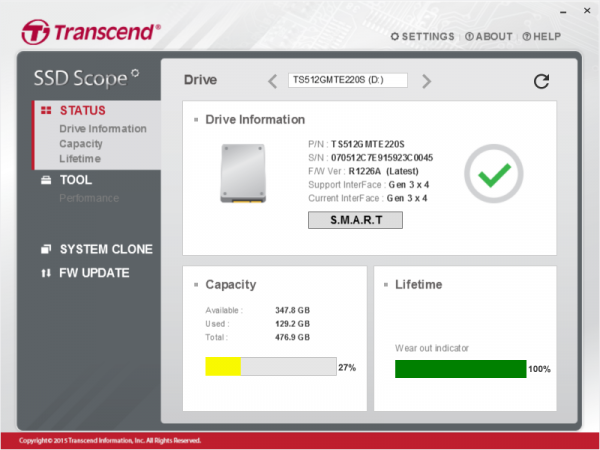 | 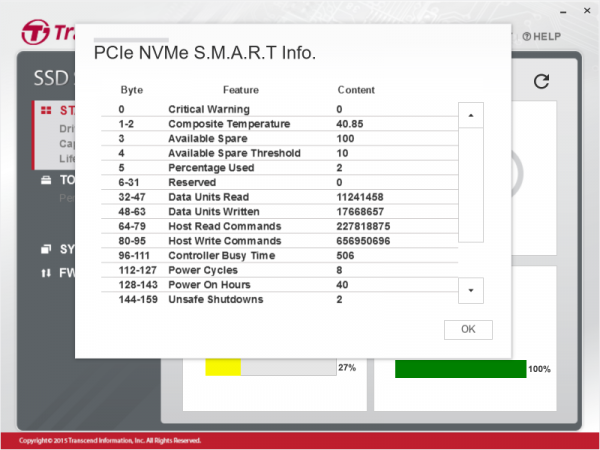 |
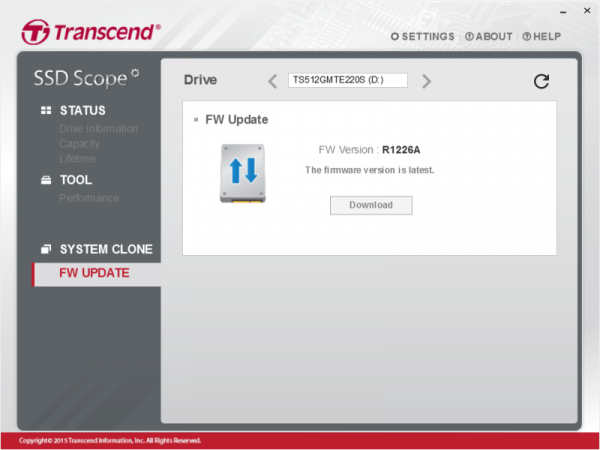
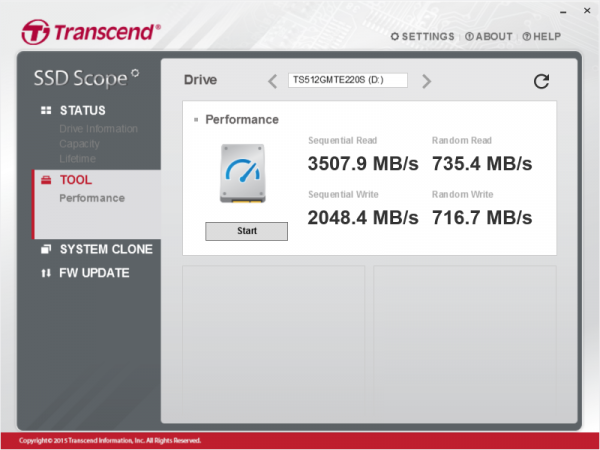
SSD Scope allows users to monitor the overall state of the drive and assess its health by accessing S.M.A.R.T. telemetry. The utility includes simple performance tests, as well as checking the firmware version and the option to update it.
 |  |
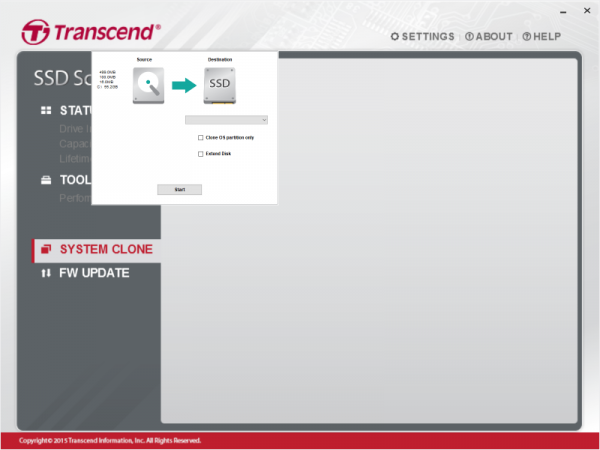
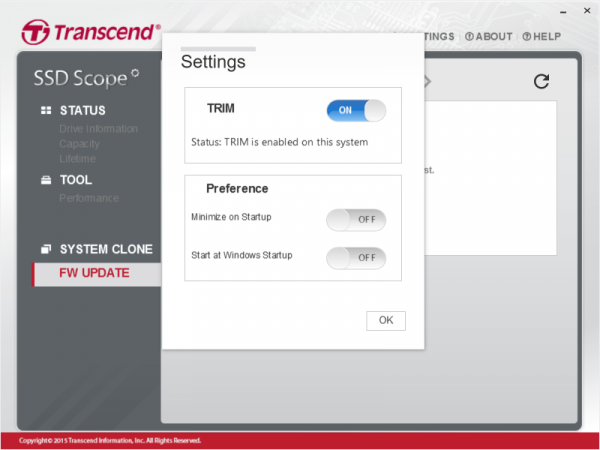
The utility also features a tool for cloning disk contents, which facilitates a quick and painless transfer of the operating system and installed applications to a newly purchased SSD. In addition, SSD Scope is capable of managing TRIM commands to the drive.
 |  |
For SATA drives, SSD Scope can also offer a check of the flash memory array for errors or perform a 'secure erase' procedure on the flash memory. However, for the Transcend MTE220S, neither of these functions works for some reason.
Source: 3dnews.ru
