

Do you remember that the Ryzen 3000 series desktop processors include not only multi-core models with Matisse design and Zen 2 architecture, but also fundamentally different models codenamed Picasso? We haven't forgotten about them either, but we've been avoiding them so far as they didn't seem particularly interesting. However, times are changing: rising prices lead to the fact that quad-core processors like Ryzen 5 3400G and Ryzen 3 3200G, built on Zen+ cores and equipped with integrated RX Vega graphics, could become a very popular option for those looking to build an affordable platform for both gaming and work.
In the past, we tested the predecessor models of AMD's hybrid processors, , and concluded that in their price category, they represent a unique combination of qualities, allowing for a quite acceptable computing and graphics performance "in one package" for a relatively limited financial outlay. The new Ryzen 5 3400G and Ryzen 3 3200G processors are improved versions of these, offering increased performance and slightly lower prices. Therefore, we thought it would be worthwhile to revisit AMD's chips with integrated graphics and check how these more modern offerings compare in today's reality.
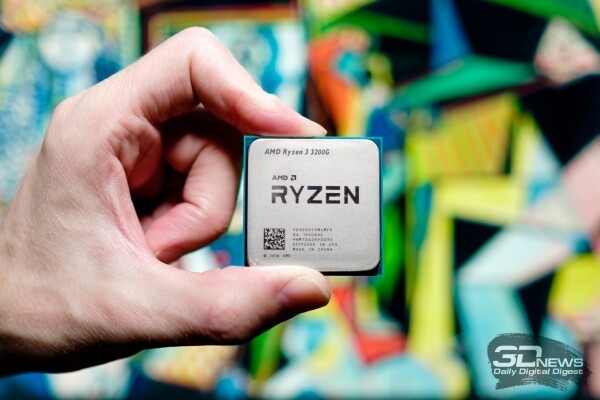
Objectively speaking, Ryzen 5 3400G and Ryzen 3 3200G do not deserve any dismissive attitude. These are two fully-fledged quad-core processors that just three years ago could have been perceived as flagship solutions. Only now, thanks to AMD's active stance in promoting the multi-core paradigm to the masses, have they fallen into the lower price category of processors, but it's important to understand that the software ecosystem has not yet raised the bar for system requirements. Thus, quad-core processors, especially if they support SMT technology, can provide more than sufficient performance for home or office systems.
Although formally, the Ryzen 5 3400G and Ryzen 3 3200G belong to the Ryzen 3000 family, they are actually lower-end processors even compared to The reason lies in the fact that they are manufactured using the old 12nm technology and are based on processor cores from the previous microarchitecture, Zen+. Consequently, the performance per core of the Ryzen 5 3400G and Ryzen 3 3200G is somewhat lower than that of modern AMD processors without integrated graphics. However, when it comes to desktop processors, there are currently no 7nm variants of the Zen 2 architecture with integrated graphics at all. There is also no information about AMD's plans to release any such processors aimed at desktop systems. This, in turn, means that the Ryzen 5 3400G and Ryzen 3 3200G, which we will discuss today, continue to remain unique and relevant products, despite their official debut taking place eight months ago.
Moreover, when comparing the Ryzen 5 3400G and Ryzen 3 3200G with their predecessors from the Raven Ridge family, namely the Ryzen 5 2400G and Ryzen 3 2200G, one cannot help but notice the progress made in specifications. Firstly, AMD has switched the manufacturing process from 14nm to 12nm technology, while also increasing clock speeds and updating the microarchitecture of the processor cores. Secondly, one of the new Picasso processors has a lid soldered to the semiconductor die, which simplifies cooling and expands overclocking capabilities. Lastly, there have been certain adjustments in the pricing policy: the higher model of the Ryzen with integrated graphics has become 12% cheaper with the arrival of the Ryzen 5 3400G.
Detailed analysis of the Ryzen 5 3400G and Ryzen 3 3200G.
From an architectural standpoint, the desktop processors Picasso, including the Ryzen 5 3400G and Ryzen 3 3200G, are based on the same ideas and principles as the Raven Ridge processors. Without getting into specifics, an approximate equality can be placed between the first and second generations of APU in the Ryzen lineup. In other words, the differences introduced by the Zen+ microarchitecture in the Ryzen 5 3400G and Ryzen 3 3200G are quite minor. The performance per core and IPC (instructions executed per clock) differ by about 3%. This gain is primarily due to improvements in the cache and memory controller, which have somewhat lower latencies.
It is worth noting that the processors equipped with integrated graphics by AMD are fundamentally different from regular Ryzen in their internal structure. Firstly, they are based on a monolithic processor die: no chiplets are used in this case. Secondly, both Picasso and Raven Ridge CPUs have all computing cores combined into a single CCX complex, which explains the limitation of their maximum number to four, but guarantees consistent latency when accessing all these cores to the third-level cache. Thirdly, the L3 cache in such processors is reduced to 4 MB.
Like other Ryzen 3000 series processors, the Ryzen 5 3400G and Ryzen 3 3200G are designed to operate within the Socket AM4 ecosystem. They are not only fully compatible with modern motherboards on A320, B450, and X470/570 chipsets but can also work with many older motherboards based on B350 and X370 chipsets. This means that Picasso is perfect for building budget systems – the cheapest platforms can be chosen for them.
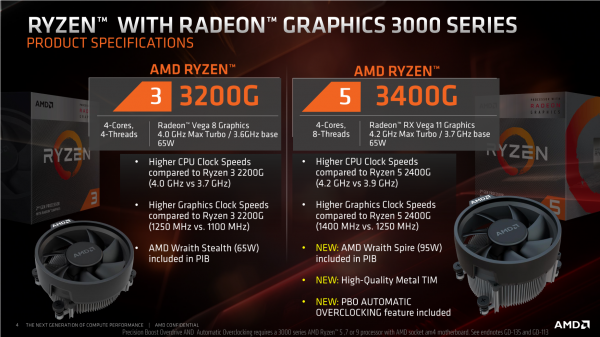
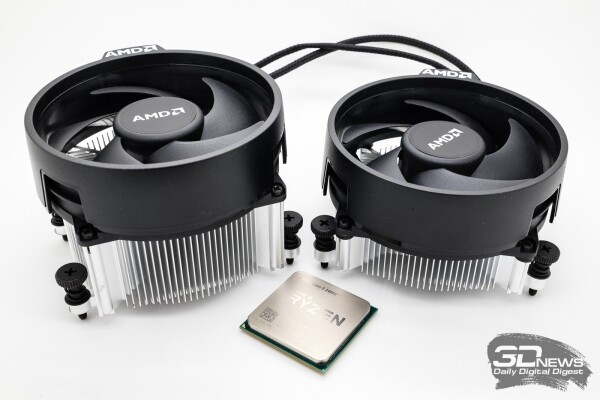
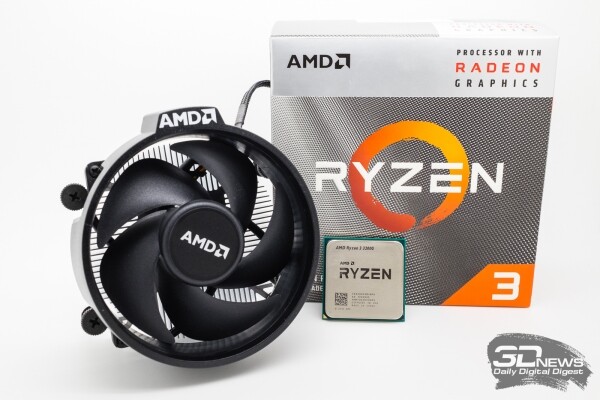
Moreover, the thermal envelope of these processors is limited to 65 watts, meaning they do not impose any special requirements on the power system on the motherboard. This also allows for a simple and inexpensive cooler. For example, the Ryzen 5 3400G, when purchased in the boxed version, comes with the Wraith Spire, while the lower-end Ryzen 3 3200G is supplied with the Wraith Stealth. Both coolers use solid aluminum heatsinks, which are more than adequate for cooling Picasso.
When it comes to the formal specifications of Picasso for desktop systems, the Ryzen 5 3400G and Ryzen 3 3200G stand out against the Ryzen 5 2400G and Ryzen 3 2200G primarily due to slightly increased clock speeds of both the computing cores and the integrated RX Vega family GPU.
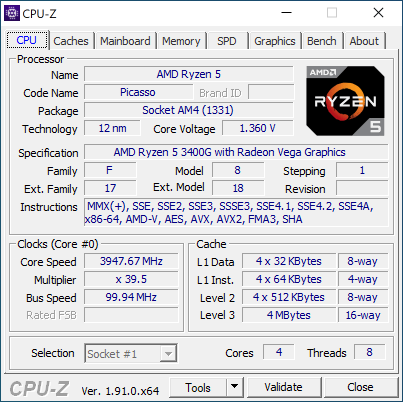 | 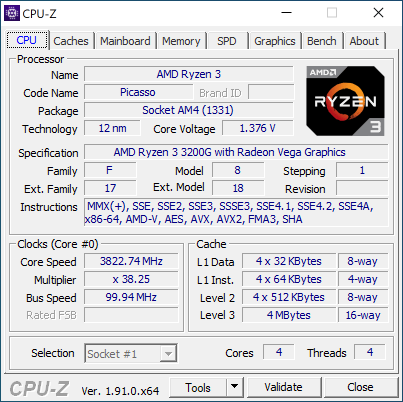 |
The 12nm process technology from GlobalFoundries has allowed the manufacturer to boost the CPU speed by 100-300 MHz and the GPU speed by 150 MHz.
| Ryzen 5 3400G | Ryzen 3 3200G | Ryzen 5 2400G | Ryzen 3 2200G | |
|---|---|---|---|---|
| Codename | Picasso | Picasso | Raven Ridge | Raven Ridge |
| Manufacturing technology, nm | 12 | 12 | 14 | 14 |
| Cores/Threads | 4/8 | 4/4 | 4/8 | 4/4 |
| Base frequency, GHz | 3,7 | 3,6 | 3,6 | 3,5 |
| Turbo mode frequency, GHz | 4,2 | 4,0 | 3,9 | 3,7 |
| Overclocking | There is | There is | There is | There is |
| L3 Cache, MB | 4 | 4 | 4 | 4 |
| Memory support | 2 × DDR4-2933 | 2 × DDR4-2933 | 2 × DDR4-2933 | 2 × DDR4-2933 |
| Integrated graphics | RX Vega 11 | RX Vega 8 | RX Vega 11 | RX Vega 8 |
| Number of stream processors | 704 | 512 | 704 | 512 |
| Graphics core frequency, GHz | 1,4 | 1,25 | 1,25 | 1,1 |
| PCI Express lanes | 8 | 8 | 8 | 8 |
| TDP, W | 65 | 65 | 65 | 65 |
| Socket | Socket AM4 | Socket AM4 | Socket AM4 | Socket AM4 |
| Official price | $149 | $99 | $169 | $99 |
Interestingly, the Ryzen 5 3400G has a starting price that is $20 lower than that of the Ryzen 5 2400G. In stores, this processor indeed costs less than its predecessor, making the Ryzen 5 2400G a less sensible purchase. However, this rule does not apply to the Ryzen 3 3200G, and the Ryzen 3 2200G can now be found slightly cheaper than the newer variant. Nevertheless, AMD has ceased supply of the Raven Ridge series processors, and what is currently on the shelves are remnants that will soon disappear.
Despite the fact that the price of the higher-end processor with integrated graphics has decreased, a notable price gap remains between it and the Ryzen 3 3200G. The higher-end processor costs one and a half times more, which can be justified by its SMT technology and support for twice as many threads, as well as the most powerful integrated graphics core RX Vega with 11 compute units. AMD seems to position the Ryzen 5 3400G as more of a gaming CPU and the Ryzen 3 3200G as more of an office and multimedia processor, although the boundary between them is rather conditional.
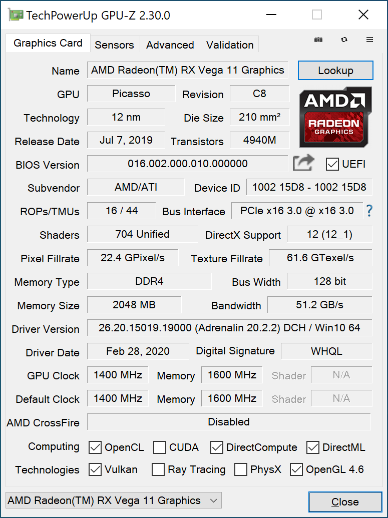 | 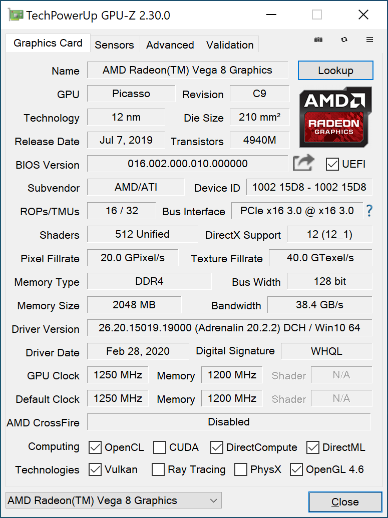 |
While AMD has transitioned the compute cores of the new generation APU to the Zen+ microarchitecture, the graphics part of the Ryzen 5 3400G and Ryzen 3 3200G has remained unchanged compared to what was present in Raven Ridge. This is due to the fact that the performance of the integrated graphics has hit the limits of the memory subsystem's capabilities, and without support for faster memory technologies, achieving tangible speed gains is no longer possible.
However, some new graphics features have been added by AMD in the driver. For example, hybrid processors finally gained support for secure 4K video streaming, which is necessary for the operation of streaming services like Netflix at high resolutions. Additionally, Picasso supports the Radeon Anti-Lag technology, which reduces response delays in gaming environments.
As before, both processors with integrated graphics do not have locked multipliers, meaning they can be overclocked, both the CPU and the GPU parts. DDR4 SDRAM can also be overclocked, but it's important to understand that the memory controller in the Ryzen 5 3400G and Ryzen 3 3200G is not as versatile as in the 7nm Ryzen 3000 series processors, so one shouldn't expect extreme overclocking results. In this regard, it will be more similar to how memory overclocking was handled in the first or second generation Ryzen processors.
However, when comparing to Raven Ridge, it is reasonable to expect better overclocking results from the Ryzen 5 3400G. In this processor, AMD uses a more efficient internal thermal interface under the lid—solder instead of thermal paste, as in its other APUs. Additionally, the Ryzen 5 3400G now supports the Precision Boost Overdrive (PBO) feature, which allows for higher operating frequencies while maintaining a 'one-button' turbo mode. However, it’s worth noting that effective PBO operation requires good CPU cooling.
In addition to what has been said, it should be noted that the desktop versions of Picasso discussed in this material are equivalent to AMD's mobile processors belonging to the 3000 series, released in early 2019. However, due to a more liberal approach to heat dissipation and energy consumption, the Ryzen 5 3400G and Ryzen 3 3200G inherently outperform their laptop counterparts in both computational and graphical aspects. Only the new APUs with Renoir design, which will soon begin to conquer the mobile computer market, will be able to surpass them.
However, this does not indicate the imminent arrival of the next generation of AMD processors with integrated graphics for desktop systems. The Ryzen 5 3400G and Ryzen 3 3200G will be around for quite some time, and there is a logic to this. The Renoir family includes relatively expensive octa-core and hexa-core processors. In budget desktop configurations, which are exactly where processors with integrated graphics are needed, they simply do not fit.
Description of test systems and testing methodology
In many ways, the Ryzen 5 3400G and Ryzen 3 3200G are unique offerings from AMD, with few direct competitors. The thing is, Intel currently has no desktop products with powerful integrated graphics accelerators. Nevertheless, based on price, alternatives to AMD's hybrid processors could be considered both the Core i3 series and the lower-end Core i5 models. In situations where integrated GPU performance in games is not a concern, we compared the Ryzen 5 3400G and Ryzen 3 3200G specifically with these.
For testing the integrated graphics of Picasso in games, we had to call upon entirely different competitors. Naturally, for the sake of formality, we also tested the Core i5-9400 with the UHD Graphics 630 core, but the main alternatives for the Ryzen 5 3400G and Ryzen 3 3200G in such tests were combinations of the Core i3-9100 and budget discrete graphics cards like the GeForce GT 1030. Two versions of these graphics cards were used – equipped with DDR4 and GDDR5 graphics memory. Also participating in the comparison were the predecessors of the Ryzen 5 3400G and Ryzen 3 3200G – the Raven Ridge processors.
Finally, in cases where we tested the Ryzen 5 3400G and Ryzen 3 3200G processors in regular applications or in games with a discrete graphics card, the Ryzen 5 3500X was also added to the list of competitors – one of the most affordable representatives of the Matisse family, which, by the way, currently costs even less than the Ryzen 5 3400G.
In the end, the test systems were formed from the following components:
- Processors:
- AMD Ryzen 5 3500X (Matisse, 6 cores, 3.6-4.1 GHz, 32 MB L3);
- AMD Ryzen 5 3400G (Picasso, 4 cores + SMT, 3.7-4.2 GHz, 4 MB L3);
- AMD Ryzen 5 2400G (Raven Ridge, 4 cores + SMT, 3.6-3.9 GHz, 4 MB L3, Vega 11);
- AMD Ryzen 3 3200G (Picasso, 4 cores, 3.6-4.0 GHz, 4 MB L3);
- AMD Ryzen 3 2200G (Raven Ridge, 4 cores, 3.5-3.7 GHz, 4 MB L3, Vega 8);
- Intel Core i5-9400 (Coffee Lake Refresh, 6 cores, 2.9-4.1 GHz, 9 MB L3);
- Intel Core i3-9350K (Coffee Lake Refresh, 4 cores, 4.0-4.6 GHz, 8 MB L3);
- Intel Core i3-9100 (Coffee Lake Refresh, 4 cores, 3.6-4.2 GHz, 6 MB L3).
- CPU cooler: Noctua NH-U14S.
- Motherboards:
- ASRock X570 Taichi (Socket AM4, AMD X570);
- ASRock X470 Taichi (Socket AM4, AMD X470);
- ASRock Z390 Taichi (LGA1151v2, Intel Z390).
- Memory: 2 × 8 GB DDR4-3200 SDRAM, 16-18-18-36 (Crucial Ballistix Sport LT White BLS2K8G4D32AESCK).
- Graphics Cards:
- MSI GeForce GT 1030 AERO ITX 2G OC (GP108, 1265/6008 MHz, 2 GB GDDR5 64-bit);
- MSI GeForce GT 1030 AERO ITX 2GD4 OC (GP108, 1189/2100 MHz, 2 GB DDR4 64-bit);
- MSI Radeon RX 570 ARMOR 8G OC (Polaris 20 XL, 1268/7000 MHz, 8 GB GDDR5 256-bit).
- Storage Subsystem: Samsung 970 EVO Plus 2TB (MZ-V7S2T0).
- Power Supply: Thermaltake Toughpower DPS G RGB 1000W Titanium (80 Plus Titanium, 1000 W).
In systems with AMD processors, the memory subsystem was configured in DDR4-3200 with XMP latencies (16-18-18-36). In systems with Intel processors, the memory subsystem operated in DDR4-2666 mode with timings of 16-16-16-34, as more speed options are unavailable on most inexpensive LGA1151v2 motherboards built on chipsets other than Z370 or Z390.
Testing was conducted in the Microsoft Windows 10 Pro (v1909) Build 18363.476 operating system using the following driver set:
- AMD Chipset Driver 2.03.12.0657;
- AMD Radeon Software Adrenalin 2020 Edition 20.3.1;
- Intel Chipset Driver 10.1.1.45;
- Intel Graphics Driver 26.20.100.7870;
- NVIDIA GeForce 442.74 Driver.
Comprehensive Benchmarks:
- Futuremark PCMark 10 Professional Edition 2.1.2177 – testing in scenarios Essentials (everyday tasks of an average user: launching applications, internet browsing, video conferencing), Productivity (office work with a text editor and spreadsheets), Digital Content Creation (creating digital content: photo editing, non-linear video editing, rendering, and visualizing 3D models). Hardware acceleration OpenCL was disabled.
- 3DMark Professional Edition 2.11.6846 — testing in Time Spy 1.1 and Fire Strike 1.1 scenes.
Applications:
- 7-zip 19.00 — testing archiving speed. Measures the time taken by the archiver to compress a directory with various files totaling 3.1 GB. Uses the LZMA2 algorithm and maximum compression level.
- Adobe Photoshop CC 2020 21.0.2 — performance testing for graphic image processing. Measures the average time taken to execute the test script Puget Systems Adobe Photoshop CC Benchmark 18.10, simulating typical image processing from a digital camera.
- Adobe Premiere Pro CC 2020 14.0 — performance testing for nonlinear video editing. It measures the rendering time in YouTube 4K format for a project containing HDV 2160p30 footage with various effects applied.
- Blender 2.82a – testing the final rendering speed in one of the popular free packages for creating 3D graphics. It measures the duration to build the final model bmw27 from Blender Benchmark.
- Microsoft Edge 44.18362.449.0 – measuring the browser's speed on standard social network sites, online stores, mapping services, streaming video, and rendering static web pages. A PCMark 10 script is used to model the load.
- Microsoft Excel 2019 16.0.12527.20260 – a script to test performance using PCMark 10, simulating typical user actions in the application;
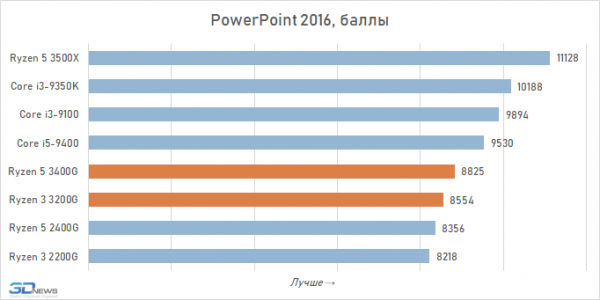
- Microsoft PowerPoint 2019 16.0.12527.20260 – a script to test performance using PCMark 10, simulating typical user actions in the application;
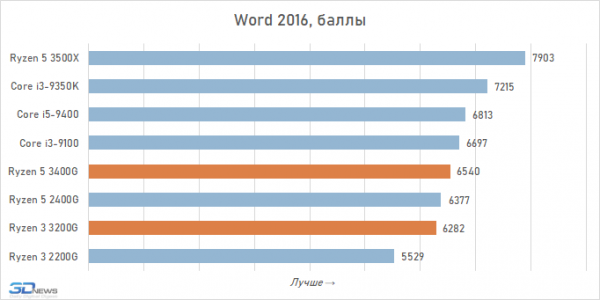
- Microsoft Word 2019 16.0.12527.20260 – a script to test performance using PCMark 10, simulating typical user actions in the application;
- Stockfish 10 – testing the speed of a popular chess engine. It measures the speed of exploring variations in the position "1q6/1r2k1p1/4pp1p/1P1b1P2/3Q4/7P/4B1P1/2R3K1 w."
- x264 r2969 — testing the speed of video transcoding to the promising H.264/AVC format. The performance is evaluated using a source 2160p@24FPS AVC video file with a bitrate of about 42 Mbps.
Games for testing processor performance:
- Assassin’s Creed Odyssey. Resolution 1920 × 1080: Graphics Quality = Medium.
- Far Cry 5. Resolution 1920 × 1080: Graphics Quality = Ultra, HD Textures = Off, Anti-Aliasing = TAA, Motion Blur = On.
- Shadow of the Tomb Raider. Resolution 1920 × 1080: DirectX12, Preset = High, Anti-Aliasing = Off.
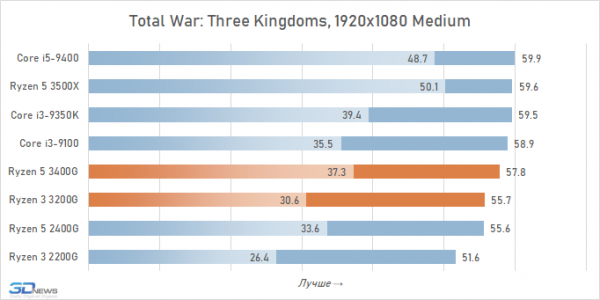
- Total War: Three Kingdoms. Resolution 1920 × 1080: DirectX 12, Quality = Medium, Unit Size = Extreme.
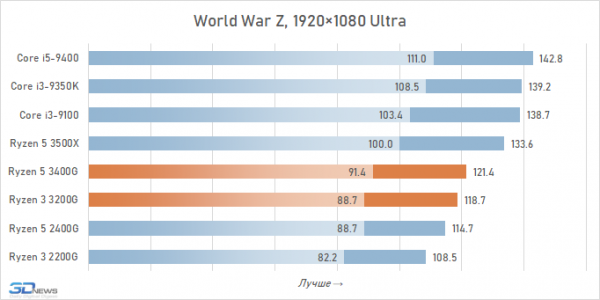
- World War Z. Resolution 1920 × 1080: DirectX11, Visual Quality Preset = Ultra.
Games for testing integrated graphics performance:
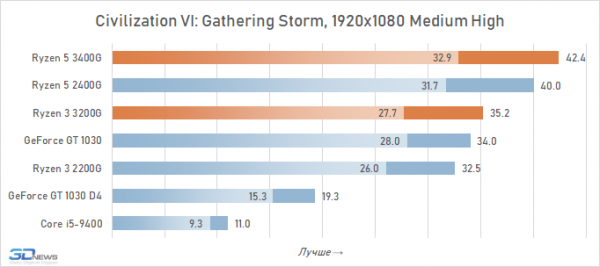
- Civilization VI: Gathering Storm. Resolution 1920 × 1080: DirectX 12, MSAA = Off, Performance Impact = Medium, Memory Impact = Medium.
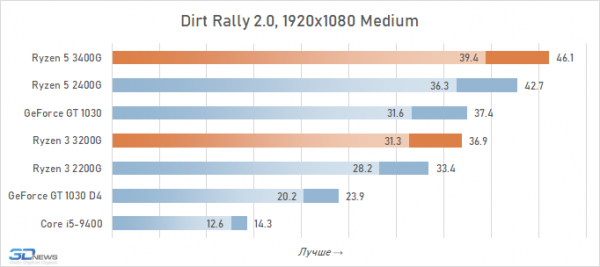
- Dirt Rally 2.0. Resolution 1920 × 1080: Multisampling = Off, Anisotropic Filtering = 16x, TAA = Off, Quality Preset = Medium.
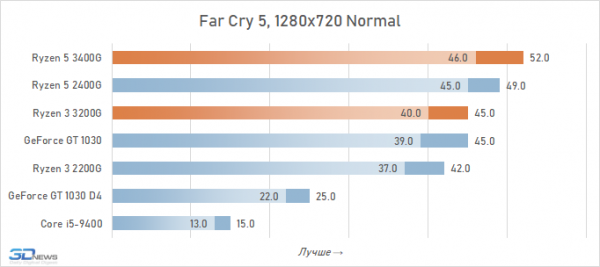
- Far Cry 5. Resolution 1280 × 720: Graphics Quality = Normal, HD Textures = Off, Anti-Aliasing = Off, Motion Blur = On.
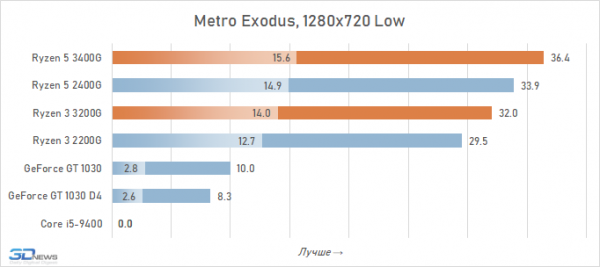
- Metro Exodus. Resolution 1280 × 720: DirectX 12, Quality = Low, Texture Filtering = AF 4X, Motion Blur = Normal, Tesselation = Off, Advanced PhysX = Off, Hairworks = Off, Ray Trace = Off, DLSS = Off.
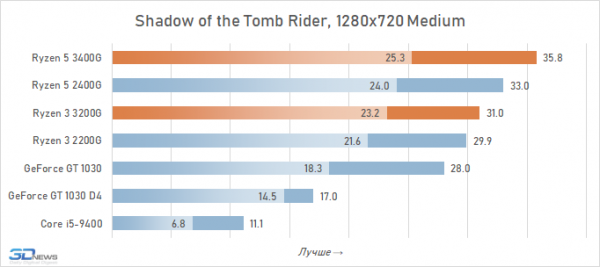
- Shadow of the Tomb Raider. Resolution 1920 × 1080: DirectX12, Preset = Medium, Anti-Aliasing = Off.
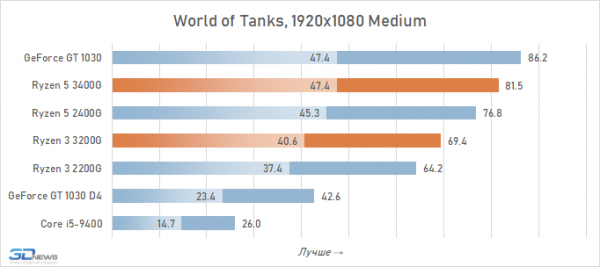
- World of Tanks enCore RT. Resolution 1920 × 1080: Quality Preset = Medium, Antialiasing = Off, Ray Traced Shadows = Off.
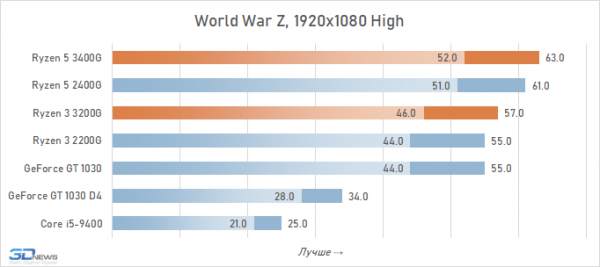
- World War Z. Resolution 1920 × 1080: Vulkan, Visual Quality Preset = High.
In all gaming tests, the results are presented as the average number of frames per second, along with the 0.01 quantile (first percentile) for FPS values. The use of the 0.01 quantile instead of minimum FPS values is aimed at cleaning the results from sudden performance spikes caused by factors not directly related to the performance of the main components of the platform.
Integrated Graphics Performance
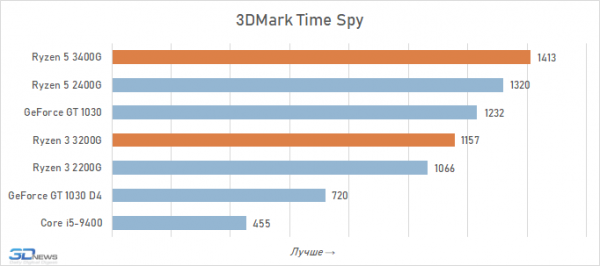
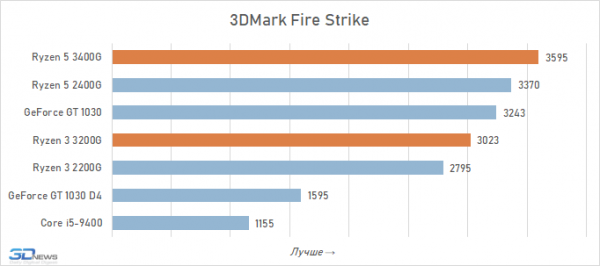
We begin our examination of the Ryzen 5 3400G and Ryzen 3 3200G with gaming tests of the integrated graphics, as this is the most interesting aspect of their performance. The Picasso series processors boast a unique integrated GPU that has quite impressive power, nearly reaching 2 GFLOPS. It even seems that AMD's integrated graphics can be compared to discrete graphics cards in the GeForce GTX 1050 range, but this is, of course, too optimistic an assessment that does not take into account the bandwidth limitations of the memory that significantly hinder the performance of any GPU built into the processor.
In reality, the graphics performance of the Ryzen 5 3400G and Ryzen 3 3200G has remained roughly at the same level as before, when AMD offered processors from the Raven Ridge series. The 12% increase in the frequency of the integrated RX Vega accelerators only provides a 7% advantage in the results of the Ryzen 5 3400G over the Ryzen 5 2400G or the Ryzen 3 3200G over the Ryzen 3 2200G.
However, AMD's integrated graphics have had no competition, and still do not. Intel has not made any changes to its integrated GPUs in recent years, resulting in an even bigger gap between the graphical performance of Picasso and Coffee Lake. Moreover, the graphics cores RX Vega used in the Ryzen 5 3400G and Ryzen 3 3200G compete successfully even with discrete graphics cards at the level of GeForce GT 1030. Tests show that systems built solely on AMD processors with integrated graphics outperform configurations with Core i3 and $80 graphics cards in gaming performance.
In other words, tests clearly indicate that the days when a discrete graphics card was a mandatory component of any gaming system are over. If the budget for the build does not allow spending more than $100 on a graphics card, a more sensible option would be to purchase the Ryzen 5 3400G or Ryzen 3 3200G, which are quite suitable for budget gaming systems. In a large number of less demanding games for graphics performance, they can provide a good level of FPS at Full HD resolution with medium quality settings (without any anti-aliasing), and in graphically intensive games, reducing the resolution to 720p is enough to achieve an acceptable frame rate.
Power Consumption (with Integrated GPU)
Processors with integrated graphics must be energy-efficient. Firstly, such CPUs are often used in compact HTPC-class systems, where there can be serious problems with high-performance cooling. Secondly, the energy efficiency of such processors allows them to be used with inexpensive motherboards, as well as to save on cooling systems and power supply units.
Formally, the Ryzen 5 3400G and Ryzen 3 3200G meet these criteria. Like their predecessors, these processors fit within a 65-watt thermal envelope. The increased clock speeds should not be a concern, as Picasso is manufactured using a more advanced 12nm process compared to Raven Ridge's 14nm.
In practice, however, the power consumption of systems with the Ryzen 5 3400G and Ryzen 3 3200G turned out to be somewhat higher than that of similar systems with the Ryzen 5 2400G and Ryzen 3 2200G. The difference in total consumption reaches 10 W under pure computational load and up to 20 W under mixed load, impacting both CPU and GPU simultaneously, as seen in gaming or specific synthetic load tests like PowerMax.
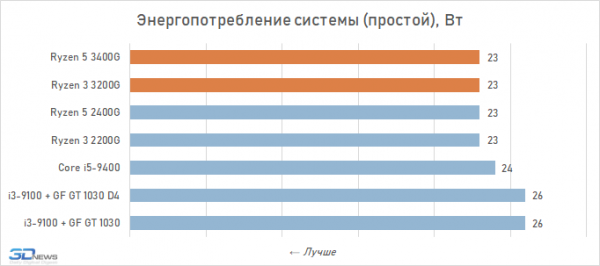
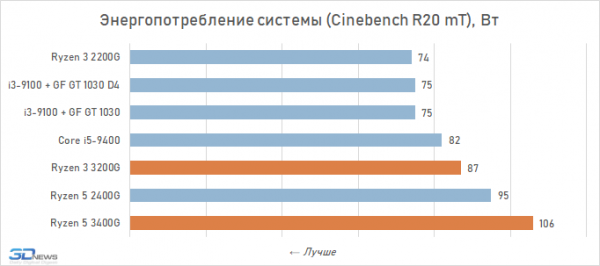
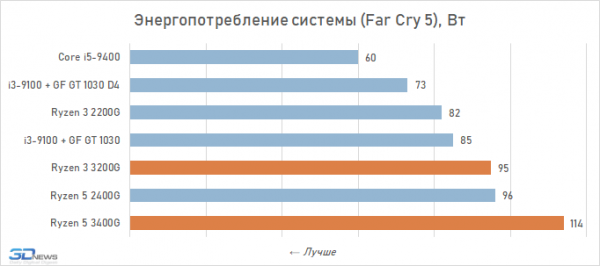
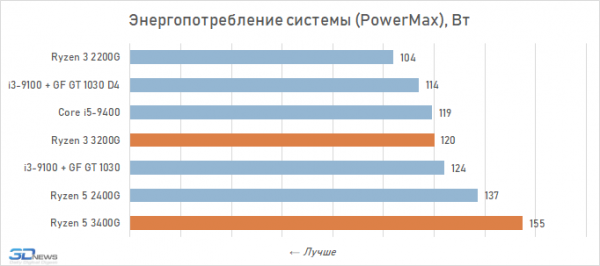
All this raises concerns that the new AMD APU may not have a particularly favorable temperature regime during operation, especially when used with the stock cooler. However, we can dispel such doubts. AMD has addressed this issue, even including the more powerful Wraith Spire cooler with a copper core in the box with the Ryzen 5 3400G.
In practice, the temperature regime of the Ryzen 5 3400G with the stock Wraith Spire cooler appears quite acceptable. Even under maximum load, the processor heats up only to 85 degrees, while the fan speed on the cooler reaches about 2700 RPM.
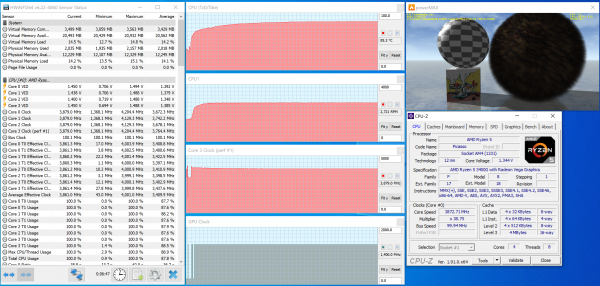
Speaking of the Ryzen 3 3200G, the stock Wraith Stealth cooler handles it well. In the PowerMax load test, the maximum CPU temperature reaches 79 degrees. In this case, the fan speed can also reach up to 2700 RPM.
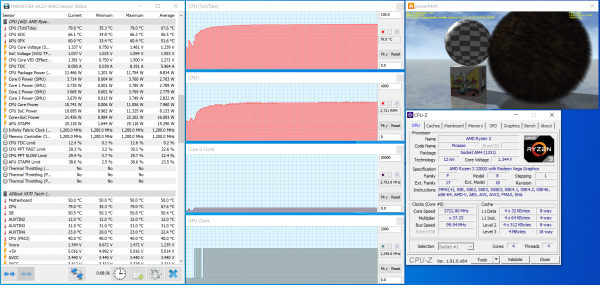
These results clearly show that the cooling systems supplied by AMD with its Picasso family processors can be used without any hesitation. In other words, users can confidently purchase the boxed versions of the Ryzen 5 3400G and Ryzen 3 3200G and use the included cooling systems in their builds, further reducing overall costs for computer construction. The price difference between the boxed and OEM versions of these processors is about 500 rubles, and this amount is certainly justified.
Overclocking
To be honest, we were disappointed with the overclocking of AMD processors. They have long ceased to be overclockable, as the company has learned to utilize almost all available frequency potential in nominal modes. However, the Ryzen 5 3400G and Ryzen 3 3200G are special processors, as they have a graphics core in addition to the computing cores, which can also be overclocked. And, to give you a head start, it should be noted that this is indeed the type of overclocking that can provide a useful effect in this case.
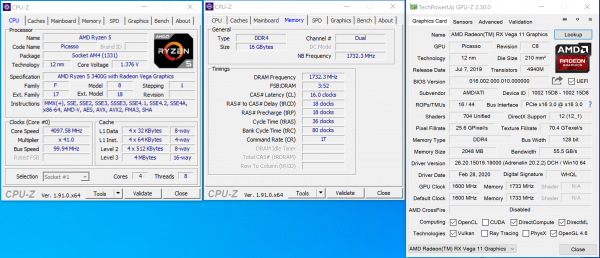
Speaking of the older processor, the Ryzen 5 3400G, experiments with it yielded rather uninspiring results. The computing cores in this APU were able to operate at a maximum frequency of 4.1 GHz with a voltage increase to 1.375 V. The memory was successfully overclocked to DDR4-3466. As for the integrated RX Vega 11 accelerator, it was able to overclock by 15% to 1600 MHz with a voltage increase to 1.2 V.
In contrast, the overclocking procedure for the Ryzen 3 3200G was significantly more successful, especially regarding the performance improvement of the RX Vega 8 graphics core. It was overclocked from a nominal frequency of 1250 MHz to 1800 MHz, which is an impressive 44%. This stable operation at such a frequency was achieved with a voltage increase on the GPU to 1.25 V.
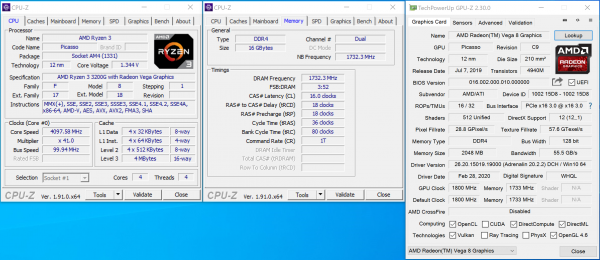
Despite the considerable increase in frequency of the integrated graphics accelerator, the computing cores of the Ryzen 3 3200G were able to operate stably only at a frequency of 4.1 GHz with a voltage increase to 1.35 V.
However, this is not so important. The main point is that overclocking allows the graphics performance of the Ryzen 3 3200G to reach the level of the Ryzen 5 3400G. At least, this is what the 3DMark testing results suggest: the overclocked RX Vega 8 from the lower-end Picasso performs at least as fast as the RX Vega 11 from the Ryzen 5 3400G.
| Ryzen 5 3400G | Ryzen 3 3200G | |||
| Nominal | Overclocking | Nominal | Overclocking | |
| 3DMark Time Spy | 1413 | 1526 | 1157 | 1436 |
| 3DMark Fire Strike | 3595 | 3834 | 3023 | 3615 |
At the same time, the performance gain of the Ryzen 5 3400G when overclocked is much more restrained: it does not exceed 6-8%. Thus, it is reasonable to conclude that advanced users who are familiar with overclocking can quite adequately build entry-level gaming systems around the cheaper Ryzen 3 3200G. After appropriate tweaking, its gaming performance can be elevated to the level of its older sibling.
Performance in comprehensive benchmarks
Further testing of the Ryzen 5 3400G and Ryzen 3 3200G was conducted using an external high-performance graphics card. This, on one hand, puts the tested CPUs on equal footing in tasks where graphics don't play a primary role. On the other hand, we will gain insight into how well the Picasso performs when it relies on a discrete graphics card instead of its integrated graphics. Such a scenario is quite realistic, for example, if a user decides to upgrade an existing system or, for instance, if they are attracted by the low price of the Ryzen 3 3200G, which often costs even less than the Core i3-9100F.
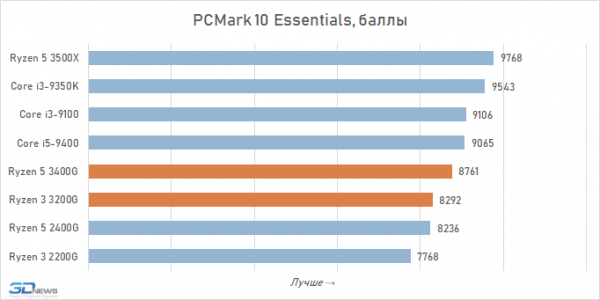
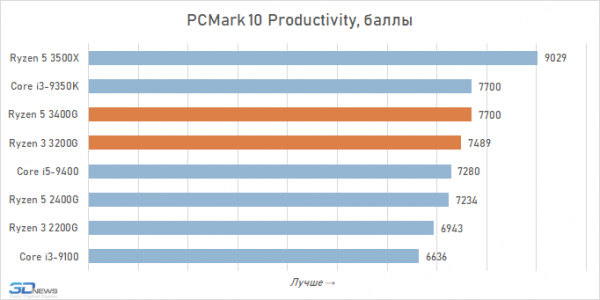
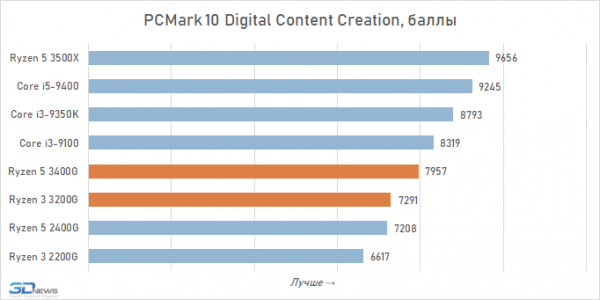
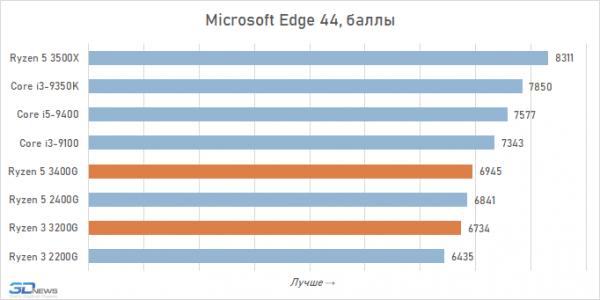
However, the results of Futuremark PCMark 10 show that in typical everyday tasks, the Picasso processors lag significantly behind their performance in gaming benchmarks with integrated graphics. They can only offer decent results compared to modern four-core Core i3 CPUs in the Productivity scenario, which evaluates the performance of typical operations in LibreOffice Writer and LibreOffice Calc.
In other words, the microarchitecture of the Zen+ cores appears rather pale against Zen 2 and Skylake. AMD clearly needs to consider the necessity of updating its processors with integrated graphics and transitioning them to a newer microarchitecture.
Performance in applications
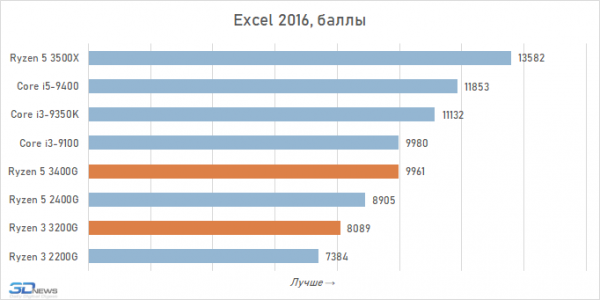
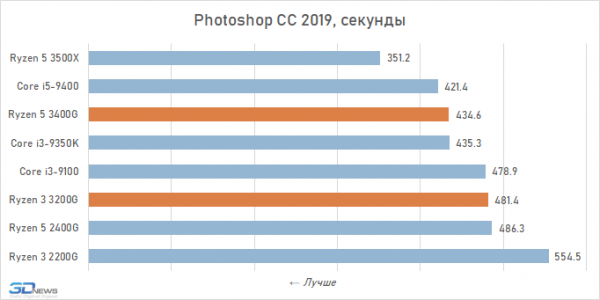
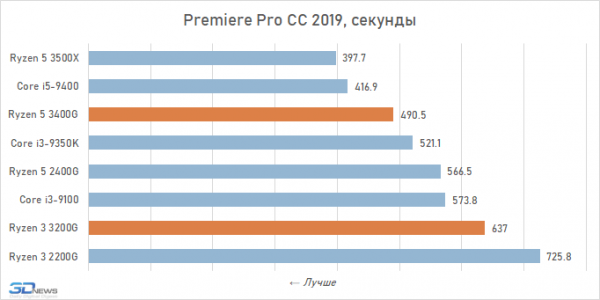
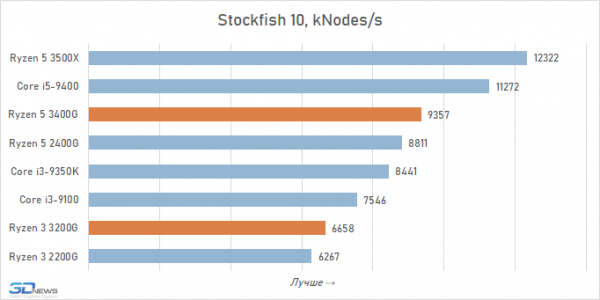
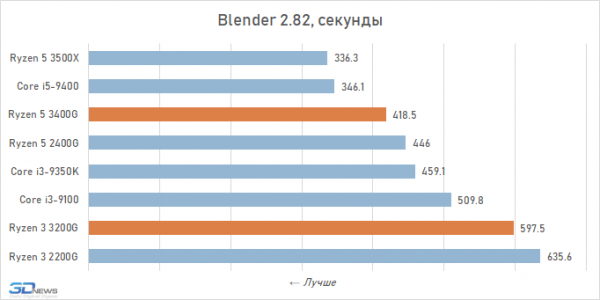
The transition of AMD's APU to the Picasso design was marked by a slight increase in clock speeds and a small rise in IPC incorporated into the Zen+ microarchitecture. In total, this improved the performance of the new hybrid processors compared to their predecessors by 5-10%. However, this is not enough for the Ryzen 5 3400G and Ryzen 3 3200G to match the performance in applications with similarly priced Intel processors. For instance, the six-core Core i5-9400 performs noticeably better in tests than the four-core and eight-threaded Ryzen 5 3400G, while the four-core Core i3-9100 surpasses the Ryzen 3 3200G. In fact, one could say that the older Ryzen 5 3400G provides computational performance on par with higher-end Core i3 CPUs, while the Ryzen 3 3200G is forced to compete in a lower division.
However, in cases where computational performance is really important, AMD has other players. The six-core Ryzen 5 3500X and 3500 are two processors from the Zen 2 family that are even cheaper than the Ryzen 5 3400G, but they perform significantly better in terms of pure CPU speed.
Office Activity:
Archiving:
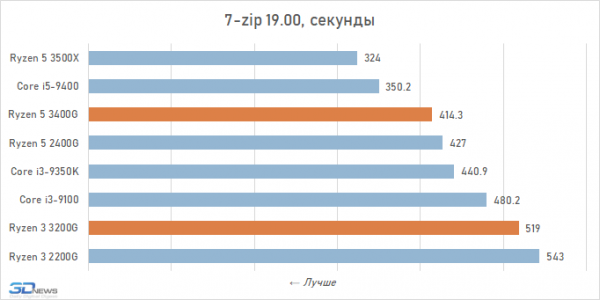
Video Encoding:
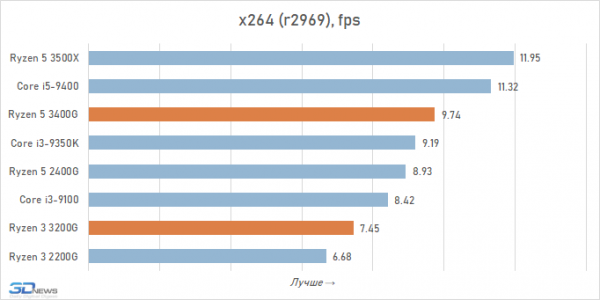
Image Processing:
Video Editing and Montage:
Chess:
Rendering:
Internet:
Gaming Performance (with discrete GPU)
It should be noted right away that Picasso processors are not designed by the manufacturer to work with external graphics accelerators. Yes, such use is possible, but one will have to deal with certain limitations that are evident even at the specifications level. Thus, the Ryzen 5 3400G and Ryzen 3 3200G can interact with a discrete graphics card only through eight PCI Express lanes, and this refers to the third, not the fourth version of the protocol.
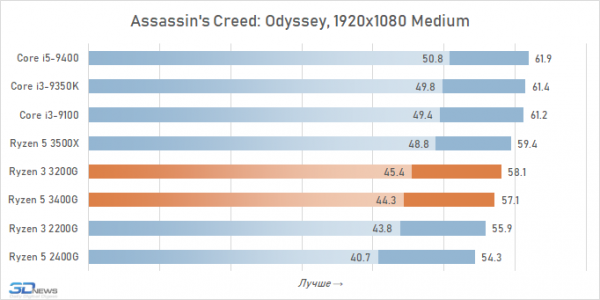
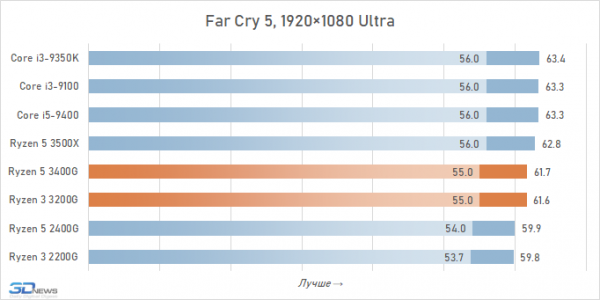
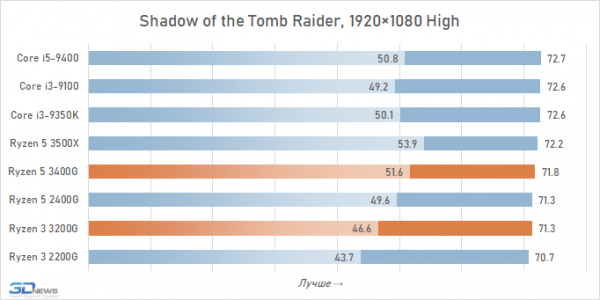
The fact that Picasso processors are not particularly suitable for high-performance gaming systems is also due to the weaknesses of the Zen+ microarchitecture and the reduced L3 cache in these processors. In other words, equipping systems based on the Ryzen 5 3400G and Ryzen 3 3200G with a full-fledged high-class graphics card is not a very promising scenario. After all, in systems with discrete graphics, other representatives of the Ryzen 3000 series based on the Zen 2 microarchitecture, such as the Ryzen 5 3500X, which, as we already mentioned, is even cheaper than the Ryzen 5 3400G, look significantly better.
Nevertheless, all of this does not mean that using the Ryzen 5 3400G and Ryzen 3 3200G with discrete graphics is strictly contraindicated. To demonstrate this with a specific example, we tested gaming performance with the Radeon RX 570 8 GB graphics card—a common option for upgrading a budget configuration often used by owners of processors in this class. And as the results show, the power of the Ryzen 5 3400G and Ryzen 3 3200G is sufficient in most cases for the gaming system with them to lag behind configurations based on Core i3 or Ryzen 5 only slightly.
In other words, buying one of the Picasso models first, using the system based on it with the integrated GPU, and then adding a mid-range graphics card to the build is quite a reasonable plan. However, in systems that are originally designed to work with discrete GPUs, using the Ryzen 5 3400G and Ryzen 3 3200G processors is not advisable.
Conclusions
AMD desktop processors with integrated graphics, whether from the previous Raven Ridge series or the newer Picasso, should not be considered a universal product. The manufacturer designed such solutions with a specific purpose - to provide users with a highly integrated chip that allows them to build budget gaming computers and multimedia centers with relatively low financial costs. The Ryzen 5 3400G and Ryzen 3 3200G handle these tasks excellently: in their relevant market niche, they appear not just confidently, but a head above all other alternatives.
AMD promises that the graphical performance of the Ryzen 5 3400G and Ryzen 3 3200G will be sufficient to achieve acceptable frame rates in games at Full HD resolution with basic image quality. And to some extent, this is true: if we disregard the most demanding games, the Picasso chips indeed demonstrate an impressively high level of FPS for integrated graphics. However, in 'heavy' modern shooters, it will still be necessary to drop the resolution to 1280 × 720, which, however, does not negate the 'proficiency' of the integrated RX Vega graphics for use in entry-level gaming systems.
Moreover, the existence of the Ryzen 5 3400G and Ryzen 3 3200G effectively renders entry-level discrete graphics cards pointless. Even the RX Vega 8 option from the lower Picasso series turns out to be generally more powerful than an $80 discrete NVIDIA graphics card with GDDR5 memory. Therefore, when it comes to entry-level gaming configurations, AMD, through hybrid processors, not only managed to knock Intel out, but also dealt a painful blow to NVIDIA by offering an affordable integrated solution that performs at least as well as a combination of a Core i3 processor and a GeForce GT 1030 graphics card.
While the previous generation of 'red' APUs, namely the Ryzen 5 2400G and Ryzen 3 2200G, could handle these tasks, the updated Picasso series models have improved in many areas. The new Ryzen 5 3400G and Ryzen 3 3200G offer enhanced performance thanks to increased clock speeds and the Zen+ microarchitecture, while the higher model has also become cheaper and features a more advanced cooling system with solder instead of paste under the cover.
However, it is fair to mention that all these improvements are not qualitative, and thus Picasso inherits many shortcomings from its predecessors. Their main downside is the processor cores, which have relatively low computational performance by modern standards. For configurations where a discrete graphics card is planned from the start, it makes more sense to choose other processors, such as the six-core Ryzen 5 3500X from the Zen 2 generation.
At the same time, upgrading systems based on the Ryzen 5 3400G and Ryzen 3 3200G by adding a mid-range graphics card is also a viable scenario. Tests show that with graphics like the Radeon RX 570 (or GeForce GT 1060/1650), they represent a well-balanced configuration that only lags behind similar builds based on Ryzen 5 with Zen 2 architecture or Core i3 in specific games.
Lastly, it's worth noting that among the Ryzen 5 3400G and Ryzen 3 3200G reviewed today, the latter seems more appealing to the average user. This processor is one and a half times cheaper than its older counterpart but, when using the integrated graphics core, its gaming performance is only 10-15% lower, which can be fully compensated for via overclocking. The pricier Ryzen 5 3400G is mainly interesting for its SMT support and better computational performance, which matters for work tasks but is unlikely to be demanded in gaming applications.
Source: 3dnews.ru
