

For two years now, 3DNews has featured the 'Computer of the Month' segment, where we explore the optimal hardware configuration based on buyer demands and wallet thickness. However, our website has been around since 1997, and back then, we had yet to invent the concept of a 'computer of the month.' What if we mentally transported ourselves twenty years back into the distant past of the IT industry (not necessarily to the very beginning of 3DNews, but let’s say two decades ago) and imagined what combination of devices was possible back then? Under one condition — we won’t limit ourselves by financial constraints and will assemble a computer constrained only by our imagination, as long as the hardware stays true to that era. Then, we will check how capable that dream system was in the most demanding games of the millennium's turn, as our goal is to create a no-compromise gaming PC.
Single-processor platform on Pentium III
When choosing a computer based on the standards of 1999–2000, one can go in one of two directions, opting for an Intel platform with a Pentium III central processor or an AMD alternative with a CPU Athlon. The IT archeologist faces a tough choice, as both architectures were equally good at the time for building a powerful gaming computer. Additionally, AMD chips based on the Thunderbird core had an advantage with motherboards supporting DDR SDRAM memory. The most informed readers might notice that there are motherboards available for Pentium III as well, featuring DDR or even RDRAM slots, but even to this day, such options are exotic and hard to find for sale. Regardless, we chose the Pentium III, primarily for sentimental reasons, as it was precisely in 2000 that Intel bet on the new NetBurst architecture and Pentium 4 chips. Thus, the later releases of Pentium III marked the end of an entire era, while Athlon on the K7 architecture continued to thrive.
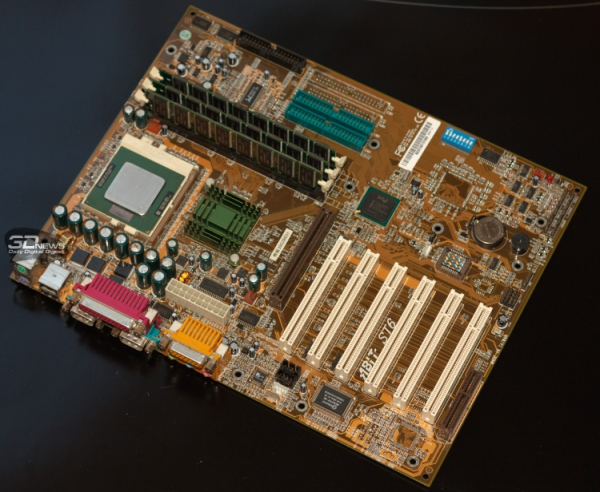
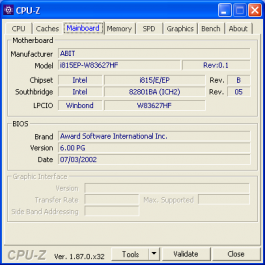
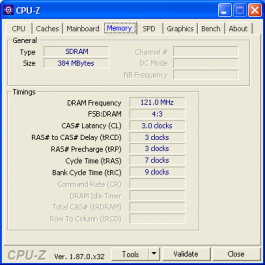
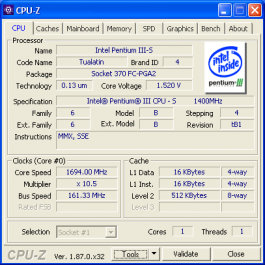
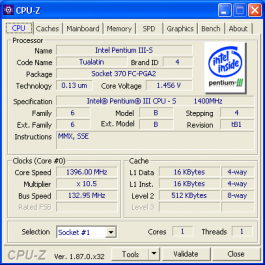
After settling the question of the platform, we need to decide on a specific CPU modification. If we are not going to stray from the round date of "20 years ago" and are adhering strictly to the timeline of 1999, the choice narrows down to one of the models based on the Coppermine core. However, let's broaden the constraints of the task. What if we push the Pentium III platform to its limits? Then the choice of CPU is obvious — it's the Pentium III-S on the Tualatin core with a standard frequency of 1.43 GHz! And we have a fitting motherboard — the Abit ST6 on the Intel 815EP chipset. Long-time users remember that this is one of the best boards for overclocking the Pentium III, so we took the opportunity to boost the CPU to 1.68 GHz. The RAM slots were filled with three PC-133 modules totaling 384 MB — the board can handle twice that amount of memory, but there is no need for that in gaming tests.
|  |  |
The Abit ST6 motherboard lacks an integrated network card, as having a computer without internet access was quite normal back then. A suitable adapter from 3Com, the 3C905B-TX with a standard speed of 100 Mbps, solved this issue. However, in terms of the disk subsystem, we cheated a bit and connected an SSD via the PROMISE Technology SATA300 TX2Plus controller: the loading speed of the OS and applications from an IDE disk is not the kind of experience one wants to have decades later.
Dual-Processor Platform on Pentium III
The Abit ST6 motherboard and the overclocked Pentium III-S — such a computer was something most of us could only dream of 20 years ago. But as time has shown, we should have been dreaming about a dual-core system. Of course, most software for home PCs, not to mention games, at that time could not utilize two CPUs, but the hardware had that capability, and now we've taken advantage of it.
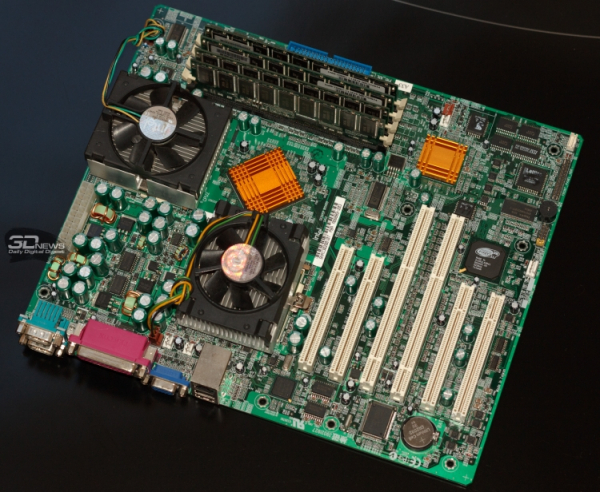
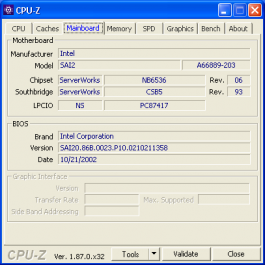
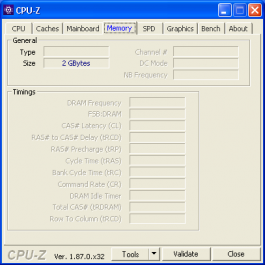
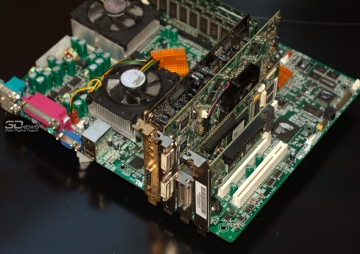
Originally, this article planned to feature a dual-socket motherboard, the ASUS CUV4X-DL — officially, it is not compatible with Tualatin chips, but it can accommodate two Pentium III-S processors after modifying the sockets (or with the help of adapters). Unfortunately, our unit turned out to be half-dead, but a suitable replacement came in the form of the Intel SAI2 on the ServerWorks ServerSet III LE chipset. Moreover, this board allowed for 2 GB of RAM thanks to four registered PC-133 modules. Agree, this configuration already looks quite modern, especially with an SSD drive.
| | |
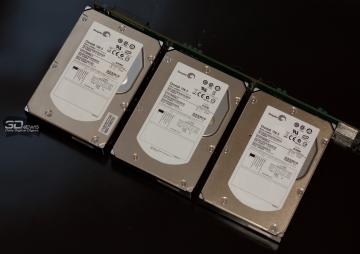
This platform has one critical flaw — the absence of an AGP slot, significantly limiting the choice of graphics cards for the dual-headed Pentium III-S compared to the Abit ST6. Fortunately, the SAI2 board features not only standard 32-bit PCI slots but also two 64-bit PCI-X slots for which suitable graphics cards are available. One of them was occupied by an Adaptec ASR-2230SLP/256 RAID controller for the Ultra-320 SCSI bus, and we built a RAID-0 array using three Seagate Cheetah 15K.5 hard drives spinning at 15,000 RPM. Certainly, even a three-drive array of 15K server drives cannot compete with an SSD; however, in terms of boot speed and software installation, RAID offers tremendous advantages over a single hard drive.
| |
Graphics Cards
In selecting graphics cards for the test, we focused more on a specific level of technology rather than strict timelines. The Pentium III-S processor running at 1.43 GHz debuted in 2002; it wasn't long before the release of the GeForce 3 and Radeon 8500. However, programmable shaders represent a significant watershed moment in the history of GPUs, and we decided to stop here. On the other hand, graphics cards from the era before the term Graphics Processing Unit (coined by NVIDIA specifically for the GeForce 256) was common, are hardly suitable for a dream build on the top-tier Pentium III. The best companion for such a system — both in chronological proximity and historical significance — would be one of the early models with hardware T&L: either the NVIDIA GeForce 256 or the ATi Radeon DDR.
The GeForce 256 needs no introduction — it is the first member of the GeForce family, based on the NV10 processor. The massive transistor budget at the time (17 million with a 220 nm process) allowed NVIDIA to integrate a geometric block into the GPU that performs polygon transformation and lighting. However, the potential of this function was fully realized only in the following iterations of the architecture when the performance of the central processor no longer allowed it to service the GPU effectively, which lacked hardware T&L.
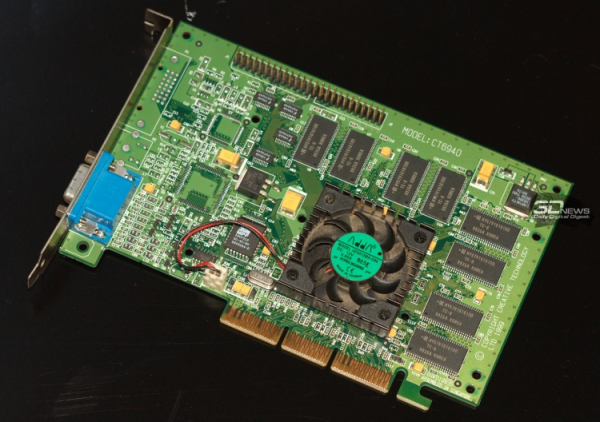
An equally important event for 3D accelerators was the shift from the outdated SDRAM standard to the progressive DDR SDRAM, which allowed the GPU to double the bandwidth of the frame buffer. NVIDIA introduced a graphics card based on NV10 with DDR chips shortly after the release of the original GeForce 256, but instead, we chose the next model — GeForce 2 GTS. It differs from GeForce 256 not only in the type of memory but also in the doubled number of texture mapping units. Additionally, the GeForce 2 GTS features early pixel shader capabilities, which, of course, were completely ignored by game developers at the time. Overall, the GeForce 2 GTS is merely a continuation of the ideas laid out in the GeForce 256.
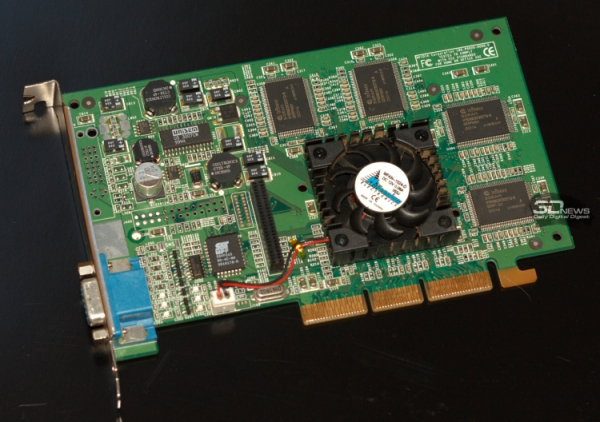
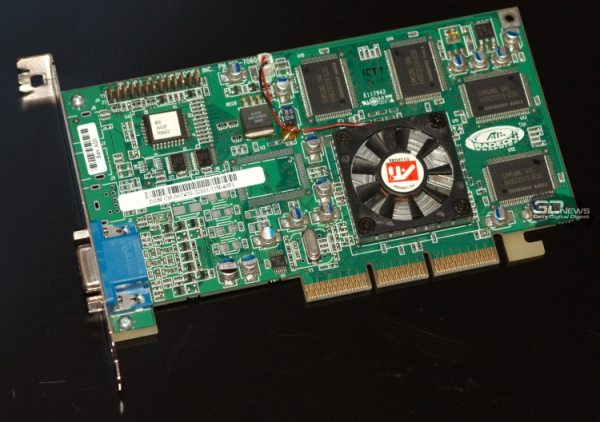
The very first Radeon, like the GeForce 256, later became the progenitor of its own family of graphics cards. This device made ATi one of the leading players in the discrete GPU market — at least technologically. The R100 chip repeated all the best features that NVIDIA had at the time: hardware T&L and support for DDR SDRAM. Due to architectural peculiarities, the Radeon DDR did not have a high fill rate compared to the GeForce 2 GTS, its main competitor. However, the R100 has an important advantage — the feature of invisible surface culling (Z-Culling) at early stages of the pipeline. Thanks to this, the Radeon DDR effectively utilizes the massive bandwidth of DDR chips and can compete on equal footing with its rival when rendering in 32-bit color.
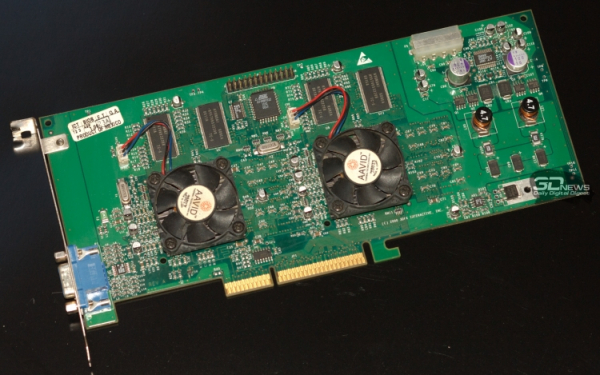
At the time when GeForce 256 and Radeon DDR were released, NVIDIA and ATi (later AMD) had yet to divide the market for discrete graphics cards. The company 3dfx was nearing its end, and its swan song was the Voodoo5 5500 accelerator. The best graphics card that 3dfx managed to launch featured two VSA-100 chips connected via SLI interface. The developers of this architecture initially planned to enhance performance by mounting multiple discrete GPUs (up to four in the Voodoo5 6000) on a single board. The single VSA-100 processor itself isn’t significantly different from the earlier generation Avenger chip (the Voodoo3 series). The main advancement made by 3dfx was support for 32-bit color rendering, which all previous devices from this company lacked. However, when two VSA-100 chips with SDRAM work in tandem, the graphics card benefits from the same bandwidth as DDR memory. Moreover, the VSA-100 features a characteristic that was ahead of its time: a hardware buffer that accumulates rendering results for several frames (T-Buffer). Thanks to the T-Buffer, the accelerator is capable of effects such as high-quality full-screen anti-aliasing, motion blur, or even simulating open aperture shooting through background blur. Many years later, unofficial drivers for the Voodoo5 introduced a temporal anti-aliasing function that utilizes data from several consecutive frames.
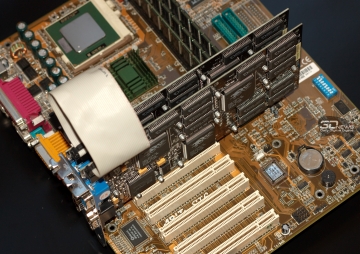
All the mentioned graphics cards were produced in configurations with AGP or PCI interfaces. This means that any of them can find a place in a dual-processor system on an Intel SAI2 motherboard. Unfortunately, the test samples of GeForce 256, GeForce 2 GTS, Radeon DDR, and Voodoo5 5500 that we have available operate on the AGP bus, so for SAI2 alternative options must be sought — for example, the classic pair of Voodoo2 cards connected via SLI bridge. Given this, why not add the Voodoo3 3000 to the test list — at least for comparison with the Voodoo5 5500, which is architecturally similar to the Avenger chip? After all, Voodoo is always interesting, because GeForce and Radeon are still with us, while 3dfx devices have forever faded into history.
 | 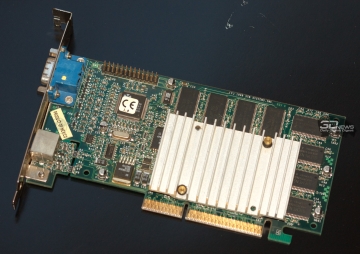 |
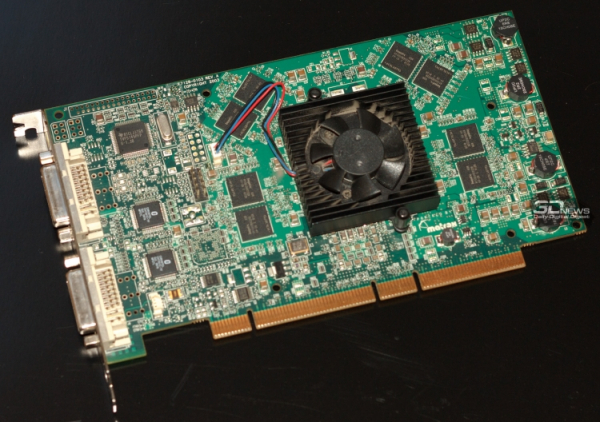
After weighing all pros and cons, we have added another participant to the testing list — the Matrox Parhelia accelerator with a PCI interface. On one hand, we agreed not to touch graphics cards with programmable shaders, and the Parhelia is a device from the same era and with similar capabilities as GeForce 3, GeForce 4, and Radeon 8500. On the other hand, the Parhelia-512 from 2002 is one of the last high-performance GPUs that were mass-produced on PCI cards, and not just any PCI, but 64-bit PCI-X. Its testing will demonstrate the maximum performance achievable on the Intel SAI2 board.
Source: 3dnews.ru
