

The Belgian research center Imec announced the development of an inexpensive technology for producing nanoporous material with outstanding qualities. This unique material, structured as a nanoporous lattice, possesses extremely high porosity and an unprecedented surface-to-volume ratio. Imagine a small can of soda where 75% of the content consists of voids, with a total surface area equivalent to a soccer field. Moreover, the production of this material is quite simple and cost-effective, with almost any metal serving as its base. Thus, the range of applications for such a nanoporous material could be vast.
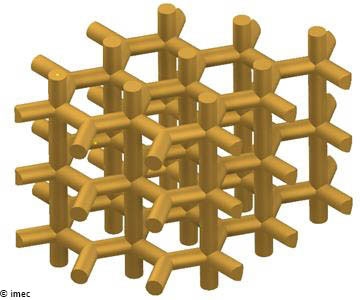
However, the primary purpose of the new nanoporous material with a large internal surface area seems to be in chemical reactions that require significant surfaces to accelerate reactions. For instance, this can include lithium-ion batteries, where increasing the reaction surface area for converting lithium to lithium ions leads to higher output power and efficiency. The metallic nature of the nanomaterial allows for direct connections for current extraction. Additionally, the porous material will enhance the performance of fuel cells and systems for extracting hydrogen from water. Instead of using a nickel foam catalytic membrane that is about a millimeter thick, the new material is 300 times thinner but provides the same effect as nickel. Green energy and batteries may have the opportunity for significant improvements in technologies and solutions.
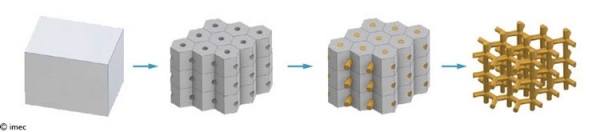
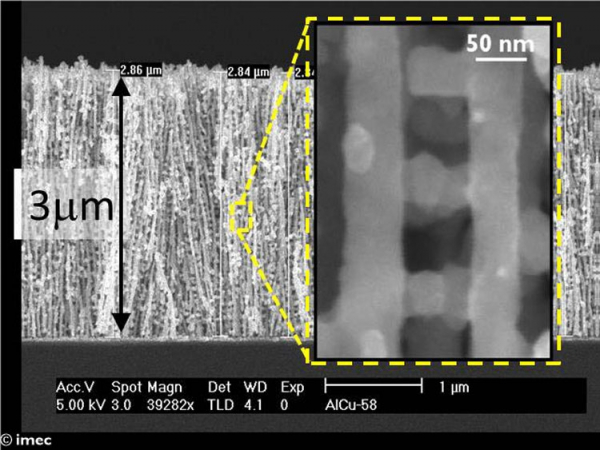
In production, the new material is quite simple, as mentioned earlier. Initially, a mold is created from aluminum foil through anodization. Then, the electroplating process is initiated with precise dosing of metallic aluminum (or another metal). After filling the voids in the mold, the latter is dissolved, liberating the spatial lattice structure of the nanowires. A strip of nanoporous material resembles foil. It is flexible and does not break, unlike modern nanoporous materials made by other methods. We are looking forward to practical implementation. The demand for such batteries continues to grow.
Source: 3dnews.ru
