

Introductory Guide: What are Pre-Built Solutions for Data Centers, Their Advantages, and Why They Are Gaining Popularity?

Big data, cloud computing, and the Internet of Things have become familiar technologies. The need for constant processing of vast amounts of information drives more investment into creating data centers and expanding the range of services they provide.
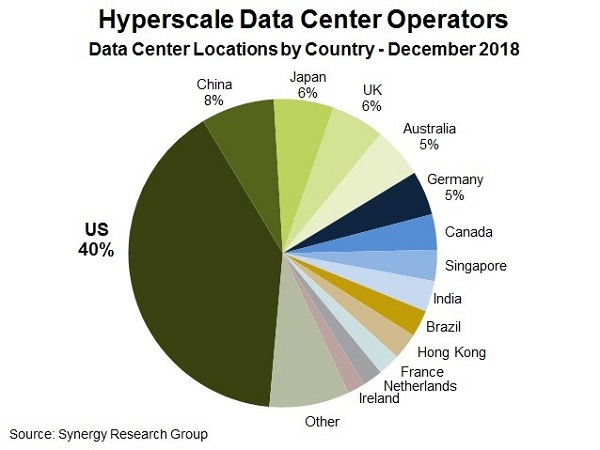
According to Synergy Research Group, the number of large data centers worldwide increased by 11% in 2018 compared to 2017. In the past year, most new data centers have appeared in the Asia-Pacific region and EMEA. However, the United States still leads, hosting about 40% of large centers.
Why Change Is Necessary, or What's Wrong with Traditional Data Centers
The natural reaction to the growth of data volumes is the acceleration of construction of new data centers and the improvement of service quality. However, traditional data centers are struggling to meet the ever-increasing demands of modernity.
- Long construction periods and lack of flexibility. Building a traditional data center takes 1 to 1.5 years, and if changes are made during the process, construction can be delayed. As a result, the data center starts generating profit late, and by that time the market has advanced significantly, making it hard to remain competitive. Scaling up the capacity of such a data center to keep pace with the growing market demands is very challenging.
- Difficulties in increasing power density. In the era of big data, the volumes of transmitted data are growing exponentially, encompassing not just symbols and words, but also graphics, audio, and video files. A smart car will generate up to 4 TB of data per day in the near future, while a smart factory could generate up to 1 PB. This indicates that data density in data centers needs to be increased. However, achieving this with cold corridors or RoomCool cooling systems is quite difficult.
- High capital investments. Significant investments are required even at the start of data center construction. Subsequently, underutilization of the data center reduces efficiency while energy consumption remains consistently high. Construction and maintenance costs, along with indirect losses due to delayed commissioning, significantly increase the total cost of ownership.
- Management complexity. Maintaining a data center is challenging due to the incompatibility of interfaces and protocols when using equipment from different manufacturers.
These shortcomings prompted a review of the data center infrastructure and sparked the creation of pre-assembled modular centers.
What are pre-assembled data centers and what are their advantages?
A pre-assembled data center is a modular center where the infrastructure elements are produced in factory conditions and can be quickly assembled on-site. The main advantages are standardization and a high level of integration. The data center consists of independent modules with the required functionality, and these modules are compatible and interchangeable.
A typical example of a pre-assembled solution is , whose infrastructure is housed in a standard 20 or 40-foot shipping container. Such a data center can be rapidly assembled and can be easily relocated if necessary. This solution is convenient for military bases, maritime vessels, mining sites, and seismic zones. Container data centers are six times more efficient than traditional ones, and their construction costs half as much.
Modular data centers are a type of container data center, but they are installed indoors. They retain all the benefits but lack a container shell.
Container and modular data centers are typical but not the only types of pre-assembled solutions. This group also includes other complexes with pre-configured infrastructure. The advantages of such solutions are undeniable:
- Simplicity of design and space efficiency. Traditional data centers are divided into functional zones. In pre-assembled data centers, server blocks and power and cooling systems are contained within a single module. Such data centers occupy less space and are easier to maintain.
- Mass production ensures quality. All infrastructure in pre-assembled data centers and all connecting terminals are produced in factories with a stringent quality control system, ensuring reliable operation.
- Quick installation. Modules are installed on-site in strict accordance with the standard installation procedure. This reduces labor costs and personnel qualification requirements. It only takes 1-2 months to install a prefabricated data center.
- Flexibility and scalability. Modules can be added as needed to increase the data center's capacity. There is no need for significant capital investments at the start, positively affecting operational efficiency.
- High power density at lower costs. In-row cooling in areas with high temperatures and the necessary use of hot and cold aisle systems enhance cooling efficiency in the racks. This achieves power densities of 20 kW and above per rack, resulting in space savings and reduced electricity costs.
- Comprehensive maintenance. An intelligent management system allows administrators to monitor the data center's operations. Necessary technical maintenance is carried out by the service department of a single manufacturer, eliminating the need for costly calls to specialists from different companies.
Relevance
In all countries, data center construction is carried out according to priority directions, and the choice increasingly leans towards prefabricated solutions. Most of these data centers have been implemented by giant companies: Microsoft, IBM, Google.
A significant focus has been attracted by the new prefabricated data center from Google, deployed in Oregon. It consists of 45 containers, each housing 1160 servers, and has a power capacity of 100 MW with an energy usage efficiency (PUE) of no more than 1.25.

Chinese internet companies such as Alibaba, Tencent, and Baidu have also transitioned to prefabricated data centers. The construction of the Alibaba data center in Zhangbei was completed in just a year, thanks to the choice of a prefabricated modular solution, even in extremely low winter temperatures.
allow for the creation of container, small, medium, and large data centers for various applications: internet projects, commercial enterprises, telecom stations, military facilities, resource development, and the oil and gas sector, among others.
The main advantage of Delta's data center is its flexible power system configuration, economical cooling, and intelligent monitoring and management systems. All these elements and other vital components are integrated on a single platform.
The relevance of pre-assembled modular data centers is undeniable, as traditional ones can no longer meet the ever-growing market demands in the age of big data. IT giants are increasingly shifting to modular solutions, and experts predict that the pace of constructing pre-assembled data centers will only increase in the future.
Source: habr.com
