

Hello, %username%.
My beer cycle on Habr has become less noticeable than the previous ones — judging by the comments and ratings, so I guess I’ve worn out my stories a bit. But since it's logical and necessary to finish the story about beer components, here is the fourth part!
Let's go.
As usual, it starts with a short beer story. This time, it will be quite serious. It's a story very indirectly related to the Great Victory achieved by our grandfathers in 1945. And despite various speculations and nonsense — I am proud of this victory.
Without going too deep, I will share some interesting facts about beer production and consumption during the Great Patriotic War (data taken from open sources on the web, as well as from the lecture of beer historian Pavel Egorov).
- Beer was produced even during the war. Yes, strangely enough, beer production did not stop completely during WWII, although the volumes were significantly reduced. The reason for this reduction is obvious: in a difficult time for the country, significant resources were required — both human and food, as well as technical.
- Some breweries began to produce crackers. Many Soviet breweries were understandably converted to produce more important wartime products. For example, the Leningrad brewery 'Stepan Razin' was assigned a production norm of 200 tons of crackers per month by the then People's Commissar of Food Industry, comrade Zotov. Just earlier, the same 'Stepan Razin,' along with several other large breweries, received an order to stop beer production and transfer all available stocks of grain for milling into flour.
- In the event of fascists coming to Leningrad, it was planned to poison them with beer. As of December 41, there were just under a million liters of beer left in the cellars of the same 'Stepan Razin,' mainly 'Zhigulevskoe.' This was part of what is called a strategic reserve, which should have been poisoned if the fascists came to Leningrad. The main brewer of the plant was to carry out the sabotage if needed.
- Beer was brewed even during the siege of Leningrad. The Leningrad brewery 'Krasnaya Bavariya,' if you believe , managed to produce about a million liters of beer by the May holidays of 1942, thereby providing all Leningrad residents with festive glasses of foamy drink. Interestingly, part of the batch was bottled manually by the factory workers, as there had been no electricity in the plant for three months.
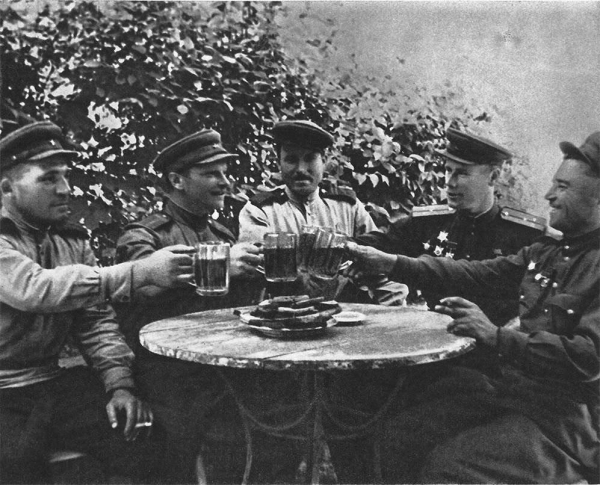
- The first Victory Day was also celebrated with beer. On May 9, 1945, the victory over the fascists was celebrated everywhere: in the USSR and in European countries where our troops remained. Some, of course, celebrated the great event with vodka, while others chose beer: in particular, the soldiers of the Red Army stationed in Czechoslovakia marked the victory with local beer (see the photo at the beginning of this article).
- The now-famous Lida Brewery produced beer for the Wehrmacht. This occurred, of course, not by the will of the owners of the plant: during the fascist occupation, production came under German control, which established the brewing of beer for Nazi soldiers. Local residents of the Belarusian city of Lida and the surrounding regions did not consume this beer, as all batches were distributed among the German military units stationed in those areas.
- Beer for the Nazis was brewed by Jews. Interestingly, the factory was overseen by an SS engineer named Joachim Lochbihler, who, contrary to the prevailing standards at the time, not only employed Jews in the beer production but also actively defended them from other SS officers. At one point, he even warned his wards of the imminent danger to their lives, urging them to flee. In September 1943, SS officers arrived at the factory and arrested all the Jews, accusing them of poisoning the beer. The unfortunate souls were loaded onto a train, but some captives managed to jump from the train during transit: among those who eventually escaped from the Nazis were the original owners of the Lida Brewery—Mark and Semyon Pupko.
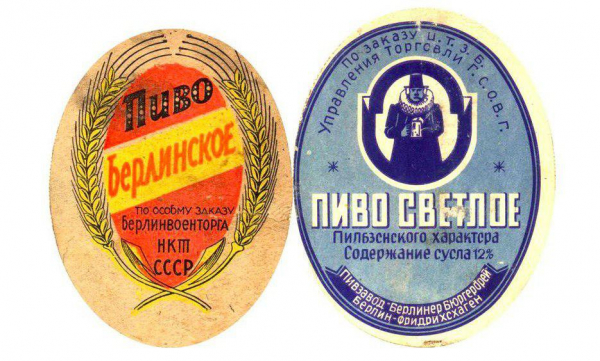
- The occupied part of Germany brewed beer for the USSR. The customers for such brewing were the Group of Soviet Forces in Germany. Russian-language labels for such beer have even been preserved. Unfortunately, history remains silent about how much this beer cost, who received it, and how good it tasted.

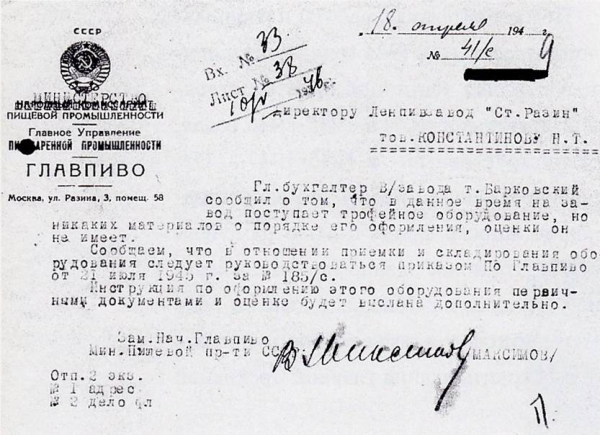
- Among the war trophies was German brewing equipment. As part of the compensation for the damage caused by Nazi Germany and its allies, the USSR received, among other things, equipment from a large Berlin brewery. This trophy equipment was installed at the brewing plant named after Stepan Razin. A similar trophy "iron" was acquired by the Moscow brewery in Khamovniki.

- After World War II, a beer standard was adopted that remains in effect to this day. GOST 3473-46 was adopted in 1946 and, with some modifications, lasted until the end of the 20th century, after which it was replaced by a newer, albeit not the most modern, standard. We will definitely discuss it separately.
Now let's return to our ingredients. Only one remains, and that is —
Additives.
I will begin my story about additives by stating that, formally, they should not be present in beer. However, in practice, they are found in every batch. They do not worsen the taste, quality, or value of the drink — they simply enhance certain characteristics of it. Let's try to understand the most popular ones, and then discuss their necessity and lack thereof in more detail.
- The most popular ingredient among brewers that is not on the mandatory list is what is known as "adjuncts" — these are grains that have not undergone the germination stage, meaning they have not become malt. This can be wheat, rice, or corn. Corn and rice are the most common, often in the form of flour or other products. The reason is simple: they are a cheap source of simple sugars that yeast need to produce carbon dioxide and alcohol, thus increasing the strength of the drink. Corn is often found in mainstream American beers (sometimes referred to as maize), while rice is found in Asian beers, which makes sense: the United States actively cultivates corn in large quantities, while Asian countries cultivate rice. Rice and corn give beer a characteristic sweetness that anyone can notice. Unsweetened wheat is also frequently used: it is one of the ingredients for brewing wheat beer. The substances contained in wheat help achieve certain flavor and aroma nuances.
- Sugar is another commonly used additional ingredient in beer. It is often used in the production of strong varieties: adding sugar provides yeast with the simplest additional food to process into alcohol. Sugar can be added in the form of containing sources: corn syrup, maltose syrup, etc. Honey can also be used, but then the production becomes quite expensive. By the way, a natural colorant is often used: caramel color (E150), which is essentially sugar caramel. If you see E150 on the bottle...a — just relax, because this is the most natural burnt sugar, which can be eaten by the spoonful. E150b, E150c, and E150d are not as natural, yet no one will add more than the allowed 160 mg/kg of body weight for those drinking beer.
- Let’s debunk one myth: during the production of beer, chemical artificial colorants and preservatives are almost never used — it is quite sufficient to use natural ingredients and the products of their fermentation, as well as the established technological procedures (more on those later). Why spend on additional chemicals and necessarily indicate them in the composition when everything can be done with a recipe? However, if you come across cheap "fruit" beer varieties ("with lime", "with pomegranate", etc.) — then this stuff indeed contains flavorings and colorants, but I find it extremely difficult to call it beer. Ascorbic acid (E300) can also be added to beer, which is formally — not synthetic chemistry, but a product of fermentation (yes, that’s how it’s synthesized). Adding ascorbic acid increases beer's resistance to light and oxygen — and even allows beer to be poured into clear bottles (more on this later, but you can already think of Miller and Corona).
- In specific types of beer, the manufacturer can use a very diverse range of additives: cloves, cardamom, anise, orange peel, pepper, fruit puree, or the fruits themselves, and much more. All these are intended to give beer additional flavor-aromatic and visual characteristics. Cherries, raspberries, blackberries — all of these can naturally find their way into a vat of fermenting beer. These ingredients are particularly favored by Belgian lambic producers.
- Salt can be added to beer! And this is not a whim, but a necessary ingredient in the production of traditional German Gose — a wheat sour ale that also uses coriander and lactic acid (a product of lactic fermentation). This style is actually around a thousand years old, making it twice as old as the famous German "Beer Purity Law," which we will discuss a bit later. By the way, adding salt increases the concentration of sodium and chlorides — remember Part 1, where we talked about water and the properties of these ions.
- Some brewers have managed to use quite unique additives: mushrooms, tree bark, dandelions, squid ink, and even 'whale vomit' — a substance formed in the stomachs of whales.
From my perspective, it's formally impossible to have beer without additives. At the very least, you need to prepare the water, smoothing out its mineral composition and pH. And that counts as additives. Moreover, you have to use gas — which we've discussed. So, that's also additives. But let's talk about how additives are viewed from a legal standpoint.
Of course, everyone immediately remembers the most famous beer law — the "Beer Purity Law" or Reinheitsgebot, which is over 500 years old. This law is so well-known, popular, and recognizable that it has acquired a whole layer of myths and misconceptions that marketers often exploit. In particular, many believe that beer is only what falls under the Reinheitsgebot, and everything else is a product of the kidneys of a domesticated odd-toed ungulate from the horse family. However, connoisseurs often have little knowledge of what the law actually states and where it came from. Let's take a closer look.
- The Beer Purity Law has a history of over 500 years—the Bavarian Beer Purity Law from 1516 is one of the oldest laws in food production. To the great displeasure of the Bavarians, the oldest Beer Purity Law was found in Thuringia and is 82 years older than the issued Bavarian law—a local regulation regarding the use of specific ingredients in brewing was issued in Erfurt as early as 1351. The Munich municipality began to oversee breweries only in 1363, and the first mention of using only barley malt, hops, and water in brewing dates back to 1453. By that time, the Thuringian regulation had already been in effect for nearly 20 years. A regulation dated 1434 issued in Weißensee (Thuringia) was discovered in the medieval town of Runneburg near Erfurt in 1999.
- The very first version of the law regulated not so much the composition of beer but its price. Signed by Duke Wilhelm VI of Bavaria, the decree primarily set the price of beer depending on the season and only mentioned the composition of ingredients in one clause: nothing but barley, water, and hops. The duke's decree was mainly aimed at conserving food supplies. By allowing only barley grain to be used for brewing, Wilhelm prohibited the use of wheat in beer production because it was essential for making bread.
- Yeast was absent from the list of ingredients permitted by the law. But that means it means nothing: the Germans were well aware of yeast, but since it was removed from the final drink, it was not mentioned in the law.
- Its modern name—Reinheitsgebot, literally meaning 'requirements for purity'—was established relatively recently—about a hundred years ago. This version, with some modifications, is still in effect in Germany today and essentially consists of two parts: one regulates the production of lagers, while the other pertains to brewing ales. As a result of the liberalization of the internal European market, the law has been incorporated into European law.
- The modern version of the Reinheitsgebot does not prevent the importation of any beer into Germany and does not prohibit local brewers from deviating from the law. Moreover, the law is updated from time to time, keeping up with modern brewing trends, although it remains relatively conservative.
- At the same time, German legislation distinguishes between local beer brewed according to the beer law and other varieties: the latter may not bear the term bier, but they are not called the ridiculous term 'beer beverage.'
- Despite all existing restrictions and its conservativeness, the Reinheitsgebot is evolving, allowing German breweries to produce a wide variety of beers and not relegating experimental brewers to the margins. However, even under this arrangement, many German producers and beer enthusiasts are either opposed to the law or at least advocate for its amendment.
This is how they live in Europe, including Germany, where beer brewing has a long history. On the other hand, in Belgium, where they have a very liberal approach to yeast and add anything they like to beer, they are generally much more relaxed. They brew excellent beer sold worldwide.
But what about Russia? It’s rather gloomy here.
In Russia, there are two laws, or rather standards: GOST 31711-2012, which pertains to beer, and GOST 55292-2012, which pertains to 'beer beverages.' I sincerely believe that domestic lawmakers and authors of Russian brewing standards intended to write their own version of the Reinheitsgebot with a twist, but it turned out as it always does. Let's break down the main gems.
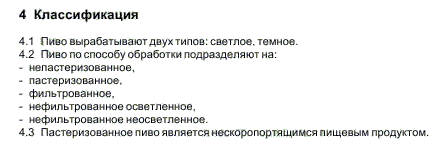
Here’s what should be in beer according to GOST 31711-2012.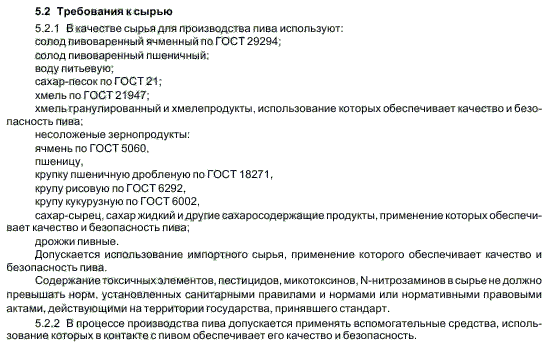
And this is all a beer beverage according to GOST 55292-2012.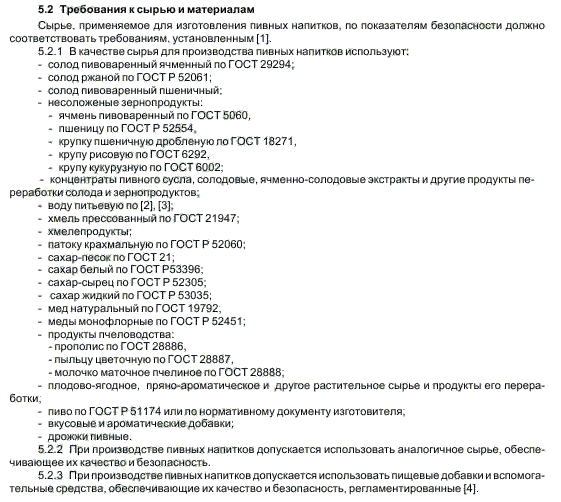
So, what can I say? In fact, a beer drink is a full-fledged beer made using something other than the classic ingredients: for example, citrus peel, spices, or fruits. As a result, under the dubious name "beer drink," there's beer on store shelves that predates all GOST standards, the RF, and even the Reinheitsgebot. For instance, Hoegaarden — its ancestor has been brewed in the namesake Flemish village (now Belgium) since 1445, and even back then, it contained coriander and orange peel. Does Hoegaarden worry about being called that? I think it couldn't care less. But our short-sighted consumer, reading the label, immediately dives into complex cognitive operations regarding a global conspiracy and thinking that "the beer being transported is NOT REAL!" By the way, in Russia, Hoegaarden is brewed right in Russia — but more on that later.
So if you see the words "beer drink" on the price tag or label, know that you are probably facing a very interesting beer that is at least worth trying. Just if you see the ever-memorable chemical flavorings and colorants in the ingredients — then you have a urine-like product "Garage" that is better left untouched.
But let’s move on! Since the chaos of the Soviet era is not in toilets but in heads, GOST tries to strictly limit beer varieties and their compositions. However, just like with “beer drinks.” Know, %username%, that:
In fact, things are even stricter.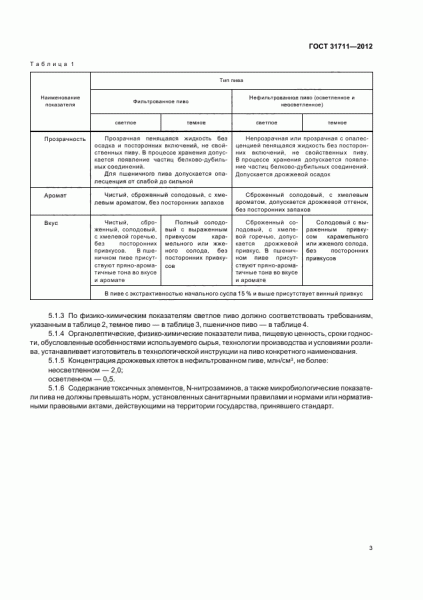
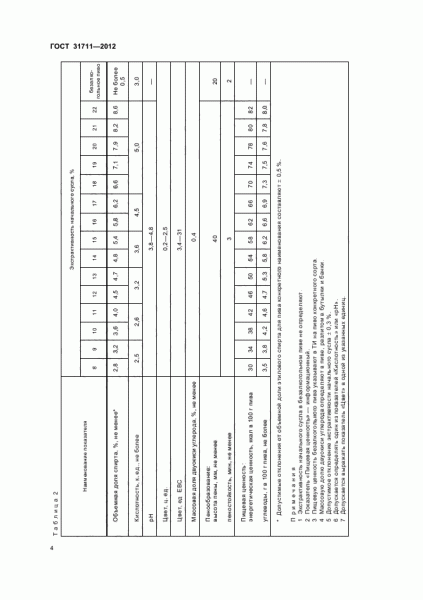
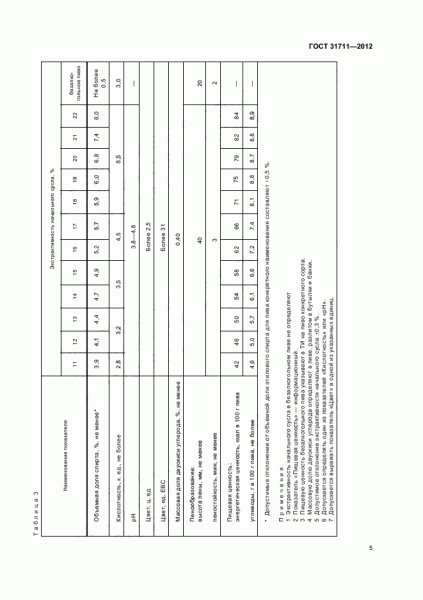
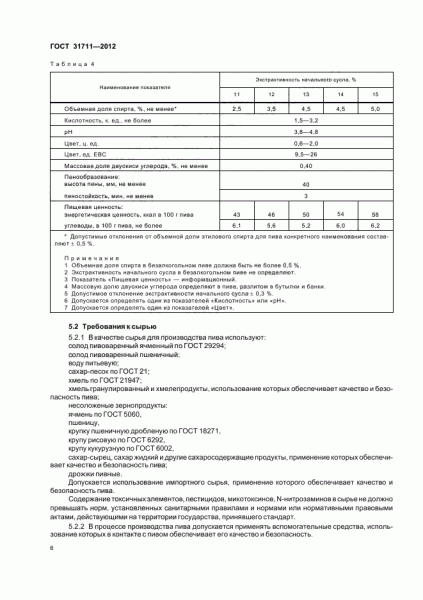
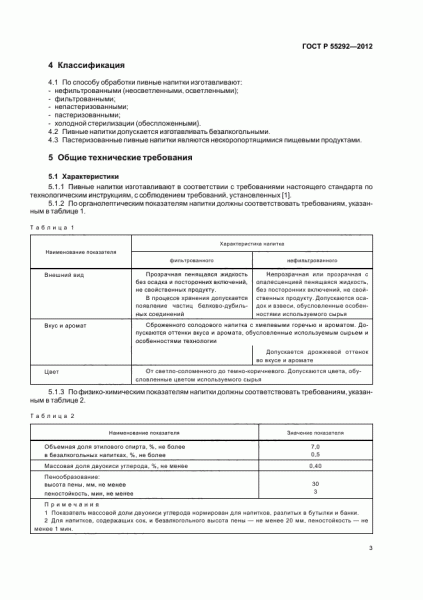
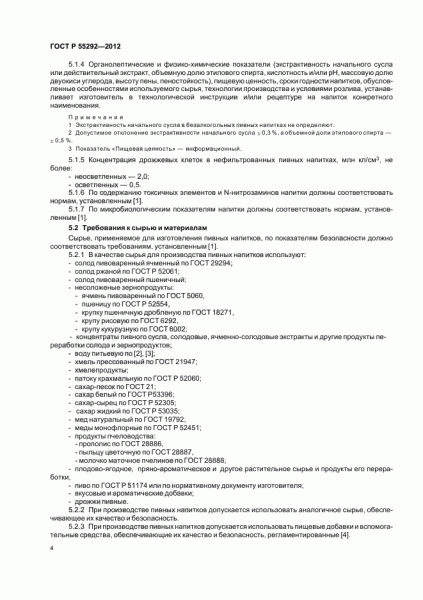
In other words, a step to the left or right is an attempt to escape, a jump is an attempt to fly.
It's hard for me to discuss the strength and depth of this nonsense, but I will touch on the EBC units — this is the color of beer according to the European Brewing Convention. It is precisely this that is used in GOST, even though the entire world has long transitioned to the newer Standard Reference Method (SRM). But that’s not important — the values can easily be converted from one to another using the Morey formula: EBC = 1.97 x SRM (according to the new scale EBC) or EBC = 2.65 x SRM - 1.2 (according to the old EBC scale — and yes, SRM is much simpler).
By the way, SRM is sometimes also called the Lovibond scale in honor of the pioneer Joseph Williams Lovibond, who, being a brewer, invented the use of a colorimeter to characterize the color of beer and his actual scale.
In short, it all looks like this:
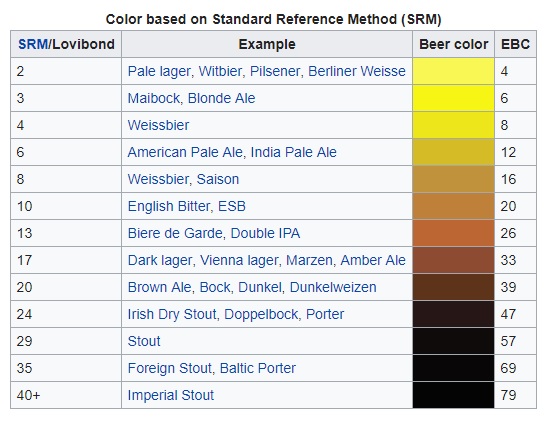
If you have been paying close attention, %username%, you would understand that anything below EBC 31 is light beer, while anything above is dark. In other words:
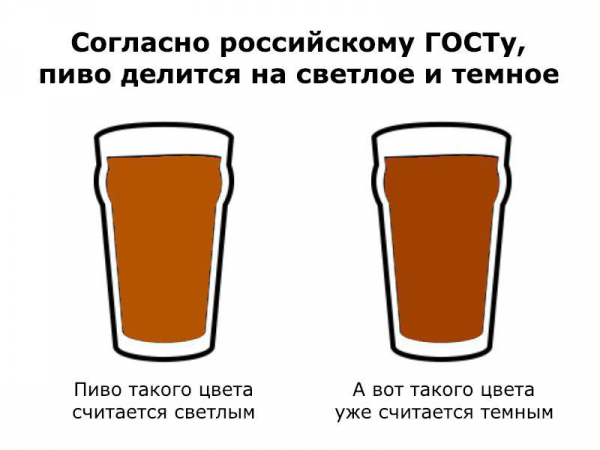
With all due respect, this classification is nonsense, far from reality — but is certainly from the ‘creators of the term “beer beverage.” What do you think, which of these two glasses of beer contains the light one?
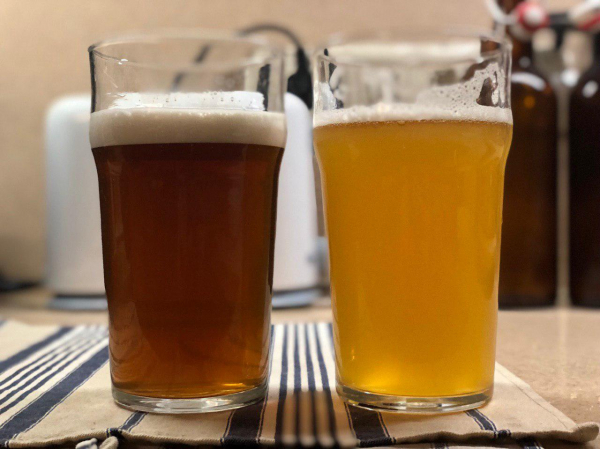
The answer is hereOn the left, Guinness Nitro IPA, on the right, Saldens Pineapple IPA. The cans of both types are labeled as “light beer.”
By the way, the English Pale Ale (literally: pale English ale) Fuller’s London Pride is considered dark beer according to GOST. I feel like I’m colorblind.
Speaking of ingredients and before we move on to the next part where we will discuss technology, let’s break down another crucial abbreviation in describing the composition and quality of beer. You already know about IBU, SRM/EBC. It’s time to talk about ABV.
ABV is not an attempt to remind you of the alphabet when after three liters you decided to read something — and the label happened to come up — it stands for Alcohol By Volume (ABV). You might see 4.5% ABV, 4.5% vol., or 4.5% ob. on the label — all of these signify the volume percentage of ethanol in the drink, and “ob.” does not refer to mythical “degrees,” but specifically to “volume.” And yes — there are also “degrees of strength” — historical measures that no one uses anymore, thus “beer 4.5 degrees” is simply 4.5% ob. in the language of our Great and Powerful.
If you are interested in the history of degrees and respect D.I. MendeleevThe alcohol content in beverages has always intrigued people, especially when it came to pricing. Johann-Georg Tralles, a German physicist known for inventing the alcoholmeter, wrote a foundational work in 1812 titled "Untersuchungen über die spezifischen Gewichte der Mischungen ans Alkohol und Wasser" ("Investigations on the Specific Weights of Mixtures of Alcohol and Water").
The degrees of Tralles correspond to the modern volumetric percentage of alcohol in a beverage. For example, 40 degrees of Tralles was supposed to correspond to 40% alcohol by volume. However, as D. I. Mendeleev demonstrated, what Tralles considered 'alcohol'—pure spirit—was actually its aqueous solution, in which the anhydrous alcohol was only 88.55%, so a 40-degree beverage according to Tralles corresponds to 35.42% 'according to Mendeleev'. Thus, the Russian scientist historically discovered a shortfall on the part of foreign bourgeoisie for the first time in the world.
In the 1840s, academician G. I. Hess, at the request of the Russian government, created methods and instruments for determining the amount of alcohol in wine. Prior to this, the strength was measured according to the Tralles system, as well as by 'overburning'. For instance, a mixture of alcohol with water that lost half its volume during overburning (about 38% alcohol) was called polugar (according to the 'Complete Collection of Laws of the Russian Empire' of 1830: 'is defined in such a way that, when poured into a state-stamped overburning vessel, the sample burns down to half during overburning'). In the presentation of Finance Minister Kankrin from 1843, it was stated that the overburning of wine and English hydrometers do not provide accuracy in measurements, and the Tralles spiritometer requires calculations to determine the strength, and therefore the Tralles system should be made convenient for Russia.
In 1847, Hess published a book titled 'Accounting for Spirits', which outlined the rules for using the spiritometer with tables for determining strength and dilution ratios. The second edition in 1849 also contained an overview of the history and theory of measuring strength. Hess's spiritometric tables combined measurements according to Tralles with the Russian tradition of converting spirit to polugar. The Hess spiritometer showed not the alcohol content, but the number of buckets of water at a temperature of 12.44 °R (degrees Reaumur, 15.56 °C) that needed to be added to 100 buckets of the tested spirit to obtain polugar, defined as 38% alcohol (although there are disputes even here). A similar system was used in England, where the proof standard was 57.3% alcohol.
In short, Hess only complicated everything, so thank you to Dmitry Ivanovich, who introduced the concept of correct volumetric percentages of alcohol.
The source of alcohol is clear to everyone: it is the main product of fermentation, derived from the food of yeast—sugar. Sugar originally comes from malt. Sometimes, some sugar may still remain, but the yeast has already exhausted itself. In this case, the brewer adds another batch of yeast. However, when you want to make the beer noticeably stronger, the fermentable sugars in the wort may not be sufficient, which is a problem. Adding more malt doesn't make sense, as the ratio of malt types affects not only the alcohol content, as we've discussed.
There are two popular methods. The first and most common: simply give the yeast a basic malt extract (not malt!), maltose, honey, or something else sweet. In cheaper varieties, they often just use plain sugar—sucrose—but then it becomes too sweet. To avoid making the beer too sugary, the brewer might use corn syrup or dextrose in some form, as their addition has little effect on the final flavor and aroma properties. In general, adding simple sugars leads to more alcohol. But there’s another problem.
Upon reaching a certain alcohol concentration, the yeast can no longer withstand their own metabolic byproducts and die—no, that sounds quite unpleasant, so let’s say they become inactive; in any case, they stop working and can even perish. To prevent this, producers of strong beer use specialized yeast colonies. Interestingly, brewers often use wine yeast in such cases. But even then, you can't go above 12-13%. Therefore…
The second method of increasing the alcohol content is by removing part of the water through freezing. For example, this is how German ice beer is produced. However, in fact, beer stronger than 12-13% is truly rare.
An important point: no one will ever add alcohol to beer. Never. Firstly, this would require additional licenses to use food-grade alcohol, and secondly, it separates and destabilizes the beer. Besides, why buy something that results from fermentation anyway? Yes, sometimes beer does smell like alcohol, but this is not due to the intentional addition of ethanol; it’s just the presence of specific esters in the beer (remember our talk about complex esters?).
By the way, I’ll again send my disdain towards Russian GOST 31711-2012:

Personally, I don’t understand 'no less than' and '+-' — does this mean I can sell beer stronger within 0.5% and not weaker? And the magical maximum strength figure of 8.6% for beer also came from this document. Therefore, anything stronger is just unclear. The Germans laugh about this loudly. In short, who knows, and cheers to the GNU 'VNIIPBiVP' of the Russian Agricultural Academy — the developer of the standard.
Well, this longread has finally come out. That's enough!
And it seems that people have grown tired of this whole story. Therefore, I will take a break, and if it turns out that there is still interest, next time we'll briefly talk about brewing technology, learn the secrets of non-alcoholic beer, and possibly debunk a couple more myths. Since I’m not a technologist, the breakdown of the technology will be quite layman's, but hopefully, I’ll manage to explain the main stages and questions about containers, filtration, and pasteurization.
Good luck, %username%!
Source: habr.com
