

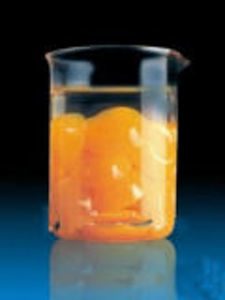
Hello, %username%.
As promised—here's an article about yellow phosphorus and how it intensely burned near Lviv in Ukraine quite recently.
Yes, I know—Google provides a lot of information about this incident. Unfortunately, most of what it returns is false, or as witnesses say, untruth.
Let's sort this out!
Well, first—let's talk about the technical details, which, by the way, are very important!
As the dull Wikipedia explains, phosphorus is one of the abundant elements in the Earth's crust: its content is 0.08—0.09% of its mass. It does not occur in a free state due to its high chemical reactivity. It forms about 190 minerals, the most important of which are apatite Ca5(PO4)3 (F,Cl,OH), phosphorite Ca3(PO4)2, and others. Phosphorus is part of essential biological compounds—phospholipids. It is found in animal tissues, is a component of proteins and other vital organic compounds (ATP, DNA), and is an element of life. Remember this, %username%, and let's move on.
Phosphorus in pure form can be white, red, black, and metallic. These are called allotropic modifications—in this regard, the weaker sex is quite knowledgeable since they can differentiate between diamond and graphite by touch—these are also allotropic modifications, just for carbon. Essentially, phosphorus is the same.
The hero of our story—yellow phosphorus—is actually unrefined white phosphorus. Often, "unrefined" means the presence of red phosphorus, rather than some dreadful foreign substances.
Yellow phosphorus (as well as white) is truly a nightmare: a highly toxic (maximum allowable concentration in atmospheric air is 0.0005 mg/m³), flammable crystalline substance ranging from light yellow to dark brown. Its specific weight is 1.83 g/cm³, it melts at +43.1 °C, and boils at +280 °C. It does not dissolve in water, oxidizes easily in air, and spontaneously ignites. It burns with a dazzling bright green flame releasing thick white smoke—tiny particles of tetraphosphorus decoxide P4O10. This is again boring Wikipedia, but I ask you, %username%—remember this information as well.
Now, let's dig deeper.
Well, firstly, despite the toxicity of phosphorus, it's very difficult to get poisoned by it for a very simple reason: it self-ignites in the air. Very quickly. And it burns, as mentioned, with a bright blue-green flame. Practically, it looks like this: you put a piece on the table — and it slowly starts to smoke. Then faster. Then even more. And then it ignites and burns. The time to ignition depends on the size of the piece: the smaller it is, the faster it ignites. So I find it hard to imagine fine dust of yellow phosphorus in the air — it would just catch fire.
Although, you might argue, it is reported that the lethal dose of yellow phosphorus for a human is 0.05-0.15 grams, it dissolves well in body fluids, and when ingested, it is quickly absorbed (by the way, red phosphorus is insoluble and therefore relatively less toxic). Acute poisoning occurs when inhaling vapors of yellow phosphorus and/or when they enter the gastrointestinal tract. Poisoning is characterized by abdominal pain, vomiting, beautifully glowing vomit in the dark that emits a garlic smell, and diarrhea. Another symptom of acute yellow phosphorus poisoning is heart failure.
Reading this, I somehow recalled phosphorus poisoning (the symptoms are quite similar) and seriously pondered — but no longer about the existence of yellow phosphorus vapors, but about the adequacy of an individual who saw a smoking, glowing in the dark piece of something unknown — and immediately ate it. Well, that's that.
By the way, to obtain a solution of phosphorus in water at 3 mg/l — which is a saturated solution, as it doesn't dissolve more — you need to shake a piece of phosphorus in water for a week. Well, I didn't make this up, that's what GOST 32459-2013 says — and that's not just random stuff from the internet!
In general, in my opinion, the toxicity of phosphorus is greatly exaggerated. But it has other nuances. More about that below.
Phosphorus burns, as specialists who work with it like to say, by the drill rule: that is, the burning piece digs into the surface on which it burns. Into the table. Into the metal. Into the shoe. Into the hand. The reason is simple: the combustion product — phosphorus oxide — is essentially an acidic oxide that immediately attracts water, forming phosphoric acid. Phosphoric acid, although not as lovely as sulfuric or hydrofluoric, can be just as damaging — and that's why it eats through everything. By the way, it is sometimes added to toilet bowl cleaners. This lovely combination of high-temperature combustion (up to 1300 °C) and hot acid gives additional holes to your table, and if you're unlucky — to your body. And yes, %username% — it is Very Painful.
I have asserted many times and will continue to assert that there is no greater enemy to man than himself: of course, the properties of yellow phosphorus have not gone unnoticed — and kind people have invented adding it to incendiary munitions, as it's very convenient when something suddenly ignites in the air!
It looks very beautiful — you can admire it.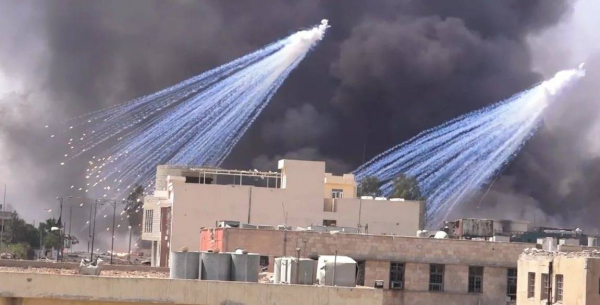
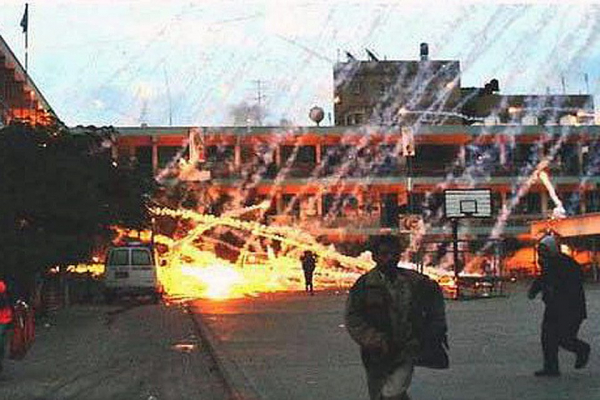
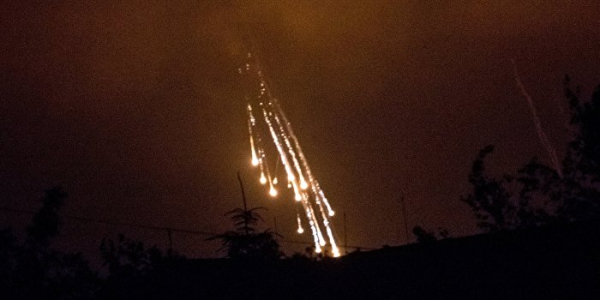
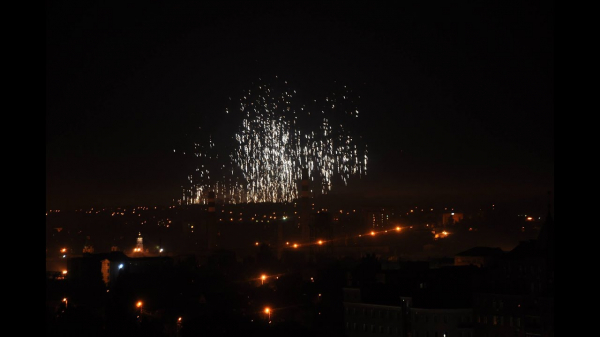
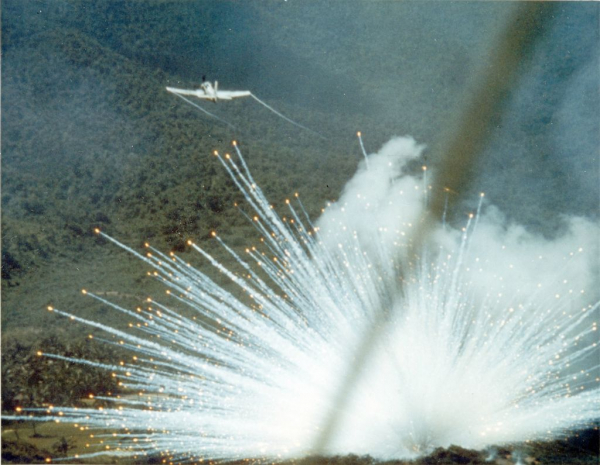
But people after such attacks do not look very beautiful — so it's better not to look.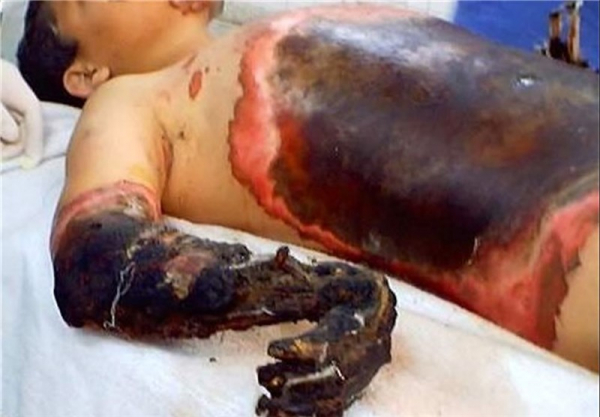




Since all of this is very charming, the development, testing, transportation, trade, use, and disposal of phosphorus munitions are carried out considering a number of international agreements and treaties, including:
- The Saint Petersburg Declaration ‘On the Prohibition of the Use of Explosive and Incendiary Bullets’ of 1868.
- Additional Protocols of 1977 to the Geneva Convention on the Protection of War Victims of 1949, prohibiting the use of munitions containing white phosphorus if civilians are endangered as a result. By the way, the USA and Israel did not sign them.
- According to the Third Protocol to the UN Convention on Certain Conventional Weapons of 1980, incendiary weapons must not be used against civilians, and, additionally, they cannot be used against military targets located in areas populated by civilians.
In general, there are many papers, but they hold a status close to toilet paper, because these munitions are used left and right — Palestine and Donbass can confirm.
Since phosphorus reacts with water only at temperatures above 500 degrees Celsius, large quantities of water are used to extinguish phosphorus (to lower the temperature of the ignition point and convert phosphorus into a solid state) or a solution of copper sulfate (copper vitriol). After extinguishing, phosphorus is covered with wet sand. To prevent spontaneous combustion, yellow phosphorus is stored and transported under a layer of water (or a calcium chloride solution, to be precise, but water will do). This is important too!
Who produces phosphorus? Here, %username%, someone might feel proud: the main supplier of phosphorus, food-grade phosphoric acid, hexaphosphate, and sodium tripolyphosphate is none other than proud Kazakhstan!
In fact, since the times of the USSR, a facility named Kazphosphate was built in the glorious city of Zhambyl (yes, the same Zhambyl Jabaev). Later, Zhambyl was renamed Taraz—let's not discuss the rationale, Kazakhs know better—but the facility remained. The availability of raw materials and its capacity, as well as the extremely low cost of labor (and there’s hardly anything else to work on in Taraz/Zhambyl), led to yellow phosphorus being produced right here.
When I visited this facility—it’s wonderful! Southern Kazakhstan, 300 km to Uzbekistan—it’s warm! Birds are singing! Everything is green! Mountains on the horizon! Beautiful!
By the way, the Kazphosphate plant does not disrupt this idyll: it’s all green, with flowers, on the slope of a small mountain.
It really is nice there.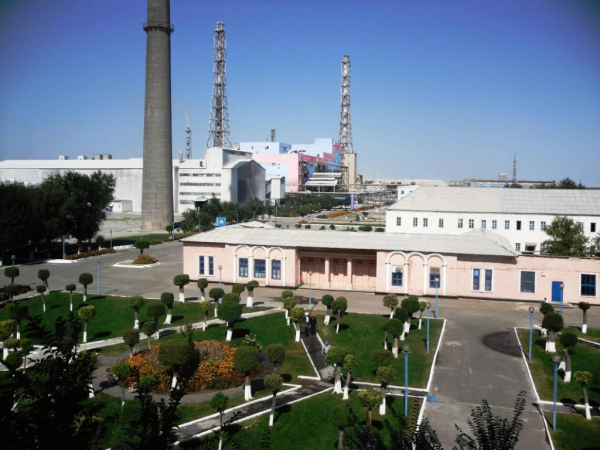
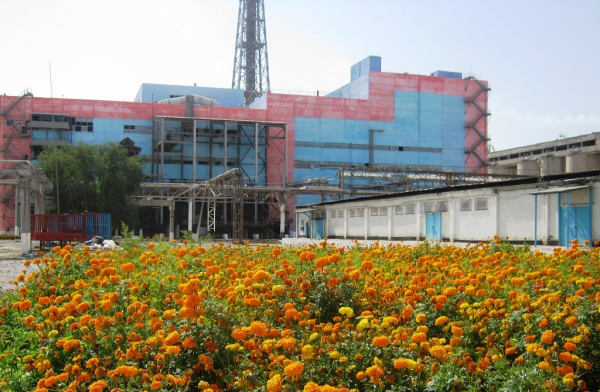
The reason for the beauty is simple—the raw materials, products, and waste of production are phosphorus-containing substances, which are basically fertilizers. That’s why everything grows and blooms.
Incidentally, the highest management of the plant really dislikes dandelions. No one knows why. So before the visit of the highest management, employees arrange a clean-up day to weed out the dandelions. Everyone knows how it goes—fighting dandelions is well-known from summer houses/gardens; within the phosphorus chaos, it's completely pointless: it lasts a day, maybe two. But management—well, that’s how it is.
I was particularly impressed by the work of the facility's laboratory. There are some truly brilliant minds working there. And to make sure you understand, %username%, here are some facts.
In yellow phosphorus, it is very important to control impurities — particularly arsenic, antimony, selenium, nickel, copper, zinc, aluminum, cadmium, chromium, mercury, lead, and iron. To control all of these, phosphorus must be dissolved, and while doing so, everything being controlled must not escape.
Task number one: how to weigh something that ignites in the air? The process is as follows: break the phosphorus ingot under a layer of water, select larger pieces — the smaller ones ignite too quickly — and transfer them to a glass of water. Then weigh another glass of water, take the phosphorus from the first glass, wipe it with alcohol, wait for it to dry — and drop it into the weighed glass of water. The mass of phosphorus is determined by the difference in weight.
Since it might ignite — nearby is a solution of copper sulfate — if it ignites, toss it into that.
Then, phosphorus is dissolved. It dissolves in nitric acid saturated with bromine vapors — a very pleasant and aromatic substance. I recommend it for household use. It is necessary to drop phosphorus into this mixture, then heat it slightly, and when the reaction begins, transfer it to a tub with cold water, because the heating is tremendous. And stir, stir, stir — if you don’t stir, the pieces will just jump out of the bubbling mixture — the results will be inaccurate! Stir with a hand, wearing two gloves: a rubber one for acid — and a felt one for heat (just rubber melts, and just felt doesn’t protect against acid droplets. However, if phosphorus gets on it — neither will help).
A mesmerizing sight of yellow phosphorus dissolving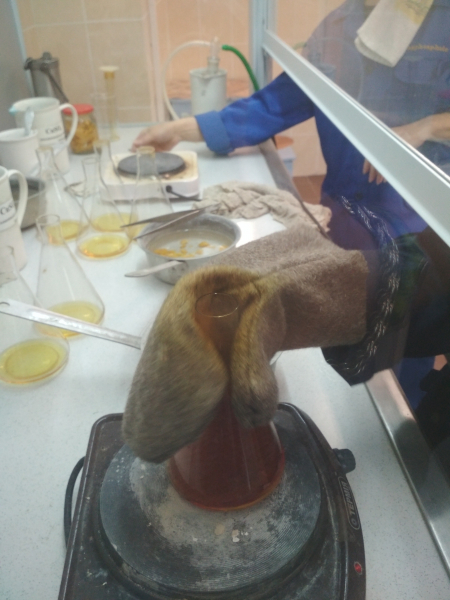
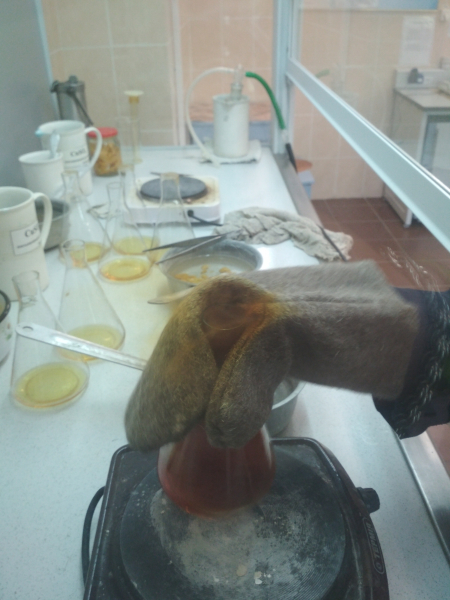
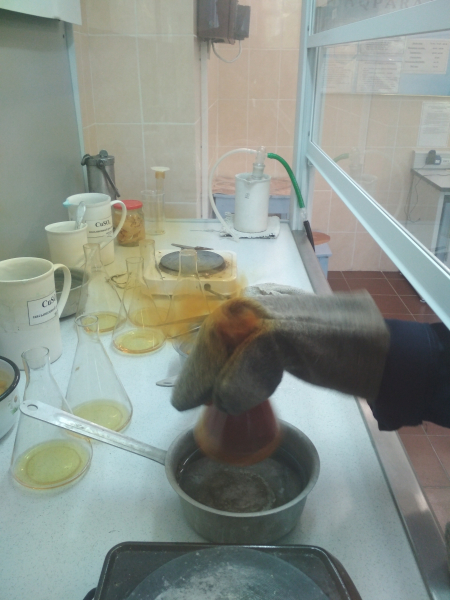
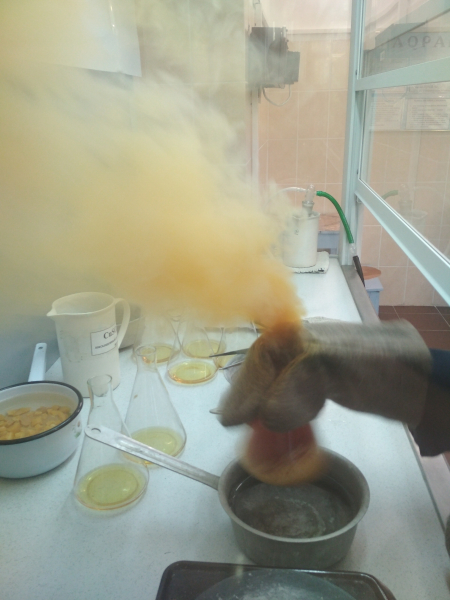
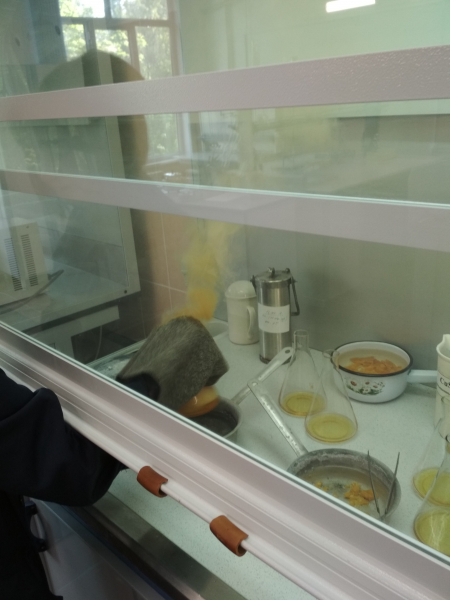
Nitrogen oxides and bromine fly off during this process — just so you know. Girls should be particularly cautious of these reddish tails and pieces of phosphorus that may end up on clothing or gloves. There are no memories of poisonings from "vapors" or "solutions" of phosphorus.
By the way, the salary of the girls who do this is no more than $200 (and the reason is simple: there is no other work in Taraz, as I have mentioned before). So the next time, %username%, when you complain about low pay and the harmfulness of your work — remember Kazphosphate!
Now that the basic knowledge has been gathered, we move on to the accident in Lviv.
Since phosphorus is in demand in Europe, Kazphosphate actively exports its products through Czech partners. The shipments travel in tankers filled with water, and it is clear that they are transported by rail.
On Monday, July 16, 2007, at 16:55 in the Busk district of Lviv region, Ukraine, 15 tankers carrying yellow phosphorus from freight train No. 2005 derailed and overturned on the section between Krasne and Ozhidiv. The train consisted of a total of 58 cars. The tankers were traveling from the Kazakh station Asa (Taraz, Kazakhstan) to the station Oklosa (Poland). A leak of phosphorus from one tanker triggered a self-ignition of six other tankers.
It looked epic.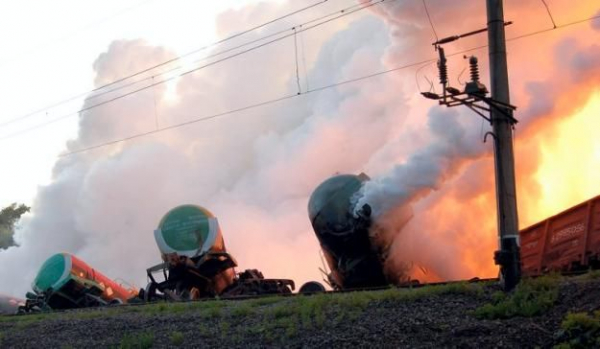
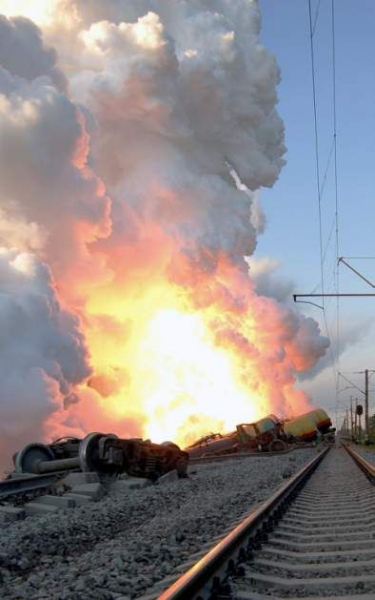
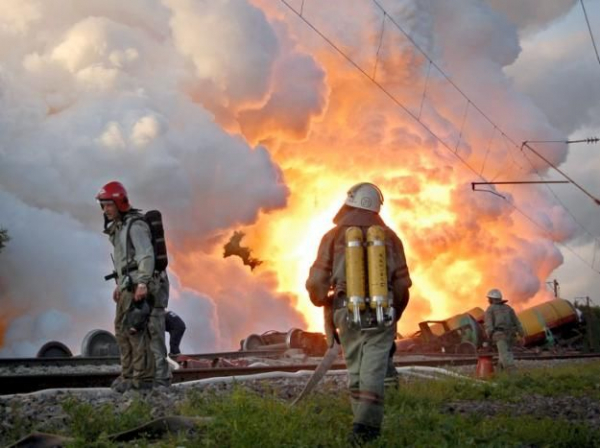
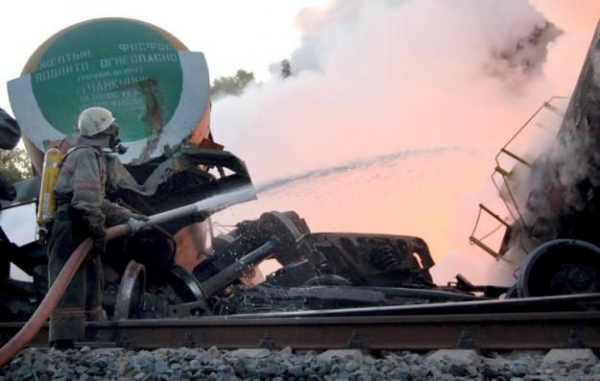
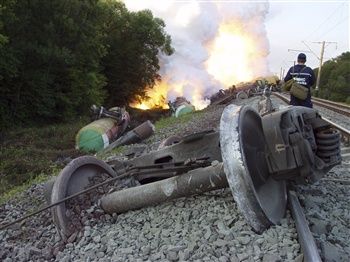
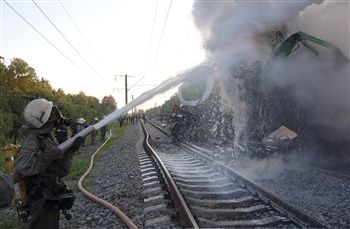
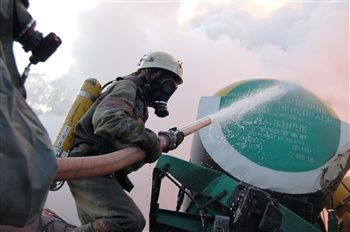

What followed was a mix of panic, media exaggeration, a lack of experience working with yellow phosphorus, and total ignorance of chemistry.
During the firefighting efforts, a cloud of combustion products formed with an affected area of about 90 square kilometers. This zone encompassed 14 settlements in the Busk district, home to 11,000 residents, as well as some territories in the Radekhiv and Brodiv districts. The Ministry of Emergency Situations of Ukraine suggested that residents of nearby villages evacuate and sent about ten buses; however, many people refused to leave their homes. Lviv authorities assured that no one would be forcibly evacuated, although they warned about the unpredictability of the incident's consequences. During the night, around 800 residents were temporarily relocated from 6 settlements in the Busk district.
By Tuesday, the number of injured had reached 20 people (6 Emergency Situations specialists, 2 police representatives, 2 railway workers, and 10 locals), of whom 13 were hospitalized in serious and moderate condition at the military medical clinical center of the Western Operational Command in Lviv. Of the hospitalized, seven were Emergency Situations workers, two were traffic police employees, and four were local residents.
At the same time, media raised a tremendous outcry. Some of the gems included:
- …
Reading all this makes me sad. Because it demonstrates a complete lack of understanding of chemistry among the masses. It also shows how easily uninformed people can be manipulated (by the way, %username%, did you know that slaveholders in the USA firmly believed that slaves should be illiterate — so they couldn't forge manumission papers, correspond with other settlements, coordinate rebellions, etc. — not much has changed).
More or less objective events chronologically are shown here (be careful — it’s in Ukrainian; if you’re ashamed and don’t know — Google Translate):
What can we understand from this chronology?
- Nobody knew anything.
- Everyone wanted some publicity.
- The firefighters/emergency services were scared.
- The military were too.
- There was total chaos among the locals.
- Until representatives from Kazphosphate arrived on July 18 — no one understood what to do.
- No one wanted to pay for anything.
After talking to some employees of Kazphosphate directly involved in dealing with the aftermath of the accident, I can say the following.
There was no explosion/self-ignition/ignition of phosphorus — it was simply floating under the water. Yellow phosphorus doesn’t explode on its own! However, there was damage to the railway tracks, causing the tankers to derail. When the tankers hit, cracks formed, allowing water to escape — and then phosphorus caught fire. The temperature and burning characteristics ultimately destroyed the tanker.
- The white smoke is quite explainable — it’s phosphorus acid vapors, not phosphorus itself. Breathing these in will indeed lead to a severe cough and it’s not particularly healthy. However, it’s not acutely life-threatening. Most injuries among local residents were due to people rushing to collect interesting smoking pieces in bottles with water, and the area wasn’t cordoned off immediately — everyone was scared.
- The firefighters' fear that supposedly "this stuff burns in water!" is due to powerful jets of water breaking the phosphorus into smaller pieces — which then scattered and ignited. It required a weaker flow or foam, which they subsequently used.
- By the way, when everything was extinguished and only pieces remained inside the tank — it was the Kazakhs who put it out. Well, how they put it out — they collected and threw it into buckets of water mostly. One of them — the chief technologist of the factory, a passionate smoker. So he was extinguishing and smoking. Some even published photos of the 'mad Kazakh who smokes even in a dreadful chemical fire!' Well, why not?
- There was no ecological disaster and no 'second Chernobyl' — essentially, nature received a dose of phosphorus fertilizers.
- The only person who acted appropriately, listened to the Kazakhs, and did what was necessary was Vladimir Antonets, the first deputy minister of emergencies. Probably because he is a colonel-general with a lot of awards.
After it became clear that there was no sensation: there was no terrorist act, no threat of an ecological disaster — nobody died, and no money would be given — interest in the catastrophe quickly faded. The official reasons for the accident were named:
- The improper condition of the tracks on this railway segment.
- Violation of safety rules by the locomotive crew.
- Negligence (ignoring the instructions on the temperature regime for transporting especially hazardous goods).
- The improper technical condition of the tanks.
In fact, the most truthful of these is the first one. The rest were added to avoid paying the Kazakhs for the loss of cargo. Well, it seems like insurance compensated.
So everyone ended up where they started.
The moral, %username%: study chemistry. It's everywhere. It will help you to survive, understand something for yourself.
And finally…
Not all chemical compounds are harmful. Without hydrogen and oxygen, for example, you wouldn't be able to get water, the main component of beer.
— Dave Barry, not a chemist
Source: habr.com
