

The official TIOBE company website, specializing in software quality control, has released an updated programming language ranking for the current month.
The TIOBE ranking clearly demonstrates the popularity of modern programming languages and is updated monthly. It is based on data gathered worldwide regarding the number of qualified engineers, available training courses, and external solutions that enhance the language and simplify its use. The ranking calculations utilize popular search engines such as Google, Bing, Yahoo!, Wikipedia, Amazon, YouTube, and Baidu. It is essential to note that the TIOBE index does not indicate which language is worse or better, or which language has more lines of code; rather, it can be used to plan the study of a language based on its popularity and demand worldwide, as well as to choose a language for creating a new product by you or your company.
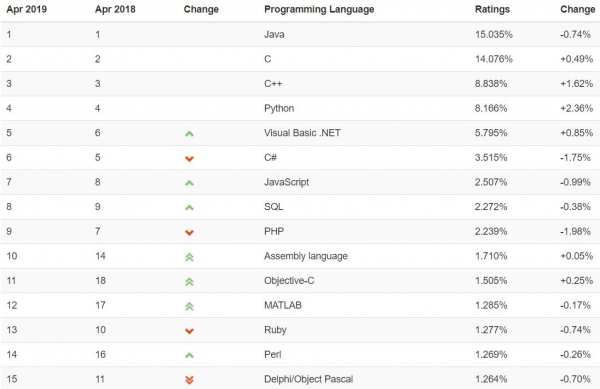
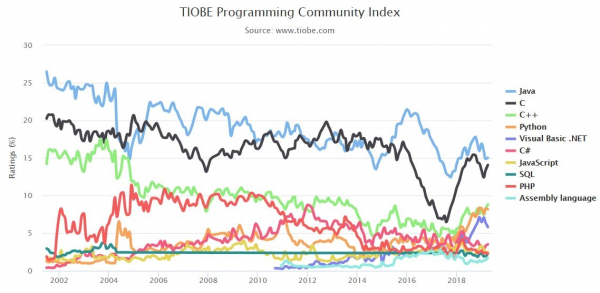
This month, C++ reclaimed third place, pushing Python down a rank. This in no way suggests that Python is in decline, as it continues to break records for popularity almost every month. Demand for C++ has also grown over the past year. However, it is still far from its peak glory at the beginning of this century, when its market share was over 15%. At that time, delays in the release of a new standard—C++0x (working title C++11)—along with the inherent complexity of the language and security issues, significantly reduced C++’s popularity. After the release of C++11 in 2011, the new standard made the language much simpler, safer, and more expressive. It took several years for the standard to be fully adopted by the community and for its support to be added to all popular compilers. Now that the C++11, C++14, and C++17 standards are fully supported by GCC, Clang, and Visual Studio, C++’s popularity is reviving due to its capabilities in writing low-level code with maximum performance.
Source: 3dnews.ru
