

The latest version, Android 9, was released in August 2018. By October, 81 days after its launch, this version of the OS was installed on less than 0.1% of devices according to Google's most recent publicly available statistics. The previous Oreo 8, released in August 2017, was running on 21.5% of devices 431 days post-launch. After a lengthy 795 days following the release of Nougat 7, the majority of Android users (50.3%) were still on older versions of the OS.
Overall, Android devices are not updating (or updating extremely slowly), preventing smartphone owners (as well as app developers) from enjoying the latest advantages of the platform. Despite numerous attempts by Google to remedy the situation, the scenario has only worsened over the years. The adoption rates of the latest versions of the mobile OS are declining each year.
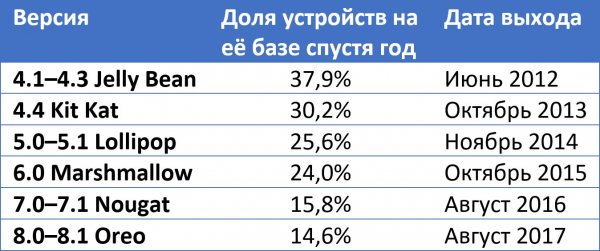
A characteristic of Android is that devices receive updates so slowly that by the time a new version of the OS is released, the previous one is still a minority in the market compared to older versions. To assess whether Google is improving the update rates of the vast array of Android devices, we can look at what percentage of devices are running the new major updates one year after their release. The numbers show a clear trend: Google's efforts are not yielding the expected results. The spread of new Android versions across the entire device pool is taking longer and longer.
Here is the percentage of devices that were running each major version of Android 12 months after its release, according to Google's official statistics:
And here is the same statistics in dynamics, in the form of a graph:
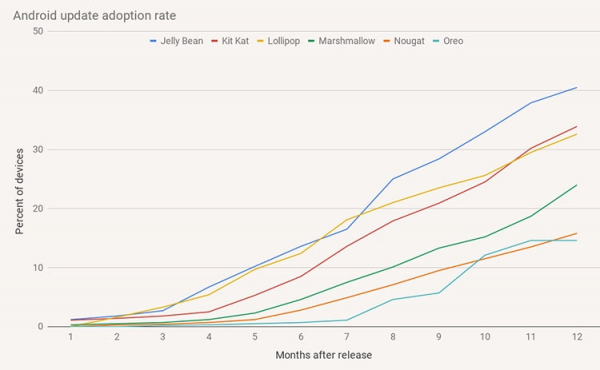
It is worth noting that the figures reflect not only the release rates of fresh updates by manufacturers. They also show how quickly new OS versions become pre-installed on new smartphones and how much time users take to purchase a new device to replace their old one. Thus, they indicate the spread of new OS versions across the entire Android device pool over the course of a year.
In addition, Android devices include not only smartphones and tablets but also TVs and car systems with Android Auto, which users do not replace very often. However, if TVs continued to receive updates a couple of years later (which does not happen), they would not lower the statistics.
So why is each version of the OS spreading slower than the previous one? A likely reason is that the complexity of the Android platform is constantly increasing. At the same time, the interfaces that each major manufacturer develops on top of Google’s mobile OS are becoming more complicated. The market participants are also rapidly changing. For example, when Android Jelly Bean was in vogue, important market players included HTC, LG, Sony, and Motorola. Since then, these companies have significantly lost ground to Chinese brands like Huawei, Xiaomi, and OPPO. Additionally, Samsung has gained market share, pushing out many smaller manufacturers that made fewer modifications to the OS and could therefore release fresh updates more quickly.
Does anyone else remember Android Update Alliance? (вряд ли)
Android fragmentation has been a problem essentially throughout the entire existence of the mobile OS—people have complained about the slow distribution of updates almost since the platform's inception.
In 2011, Google launched the Android Update Alliance with considerable optimism. This was an agreement between Google, leading manufacturers, and mobile operators for the timely release of updates for Android. Android users and the media were thrilled with this news, but the initiative faded away, remaining more of a concept than reality.
Nexus programs and Pixel
In 2011, Google also began selling Nexus phones under its brand, developed in close collaboration with various companies. They were designed to showcase the platform's capabilities and aimed to demonstrate the advantages of using a reference and quickly updated Android environment to manufacturers. Nexus devices remained niche products and could never rival the popularity of Samsung.
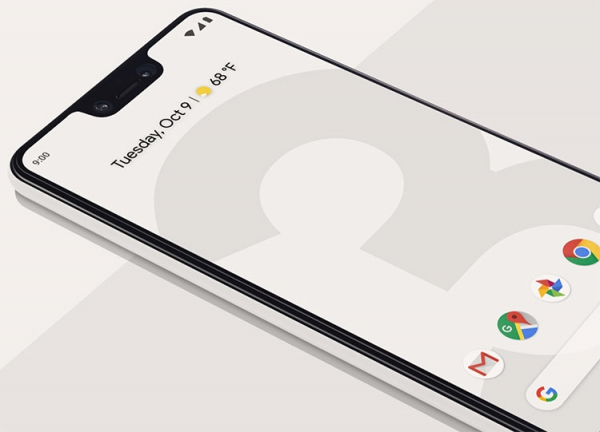
The spirit of the program lives on today in Pixel smartphones, but, much like with Nexus, only a small number of Google fans choose these devices. Very few manufacturers release smartphones based on the reference Android environment, and there are extremely few flagship solutions. For instance, the attempt by Essential to create something similar did not succeed in the market.
In 2016, Google tried a new tactic by threatening to publish a blacklist of the worst manufacturers that were too slow to update their devices as anti-advertising. Although this list was reportedly distributed among partners in the Android ecosystem, the search giant abandoned the idea of publicly criticizing companies.
Project Treble
In 2017, Google introduced another approach to combat fragmentation. This was not an alliance or a list, but a project codenamed Project Treble. This high-tech development aimed to modularize the Android kernel, allowing independent updates, which enabled device manufacturers to create fresh firmware more quickly, without relying on changes from chip manufacturers, and significantly simplifying the entire update process.
Treble is a part of any device running Oreo or a later version of the OS, including the Samsung Galaxy S9. The S9 received its first major update indeed faster than its predecessor. What’s the bad news, though? It still took 178 days (for the S8, the process took an absurd 210 days).
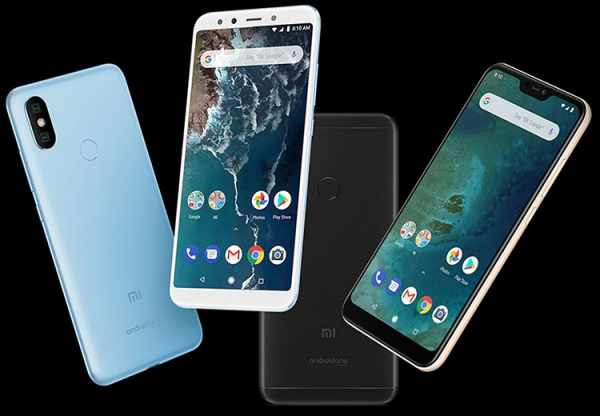
We can also recall the Android One and Android Go programs, which are aimed at making the latest versions of Google's mobile OS more widespread, especially on mid-range and budget models. Perhaps Project Treble will lead to modest improvements in the speed of fresh updates on flagship devices. But the trend is clear: the fragmentation problem with each new major version of Android is only growing, and there’s no reason to believe it will change anytime soon.
Source: 3dnews.ru
