

After 6 months of development, the release of the postmarketOS project 25.06 is presented, which develops a Linux distribution for mobile devices based on the Alpine Linux package base, the standard C library Musl, and the BusyBox utilities. The goal of the project is to provide a Linux distribution for smartphones and tablets that is independent of the lifecycle support of official firmware and is not tied to the standard solutions of major industry players. Builds have been prepared for 57 devices, including the PINE64 PinePhone Pro, Purism Librem 5, OnePlus 6, Fairphone 5, Google Nexus 10, Google Pixel 3a, Nokia N900, Lenovo A60xx, ASUS MeMo Pad 7, as well as various models of Samsung Galaxy and Xiaomi. Limited experimental support is provided for over 600 devices.
The postmarketOS environment is unified and extracts all device-specific components into a separate package. All other packages are identical for all devices and are based on packages from the Alpine Linux distribution. Vanilla Linux kernel is used in the builds whenever possible, and if this is not feasible, kernels from firmware prepared by device manufacturers are utilized. The main user interfaces offered include KDE Plasma Mobile, Phosh, GNOME Mobile, and Sxmo, but there is also the option to install other environments, including MATE, COSMIC, and Xfce.
In the new release:
- The ability to use the system manager systemd instead of the OpenRC initialization system has been added. Systemd is used in builds with GNOME Mobile, KDE Plasma Mobile, and Phosh. OpenRC remains in the build with Sxmo. The reason for adding systemd support is the increasing complexity of maintaining the OpenRC-based initialization stack in the context of the growing dependence of GNOME and KDE on systemd components. Existing layers for working with GNOME and KDE without systemd do not support some necessary features and have maintenance issues. By using systemd in the distribution, new opportunities for granular privilege management, security enforcement, service dependency management, cgroups support, and socket-based service activation can be implemented.
- The number of ready builds has increased from 53 to 57. Support has been added for the Google Pixel 3A XL, Motorola Moto G5 Plus, Xiaomi Redmi 7, Xiaomi Mi 9T, Redmi K20, Xiaomi POCO X3 NFC, and Xiaomi Mi Pad 5 Pro smartphones.
- Camera support has been implemented for the OnePlus 6, Motorola Moto E5 Plus, Motorola Moto G5s, Xiaomi Redmi 3S, Xiaomi Redmi 4 Standard, and Xiaomi Redmi 4A smartphones.
- Support for the sound subsystem and battery management has been included for devices with Qualcomm Snapdragon 425/427/430/435 (MSM89x7) chips, such as the Motorola Moto E5 Plus, Motorola Moto G5s, Xiaomi Redmi 3S, and Xiaomi Redmi 4.
- The package base has been synchronized with Alpine Linux 3.22.
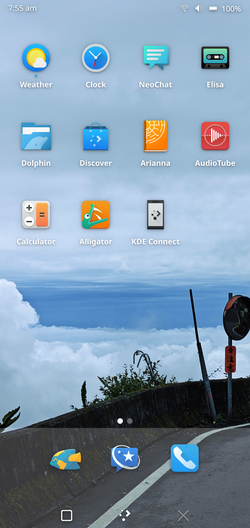
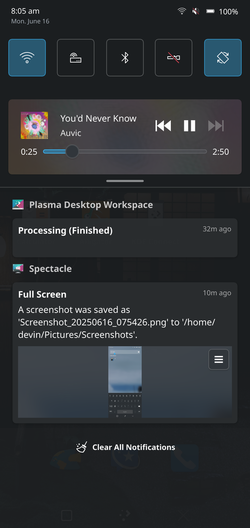
- The KDE Plasma Mobile shell has been updated to version 6.3.5 (previously version 6.2.4 was supplied). Compared to the last release, the task-switching interface has been improved, window management capabilities have been expanded, enhancements have been made to the quick settings panel, support for manual screen orientation switching has been added, a traffic tracking interface has been introduced, and the volume control widget has been enhanced.

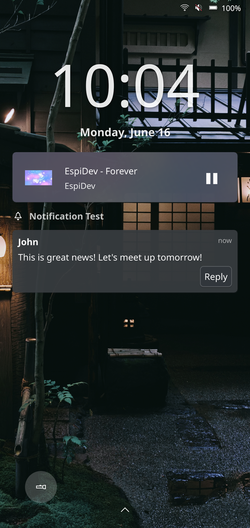
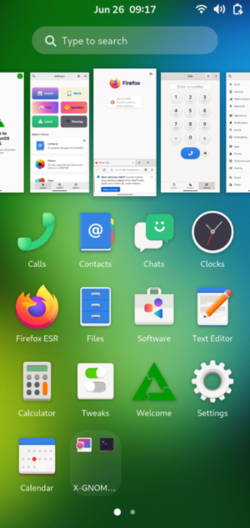
- The GNOME Mobile user environment has been updated, utilizing a version of the GNOME Shell shell adapted for smartphones and tablets with touch screens. GNOME Mobile components have been migrated to the GNOME 48 branch (the previous version used GNOME 46). Notable changes include the implementation of dynamic triple buffering for output, a stacked notification layout, a new font, and enhanced window management tools.
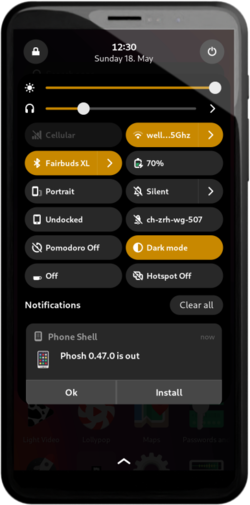
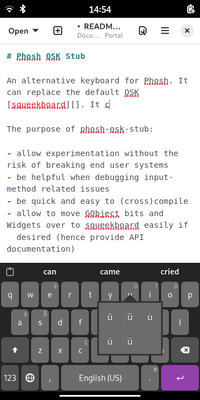
- The Phosh environment, based on GNOME technologies and developed by Purism for the Librem 5 smartphone, has been updated to version 0.47 (the previous version was 0.43). Changes include the ability to set wallpapers for the lock screen, enhanced quick launch panel features, support for searching in the file chooser interface, adjustment of haptic feedback strength, and the display of broadcast messages from the mobile operator. Instead of squeekboard, the default on-screen keyboard is now Stevia, which supports word auto-completion and an additional symbols input pop-up.


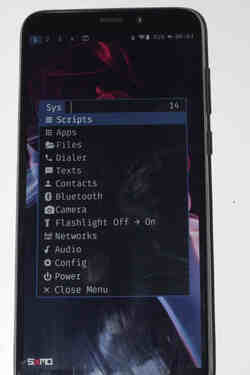
- The Sxmo (Simple X Mobile) graphical shell, based on the Sway compositor and adhering to the Unix philosophy, has been updated to version 1.17.1 (previously it was 1.17.0).

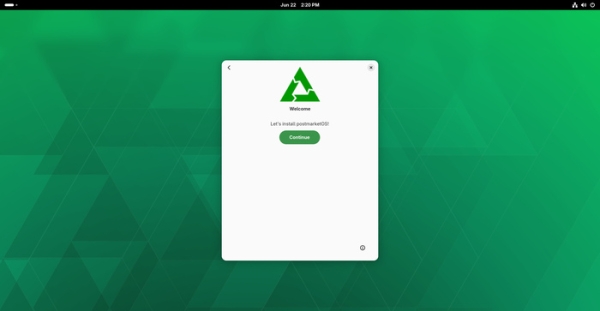
- A new interface has been proposed in the installer, simplifying the distribution installation on laptops. The interface allows for installation to the internal storage while booting in live mode, performing initial setup, and installing additional packages.

- Included in the package is mobile-config-thunderbird, which modifies the settings of the desktop version of the Thunderbird email client for use as a mobile application.
- The mobile-config-firefox package has been improved, allowing standard Firefox to be used on mobile devices.
- The default supply of the openssh-client package has been discontinued, and it now needs to be installed manually. The package is also installed as a dependency when installing the postmarketos-dev developer package, which includes alpine-sdk, bash, and coreutils.
Source: opennet.ru
