

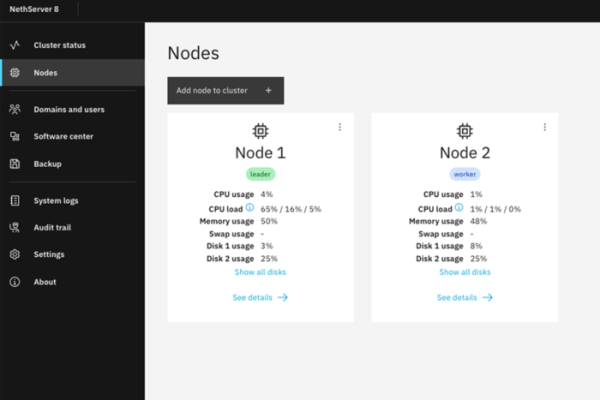
The release of the NethServer 8.5 project has been announced, which develops a platform for deploying server application infrastructures in isolated containers, using a cluster of local or cloud servers. NethServer is positioned as a simple container orchestration platform for system administrators in small offices and medium-sized enterprises that do not want to deal with complex tools like Kubernetes.
Up to version 8.x, the project developed its own distribution for rapid deployment of standard servers based on CentOS, but starting with the release of NethServer 8, it has transformed into a universal platform installed over distributions such as Rocky Linux 9, CentOS Stream 9, AlmaLinux 9, and Debian 12. Instead of installing components as RPM packages, NethServer 8 utilizes isolated containers running self-sufficient images with various server applications. The platform's code is written in Vue, Go, and Python, and is distributed under the GPLv3 license. For installation in cloud environments and virtual machines, ready-to-use builds are provided in qcow2 (QEMU/Proxmox) and vmdk (VMWare) formats, based on Rocky Linux 9.
Applications in containers can be launched on different hosts and managed through a single centralized web interface. Nodes are connected to each other via an encrypted VPN. Installation and commissioning of selected server components are done with one click and do not require knowledge of each service's configuration details. The transfer of containers with applications between hosts is supported. Backups of running application data and cluster settings can be stored on local drives as well as on external storage services such as Amazon S3, Backblaze B2, and Microsoft Azure. For infrastructure operation, Podman, WireGuard, firewalld, and OpenLDAP are used.
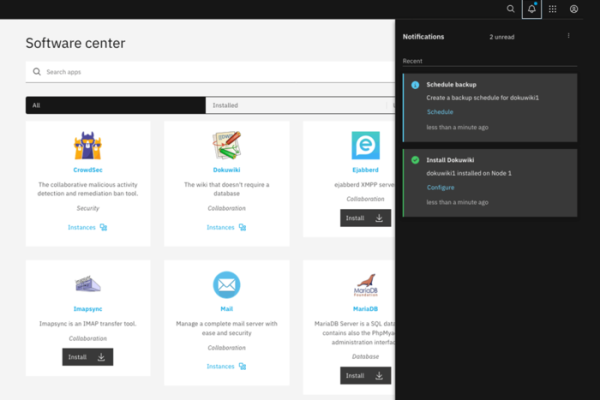
Modules for the quick setup of mail servers (Postfix, Dovecot, Rspamd, ClamAV), collaboration systems (Collabora Online or NextCloud), telephony servers (Asterisk), SIP servers, and messaging systems (Mattermost) are available for installation. web server (Nginx, PHP, SFTPGo), customer interaction platforms (Odoo), DBMS (MariaDB, PostgreSQL), Wiki (DokuWiki), intrusion detection systems (CrowdSec), Active Directory domain controller (Samba), cloud storage (MinIO), etc. It is possible to run different versions of the same application on one node.
Among the changes in the new version:
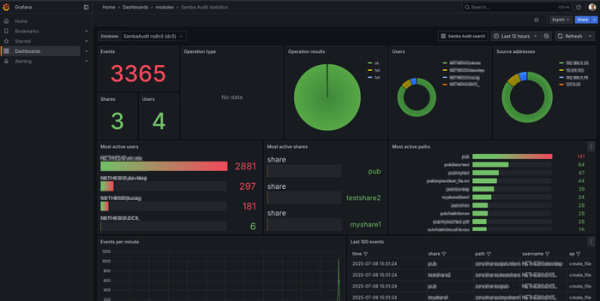
- The application installation center provides the ability to set up a file server based on Samba and configure it to operate as a member of the Active Directory domain controller. WSDD service is used to determine the server's presence in the network. Status visualization is provided in the form of graphs.

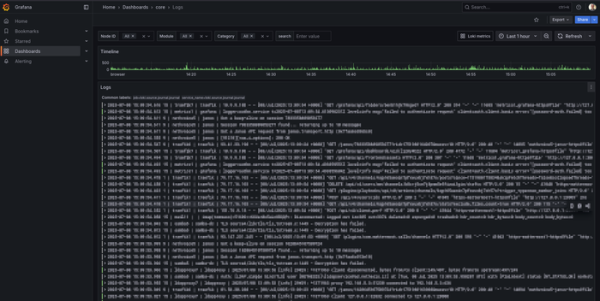
- A new section 'Metrics' has been added to the settings, through which visualization can be configured using Grafana and notifications about failures can be sent via email. Prometheus and Loki are used for collecting and storing metrics. Visualization of activity spikes in logs has been added.
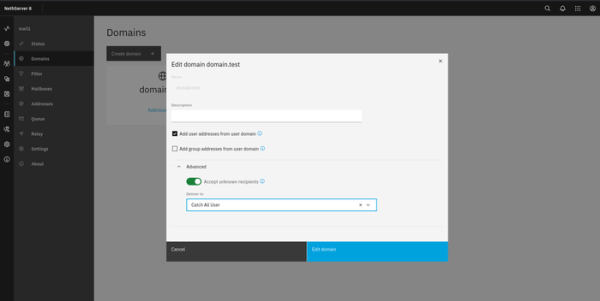
- The mail server module now allows the delivery of all emails coming to a specific domain to the address of one user or a group.
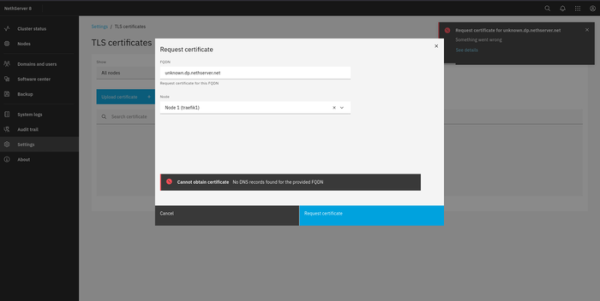
- The interface for managing TLS certificates has been improved. Checks have been added to the certificate request procedure to exclude requests for already used names.
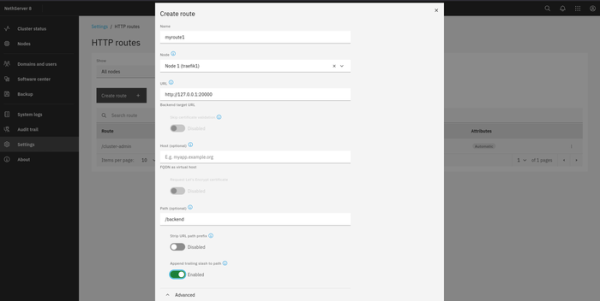
- An option has been implemented to append a trailing slash to HTTP routes.
- Updated versions: Webtop 5.28.6, PEC Bridge 5.4.8, NethVoice 1.3.4, Nextcloud 31, Collabora 25, Roundcube 1.6.11, SOGo 5.12, Mattermost 10.5.5, PostgreSQL 17.5, Netdata 2.4, Crowdsec 1.6.8, Ejabberd 25.4.
Source: opennet.ru
