

"Protection" is a good label for bad deeds.
Milton Friedman "Free to Choose"
This text was created as a result of analyzing some comments on articles. and .
In interpreting any data and drawing conclusions, some commentators made the typical "survivorship bias" error.
What is the "systematic error of survivorship"? It is the consideration of what is known while neglecting what is unknown but existing..
An example of the "cost" of the survivorship error and a successful overcoming of this mistake is the work of Hungarian mathematician Abraham Wald, who worked for the US Army during World War II.
The command tasked Wald with analyzing bullet and shrapnel holes on American aircraft and suggesting a way to armor them so that pilots and planes would not perish.
Solid armor could not be applied — the plane would become too heavy. It was necessary to either armor the areas where damage occurred, where bullets hit, or those areas that were undamaged. Wald's opponents suggested armoring the damaged areas (marked with red dots in the picture).
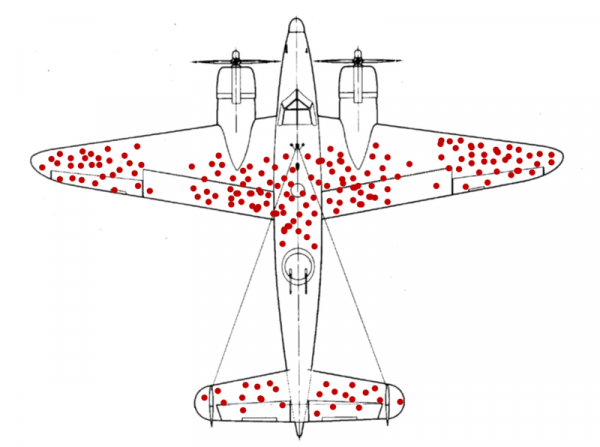
Wald argued against this. He stated that planes with such damage managed to return, while planes with damage in other areas did not return. Wald's perspective prevailed. The planes were armored where returned aircraft had no damage. As a result, the number of surviving planes greatly increased. According to some data, Wald thus saved the lives of about 30% of American pilots. (I might be mistaken in the number, but the effect was quite significant. Wald saved hundreds of lives).
Another illustration of the "survivorship error" is Cicero's account of the words of Diagoras of Melos, who, in response to an argument in favor of swearing to the gods, because there are many "images of people being saved who were caught in a storm and vowed to the gods to fulfill some promise," replied that "however, there are no images of those who perished at sea due to shipwrecks."
And the first "survivorship error" in comments on the article. consists of the fact that we do not know how many good, useful, brilliant ideas, creations, inventions, and scientific works have been buried under various "dislikes," "ignores," and "bans."
I will quote the wording of Mr. : "No one knows how many good ideas have been lost, unpublished, or not developed due to fear of being banned. There have also been many attempts that ended quietly with the author's ban. What is visible now is how many successful ideas have been recognized immediately or belatedly, and how many failures went unrecognized. If we rely solely on what is visible — then yes, everything is fine."
This is true for any rating system based on the preferences of the majority. Whether it be in science, social networks, search engines, primitive tribes, religious groups, or other human communities.
"Ban" and "dislike" do not always stem from malevolent intent. The reaction of "indignation" toward something new and unusual is a routine physiological and psychological response, termed with the trendy phrase "cognitive dissonance" — it is simply a feature of the Homo Sapiens species, not a characteristic of any specific group. However, the triggers for each group may be different. The newer and more unusual something is, the stronger the outrage and dissonance. One must have a very good grasp of their own psyche to not lash out at the "disturber of the peace." This, however, does not justify the aggressor in any way. The "disturber" merely "arouses" indignation, whereas the actions of the aggressor are aimed at destruction.
The survivor bias also appears in the comments to the article . And it relates to the certification of medicines.
Just below, I will provide a lengthy quote from Milton Friedman's book "Free to Choose", a Nobel laureate in economics, but for now, I just want to note that a vast number of clinical trials, certifications, and more do not seem to convince everyone to get vaccinated, take prescribed antibiotics, and hormones. That is, licensing and certification, in this case, "do not work". At the same time, there are quite a lot of people using dietary supplements or homeopathy, which are not subject (to put it mildly) to the same rigorous control as medicines. Many people prefer to turn to healers and folk doctors instead of going to a doctor and taking the "chemicals" which have licenses, certifications, and have undergone numerous controls and trials.
The cost of such a decision can be incredibly high—ranging from disability to death. A quick death. The time that a patient spends on treating with dietary supplements, neglecting chemicals and a doctor's visit, translates into a missed opportunity to cure the disease at an early stage, in the so-called "clear gap".
It is important to understand that before a drug is sent for "certification", the pharmaceutical company conducts a multitude of its own trials and controls, including on people.
Certification merely duplicates this procedure. Moreover, this repeats itself in every country, ultimately increasing the drug's cost for the consumer.

This was a slight digression from the topic. Now, to shorten it significantly, I quote Milton Friedman.
«To organize mutually beneficial cooperation among people, it does not require the intervention of external forces, coercion, or restriction of freedom… Currently, significant evidence has accumulated that the regulatory activities of the FDA are detrimental, having caused more harm by stifling progress in the production and distribution of beneficial drugs than good, protecting the market from harmful and ineffective drugs.
The impact of the Food and Drug Administration (FDA) on the speed of new drug adoption is significant... Currently, it takes much longer to obtain approval for a new drug, and partly as a result, the costs of developing new treatments have skyrocketed... An estimated $54 million and about 8 years are now necessary to bring a new product to market, leading to a tenfold increase in costs and a fourfold extension of time compared to a general twofold increase in prices. As a result, U.S. pharmaceutical companies can no longer develop new treatments for patients with rare diseases. Additionally, we cannot fully benefit from foreign advancements because the FDA does not accept evidence from abroad as proof of drug efficacy.
If we examine the therapeutic significance of drugs that are not available in the U.S. but are accessible in places like England, you will encounter numerous instances where patients have suffered due to the lack of medication. For example, there are drugs known as beta-blockers that can prevent death from a heart attack—secondary prevention of myocardial infarction death—had these drugs been available in the U.S. they could save approximately ten thousand lives each year.…
A collateral consequence for patients is that therapeutic decisions, which were previously at the discretion of doctors and patients, are increasingly being made at the national level by expert committees. For the Food and Drug Administration, the highest priority is to avoid risk, which results in safer medications but fewer effective ones..
It is not coincidental that the Food and Drug Administration, despite its best intentions, discourages the development and market implementation of new and potentially beneficial drugs with its actions.
Put yourself in the position of an FDA official responsible for approving or denying a new drug. You can make two mistakes:
1. Approve a drug., causing an unforeseen side effect that could lead to the death or serious deterioration of health for a large number of people.
2. Deny approval of a drug, which could save the lives of many people or relieve immense suffering and has no adverse side effects.
If you make the first mistake and approve it, your name will be on the front pages of all the newspapers. You will face severe backlash. If you make a second mistake, who will find out? The pharmaceutical company promoting a new drug, which can be dismissed as a sample of greedy businessmen with cold hearts? A few enraged chemists and doctors involved in the development and testing of the new drug?
Patients whose lives could have been saved will no longer be able to voice their protest. Their families won't even know that their loved ones lost their lives due to the 'caution' of an unknown official from the Food and Drug Administration.
Even with the best intentions in the world, you would inadvertently ban many good drugs or delay their approval to avoid even the remote chance of allowing a medication with side effects that could generate newspaper headlines...
The harm caused by the Food and Drug Administration is not a result of the shortcomings of people in responsible positions. Many of them are capable and dedicated public servants. However, social, political, and economic pressure dictates the behavior of those responsible for the government agency's actions far more than they themselves determine its behavior. Undoubtedly, there are exceptions, but they are nearly as rare as barking cats.” End of quote.
Thus, the 'survivor bias' in evaluating the effectiveness of the regulatory agency 'costs' humanity 10,000 lives per year for just one drug in one country. The size of the entire invisible part of this 'iceberg' is difficult to assess. And perhaps, frightening.
"Patients whose lives could have been saved will no longer be able to express their protest. Their families will not even learn that their loved ones lost their lives due to the 'caution' of an unknown official.". No negligent manufacturer has caused such damage to their fellow citizens.
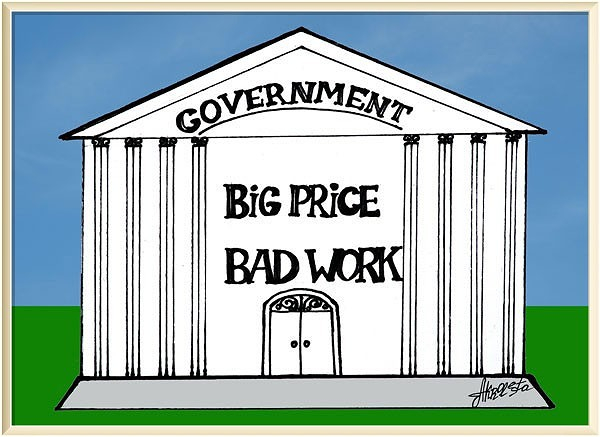
Moreover, the certification service is quite costly to taxpayers. That is, to all residents. According to Milton Friedman, the share of the 'eaten up' funds by officials regulating various social programs in the U.S. is about half of all taxes allocated for various social payments. This half is spent on salaries and other expenses of officials from the social distribution-regulatory system. Any business would have gone bankrupt long ago with such unproductive overhead costs.
It's like tipping a waiter for poor service at a restaurant with an amount equal to the cost of dinner. Or paying for packaging groceries at a supermarket at their full price just for having them bagged.
The presence of an official in the producer-product-consumer chain or service-consumer relationship doubles the cost of any product and service. That is, a person's salary could buy twice as many goods and services if officials were not overseeing these products and services.
As Judge Louis Brandeis said: "Experience teaches that freedom particularly needs protection when the government is seeking benevolent ends."
Licensing, like other prohibitive means of regulating (depressing) the economy, is not new and has been known since the Middle Ages. All forms of guilds, castes, and estates are nothing more than licensing and certification, translated into modern language. And their goal has always been the same — to limit competition, raise prices, increase the incomes of 'their own,' and exclude 'others.' That is, the same old discrimination and blatant cartel conspiracy that worsens quality and raises prices for consumers.
Maybe we should find a way out of the Middle Ages? It's the 21st century.
Traffic accidents are caused by drivers who have permits and licenses. Medical errors are committed by certified and licensed doctors. Licensed and certified teachers poorly educate and inflict psychological trauma on students. At the same time, healers, homeopaths, shamans, and charlatans operate splendidly without licenses and exams and thrive while satisfying public demand.
Meanwhile, a plethora of officials, who produce no valuable goods or services for citizens, thrive on all these licenses and permits, yet somehow have the right to decide for the citizen where to receive medical treatment and education at the expense of their own taxes..
One can only marvel at the fact that, despite the prohibitive nature of officials' work, pharmaceutical companies still managed to register numerous drugs in the 20th century that saved millions of lives.
And one can only be horrified at the amount of medicines that were not developed, not registered, or deemed economically unfeasible due to the cost and duration of the permitting process. It is shocking how many lives and health have been cost by the prohibitive activities of officials.
Meanwhile, the presence of a vast number of licensing, controlling, supervising, and sanctioning officials and agencies has not in the least reduced the number of charlatans, folk remedies, various panaceas, and magical pills. Some of them are marketed as food supplements, while others are simply distributed bypassing any pharmacies, stores, and agencies.
Is it worth continuing to insist on the erroneous path of licensing and regulation? I believe not.
If the brain of the heroic and respected reader, who has read this article to the end, is still not ablaze with fierce cognitive dissonance, I would like to recommend four books, written in very simple language, that debunk many myths concerning capitalism, survivor bias, economics, and government control. Here are these books: Milton Friedman "Free to Choose," Ayn Rand "Capitalism: The Unknown Ideal," Steven Levitt "Freakonomics," Malcolm Gladwell "Outliers," Frédéric Bastiat "What is Seen and What is Not Seen."
A Another article about the 'survivorship bias' has been published.
Illustrations: , , .
P.S. Dear readers, I ask you to remember that 'the style of debate is more important than the subject of debate. Subjects change, while style creates civilization.' (Grigory Pomerants). If I haven't responded to your comment, it means there is something wrong with the style of your debate.
Addition.
I apologize to everyone who wrote a meaningful comment and I didn't respond. The thing is, someone has taken to downvoting my comments. Every time a new one appears. This hinders me from gaining 'momentum' and giving a plus to the karma for the responses to those who write meaningful comments.
But if you still wish to receive an answer and discuss the article, you can send me a personal message. I respond to them.
Addition 2.
'Survivorship bias' using the example of this article.
At the time of writing this addition, the article has 33.9k views and 141 comments.
Let's assume that the majority of them are negative towards the article.
That is, the article was read by 33,900 people. 100 criticized it. 339 times less.
So, if we round off quite roughly and with assumptions, the author has no data on the opinions of 33,800 readers, but has data only on the opinions of 100 readers (actually, even fewer, since some readers leave multiple comments).
And what does the author, that is me, do when reading the comments? I commit the typical 'survivorship bias' error. I only analyze the hundred 'dislikes', completely (psychologically) ignoring the fact that these are just 0.3% of opinions. Based on this 0.3%, which is within the margins of statistical error, I conclude that the article was not liked. I get upset, having no reason for it, if I think logically rather than emotionally.
Thus, the 'survivorship bias' lies not only in the realm of mathematics but also, probably, in psychology and neurophysiology, which makes its detection and correction quite a 'painful task' for the human brain.
Addition 3.
Although this goes beyond the scope of this article, since there is a lively discussion in the comments about the issue of drug quality control, I respond to everyone at once.
An alternative to state control could be the establishment of private expert laboratories that would verify the quality of medicines, competing against each other. (Such laboratories, societies, associations, and institutes already exist in the world.)
What will this provide? First, it will eliminate corruption, as there will always be an opportunity to double-check and refute data from corrupt expertise. Second, it will be faster and cheaper. Simply because private business is always more efficient than government. Third, the expert laboratory will sell its services, meaning it will be accountable for the quality, timelines, and prices. All of this will collectively reduce the cost of medicines at pharmacies. Fourth, if a package does not have a mark indicating verification by an independent private expert laboratory, or even by two or three, the buyer will understand that the medicine is unverified. Or verified multiple times. They will “vote with their wallets” for a particular pharmaceutical manufacturer.
Appendix 4.
I believe it is important to consider the "survivorship bias" when developing AI, machine learning algorithms, etc.
That is, to incorporate not only known examples into the training program but also some delta, possibly even theoretical models of the "unknown possible."
For instance, with "drawing" AIs, it could be, conditionally, "van Gogh + delta"; then, with a large delta, the machine will create a filter based on van Gogh, but resembling him not at all.
Such training may be useful where there is a data deficit: medicine, genetics, quantum physics, astronomy, etc.
(I apologize if I explained it "crookedly").
Note (I hope the last one)
To everyone who read to the end — "Thank you." I truly appreciate seeing your "bookmarks" and "views."
Source: habr.com
