

There are quite a few guides on Habr and in the Russian-speaking Internet about moving to the Netherlands. I also found useful insights from an article on Habr (which, apparently, is now hidden in draft form). ) However, I still want to share my experience of job searching and relocating to this European country. I remember being very curious to read about similar experiences from my peers when I was just about to send out my resume and during the interviews.

In short, if you are interested in a story about how a C++ programmer from the Moscow region searched for a job in Europe, preferably in the UK, but ended up in the Netherlands, moved there on his own, brought his wife along, all while having an outstanding mortgage in Russia and some minor adventures—welcome below the cut.
Background
A brief overview of my career, so you can understand what I was trying to sell to potential foreign employers.
In 2005, I graduated from university in my hometown of Saratov and went to graduate school in Dubna, near Moscow. While studying, I also worked part-time, writing some code in C++ (it’s embarrassing to remember). In three years, I got disillusioned with an academic career and moved to Moscow in 2008. I got lucky with my first proper job (C++, Windows, Linux, well-structured development process), but in 2011, I found a new one. Also C++, but focused on Linux and a more interesting tech stack.
In 2013, I finally defended my PhD and made the first move towards thinking about going abroad. Samsung held some kind of job fair in Moscow, so I sent them my resume. They even interviewed me over the phone. In English! The Koreans left an impression of being complete slackers—neither my resume nor the presentation I had sent them in advance was available. Yet, they were giggling, actually giggling. This strongly offended me, and I was not upset when I was rejected. A bit later, I learned that such laughter among Koreans is a sign of nervousness. Now I prefer to think that the Korean guy was also nervous.

Then I abandoned the idea of moving abroad and changed jobs. I worked with C++, Linux, Windows, and even wrote a bit in C for microcontrollers. In 2014, I took out a mortgage and moved to nearby Moscow region. In 2015, I was laid off (many were laid off then), and I hurriedly found another job. I realized I had made a mistake, searched again, and in that same 2015, I ended up in one of the best places in Moscow, and indeed all of Russia. The best job of my career, a ton of new technologies for me, yearly salary increases, and an excellent team.
You might think that I should have calmed down by now, right? But it didn't work out that way. There isn't just one reason that made me decide to move (I am avoiding the word ‘emigration’ for now). It's a bit of everything: the desire to test myself (could I really communicate in English all the time?), boredom with a quiet life (to step out of my comfort zone), and uncertainty about Russia's future (economically and socially). In any case, since 2017, in addition to wanting to, I started taking active steps.
Job Search
I started by wanting to learn more about a vacancy that had been catching my eye for 4 years, or maybe all 6 — 'C++ programmer needed for a Russian-Vietnamese company in Hanoi.' I overcame my introversion and chatted on social media with people I didn't know — Russian employees of that company. It quickly became clear that such conversations were quite useful, and there was nothing to do in Vietnam. Okay, onward.
I only know English among foreign languages. I read, of course. I also try to watch movies and series in their original language (with subtitles; I find it uncomfortable without them). So, at first, I decided to limit myself to English-speaking countries in Europe. Because I wasn't prepared to move beyond Europe then or now (parents are getting older, and sometimes I need to look after the apartment). There are exactly three English-speaking countries in Europe — the UK, Ireland, and Malta. So what to choose? Of course, London!
Bloomberg L.P.
I updated/created my profiles on LinkedIn, Glassdoor, Monster, and StackOverflow, revamped my resume, and translated it into English. I began browsing job openings and came across Bloomberg. I remembered that a year or two earlier someone had sent me a brochure from Bloomberg, and everything was so wonderfully detailed, including assistance with relocation, that I decided — I will try to get there.
I hadn't sent anything anywhere yet when a recruiter from London contacted me in May 2017. He offered a position at some financial startup and suggested we talk on the phone. On the appointed day and time, he called me on my Russian number and, word by word, mentioned that I should try Bloomberg since they needed people with my background. And the financial startup? Well, they no longer needed anyone there, or something like that. Anyway, I actually needed Bloomberg.
The very fact that I was able to speak with a real Englishman (yes, he was a real Englishman), and I understood him and he understood me, was inspiring. I registered where necessary, sent my resume for a specific position, mentioning that this recruiter had found me and led me by the hand. I was scheduled for the first video interview in a couple of weeks. The recruiter provided me with preparation materials, and I sifted through reviews on Glassdoor myself.
An Indian interviewed me for about an hour. The questions were largely similar (or even identical) to those I had already studied. There were both theoretical questions and actual coding tasks. What pleased me the most at the end was that I was able to hold a dialogue; I understood the Indian. The second video call was scheduled for about a week and a half later. This time there were two interviewers, one of whom was clearly a Russian speaker. I wasn't just solving problems for them, but I was also asking the prepared questions, inquiring about their projects. After an hour of conversation, they told me that I would have a 5-minute break, and then the next pair of interviewers would join. I didn't expect that, but, of course, I didn't object. And again: they had me solve problems, I had questions for them. In total, it was a two-hour interview.
However, I was invited to the final interview (as the recruiter explained to me) in London! They issued me an invitation letter, with which I went to the visa center and applied for a UK visa at my own expense. The inviting party paid for the tickets and hotel. In mid-July, I traveled to London.

The recruiter met me about 20 minutes before the interview, providing the last instructions and advice. I expected to be interviewed for about 6 hours (as mentioned on Glassdoor), but it was just a one-hour conversation with two technical interviewers. I only solved one problem for them; the rest of the time they asked about my experience while I inquired about their project. Then I had a half-hour with HR, who was interested in my motivation, and I had prepared some answers. As I was leaving, I was informed that since a certain manager was unavailable, he would get back to me later — in a week or two. I spent the rest of the day wandering around London enjoying myself.
I was confident that I hadn't messed up and that everything had gone well. Therefore, upon returning to Moscow, I immediately signed up for the next IELTS exam (needed for a UK work visa). I practiced writing essay compositions for two weeks and scored 7.5. That would not be sufficient for a student visa, but for me — without language practice, after just two weeks of preparation — it was quite impressive. However, soon the London recruiter called and informed me that Bloomberg wasn't hiring me. "We didn’t see enough motivation." Well, OK, on to the next opportunity.
Amazon
Even when I was still planning my trip to London, I received a message from recruiters at Amazon inviting me to participate in their hiring event in Oslo. They are actually recruiting people for positions in Vancouver, but this time the interviews are taking place in Oslo. I don’t need to go to Canada, and Amazon, according to reviews, isn’t the most pleasant place to work, but I agreed. I decided to gain some experience if the opportunity arose.

First, there was an online test — two straightforward tasks. Then came the actual invitation to Oslo. The Norwegian visa is several times cheaper than the British one and is processed twice as fast. This time, I paid for everything myself, and Amazon promised to reimburse me afterward. Oslo surprised me with its high prices, abundance of electric vehicles, and the overall impression of a big village. The interview itself consisted of 4 stages, each lasting 1 hour. At each stage, there was one or two interviewers discussing my experience, giving me a task, and answering my questions. I didn't shine, and a few days later, I received a predictable rejection.
From my trip to Norway, I drew a couple of new conclusions:
- it's not worth trying to solve a problem using static polymorphism if you are being interviewed by an engineer who programs only in Java (and seemingly only in Java).
- If you expect compensation for expenses in dollars, indicate a dollar account. My bank simply did not accept the dollar transfer to a ruble account.
United Kingdom and Ireland
I registered on a couple of British sites with technical vacancies. Oh, the salaries they listed were impressive! But no one responded to my applications on these sites, and my resume went unnoticed. However, British recruiters found me somehow, spoke with me, showed me some vacancies, and even forwarded my resume to employers. They convinced me during the process that £60,000 a year is a lot, and no one would hire me with such expectations. It also turned out that my resume branded me a job hopper, as I had changed jobs four times in six years when ideally, you should spend at least two years in each role.
I didn’t regret spending £50 and sent my resume for editing to supposed professionals. The professional provided me with some results, I made a couple of remarks, and he corrected them. For another £25, they offered to write a cover letter, but not impressed by their previous result, I declined. I used the resume later, but its effectiveness didn’t change. So, I tend to consider such services a scam for those who are trusting and insecure job seekers.
By the way, British and Irish recruiters have a bad habit of calling without notice. A call can come at any time—on the subway, during lunch in a noisy cafeteria, or even in the restroom. If you miss their call, they send an email asking, 'When would it be convenient to talk?'
Yes, I started sending my resume to Ireland as well. The reaction was very weak—two fruitless calls and a polite letter of refusal in response to about a dozen or two resumes sent. I got the impression that there are only 8-10 recruitment agencies in all of Ireland, and I have already contacted each of them at least once.
Sweden
Then I decided that it was time to expand my search geography. Where else do people speak English well? In Sweden and the Netherlands. I had never been to the Netherlands before, but I had been to Sweden. The country didn’t inspire much enthusiasm, but it was worth a try. However, there were even fewer vacancies in Sweden for my profile than in Ireland. In the end, I had one video interview with an HR from Spotify, which I didn’t pass, and a brief correspondence with Flightradar24. Those guys quietly disappeared when it turned out that I wasn’t planning to work remotely for them with the prospect of relocating to Stockholm someday.
Netherlands
It was time to get started with the Netherlands. First, my wife and I took a few days to visit Amsterdam to see what it was like. The entire historical center was heavily infused with the smell of marijuana, but overall we decided that the country was decent and livable. So I began looking for vacancies in the Netherlands, while still keeping an eye on London.
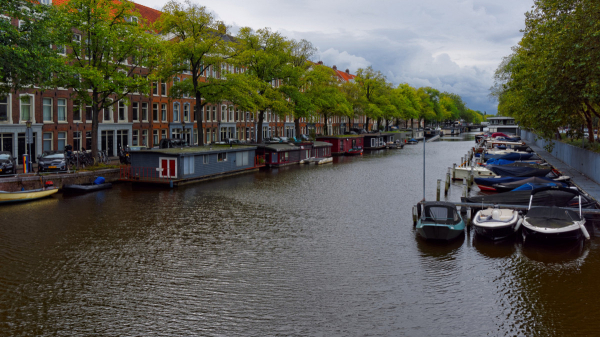
There weren’t many vacancies compared to Moscow or London, but there were more than in Sweden. In some places, I was denied right away, in others after the first online test, or after the first interview with HR (Booking.com, for example, had one of the strangest interviews; I still don’t understand what exactly they wanted from me), and in one place, after completing a test task.
The structure of interviews in Dutch companies differs from those at Bloomberg or Amazon. Usually, it starts with an online test, where you need to solve several (from 2 to 5) technical tasks in a couple of hours. Then there is the first introductory interview (by phone or Skype) with technical specialists, discussing experience, projects, and questions like "How would you act in such a situation?". This is followed by either a second video interview with someone of a higher rank (architect, team lead, or manager) or the same, but already in the office, face to face.
These are the steps I went through with the company from which I eventually received an offer. In December 2017, I solved three tasks on codility.com. By that time, I knew the solutions to such tasks almost by heart, so they didn't pose any problems. This is to say that the technical part is pretty much the same everywhere (except for Facebook, Google, and maybe Bloomberg — see below). A week later, I had a phone interview that lasted an hour instead of the promised 15 minutes. I stood in a corner of my open space, trying not to look suspicious (yes, talking in English) for the entire hour. A week after that, I had to press HR for any kind of response, which turned out to be positive, and I was invited for an on-site interview in Eindhoven (flight and accommodation were covered).
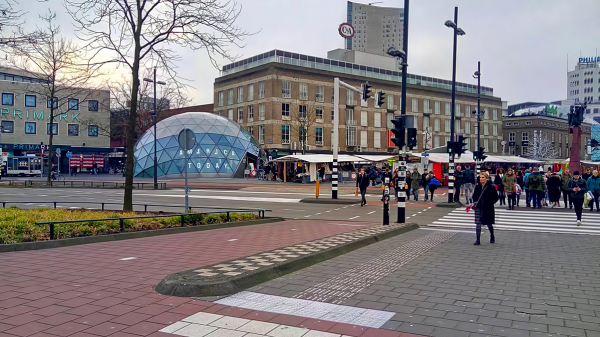
I arrived in Eindhoven a day before the interview and had time to walk around the city. I was struck by its cleanliness and warm weather: in January, it was about as warm as a mild October in Moscow and the surrounding region. The interview itself consisted of three one-hour stages, with two interviewers at each stage. The topics for discussion included experiences, interests, motivations, and answers to my questions. The purely technical part concluded with an online test. One of the interviewers decided to try out a trendy approach — a joint lunch. My advice is to avoid this if possible; if you are the one interviewing, please don't do this. The noise, the clatter, the ringing of dishes, and I could barely hear the person a meter away from me. But overall, I liked the company and the people.
A couple of weeks later, I had to nudge HR again to get feedback. It was positive once more, and now we were finally discussing the actual salary. They asked me what I wanted and offered a fixed salary and an annual bonus dependent on my personal performance, the performance of my department, and the company overall. In total, it was somewhat less than what I had requested. Remembering various articles on negotiating a higher salary, I decided to bargain, even though the articles mainly described American realities. I managed to negotiate a couple of thousand more gross, and by the end of January 2018, I accepted the offer after some reflection (see below).
Yelp
Somewhere around October 2017, I finally received some positive feedback from London. It was an American company, Yelp, hiring engineers for its London office. First, they sent me a link to a short (15 minutes, not 2 hours!) test on . After the test, there were three Skype interviews spaced about a week to a week and a half apart. Although I did not pass further, these were some of the best interviews for me. The conversations were relaxed, blending theory with practice, and included discussions about life and experiences. All three interviewers were Americans, and I had no trouble understanding them. They not only answered my questions in detail, but they also genuinely shared what they do and how they work there. I even couldn't help but ask if they were trained in any specific way for such interviews. They said no, they just pick volunteers. Overall, I now have a benchmark for video/Skype interviews.
Facebook and Google
I will describe my experience with these well-known companies in one section not only because their processes are very similar, but also because I interviewed with them almost at the same time.
Somewhere in mid-November, a recruiter from Facebook's London office contacted me. It was unexpected, but understandable—I had sent them my resume in July. A week after the first email, I spoke with the recruiter on the phone, who advised me to prepare thoroughly for the first Skype interview. I took three weeks to prepare, scheduling the interview for mid-December.
Suddenly, a couple of days later, a recruiter from Google contacted me! And I hadn’t sent anything to Google. The fact that such a company found me was a huge boost to my ego. However, that faded quickly. I understand that this giant can afford to scour the world for suitable employees. In general, the process with Google is the same: first, a screening interview with HR (where I was unexpectedly asked about the complexity of a sorting algorithm in average and worst cases), then HR provides recommendations for preparing for the technical interviews, which take place a few weeks later.
So, I had lists of links to articles/videos/other resources from Facebook and Google, which often overlapped. For example, the book "Cracking the Coding Interview," the sites , , and . I’ve known about this book for a long time, and it seems to me that it's not very relevant anymore. Nowadays, the interview questions are harder and more interesting. I solved problems on HackerRank back when I was preparing for Bloomberg. However, became a very useful discovery for me—much of what was listed there came up in actual interviews.

In the first half of December 2017, I had video interviews with Facebook and Google a week apart. Each lasted 45 minutes, involving a simple technical task; both interviewers (one British, the other Swiss) were polite, cheerful, and engaged in a relaxed conversation. Interestingly, I wrote code for Facebook on , and for Google in Google Docs. Before each of these interviews, I thought, "Just an hour of embarrassment, and then I’ll explore other, more promising options."
But it turned out that I successfully passed this stage in both cases, and both companies invited me to London for on-site interviews. I received two invitation letters for the visa center and initially thought about combining the trips. But I decided not to complicate things, especially since the UK issues a multi-visa valid for six months. So in early February 2018, I flew to London twice, a week apart. Facebook covered the flight and one night in a hotel, so I flew back at night. Google covered the flight and two nights in a hotel. Overall, Google handles organizational matters at the highest level—quickly and efficiently. By that time, I already had something to compare it to.
Interviews at the offices followed the same scenario (the offices are also located close to each other). 5 rounds of 45 minutes each, with one interviewer per round. An hour or so for lunch. Lunch is provided for free, and during the entire lunch break, they assign a 'guide' — someone from the junior engineers who shows how to use the cafeteria, tours the office, and engages in conversation. I casually asked my guide at Google about the average tenure of a programmer there. In Russia, for us, 2 years is considered normal, but here, you'd be considered a job hopper. He replied that at Google, the first two years are mainly about figuring out how things work, and a person starts contributing meaningfully after around 5 years. Not exactly the answer to my question, but it’s clear that the numbers are different there (and don’t quite match with ).
By the way, not just one but even two engineers mentioned that they transferred to the London office from California. When I asked 'Why?', they explained that life outside of work in the Valley is boring and monotonous, whereas in London, there are theaters, art galleries, and generally civilization.
The questions in all rounds were just as described on hundreds of other sites/videos/blogs. They give you a choice of where to write code — on a whiteboard or on a laptop. I tried both options and chose the whiteboard. Somehow, the whiteboard encourages verbalizing one's thoughts more.

I performed significantly better at Facebook than at Google. Perhaps general fatigue and an overwhelming sense of indifference affected me — even before these trips, I received and accepted an offer from the Netherlands, pessimistically assessing my chances. I don't regret it. Plus, at Google, one of the interviewers had a heavy French accent. It was awful. I barely understood a word, kept asking for clarification, and surely came off as a complete idiot.
In the end, Google quickly rejected me, while Facebook wanted to conduct another interview (via Skype) three weeks later, stating that they couldn't figure out how well I fit for the Senior Engineer role. Honestly, I was a bit irked. For the last four months, I've been doing nothing but attending interviews and preparing for them, and here we are again?! I politely thanked them and declined.
Conclusion
I accepted an offer from a not-so-well-known company in the Netherlands like a bird in the hand. I repeat, I have no regrets. Relations between Russia and the United Kingdom have noticeably soured since then, and in the Netherlands not only did I receive a work permit, but my wife did as well. However, more on that later.
The narrative unexpectedly becomes lengthy, so I will pause here. If you're interested, in the next parts, I’ll describe the document gathering and moving, as well as my wife’s job search in the Netherlands. I can also share a bit about everyday life.
Source: habr.com
