

So, over about a year (from May 2017 to February 2018), I, a C++ programmer, finally found a job in Europe. I applied dozens of times to job vacancies in England, Ireland, Sweden, the Netherlands, and even Portugal. I had telephone and Skype conversations with recruiters countless times, and had a few less with technical specialists. I traveled to Oslo, Eindhoven, and London three times for final interviews. This is all described in detail. As a result, I received one offer and accepted it.
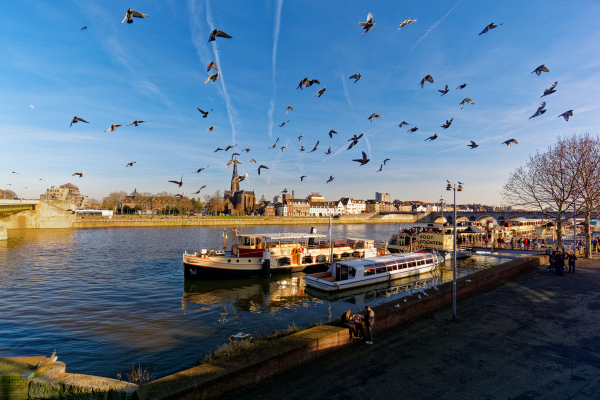
This offer was from the Netherlands. Employers in this country can relatively easily invite workers from abroad (not from the European Union), so the bureaucratic red tape is minimal, and the process takes only a few months.
But one can always create difficulties for oneself. And that’s exactly what I did, which delayed my
move by another month. If you're interested in reading about the troubles (not very pleasant ones) related to relocating an IT family to Western Europe — feel free to read on.
Offer
I’m not sure how standard the offer I received is for Europe, but the main points are as follows (besides the salary, of course):
- the contract is indefinite
- the probation period is 2 months
- 40 working hours per week
- 25 working days of vacation per year
- 30% ruling (see below)
- payment for all document processing (visas, residence permits) for the whole family
- payment for one-way tickets for the whole family
- payment for the transportation of belongings and furniture
- payment for temporary housing for the first month
- assistance in finding permanent housing
- assistance in opening an account in a Dutch bank
- assistance in filing the first tax return
- if I am fired within the first year, I will also be relocated back to Russia at no cost
- if I decide to quit within the first 18 months, I must reimburse half of the relocation package costs; if I quit between 18 and 24 months — a quarter
As I learned later from conversations with colleagues, such a relocation package is valued at 10,000 euros. So, resigning within the first two years is costly, but some have resigned (hence the known amount).
The 30% ruling is a concession from the Dutch government for foreign highly skilled migrants. 30% of income is exempt from tax. The amount of the benefit depends on salary; for an average programmer, this would be about €600-800 per month net, which is quite good.
Documents
The documents required from me were:
- translated and apostilled birth certificates (mine and my wife’s)
- translated and apostilled marriage certificate
- copies of my diplomas
- copies of our passports
The copies of the passports are straightforward — they are only needed by the HR department. Apparently, they are attached to the visa and residence permit applications. I made scans, sent them by email, and they were not required anywhere else.
Educational diplomas
For the visa and residence permit, all my diplomas are not necessary. They were required for my background screening, which was conducted by a British company at the employer's request. Interestingly, they did not need a translation, only scans of the originals.
After sending the required documents, I decided to apostille our diplomas just in case. I’m fine — I’ve already found a job, but it was expected that my wife would also work there, and who knows what documents she might need.
An apostille is an international stamp on a document that is valid in countries that have signed the Hague Convention of 1961. Unlike documents issued by the registry office, diplomas can be apostilled, and not necessarily in any regional education ministry, but certainly in Moscow. Although diplomas issued in other cities take longer to verify (45 working days), it is still convenient.
At the end of February 2018, we submitted 3 diplomas for apostille, and we picked them up at the end of April. The hardest part is waiting and hoping that the diplomas are not lost.
Birth and marriage certificates
Yes, the Dutch require the birth certificates of adults. That is their registration process. Moreover, an apostille is needed on the originals of all these certificates, a translation of these documents (including the apostille), and an apostille on the translation. The apostilles should not be older than 6 months — that’s what I was told. Plus, I’ve already found out that the Netherlands may not accept our Soviet-style birth certificates, but modern Russian ones — no problem.
Yes, I read , just as he had done in Russia with the apostille, while the translation was done in the Netherlands. There, there are so-called sworn translators whose stamps effectively replace the apostille. However, first of all, I wanted to arrive with fully prepared documents, and secondly, I still had to get an apostille on the original before the translation.
This is quite a hassle. An apostille on documents issued by the Registry Office can only be obtained from the regional Registry Office of the area where the documents were issued. You have to go to the place where you received the certificate. My wife and I are both from Saratov and its region, which, while not too far from Moscow, made running around for three stamps quite undesirable. Therefore, I first contacted a company that supposedly handles these matters. However, I was dissatisfied with their timelines (first and foremost) and prices (secondly).
Thus, a plan was formulated: my wife would issue a power of attorney for me to approach the Registry Office, I would take a few days off and go to Saratov, where I would obtain 2 new birth certificates, submit 3 certificates for apostilling, wait, pick them up, and return.
I called all the necessary Registry Offices in advance to confirm their schedules. I didn't encounter any problems with the first three items (power of attorney, vacation, trip to Saratov). Getting my wife's new birth certificate was also straightforward—I went to the Registry Office, filed a statement about the loss (this wasn't my idea), paid the fee, and obtained a new one. Including a lunch break at the Registry Office, this took about 2 hours. They didn't even ask about the old certificate, meaning we now both have 2 birth certificates 🙂.
To obtain my new certificate, I went to the district center where I was born. There, as the only visitor, I was issued a new document in less than an hour. But alas—this one indicates a different place of birth! That is, my old certificate and the Registry Office archive list different localities.
Both are related to me: one contains the maternity hospital, and the other was the registered address of my parents at that time. By law, parents have the right to specify either of these addresses in the documents. Initially, the parents either chose or left one by default. A few days later (according to their words), they decided to change to the other. And the registry office employee simply took and corrected the address in the issued certificate. However, no changes were made in the archive, or perhaps she didn’t intend to do so. It turns out I lived for 35 years with a forged document, and it’s nothing 🙂
So now, it’s impossible to correct the record in the archive, only by court order. Not only do I not have time, but the court is unlikely to find grounds for this. Moreover, all my documents, including the marriage certificate and internal passport, indicate the same place of birth as in the old birth certificate. That is, they will also have to be changed. There's no need to change the international passport, as the place of birth is indicated quite vaguely: in Russian — "Saratov Oblast", and in English — simply "USSR."
By law, there is up to 3 months allowed to exchange the marriage certificate, while the passport can be changed in 10 days. This is long, very long. In my contract, the start date for work is specified as May 1st. So I had 2 options:
- hope that the regional registry office wouldn’t ask for confirmation from the district one and would put an apostille on my old certificate, which the Dutch would accept
- change the marriage certificate and passport
I was almost ready to take the first path, but — thanks to the head of the registry office. She promised to exchange the marriage certificate as quickly as possible. I arranged with the HR department to postpone my start date by a month, granted power of attorney to my father at the notary, submitted the marriage certificate for exchange, prepaid all the fees, left all other documents in Saratov, and returned to the Moscow region.
The civil registration offices really processed everything very quickly — in two and a half weeks, they exchanged the marriage certificate, and another 4 days were spent on the apostille. At the end of March 2018, my father came to Moscow for business and brought me all the prepared documents. The rest was comparatively simple and uninteresting: I ordered a translation into English from an agency and got the apostille for the translation from the Moscow Ministry of Justice. This took about a week and a half. In total, each A5 sheet of the certificate turned into 5 A4 sheets, certified with stamps and signatures on all sides.
Passport
I exchanged it through the State Services. Everything was as promised: a week after submitting the application, I received a letter stating that I could pick up my new passport at my local Ministry of Internal Affairs. However, the Ministry only processes passports two days a week, so I received my passport on the 18th day after applying.
Visas
A residence permit and work permit — that’s all good, but later. First, I need to come to the country. And for that, I need visas.
When I finally gathered all the necessary documents, I scanned them and sent them to the HR team. Fortunately, in the Netherlands, regular scans have the same legal validity as originals, so I didn’t have to physically send the documents. The HR team submitted the application to the immigration service. The immigration service issued a positive response three weeks later. Now my wife and I could obtain our visas at the Dutch embassy in Moscow.
So, it’s mid-May, and I am supposed to start working in Eindhoven on June 1. But there’s just one thing left: to affix the visa in the passport, pack my suitcase, and fly. How do I get to the embassy? I need to make an appointment on their website. Okay, what’s the earliest date? Mid-July?!
I wasn’t even worried anymore, after the document adventures. I just started calling the embassy. No one picked up. My phone had a useful auto-dial feature. After a few hours, I finally got through and explained the situation. My problem was resolved in just a few minutes — my wife and I were scheduled for an appointment in three days.
The embassy needed our passports, photos, completed applications, and the signed employment contract. We had all of that. But for some reason, my wife's photos didn’t work. None of the three options. They sent us to get a fourth one in the building across the street. We got the photos taken, and they didn’t even charge us an exorbitant amount, not even twice 🙂
By evening, I picked up our passports with multi-visas for 3 months. Now we can choose a flight and go.
Things
The employer paid for my moving expenses. The actual move is handled by an international company, and the HR personnel communicated with them in the Netherlands, while I dealt with their representatives in Russia.
About a month and a half before my departure, a woman from this company came to our home to assess the volume of belongings to be moved. We decided to travel relatively light—no furniture, the heaviest item being my desktop (and that without a monitor). However, we took a ton of clothes, shoes, and cosmetics.
Again, I needed a power of attorney to pass through customs. Interestingly, you cannot export paintings from Russia without approval from experts, even if it’s just a sketch you made. My wife dabbles in painting, but we didn’t take any paintings or drawings, leaving everything in our apartment. In our (albeit mortgaged) apartment. If we were leaving ‘completely’ or from a rented place, it would have been one more issue.
A week before our departure, three packers arrived on time. They packed all our stuff very quickly and efficiently. We ended up with 13 boxes of various sizes, averaging around 40x50x60 cm. I handed over the power of attorney, received a list of the boxes, and was left without a computer, just a laptop for the next 6 weeks.
Settling in the Netherlands
Our moving plan was as follows: first I would fly alone, settle there, rent a permanent home, and complete my probation period. If everything goes well, I would return for my wife, and we would fly to the Netherlands together.
The first challenge I faced upon arrival was how to call a Dutch number. All my contacts were given in the format +31(0)xxxxxxxxx, but when I tried dialing +310xxxxxxxxx, I got a robo-response saying 'Invalid number.' Luckily, there was free WiFi at the airport. I googled it and figured it out: you need to dial either +31xxxxxxxxx (international format) or 0xxxxxxxxx (local). It’s a minor detail, but I should have figured it out before arriving.
For the first month, I was placed in a rental apartment. A bedroom, a kitchen combined with the living room, a shower, a washing machine, a dishwasher, a refrigerator, an iron — perfect for one person. I didn't even have to sort the trash. The property manager only prohibited throwing glass in the general waste, so I carefully avoided buying anything in glass containers for the whole first month.
The day after my arrival, I met with Karen — my guide to the world of Dutch bureaucracy and also a real estate agent. She had scheduled meetings for me in the bank and the expat center in advance.
Bank account
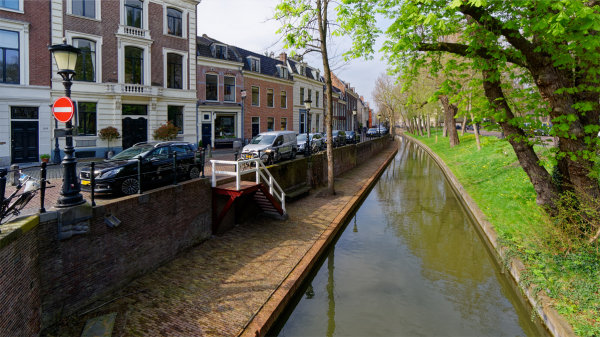
At the bank, everything was very straightforward. "You want to open an account with us, but you're not registered in the Netherlands yet, and you don't have a BSN? No problem, we'll take care of that now, and you can just update your information in your profile on our website later." I suspect that having a signed contract with my employer helped with this attitude. The bank also sold me liability insurance — coverage in case I damage someone else's property. They promised to send the plastic card of the local system by regular mail within a week. And they did — first the PIN code in an envelope, and two days later — the card itself.
Regarding plastic cards. Even when my wife and I visited the Netherlands in the fall, we experienced this ourselves — Visa and Mastercard are not widely accepted here. These cards are considered credit cards (even though we had them as debit cards), and many stores simply don't accept them (possibly due to interchange fees? I don't know). The Netherlands has its own type of debit cards and its own online payment system called iDeal. From my experience, I can say that at least in Germany and Belgium, these cards are also accepted.
Residence permit
The expat center is a simplified version of the migration service, where I was officially registered at my temporary address, issued a BSN – the main residency number in the Netherlands (the closest equivalent in Russia is the tax identification number), and told to come back for my work and residence permit in a few days. By the way, my stack of documents (apostille, translation, apostille on the translation) caused some mild surprise; I had to explain what each document was. Interestingly, my Dutch documents list Soviet Union as my country of birth and Russia as my country of arrival. This means that at least the local clerks are aware of this metamorphosis of our state.
I received a residence permit with the right to work as a highly skilled migrant (Dutch: kennismigrant) in about 3 working days. This delay did not affect my work—my three-month visa allowed me to work. I can change jobs but must remain a specialist. This means my salary must be at least a certain amount, which was € 58,320 for people over thirty in 2019.
Mobile Communication
I bought a local SIM card myself. Karen recommended the operator (KPN) and where to find its store. Since I had no financial history with a local bank, they would not sign a contract with me and only sold me a prepaid SIM card. I was lucky that the store accepted Visa; I paid with a card from a Russian bank. To jump ahead, I can say that I still use this prepaid card. I researched the rates of this and other operators and decided that prepaid suits me best.
Medical Examination
As someone arriving from a not-so-prosperous country, I needed to undergo a fluorography examination. They booked an appointment for 2 weeks later (everything in the Netherlands is quite unhurried compared to Moscow), it cost almost 50 euros, and if they didn't call me in a week, it meant everything was fine. They didn't call 🙂
Searching for Rental Housing
Of course, I looked at apartment rental listings from Russia, but once I got here, I quickly had to give up on the hope of finding housing for € 700 or at least around € 1000 (including utilities). About 10 days after my arrival, Karen sent me links to a couple of dozen listings. I selected 5 or 6 of them, and the next day she took me to view them.
In the Netherlands, it is quite common to rent out housing not only without furniture, which I can understand, but also without flooring — that is, with just bare concrete. I really don't get that. Tenants take their flooring when they move out, but what's the point of that in a different apartment? Overall, there are not many furnished apartments, which made my search a bit more complicated. On the flip side, five viewings a day is a dream compared to Dublin or Stockholm.
The main drawback of Dutch apartments, in my opinion, is the inefficient use of space. Apartments range from 30 to several hundred square meters, but of course, I was looking for affordable, that is, smaller ones. For instance, I looked at a 45-square-meter apartment. It had a small hallway, a bedroom, a combined bathroom, and a kitchen with a living room — and that's it. There’s a constant feeling of tightness; we simply have no place to put the two essential desks. On the other hand, I clearly remember how my family of four lived quite comfortably in a standard Khrushchyov apartment of 44 square meters.
Moreover, the Dutch have different ideas about temperature comfort. In that apartment, for example, the front door is just a single layer of glass, leading directly to the street. Some apartments in old buildings have single glazing throughout. And nothing can be changed, as the building is an architectural monument. If someone thinks that winters in the Netherlands are mild, well, that's true, but there is no central heating, and the locals can keep their homes at +20 degrees and walk around in just a t-shirt. But my wife and I, it turns out, cannot do the same. We keep it a bit warmer and dress more warmly.
However, I digress. From five options, I chose one: three rooms, 75 square meters, clearly not new, as one would say in our country — 'without euro-repairs' (ironic, right?). I signed the contract, paid the first month's rent, gave a deposit equivalent to one month's rent, and around €250 to the realtor on the owner’s side. My employer later reimbursed me that €250.
The rental market for apartments, as I understand it, is regulated by the government here. For instance, my lease (officially in Dutch, but there is an English translation) consists of just a few pages, mainly listing personal information and differences from the standard, officially approved lease. According to the law, a landlord cannot increase the rent by more than 6 or 7 percent per year. For me, for example, my rent was raised by only 2.8% in the second year. By the way, the landlord of my rental apartment is one of the very few people I have met here who speaks very little English. However, after signing the lease, I have not seen her once; we just congratulated each other on Christmas and New Year's via WhatsApp, and that’s it.
I should also note that housing here is becoming more expensive year after year — both for rent and purchase. For example, one of my colleagues vacated an apartment he had rented for about €800 for several years and wanted to offer it to a friend. However, the price for his friend was already €1200.
Internet
The rented apartment lacked the most essential thing — the internet. If you Google it, there are a ton of providers here, most of which offer fiber optic connections. However, fiber optic isn't available everywhere, and it can take several (up to six!) weeks from application to connection. My building, as it turned out, is deprived of this blessing of civilization. To connect with one of those providers, I would need to wait for the technician during working hours — of course! — and coordinate with all the neighbors below, as the cable runs from the first floor. I decided I wasn't ready for such adventures and canceled my request.
In the end, I connected to the internet through Ziggo — via the TV cable, with upload speeds 10 times lower than the download speeds, and one and a half times more expensive, but at least without a technician and within three days. They just sent me all the necessary equipment by mail, which I connected myself. Since then, everything has been working well, and the speed is quite stable; it’s enough for us.
My Wife's Move
I found housing, had no issues with work, so according to plan, at the beginning of August, I went to get my wife. Her ticket was bought by my employer, and I bought myself a ticket for the same flight.
I scheduled her appointment at the bank and expat center in advance, and it turned out to be nothing complicated. She was granted an account, residence permit, and work authorization just like me. However, unlike me, she has the right to take any job, not just as a highly qualified specialist.
Later, she registered herself at the local municipality and got a chest X-ray.
Health Insurance
Every resident of the Netherlands is required to have health insurance and pay at least a hundred something euros per month for it. New arrivals must obtain insurance within four months, it seems. If they don't, a default insurance plan is automatically assigned to them.
After my first month in the Netherlands, I chose insurance for myself and my wife, but it turned out to be not very simple to arrange. Did I mention that the Dutch are slow-paced? Every few weeks, they requested personal information, documents, or something else from me. As a result, my wife and I only got our insurance at the end of August.
Credit Card
In the first two months, I realized how inconvenient the local debit card is. Online, it can only be used for payments where iDeal is accepted, i.e., only on Dutch websites. I couldn't pay for Uber, for instance, or buy a ticket on the Aeroflot website. I needed a regular card — Visa or Mastercard. Well, Mastercard, of course. It's Europe.
And here, it's only credit cards. Moreover, their issuance is handled not by the bank itself but by some national office. At the beginning of August, I submitted an application for a credit card from my personal account on the bank's website. A few weeks later, I was denied on the grounds that I had been at my current job for too short a time. In my reply, I asked how long one needs to be employed? Another month later, my credit card was suddenly approved and mailed to me within a couple of weeks.
30% Ruling
The 30% ruling is a great thing. But to qualify for it, you need to be a kennismigrant and have lived more than 150 km away from the Netherlands for the last 18 months before arriving. It's a pity that the ruling is being granted less and less — it used to be issued for 10 years, then for 8, and now only for 5.
My employer pays the intermediary company's fees, which then submits my ruling to the local tax authority. According to my colleagues, this usually takes 2-3 months, after which my 'net' salary increases significantly (and the due amounts for the months without ruling are paid out).
I filled out the application and sent the documents at the beginning of June. The tax office responded that they are currently transitioning to electronic document management, so the approval of the ruling may take longer. Okay. After 3 months, I started pushing the intermediary company. They were sluggishly passing my nudges to the tax office and back to me. At the beginning of September, I received a letter from the tax office asking me to provide evidence that I had not lived in the Netherlands for 18 months prior to April 2018.
Coincidence? I don't think so. It was in April that I received my new civil passport. I don't remember exactly now, but it seems that a scan of the passport was attached to the ruling application. Bills for utilities in my name can serve as proof. Fortunately, I had lived in my apartment for several years, and all the bills came in my name. And I've kept them all 🙂. Relatives sent me photos of the necessary bills, and I forwarded them (with explanations of what each was) to the intermediary company.
Once again, I received a notification that the tax office was moving towards electronic document management, and the review of the application would take longer. In November, I started nudging the intermediary again, and kept doing so until mid-December, when my ruling was finally approved. It started affecting my salary from January, meaning it took 7 months to process the ruling.
Wife finds a job
Everything went according to plan here too. My wife is a software tester with 4 years of experience. For the first few months, she continued working for her employer in Moscow. A big thank you to him for allowing her to transition to fully remote work. The benefit of this decision: there's no need to dive headfirst into an unfamiliar environment and create unnecessary stress for herself.
Drawback: as it turns out, since registering here, my wife has been a tax resident of the Netherlands. Consequently, she needs to pay taxes on any income. Perhaps the local tax authority wouldn't have found out about this income, or maybe they would have (since 2019, an automatic exchange of tax data between Russia and European countries has started). In general, we decided not to take any risks and declared this income on the tax return. How much we will have to pay is still unknown; the declaration is in the process of being submitted.
Somewhere in November, my wife started looking for a job here. There are few Software Tester and QA Engineer vacancies, but they do exist. In most cases, ISTQB and/or Tmap certifications are required. She has neither. As far as I understand from her words, in Russia, much more is said about this than there is actual necessity.
In the end, my wife was denied twice without even being invited for an interview. The third attempt was more successful — at the beginning of December, she was invited for an interview. The interview itself lasted just over an hour and was in the format of a 'life conversation': they asked what she does, how she handles certain situations. They asked a bit about her automation experience (she has some, but it's quite limited), and there were no technical questions at all. All this lasted just over an hour and, of course, was in English. This was her first experience interviewing in a foreign language.
A couple of weeks later, she was invited for a second interview — with the owner and concurrently the director of the company. The same format, the same topics, another hour of conversation. A few weeks later, they said they were ready to make an offer. They began discussing the details. Remembering my relatively successful experience, I advised her to negotiate a bit. It worked here as well.
The offer itself is a contract for 1 year with the prospect of transitioning to a permanent position if all goes well. The work permit for any job came in handy, as my wife's salary does not yet meet the kennismigrant threshold. And she is not entitled to a ruling as she has been living in the Netherlands for several months now.
Since February 2019, my wife has been fully working as a software tester in a local company.
Local driver's license
My status as a kennismigrant not only provides me with a ruling but also allows me to exchange my Russian driver's license for a local one without taking a test. This is a significant saving as driving lessons and the test itself would cost several thousand euros. And all of this will be in Dutch.
Now that I have received the ruling, I proceeded to exchange my license. On the CBR website — the local equivalent of the traffic police — I paid 37 euros for a medical questionnaire, where I simply noted that I had no health problems (I wear glasses regularly, but there was nothing about glasses, just whether I could see with both eyes?). Since I have the ruling, and I am exchanging a category B license, no medical examination was required. After two weeks, I received a letter stating that CBR approved my license exchange. With this letter and other documents, I went to my local municipality, where I paid another 35 euros and handed over my Russian license (without a translation).
Another two weeks later, I was informed that my new license was ready. I picked it up at the same municipality. My Russian license was valid until 2021, but the Dutch one was issued for 10 years — until 2029. Additionally, it specifies not only category B but also AM (mopeds) and T (tractors!).
The Dutch will send my Russian license to our consulate, and the consulate will send it back to Russia at the end of the year. This means I have a few months to intercept the license in The Hague to avoid searching for it in the traffic police office — either in Saratov or the Moscow region.
Conclusion
I consider our relocation and settling process complete. My plans for the next few years are to live and work peacefully. In the next and final part, I will discuss the everyday and work aspects of life in the Netherlands.
Source: habr.com
