

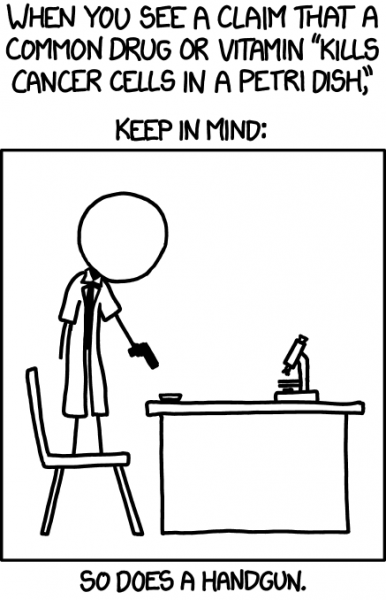
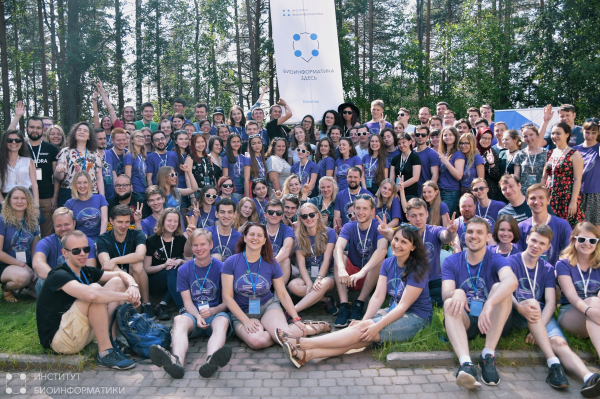
 In the summer of 2018, an annual summer school on bioinformatics took place near St. Petersburg, attended by 100 students and graduate students to learn about bioinformatics and its applications in various fields of biology and medicine.
The main focus of this school was on cancer research, but there were also lectures on other areas of bioinformatics, ranging from evolution to single-cell sequencing data analysis. Throughout the week, participants learned to work with next-generation sequencing data, coded in Python and R, applied standard bioinformatics tools and frameworks, and explored methods in systems biology, population genetics, and drug modeling in tumor studies, among other topics.
Below you will find videos of 18 lectures delivered at the school, along with brief descriptions and slides. Those marked with an asterisk "*" are quite basic and can be watched without prior preparation.
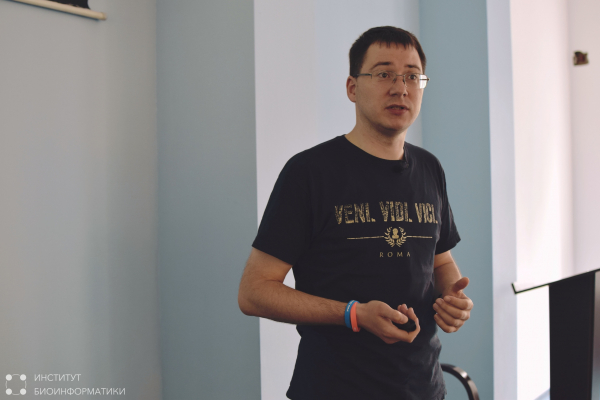
1*. Oncogenomics and Personalized Oncology | Mikhail Pyatnitsky, Institute of Biomedical Chemistry
|
Mikhail briefly discussed tumor genomics and how understanding the evolution of cancer cells helps address practical challenges in oncology. The lecturer particularly focused on explaining the difference between oncogenes and tumor suppressors, methods for identifying "cancer genes," and distinguishing molecular subtypes of tumors. In conclusion, Mikhail addressed the future of oncogenomics and potential challenges that may arise.
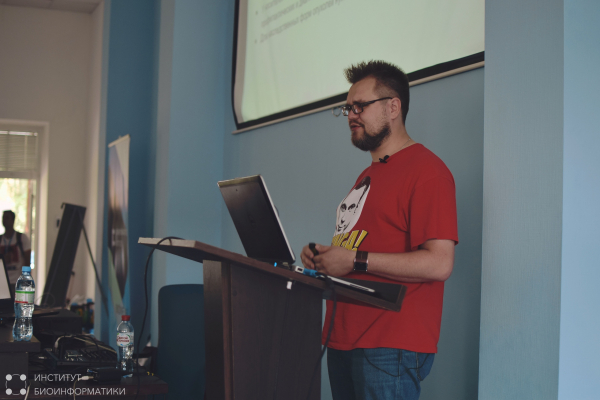
2*. Genetic Diagnosis of Hereditary Tumor Syndromes | Andrey Afanasyev, yRisk
|
Andrey discussed hereditary tumor syndromes, examining their biology, epidemiology, and clinical manifestations. Part of the lecture was dedicated to genetic testing—who needs to undergo it, what is involved, the complexities encountered in data processing and interpretation, and finally, how it benefits patients and their relatives.
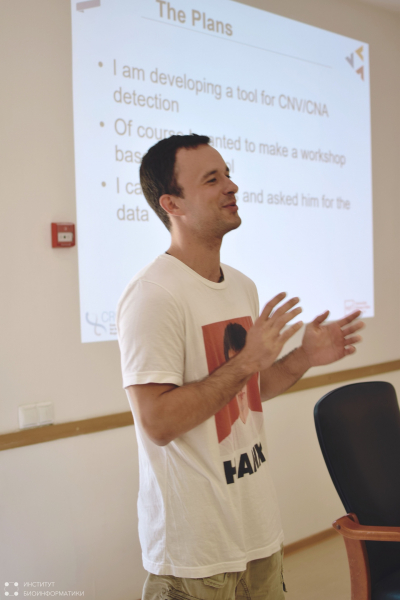
3*. The Pan-Cancer Atlas | German Demidov, BIST/UPF
|
Despite decades of research in the fields of cancer genomics and epigenomics, the answer to the question of 'how, where, and why tumor syndromes arise' remains incomplete. One reason for this is the need for standardized collection and processing of vast amounts of data in order to detect small effects that are difficult to identify in a limited dataset (which is typical for research conducted in one or several laboratories), but which collectively play a crucial role in a complex and multifactorial disease like cancer.
In recent years, many of the world’s leading research groups, recognizing this issue, have begun to combine their efforts in attempts to discover and describe all these effects. One such initiative (The PanCancer Atlas) and the results obtained from this consortium of laboratories, published in a special issue of Cell, were discussed by German in this lecture.
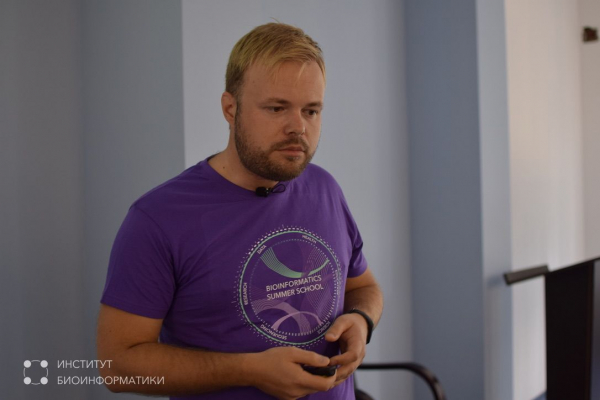
4. ChIP-Seq in the study of epigenetic mechanisms | Oleg Shpynov, JetBrains Research
|
Gene expression regulation occurs through various means. In his lecture, Oleg discussed epigenetic regulation via histone modification, the study of these processes using the ChIP-seq method, and ways to analyze the results obtained.
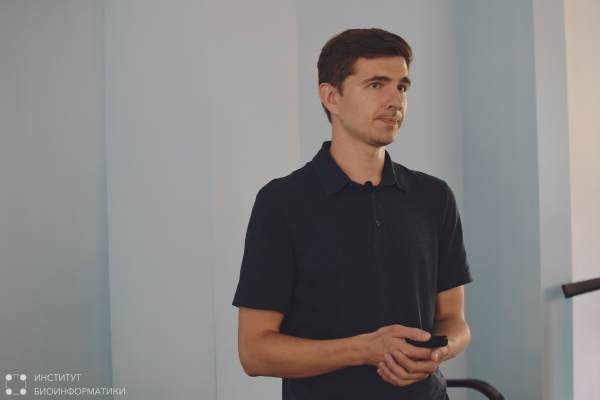
5. Multi-Omics in cancer research | Konstantin Okonchnikov, German Cancer Research Center
|
The development of experimental technologies in molecular biology has made it possible to combine the study of a wide range of functional processes in cells, organs, or even entire organisms. To establish connections between components of biological processes, multi-omics must be employed, integrating massive experimental data from genomics, transcriptomics, epigenomics, and proteomics. Konstantin provided clear examples of the application of multi-omics in cancer research, focusing on pediatric oncology.
6. Multifacetedness and limitations of single-cell analysis | Konstantin Okonchnikov
|
A more detailed lecture on single-cell RNA sequencing and methods for analyzing this data, as well as approaches to overcoming apparent and hidden issues in their study.
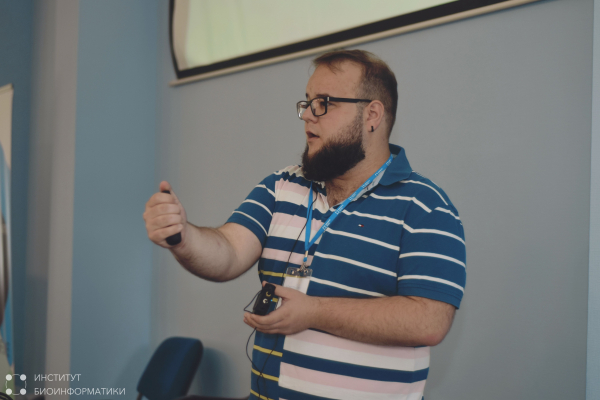
7. Single-cell RNA-seq Data Analysis | Konstantin Zaitsev, Washington University in St.Louis
|
An introductory lecture on single-cell sequencing. Konstantin discusses sequencing methods, challenges in laboratory work and bioinformatics analysis, and ways to overcome them.
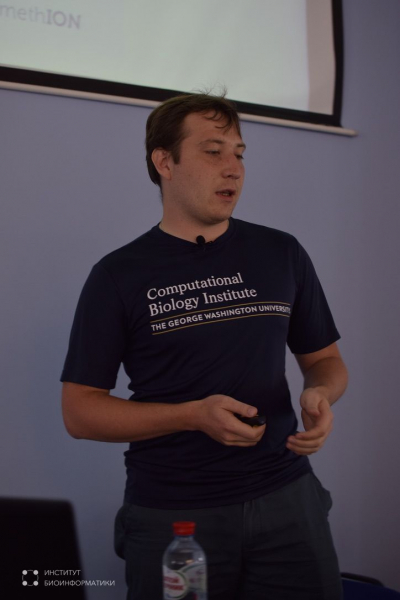
8. Diagnosis of Muscular Dystrophy Using Nanopore Sequencing | Pavel Avdeev, George Washington University
|
Sequencing using Oxford Nanopore technology has advantages that can be utilized to identify genetic causes of diseases such as muscular dystrophy. In his lecture, Pavel talked about the development of a pipeline for diagnosing this disease.
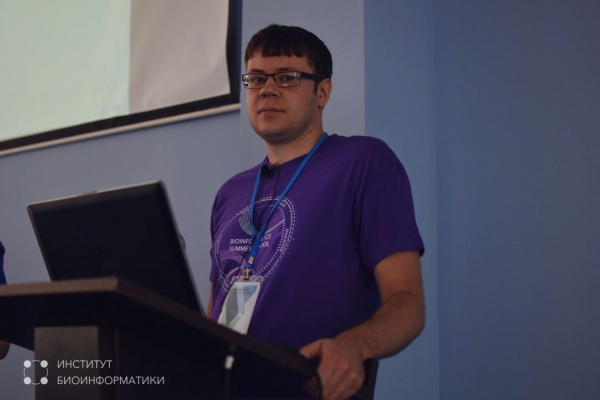
9*. Graph Representation of the Genome | Ilya Minkin, Pennsylvania State University
|
Graph models allow for a compact representation of a large number of similar sequences and are often used in genomics. Ilya detailed how genomic sequences are reconstructed using graphs, the purpose of using a de Bruijn graph, how such a 'graph-based' approach increases the accuracy of mutation detection, and the unresolved problems that still exist with the use of graphs.
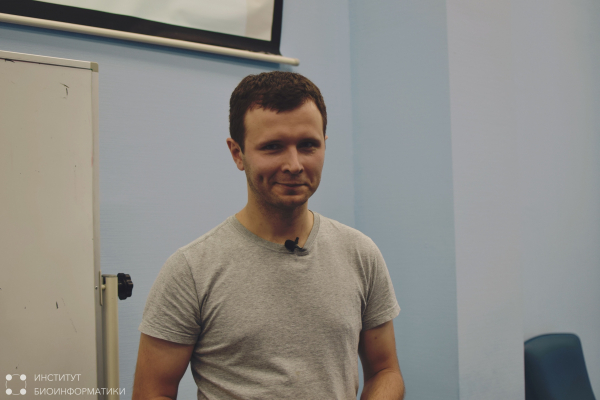
10*. Engaging Proteomics | Pavel Sinitsyn, Max Planck Institute of Biochemistry (2 Parts)
, |,
Proteins are responsible for most biochemical processes in living organisms, and proteomics remains the only method for global analysis of thousands of proteins simultaneously. The range of tasks it addresses is impressive – from identifying antibodies and antigens to determining the localization of thousands of proteins. In his lectures, Pavel spoke about these and other applications of proteomics, its current development, and the pitfalls in data analysis.
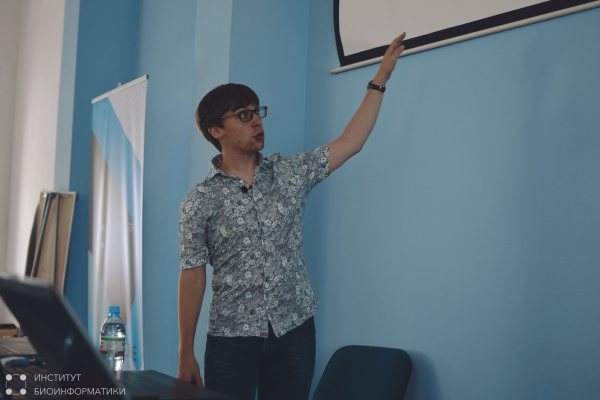
11*. Basic Principles of Molecular Simulations | Pavel Yakovlev, BIOCAD
|
An introductory theoretical lecture on molecular dynamics: why it is needed, what it does, and how it is used in drug development. Pavel focused on molecular dynamics methods, explanations of molecular forces, descriptions of bonds, concepts of 'force fields' and 'integration', limitations in modeling, and much more.
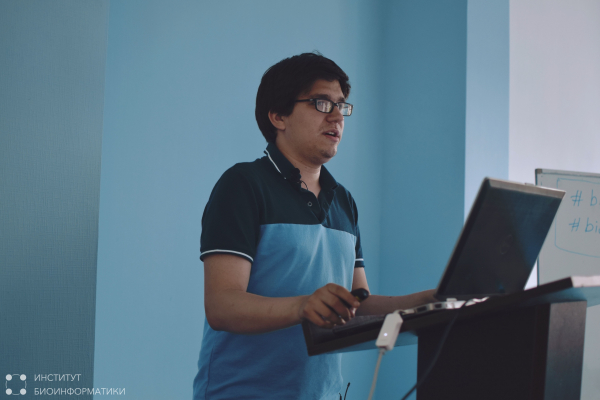
12*. Molecular Biology and Genetics | Yuri Barbitov, Institute of Bioinformatics
, , |
An introduction to molecular biology and genetics in three parts for students and graduates of technical specialties. The first lecture discusses concepts in modern biology, the structure of the genome, and the emergence of mutations. The second lecture covers gene function, transcription, and translation processes in detail, while the third addresses gene expression regulation and key molecular biology methods.
13*. Principles of NGS Data Analysis | Yuri Barbitov, Institute of Bioinformatics
|
The lecture explains second-generation sequencing (NGS) methods, their types and characteristics. The lecturer details how the output data from the sequencer is structured, how it is processed for analysis, and various ways to work with it.
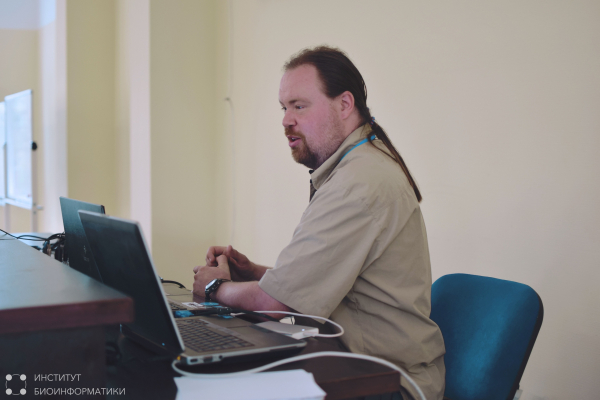
14*. Command Line Usage, Practice | Gennady Zakharov, EPAM
A practical overview of useful commands in the Linux command line, options, and their basic usage. Examples focus on analyzing sequenced DNA fragments. In addition to standard Linux operations (such as cat, grep, sed, awk), utilities for working with sequences (samtools, bedtools) are discussed.
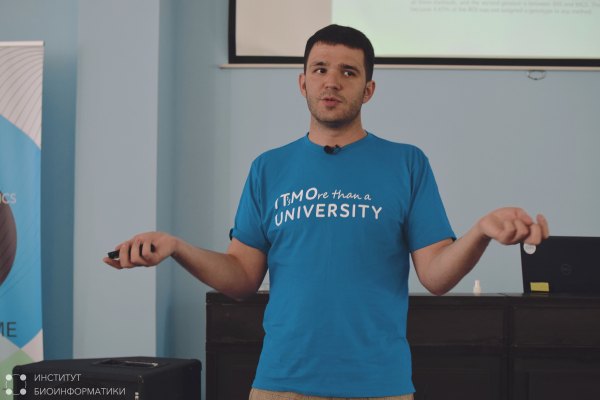
15*. Data Visualization for Beginners | Nikita Alexeyev, ITMO University
|
Everyone has to illustrate the results of their scientific projects or understand others' diagrams, graphs, and images. Nikita explained how to correctly interpret graphs and diagrams, highlighting the key points; how to create clear visuals. The lecturer also emphasized what to pay attention to when reading a paper or watching an advertisement.
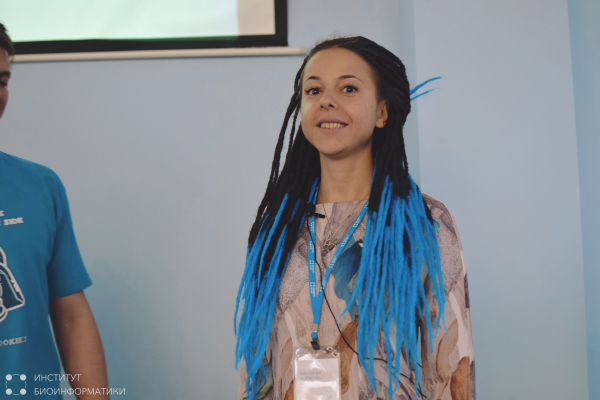
16*. Career in Bioinformatics | Victoria Korzhova, Max Planck Institute of Biochemistry
Video: , |
Victoria discussed the structure of academic science abroad and what to pay attention to in order to build a career in science or industry while being an undergraduate, master's, or PhD student.
17*. How to Write a CV for a Scientist | Victoria Korzhova, Max Planck Institute of Biochemistry
What to include in a CV, and what to leave out? Which facts will interest a potential employer, and which are better not mentioned? How to structure information so that your resume captures attention? The lecture will provide answers to these and other questions.
18*. How the bioinformatics market is structured | Andrey Afanasyev, yRisk
|
How is the market structured and where can a bioinformatician work? This question is answered in detail with examples and advice in Andrey's lecture.
End
As you may have noticed, the lectures at the school are quite broad in topics—from molecular modeling and using graphs for genome assembly, to single-cell analysis and building a scientific career. At the Institute of Bioinformatics, we strive to include a variety of topics in the school program to cover as many bioinformatics disciplines as possible, helping each participant discover something new and useful.
The next bioinformatics school will take place from July 29 to August 3, 2019, near Moscow. This year’s theme will be bioinformatics in developmental biology and aging research.
For those who want to delve deeper into bioinformatics, applications are still being accepted for our in St. Petersburg. Or stay tuned for our news about the program launch in Moscow this autumn.
For those not in St. Petersburg or Moscow but who are eager to become a bioinformatician, we have prepared a on algorithms, programming, genetics, and biology.
We also have dozens of , which you can start taking right now.
In 2018, the summer school on bioinformatics was held with the support of our longtime partners – JetBrains, BIOCAD, and EPAM, for which we are very grateful.
To all bioinformaticians!
P.S. If that seemed too little, and .
Source: habr.com
