

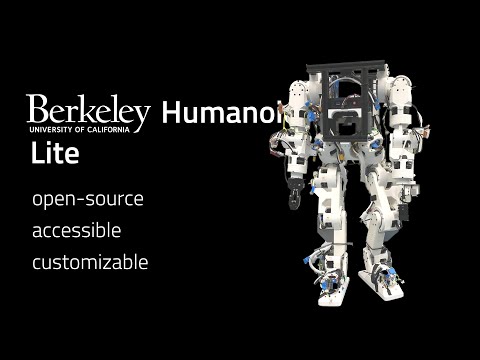
The University of California, Berkeley has published the Berkeley Humanoid Lite project, which is the result of research and experiments in the field of creating easy-to-manufacture humanoid robots. The robot is built using open-source software and develops according to the concept of Open Hardware. Its hardware consists of standard components available for purchase and parts manufactured with a 3D printer. Models for machine learning, source code, schematics, a bill of materials (BOM), assembly plans, and models for 3D printing have been published.
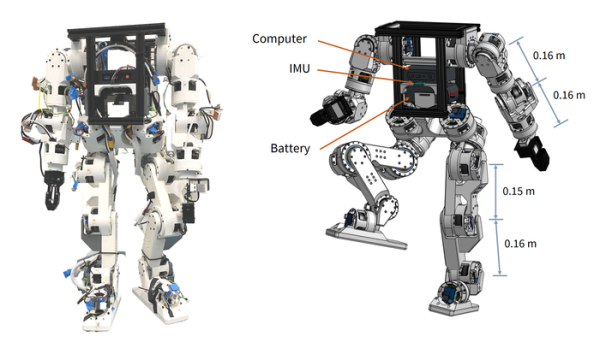
Under the MIT license, the source codes for the firmware of the actuator controllers and the low-level management firmware running on the robot, as well as external components such as the development environment for control scripts, simulation environments, motion model training, and verification built on Isaac Lab, Isaac Sim, and MuJoCo frameworks, are open. Standard SteamVR virtual reality controllers can be used for remote control.
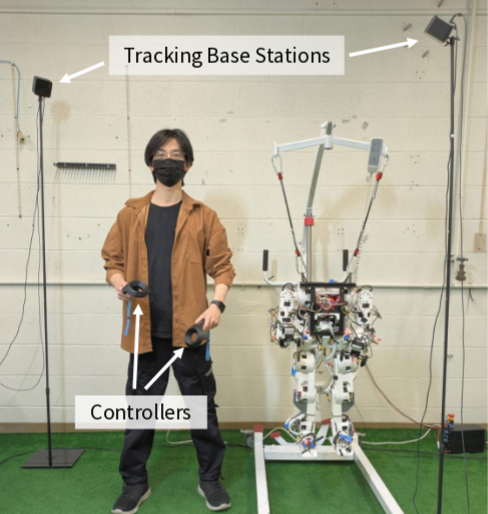
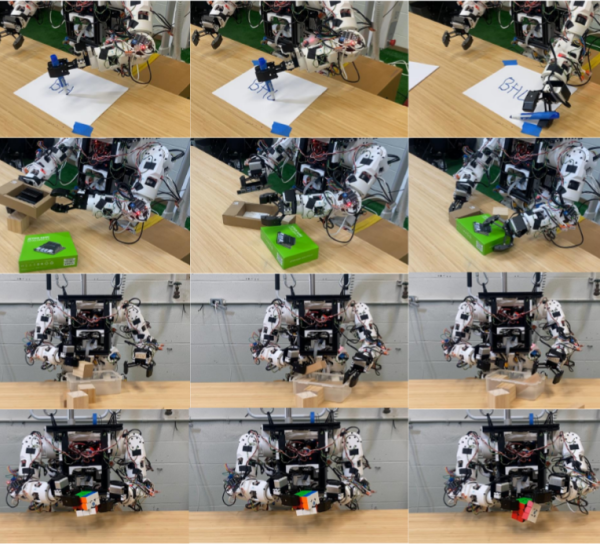
Separately published are the machine learning models used in the experiments, as well as a locomotion controller that uses reinforcement learning for ensuring the robot moves to a designated point. The use of the robot as a manipulator remotely controlled by a human has been demonstrated. Experiments are underway in autonomous navigation, obstacle avoidance, fine motor control, and movement coordination while walking upright.
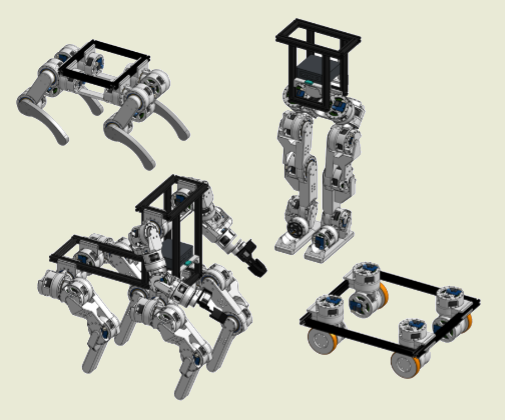
The project can be used by other researchers as an inexpensive starting point for studying and conducting research in robotics. No special skills are required for assembly, and anyone can use the provided instructions and schematics to create their own instance, costing less than $5000. The robot is modular and designed to be extendable and adaptable for individual purposes; for example, it can be transformed from bipedal to quadrupedal or kangaroo-like after minimal modification.
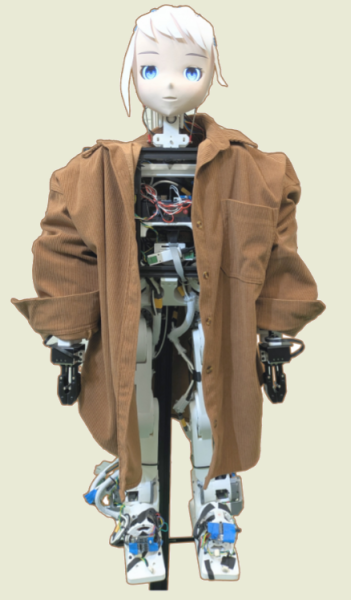
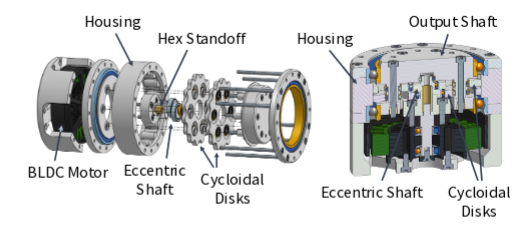
The main factor in reducing production costs was the use of plastic parts made with a 3D printer in the design. Researchers had to address a number of issues related to the reliability and durability of transmissions based on plastic, rather than metallic, gears. These limitations were overcome by employing a cycloidal reducer.
Source: opennet.ru
