

All DNA sequences of the life forms studied are stored in a database owned by the National Center for Biotechnology Information in the USA. On April 1, a new entry appeared in the database: 'Caulobacter ethensis-2.0'. This is the world's first fully computer-simulated and then synthesized synthetic genome of a living organism, developed by researchers from ETH Zurich (Swiss Federal Institute of Technology Zurich). However, it should be emphasized that although the genome of C. ethensis-2.0 has been successfully obtained as a large DNA molecule, a corresponding living organism does not yet exist.
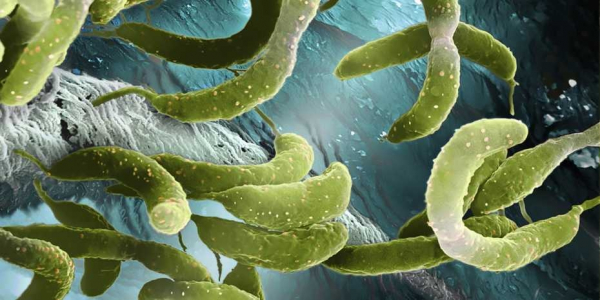
The research was conducted by Bit Kristen, a professor of experimental systems biology, and his brother Matthias Kristen, a chemist. The new genome, named Caulobacter ethensis-2.0, was created by cleaning and optimizing the natural code of the bacterium Caulobacter crescentus— a harmless bacterium that lives in fresh water all over the world.
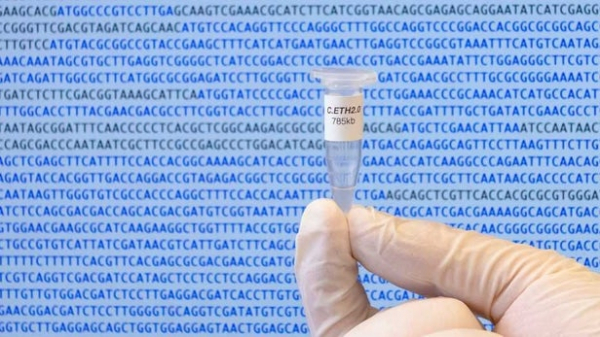
More than ten years ago, a team led by geneticist Craig Venter created the first 'synthetic' bacterium. During their work, the scientists synthesized a copy of the Mycoplasma mycoides genome, which was then implanted into a host cell that subsequently proved to be fully viable and retained the ability to reproduce.
The new study continues Craig's work. While previous scientists created a digital model of DNA from a real organism and synthesized a molecule based on it, the new project goes further by using the original DNA code. The scientists significantly reworked it before synthesizing and testing its functionality.
Researchers began with the original genome of C. crescentus, which contains 4,000 genes. Like all living organisms, most of these genes carry no information and are considered 'junk DNA'. After analysis, the scientists concluded that only about 680 of them are necessary to sustain the bacterium's life in the laboratory.
After removing the "junk DNA" and acquiring the minimal genome of C. crescentus, the team continued their work. The DNA of living organisms typically exhibits built-in redundancy, meaning that the synthesis of the same protein is encoded by different genes across several sections of the strand. The researchers replaced more than 1/6 of the 800,000 DNA letters during optimization by eliminating duplicate code.
"Thanks to our algorithm, we completely rewrote the genome into a new sequence of DNA letters that no longer resembles the original," says Bit Kristen, co-lead author of the study. "Despite this, the biological function at the protein synthesis level remained unchanged."
To check whether the resulting strand would work properly in a living cell, the researchers grew a strain of bacteria that had both the natural Caulobacter genome and segments of the artificial genome in its DNA. The scientists turned off individual natural genes and tested the ability of their artificial counterparts to perform the same biological role. The results were quite impressive: around 580 out of 680 artificial genes proved to be functional.
"With the knowledge gained, we will be able to improve our algorithm and develop a new version of the genome 3.0," says Kristen. "We believe that in the near future, we will create living bacterial cells with a completely synthetic genome."
In the initial stage, such studies will help geneticists verify the accuracy of their understanding of DNA and the roles of individual genes within it, as any error in synthesizing the strand will lead to the organism with the new genome dying or being nonviable. In the future, they will lead to the creation of synthetic microorganisms designed for specific tasks. Artificial viruses could combat their natural relatives, while specialized bacteria would produce vitamins or medicines.
The research was published in the PNAS journal.
Source: 3dnews.ru
