

The destruction of coral reefs is a major problem currently facing oceanologists. An international group of scientists from the UK’s University of Exeter and University of Bristol, as well as Australia’s James Cook University and the Australian Institute of Marine Science, claims that 'acoustic enrichment' could be a valuable tool in helping to restore damaged coral reefs.
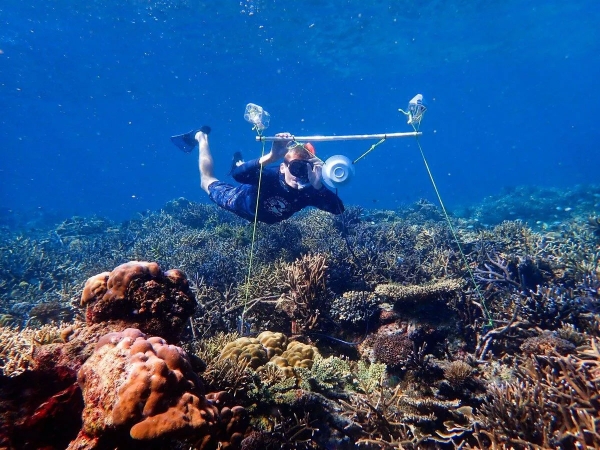
While analyzing the dying Great Barrier Reef in Australia, scientists set up underwater speakers that played recordings of healthy reefs in areas with dead corals and found twice as many fish arriving—and staying—compared to similar areas where no sound was played. 'Fish are crucial for coral reefs to function as healthy ecosystems,' said Tim Gordon from the University of Exeter. 'Increasing fish populations in this way can help kickstart natural recovery processes, countering the damage we see on many coral reefs around the world.'
This new technique works by replaying sounds that are lost when reefs degrade. 'Healthy coral reefs are remarkably noisy places: the crackling of snapping shrimp, the grunts and groans of fish create a dazzling biological soundscape. These sounds draw juvenile fish in when they are looking for places to settle,' said Professor Steve Simpson from the University of Exeter. 'Reefs become eerily quiet when they degrade because shrimp and fish disappear, but with loudspeakers recreating this lost soundscape, we can attract juvenile fish back again.'
Fish biologist Dr. Mark Meekan from the Australian Institute of Marine Science added, 'Of course, attracting fish to a dead reef won’t automatically bring it back to life, but the restoration is supported by fish that clean the reef and create space for coral growth.'
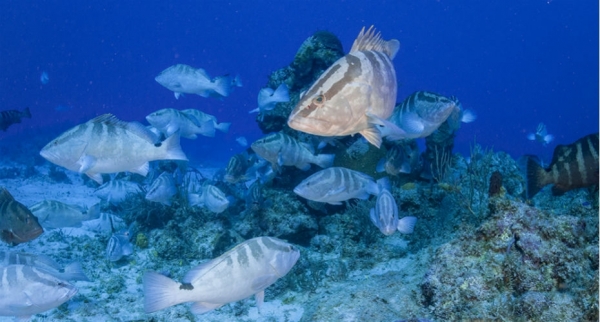
Research has shown that the soundscape of a healthy reef doubled the total amount of fish accessing experimental reef habitat areas and increased the number of species present by 50%. This diversity included species from all sections of the food chain—herbivores, detritivores, plankton-feeders, and predatory fish. Different groups of fish play various roles on coral reefs, meaning that a plentiful and diverse fish population is a crucial factor in maintaining a healthy ecosystem.
Professor Andy Radford from the University of Bristol said: 'Acoustic enrichment is a promising local management method. Combined with habitat restoration and other conservation measures, recreating fish communities in this way may accelerate ecosystem revitalization. However, we still need to address many other threats, including climate change, overfishing, and water pollution, to protect these fragile ecosystems.'
Mr. Gordon added: 'While attracting more fish will not save coral reefs on its own, new methods like this give us more tools in the fight to save these precious and vulnerable ecosystems. Significant progress is needed at all levels, from innovations in local management to international political action, to ensure a better future for reefs worldwide.'
Source: 3dnews.ru
