

It is unlikely that anyone would argue that processors are quite complex solutions that simply cannot function without self-diagnostics and sophisticated control mechanisms, both during manufacturing and in operation. Developers must have "absolute" tools to be completely confident in the quality of the product. And these tools do not go anywhere. In the future, all these diagnostic tools within the processor could serve good purposes in technologies such as Intel AMT remote control, but they could also potentially become a backdoor for intelligence agencies or attackers, which often means the same thing for users.

As you may recall, in May 2016, experts from Positive Technologies discovered that the Intel Management Engine 11 module for implementing AMT technology within the platform controller hub (PCH) underwent significant changes and became vulnerable to attacks by malicious actors. Prior to version IME 11, the module was based on a unique architecture and posed no particular danger without special documentation; however, it could open access to information in a PC's memory. Starting with IME 11, the module became x86-compatible and accessible for broader examination (more about the INTEL-SA-00086 vulnerability here and further via the links). Moreover, a year later, a connection was revealed between IME and a surveillance program by the NSA. Further study of IME led to the discovery of yet another potential "backdoor" in Intel controllers and processors, which was reported yesterday at the Black Hat conference in Singapore by Positive Technologies experts Maxim Goryachy and Mark Yermolov.
Within the PCH hub and Intel processors, a multifunctional signal analyzer known as VISA (Intel Visualization of Internal Signals Architecture) has been discovered. More precisely, VISA is also an Intel tool for testing processors for functionality. The documentation for the block is not publicly available, but that doesn't mean it doesn’t exist. The study of VISA revealed that the analyzer, initially deactivated at the Intel factory, can be activated by an attacker, granting access to both information in the PC's memory and the signal sequences of peripherals. There are, in fact, several ways to enable VISA.
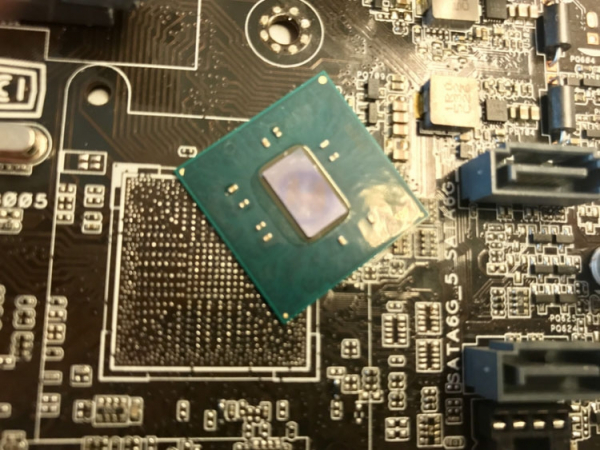
Activating VISA allowed access to webcams, for example, on a standard motherboard. No special equipment was necessary for this. This and another example were demonstrated by Positive Technologies experts during their presentation at Black Hat. No one directly associates the presence of VISA (for now) with the NSA, except, of course, conspiracy theorists. However, if there is an undocumented ability to turn on a signal analyzer in any system on an Intel platform, it will definitely be enabled somewhere.
Source: 3dnews.ru
