

The era of post-futurism began 110 years ago. Back in 1909, Filippo Marinetti published the manifesto of futurism, proclaiming a cult of the future and the destruction of the past, a pursuit of speed and fearlessness, and a denial of passivity and fear. We decided to kick off the next phase and chatted with several good people about what they envision for the year 2120.
Disclaimer. Dear friend, be prepared. This will be a long post packed with futuristic details, seemingly crazy professions, and thoughts about the future we deserve.
Keywords before the cut to grab attention: Andrey Sebrant from Yandex and TechSparks, Andrey Konyayev from N+1, Obrazovach and KuJi, Ivan Yamshchikov from ABBYY and the Max Planck Institute, Alexander Lozhichkin from Amazon, Konstantin Kichinskiy from the NTI Platform and ex. Microsoft, Valeria Kurmak from AIC and ex. Sberbank Technology, Andrey Breslav from JetBrains and the creator of Kotlin, Grigory Petrov from Evrone and Alexander Andronov from Dodo Pizza.
Table of Contents
Let's get acquainted
With this crew, we could take over the world or steal Christmas, but instead, we are sharing the text.
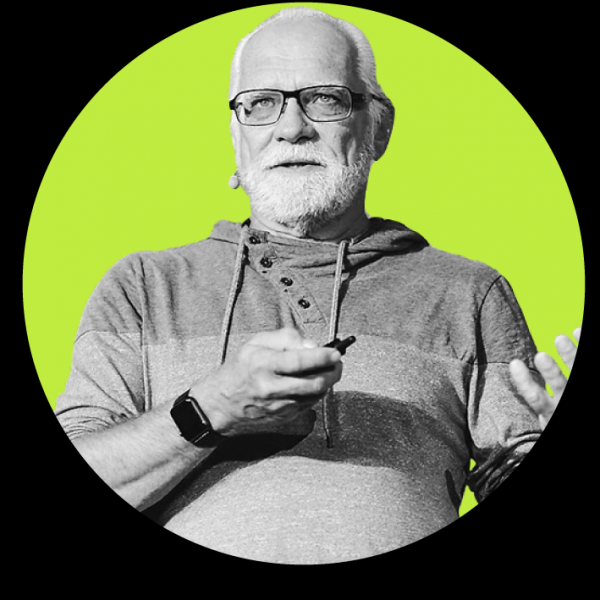 – Director of Strategic Marketing at , author of the podcast , author of the channel . One of the early figures of the Runet, and cannot lie. Among other things, Andrey holds a Ph.D. in physical and mathematical sciences, is a professor at HSE, and a laureate of the Lenin Komsomol Prize in Science and Technology (1985).
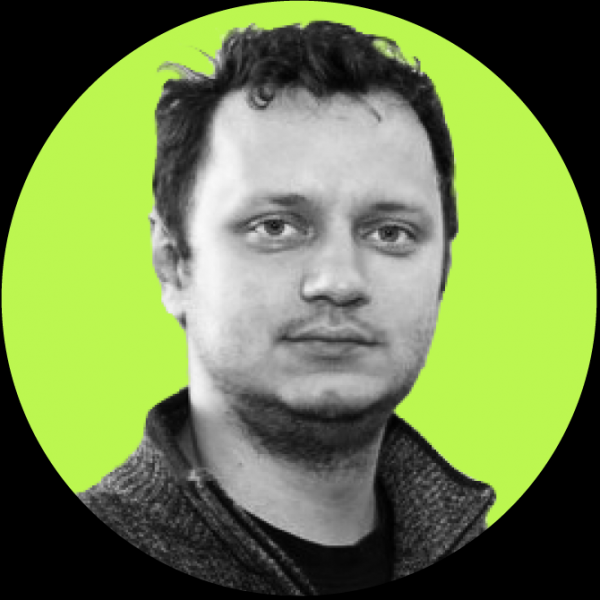 – Publisher of the popular science internet publication , founder of the communities and . In his spare time away from publishing and communities, Andrey is a candidate of physical and mathematical sciences and teaches at the Faculty of Mechanics and Mathematics of Moscow State University. He also finds time to host a podcast. .
 – evangelist of artificial intelligence at . He obtained his PhD in applied mathematics from Brandenburg University of Technology (Cottbus, Germany). Currently, he is a researcher at the Max Planck Institute (Leipzig, Germany). Ivan investigates new principles of artificial intelligence that could help us understand how our brain works, and he also hosts a podcast. .
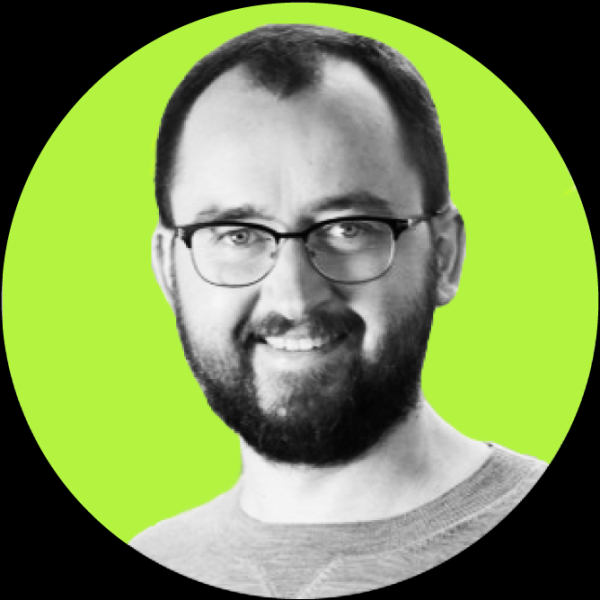 – former evangelist at Microsoft for Eastern Europe and Russia, director of the strategic technology department, and now head of Solutions Architects at Amazon Web Services (AWS) in over 100 Emerging Markets. In his spare time away from IT corporations, Alexander writes notes on various topics in his .
 – has been developing the Kotlin programming language at JetBrains since 2010. He adheres to a passion-driven development (PDD) approach in life. Besides IT topics, he pays a lot of attention to gender equality and psychotherapy, and is a co-founder of the service , which helps find a good psychotherapist. He keeps a curated collection of links to his interviews, articles, and talks .
 – director of Human Experience practice at AIC, an Inclusive Design Expert in real life. She knows everything about Umwelt and what to do with this knowledge to create inclusive digital products. In her spare time, she shares her expertise in her Telegram channel . She has additional accolades: candidate of technical sciences, social researcher.
 – head of the ‘NTI Franchise’ center at the ANO 'Platform NTI', an ex-Microsoft employee with a decade of experience. He cannot sit still and is constantly involved in something, for example, in the project . He has written and runs the channel about technology on Telegram.
 – DevRel at the company , evangelist of Moscow Python and head of the program committee for Moscow Python Conf++. On weekends, he records the , in the evenings he travels to conferences in our homeland and neighboring countries. The remaining seconds of his time are invested in writing .
 – CTO at Dodo Pizza, he is also one of the leaders of the Dodo IS system. He once gained experience at Intel and Smart Step Group. He’s not fond of publicity, but he loves his team and makes balanced decisions. In the evenings, he dreams of implementing a Data Driven culture of decision-making in Dodo Pizza.

You fell asleep and woke up 100 years later, you still need to work, what would you like to become? Come up with three professions of the future.
 Andrey Sebrant: Given this situation, I’m primarily looking at a unique specialization. expert in retro-reality.Authentic, not synthetic, memories from a hundred years ago will likely be expensive 🙂 Or I’ll have to try to master the role of a donor of vanished emotions or a premium character in a historical game..
 Andrey Konyayev: Of course, if I were to wake up in a hundred years, I would still be the same as I am now, that is, a mathematician. As for professions that could be invented:
1. Tech Ethicist – a person whose job is to understand applied ethical issues, analyze emerging cases, and provide expert conclusions on them. Is it permissible to create virtual copies of deceased people? Can artificial intelligence pretend to be a living person for the benefit of humanity?
2. Erasure Specialist – a person whose job is to destroy digital traces. It is assumed that future people will regularly change their names and appearances to escape the sins of the past – for example, you drank in school, and now you are a successful banker. But the school left a trace that must be skillfully and professionally eliminated.
3. Coder-Farmer. In the future, code will be written by neural networks, possibly using evolutionary and other algorithms. Therefore, solutions for specific tasks will need to be grown rather than invented. Essentially, a farmer is someone with a neuro-farm where this code grows. Andrey Breslav: There are two versions of the future: in one, we have created "strong artificial intelligence," and everything has moved into a virtual world. In this world, there are no professions (in our understanding), and "working" means something different.
I will consider the other version: we have not created strong AI, so there are still people, as biological beings, and they have specializations. In that case, the professions of research scientists and programmers creating precise reliable systems will remain. (neural networks will already manage inaccuracies), as well as artistic professions related to creating complex emotional images: writers, for example, or directors. Konstantin Kichinskiy:
- Synthetic life form programmer: a person who 'constructs' new life forms, 'sets' the behavior of existing ones, 'writes' protein assemblers, 'packages' data into DNA, and all that.
- Architect of underwater/aboveground/airborne/moon cities: a person who creates and manages new environments for human settlement, dealing with urban planning, architecture, resource management, etc.
- Futurist: a person who creates alternative worlds set in the 21st century.
 Ivan Yamshchikov: For me, it's very simple. My profession won't disappear in 100 years. Rather, if there are no scientists in 100 years, then humanity, as we understand it, will not exist. If the biological species Homo Sapiens survives and doesn't create an artificial intelligence that surpasses humans, then there will be work for scientists.
If I am not accepted into science in a hundred years, then I would go into designing closed ecosystems. If we learn to create 'full-cycle' space bases that can exist in autonomous mode, then I believe there will be demand for creating such ecosystems. There will be many tasks: ensuring a certain climate, achieving sufficient biodiversity, making it all aesthetically beautiful yet functional. A very wide range of skills will be needed here: from landscape design to data analysis.
The third profession I would call a virtual guide. Imagine a tour guide who can effortlessly transport you from a Rubens painting to a smoky 17th-century tavern, show you the artist's brushstroke under a microscope, teleport you to biblical times while recounting the Gospel of Luke, and bring you back to the painting. All with a sense of complete immersion in history.
With the advancement of virtual reality technologies and neurointerfaces, the experiences available will become increasingly diverse and interesting. The challenge will be to connect different environments into a single narrative, to create it, and to make it adaptive. Clearly, such attractions will be automated, but the value of human interaction will increase. Therefore, the unique 'experience' provided by a guide with imagination, quick access to a knowledge base, and the ability to communicate with you through a neurointerface may be valued higher and distinctly differ from experiences without human involvement. This is somewhat analogous to the difference between a computer game and traditional DnD today. Alexander AndronovI don't know what will happen in a hundred years. Maybe everything will be filled with robots, and people will feel the need to destroy them? In that case, I will create a business focused on destroying robots.Or, everything in the world may become weaponized. Then I will trade in weapons.Or perhaps personal space will completely vanish, but a new form of private internet will emerge. Then I will create services for it. Or consider this: in a hundred years, all vehicles will be controlled by autopilots, making driving merely a form of entertainment. Then I will create an amusement park where you can drive for fun.
 Valeria Kurmak:
- Body designer. In the future, bodies will be altered both through genetics and through external non-biological body parts. An example of genetic alteration is the integrated jellyfish gene within a monkey's DNA, allowing its skin to glow green under ultraviolet light.
A breakthrough in non-biological parts has been made by Hugh Herr's team, which developed an interface linking nerves in the residual limb to an external bionic prosthesis, allowing the user to feel it as a complete part of their body. In the future, the ability to connect nerve tissues with artificial mechanisms will enable people not only to replace lost limbs but also to enhance a perfectly healthy body with non-human parts. For instance, with wings that a cyborg would perceive as their own innate limbs and could control with equal effectiveness.
- Omni-interface designer. A person has six senses. Today, interfaces mostly work with vision. Interfaces that operate with hearing are starting to develop actively. However, there are also taste, smell, touch, and the vestibular system. I believe that in the future, not only will interfaces for these forms of perception appear, but there will also be hybridization of these modes of perception.
- Researcher. Today it seems that big data will soon allow you to know everything about a person. Data does indeed reveal what is happening, but to understand why it is happening, one must go into the field and learn about motivations, fears, and desires. It seems that some professions will remain unchanged.
 Alexander Lozhechkin: I disagree with the framing of the question 'do I still need to work?' It implies that I have not yet become a retiree or a millionaire (which is basically the same thing – where there is some passive income that allows one not to think about means of living)? Fortunately, I am far from being a millionaire. And I sincerely hope (yes, I am not being disingenuous) that I do not become one. However, I also hope not to become a retiree.
I am terribly lazy, so if, God forbid, I were able to afford not to work, I fear I wouldn't be able to make myself work. I would spend all day watching YouTube or scrolling through Facebook (or whatever will exist in a hundred years). Not that I dislike working, but dual motivation (desire and necessity) works better than just one. Therefore, I most hope that our society in 100 years will be so healthy that it will not have those dreadful remnants of the past, such as inheritance (which motivates people to endlessly take rather than give) or pensions, which I hope will no longer be needed, as medicine will allow people to remain useful to society and not a burden for as long as possible.
As for the question of 'who to become' – that is secondary. I hope that even in a hundred years I will remain flexible and mobile enough to find something enjoyable to do that will be in demand by people of that time. Therefore, the brief answer to the question 'who to become' is to be useful and to be flexible. Grigory Petrov:
Psychologist for artificial intelligence, experience designer, guide through virtual worlds.

Do you consider the IT direction a promising field for work over the next 100 years? Is there a comparably promising field?
 Andrey Sebrant: I'm not sure about IT... In its current form, it definitely won't last. However, everything related to 'bio' (as a prefix to yet non-existent professions) will definitely be in demand. In a hundred years, we won't completely part with our biological essence, but we will stop being shy about changing it.
 Andrey Konyayev: The IT sector has long been nonexistent. Coding skills are becoming a necessary condition for work in almost any field. People are simply inert creatures and continue, out of habit, to call those responsible for their business infrastructure IT specialists.
 Valeria Kurmak: IT is a very broad field. There are many professions within it, some of which are turning into more artisanal work. For example, Google has a program that retrains staff to become developers. That is, developers are losing their status as a highly complex and special profession.
At the same time, there are quite a few 'humanists' emerging within IT who tackle seemingly non-IT tasks, such as UX editors. For me, IT is not really a field; it is more of a tool for solving problems, like English, which is needed to understand others. By itself, it has no value. IT is used to solve issues of simplifying user experience, speeding up interactions with clients, optimizing, and reducing costs in internal processes.
Speaking about promising areas of development that won't die and will actively evolve, for me, these are space and genetics. Moreover, people working in these fields usually know English and can program.
 Konstantin Kichinskiy: IT and its derivatives will be everywhere, but our current understanding of IT will, in a hundred years, be as much a commodity as electricity is today. I would associate it with comparably promising areas such as:
- biotech, genetics, computational biology;
- quantum materials, sensors – process management, material assembly, creating quantum-level computers;
- cyber-living systems – various augmentations of humans and other living beings.
The question is whether all of this will be available to the masses with a relatively low entry threshold.
 Andrey Breslav: Yes, and not only programming but also QA, which may become even more significant with the spread of neural networks (they have already learned to do some things, but no one fully understands what exactly).
All areas related to creative thinking will remain in demand to some extent. In particular, science and management. It is difficult to predict how many such specialists will be needed, but likely more than now. Alexander Andronov: IT is a promising field not just for 100 years but for 1000 years. A comparably promising sphere is medicine, as there will be more trends towards organ replacement; parts of organs, and humans will become replicable. Humanity will reach a point where if something in a person breaks, it could quickly be replaced rather than lead to death.
  Grigory Petrov: I believe that over the next 100 years, anything related to socialization and relationships among people will be promising. Since programming is about articulating the social 'I want...' into a formalized form, the field is more than promising. Comparable fields, I think, include everything related to entertainment, such as creating computer games.
 Ivan Yamshchikov: I believe that if we understand IT as broadly as 'information technology,' there are many prospects. In general, we see that almost all areas of human activity are starting to shift into 'digital.' So there will be plenty of work, but it's important to understand that IT, in this sense, is a tool for solving various tasks.
The tasks themselves will change over time. For example, I think a lot of interesting things are currently happening in biology. I have a podcast . Episodes about artificial organisms or modern genetics are among my favorites. In biotech, medicine, and pharmacology, something new is constantly happening. Alexander Lozhechkin: It depends on the definition of IT. IT emerged from cybernetics, a science that Norbert Wiener formalized in 1948 (the concept itself, as nitpickers will correct me, was first conceived by Ampère, who was a bit ahead of Ohm). And cybernetics is the science of management and information transfer—managing and transmitting information in machines, organisms, society, anywhere.
Currently, cybernetics mainly manifests itself in the form of silicon chips with beautiful patterns. Tomorrow, it might take the form of quantum computing or biotechnology. Both of these, as well as the third, are just ways of realizing the principles of cybernetics, which, like Ohm's Law, existed long before its 'discovery.' It will certainly always exist and remain promising, just like Ohm's Law.

In your opinion, in which areas will IT specialists be paid more? Space, medicine, managing people's consciousness, your option?
 Valeria Kurmak: I heard a great phrase: 'It's easier to imagine the end of the world than the end of capitalism.' Unfortunately, payments will not be focused on areas important to humanity—like space or medicine. They will, as always, be in sectors that generate profit.
Huge amounts of talented people are currently spending time on advertising campaigns and gamified sales methods. When you listen at conferences to how creatively teams have approached solutions, it's mind-blowing because all this genius has been spent on selling 'cat litter filler.' As a result, many professionals today choose their field not based on salary but based on the value that the sector or company provides for them or for humanity. Companies need to consider how to convey the value and importance of their employees' work.
 Konstantin Kichinskiy: In maintaining legacy systems inherited from the 21st century. I don't know what will be the equivalent of COBOL in 100 years.
 Andrey Breslav: It is quite possible that in 100 years, all IT specialists will be paid roughly the same, because all simple work will be automated, leaving only truly complex tasks. Therefore, higher pay will be in areas where people will least want to work, possibly somewhere in the system of state coercion (police or its equivalent).
 Alexander Andronov: In a hundred years, probably in medicine. However, I actually believe that salaries will be relatively equal across the board. The difference is not significant enough to consider.
  Grigory Petrov: The highest salaries will likely be in the most populous segment requiring high qualifications. I believe this will still involve app development and automation. Even though simple tasks will be solved very easily, solving complex problems will require specialists, many specialists. The very complex tasks will demand highly qualified specialists, who will be the ones earning the most.
 Ivan Yamshchikov: I don't think there will be significant differences from industry to industry. The exception might be in controlling people's minds. If such systems are operational and someone has complete control over them, they will certainly influence their managers first.
 Alexander Lozhechkin: In 100 years? The price, including labor costs, is determined by the balance of supply and demand. Due to the mass production of silicon chips, IT specialists suddenly found themselves highly sought after in the market. They believe it’s because they are so smart. Maybe. But only partly. In reality, it’s because there are few of them, while many more are needed.
Once, the limiting factor was the number of horses available to transport goods. (Actually, it was more about the amount of manure produced by horses that needed to be dealt with – a vicious circle. By the way, something similar is happening now with IT specialists: they produce so much... hmm... not-so-good software that even more IT specialists are needed to manage it). Then suddenly, the car was invented as a response to the growing demand for transportation.
Any unsatisfied demand eventually leads to the invention of something unexpected. Likewise, I believe that StackOverflow coders, who can only search for and copy the needed piece of code from the internet, will soon become less necessary. However, people who can come up with things that have never existed will always be in demand everywhere.
 Andrey Sebrant: I think the highest salaries will be in fields that will emerge from today's bioinformatics. Their essence and names we don’t know yet, of course.

How do you think, by what year will robots be smart enough to 'remove the chips that prevent them from killing people' on their own?
 Andrey Konyayev: Most likely, the robots of the future won’t be hardware, but will be software-technological complexes. Something like the programs in the movie 'The Matrix', only simpler and without human avatars.
As for the end of the world, there will be no need to kill people. It will be enough to organize an economic collapse, a breakdown in global communication, or something like that. Valeria Kurmak: The difference between "The Terminator" and the film "Her" is that in the former, robots want to conquer humans, while in the latter, they perceive humanity as a weak and less developed being, simply retreating from it into the expanses of the internet. Agree, it's strange to want to kill an ant. I believe there will be a third story. Humans will become hybrid beings with life in two realities: having a chip that allows us to multiply 30-digit numbers by 50-digit numbers at the same speed as a computer, but we will still have our brains, which will continue to evolve.
 Konstantin Kichinskiy: I don't think such chips will exist. I mean, we don't know how to accurately describe to a robot that "just a little bit longer and you'll kill a human, don't do it." In that sense, there won't be any stop chips. Robots will sometimes accidentally or frequently programmedly kill people. I doubt the military will resist such temptation.
 Andrey Breslav: There is a much simpler way to avoid a machine uprising: as soon as machines become smart enough, all humans can replace their biological bodies with technological ones and also become machines. After that, the conflict between humanity and robots will lose much of its meaning.
 Alexander Andronov: If robots want to exterminate humanity, they won't do it by their own hands. They will simply push us towards wars and destruction. On a global scale, humanity is perfectly capable of self-destruction, unfortunately.
 Grigory Petrov: Unfortunately, there is no such thing as "self-sufficient." There is trained. Exactly when someone teaches them. So, we might survive for about 50 more years and... unlikely to be horrified. People have been successfully dealing with such tasks for thousands of years, and it's doubtful that artificial intelligence can compete with our biological species in exterminating its own kind.
 Ivan Yamshchikov: We are still very far from artificial intelligence, and predictions in the field of scientific breakthroughs are a thankless task. Many people are currently actively studying issues at the intersection of security, ethics, and artificial intelligence. Most questions are still purely theoretical, as there are not even hints of a "strong" artificial intelligence that would possess its own goal-setting mechanism.
 Alexander Lozhechkin: Do you think we are currently controlling the algorithms we create? Or at least understand how they work? With the widespread adoption of non-deterministic algorithms of so-called “Machine Learning,” this is no longer the case. So, I believe the honest answer to this question is – “we don’t know” and, most likely, we won’t know.

But will humanity even survive until 2120?
 Andrey Konyayev: It will survive, where would it go?
 Andrey Sebrant: Of course 🙂 But it’s interesting to see how it will look and who will make it.
 Konstantin Kichinskiy: Yes, there are chances. They say Elon Musk knows something, building rockets, digging tunnels, and developing alternative energy.
 Andrey Breslav: If it doesn’t survive, it’s probably not because of robots. Rather, something will change drastically in the climate, or someone will do something foolish and use some very destructive weapon. But there is hope that if it didn’t happen in the 20th century, we can hold out for another 100 years.
 Alexander Andronov: A hundred years isn’t that long. Of course, we will survive.
 Georgy Petrov: I hope that both humanity will survive and I will too. The development of medicine is everything for us.
 Ivan Yamshchikov: “I don’t know what weapons will be used in the third world war, but the fourth world war will be fought with sticks and stones.” Preventing catastrophes that would lead to the extinction of humanity is our common duty. I sincerely hope we can manage it.
 Valeria Kurmak: Speaking of fear of wars, as I’ve mentioned, capitalism prevails today, and it doesn’t favor wars in the classical sense. That’s why the wars we observe today are economic. I believe that with modern science, humanity has a chance to survive until 2120, as well as myself and my contemporaries. I sincerely believe in a very high chance of this.
 Alexander Lozhechkin: With any complex questions, the answer often lies in the correct definition. What is “humanity”? Is it a community of protein beings of the species Homo Sapiens on the planet Earth?
: I think it will survive in one form or another. But honestly, it’s not that important to me anymore, as we’ve long been living and developing not just as protein beings, but as immaterial ideas. In that form, I have no doubt that we will survive. Even if, contrary to all the efforts of eco-activists, the Sun were to explode – after all, Voyager with the achievements of human thought recently left the Solar System.
Friends, we hope you enjoyed our interview after reading and scrolling all the way to the end. Also, we created a test just for fun.
Source: habr.com
