

The Pine64 community, dedicated to creating open devices, has introduced the PinePhone Pro smartphone, which has been developed taking into account the lessons learned from the production of the first PinePhone model and user feedback. The main goal of the project remains unchanged, and the PinePhone Pro continues to be positioned as a device for enthusiasts tired of Android and iOS, looking for a fully controlled and secure environment based on alternative open Linux platforms.
The device will be priced at $399, which is more than twice the price of the first PinePhone model, but the price increase is justified by significant hardware upgrades. Pre-orders are open starting today. Mass production is scheduled to begin in November, with the first deliveries expected in December. Production of the first PinePhone model, which is sold for $150, will continue unchanged.
The PinePhone Pro is built on the Rockchip RK3399S SoC with two ARM Cortex-A72 cores and four ARM Cortex-A53 cores running at a frequency of 1.5GHz, as well as a quad-core ARM Mali T860 GPU (500MHz). Notably, in collaboration with engineers from Rockchip, a new variant of the RK3399 chip, the RK3399S, was developed specifically for the PinePhone Pro, which implements additional energy-saving techniques and a special sleep mode that allows receiving calls and SMS.
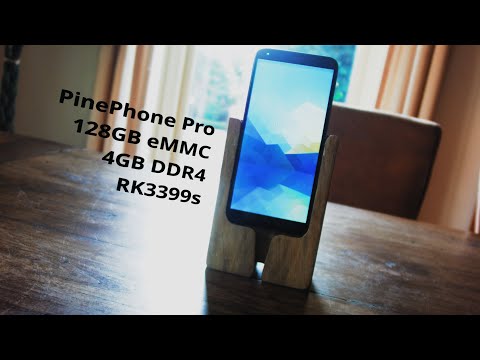
The device is equipped with 4 GB of RAM, 128GB eMMC (internal), and two cameras (5 MP OmniVision OV5640 and 13 MP Sony IMX258). In comparison, the first PinePhone model came with 2 GB of RAM, 16GB eMMC, and cameras with 2 and 5 MP. Like the previous model, it features a 6-inch IPS display with a resolution of 1440×720, but it is better protected thanks to the use of Gorilla Glass 4. The PinePhone Pro is fully compatible with add-ons that replace the back cover, previously released for the first model (the cases of PinePhone Pro and PinePhone are nearly indistinguishable).
Noteworthy components of the PinePhone Pro also include Micro SD (with support for booting from the SD card), a USB-C port with USB 3.0 and combined video output for connecting a monitor, Wi-Fi 802.11 ac, Bluetooth 4.1, GPS, GPS-A, GLONASS, UART (via the headphone jack), a 3000mAh battery (fast charging at 15W). Like the first model, the new device allows for hardware-level disabling of LTE/GPS, WiFi, Bluetooth, cameras, and the microphone. Dimensions are 160.8 x 76.6 x 11.1 mm (2 mm thinner than the first PinePhone). Weight is 215 g.
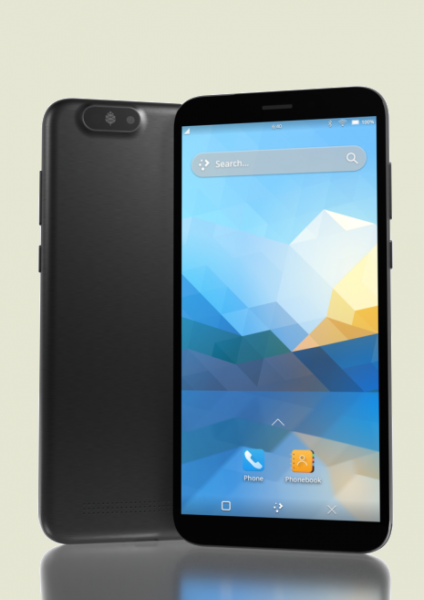
The performance of the PinePhone Pro is comparable to modern mid-range Android smartphones and is approximately 20% slower than the Pinebook Pro laptop. When connected to a keyboard, mouse, and monitor, the PinePhone Pro can be used as a portable workstation, suitable for watching videos in 1080p quality and performing tasks such as photo editing and using office software.
By default, the PinePhone Pro will be equipped with the Manjaro Linux distribution and the KDE Plasma Mobile user interface, but developers are also working on creating alternative builds with firmware based on platforms such as postmarketOS, UBports, Maemo Leste, Manjaro, LuneOS, Nemo Mobile, Sailfish, OpenMandriva, Mobian, and DanctNIX, which can be installed or loaded from an SD card. The firmware uses a standard Linux kernel (with patches scheduled to be included in the main kernel) and open drivers.
The Manjaro distribution is based on the Arch Linux package base and uses its own toolkit, BoxIt, designed in the image of Git. The repository is maintained on a rolling release principle, but new versions undergo an additional stabilization phase. The KDE Plasma Mobile user interface is based on the mobile edition of the Plasma 5 desktop, KDE Frameworks 5 libraries, the Ofono telephony stack, and the Telepathy communication framework. Qt, a set of Mauikit components, and the Kirigami framework are used to create the application interface. Graphics output is handled by the composite server kwin_wayland. PulseAudio is used for sound processing.
Included are applications such as KDE Connect for pairing the phone with the desktop, the document viewer Okular, the music player VVave, image viewers Koko and Pix, the note-taking system buho, the calendar planner calindori, the file manager Index, the application manager Discover, the SMS sending program Spacebar, the address book plasma-phonebook, the interface for making phone calls plasma-dialer, the browser plasma-angelfish, and the messenger Spectral.

Source: opennet.ru
