

The Fedora developer, working at Red Hat, has introduced the SyncStar toolkit, which allows the deployment of services for creating USB flash drives with operating systems of the user's choice. The primary purpose of SyncStar is to create kiosks and informational stands that can be used at technical conferences and exhibitions to record bootable builds of various operating systems onto the USB drives of participants.
Developers of Linux distributions can utilize such kiosks to distribute demo builds of their systems, simplifying the introduction of Linux to conference and exhibition visitors. Speakers and lecturers can take advantage of the project to disseminate a prepared boot image to attendees, showcasing the systems mentioned in their presentations or containing educational materials.
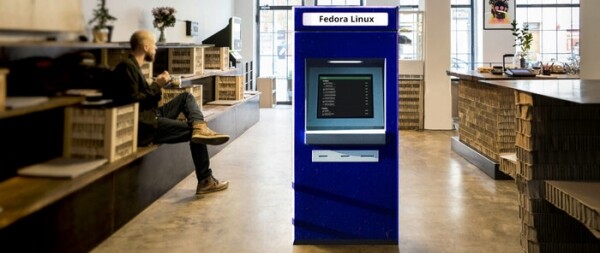
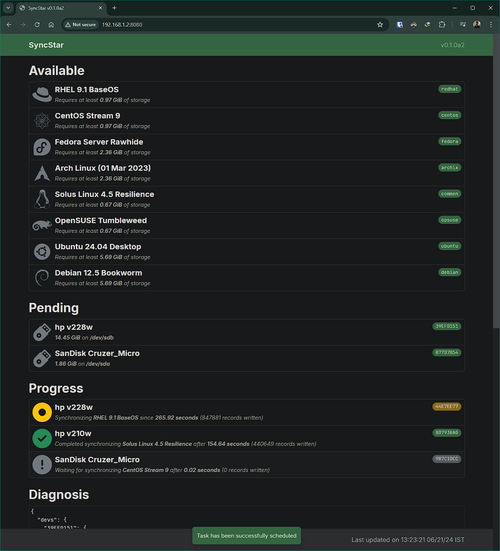
To create a kiosk, all that's needed is a regular laptop set up at the exhibition stand, or a Raspberry Pi board housed in a 3D-printed case. The project is designed to operate without a monitor — control and selection of the image for recording is done through a web interface, accessible by any participant of the event using their smartphone or laptop while connected to the shared wireless network. Among the features of SyncStar is the capability to record multiple images simultaneously in asynchronous mode, an adaptive web interface designed for various device types, and a command line interface for kiosk configuration.
Source: opennet.ru
