

Hello everyone! A year ago, I wrote . Judging by the feedback, the article contains many interesting ideas, but it is large and hard to read. I have long wanted to divide it into smaller pieces and write them more clearly.
But writing the same thing twice somehow doesn’t work. Additionally, this year there were significant issues with a similar course organization. So I decided to write separate articles about each of the ideas. To discuss the pros and cons.
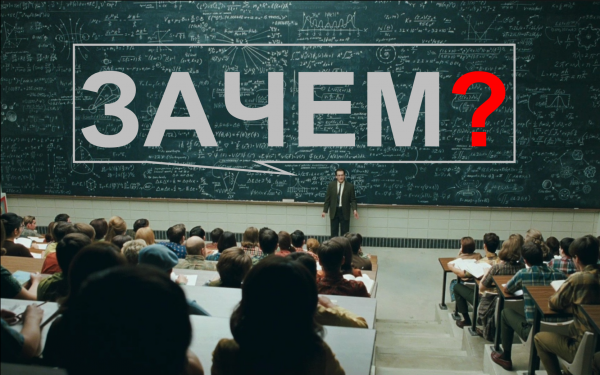
This is a zero article — an exception. It’s about the motivation of the teacher. About why teaching is beneficial and pleasant for both oneself and the world.
I’ll start with what motivates me
First of all, I find it interesting and enjoyable! I’ll try to articulate precisely what it is.
I enjoy coming up with rules that others will have to live by for at least a semester. I like refining existing rules or those I've created. Making them better, solving some problems that I or the students encounter.
A good course requires a lot: selecting material, organizing it wisely throughout the semester, learning to explain clearly and interestingly, and devising an adequate and stimulating reporting system for students. Designing such a course is not only very interesting but also practically useful. It can be endlessly improved. One can personally observe intermediate improvements in practice. In research tasks, visible practical improvements are usually lacking; teaching can compensate for this.
I also certainly enjoy sharing my knowledge — it seems to make me look smarter and more attractive. I feel like I’m at the forefront of the audience. I appreciate that at least someone is listening to me attentively. They do what I believe is right. Plus, the status of a teacher creates a pleasant aura in itself.

But being interesting and pleasant is not everything. Teaching makes me better: more knowledgeable, more capable.
I am forced to delve much deeper into the material. I don’t want students to look at me disapprovingly and think: 'Here’s another one who has nothing better to do than read us some nonsense that he himself doesn’t even consider worth understanding.'
When students have a general understanding of the material, they begin to ask questions. Sometimes, these questions are insightful and lead us towards the unknown. Other times, the thought contained in the question has never crossed our minds before, or has been miscalculated in some way.
It happens that new knowledge emerges from students' work results. For example, while students complete practical assignments or improve course materials, they propose new algorithms and quality assessment formulas that are new to me. I may have heard about these ideas before, but I just couldn't bring myself to delve into them. Then they come and say, 'Why not add this to the course? It's better than what we have, because...'. I have to engage with it; there's no escaping.
In addition, teaching is an active practice of communicating with students. I answer their questions, striving to be clear and not veer into too much complexity.
Spoiler:I'm not particularly good at this=(
During our interactions, I unwittingly assess the abilities and diligence of the students. Then, these evaluations automatically align with what the student actually accomplished. It turns out that I learn to evaluate the abilities of others.
Sometimes I discover interesting facts about how the world operates. For example, this year I experienced firsthand how significantly student flows can differ with just a one-year gap.

How else can teaching benefit the teacher?
I have a few ideas. One can:
- Use students to validate research hypotheses. Yes, I don't consider using students' labor on subject matter for my own purposes to be unethical or wrong. On the contrary: students feel that what they are doing is genuinely needed. This is a pleasant feeling; it drives them to perform tasks more effectively.
- Understand how different people will react to your words. Learn to communicate more effectively.
- Conduct experiments on organizing teamwork.
- Get to know future specialists in your field. Perhaps some of them will later collaborate with you. Or maybe you'll find someone among the students you like and later invite them to work with you. Observing a person throughout the semester allows you to understand them much better than through a few interviews.
In sad moments, you can remember that you have shared a piece of your knowledge and experience with many. They haven't been lost =)

Source: habr.com
