

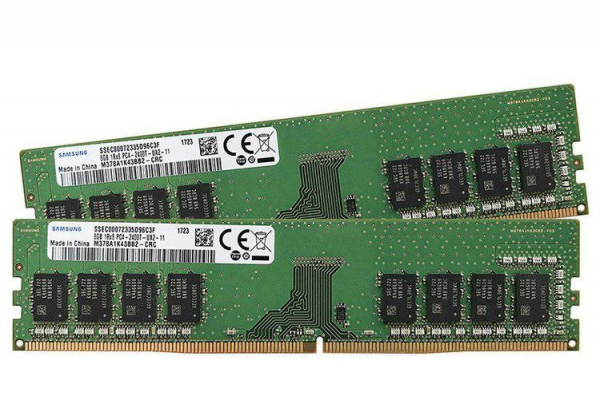
Memory modules built on Samsung B-die chips are arguably one of the most popular choices among enthusiasts. However, the South Korean manufacturer considers them outdated and is currently halting their production, offering newer DDR4 memory chips made with more advanced processes instead. This means that the lifecycle of unbuffered DDR4 memory modules from Samsung, based on B-die chips, has now come to an end, and they will soon disappear from the market. Other manufacturers that use Samsung B-die chips in their products will also stop supplying such modules.
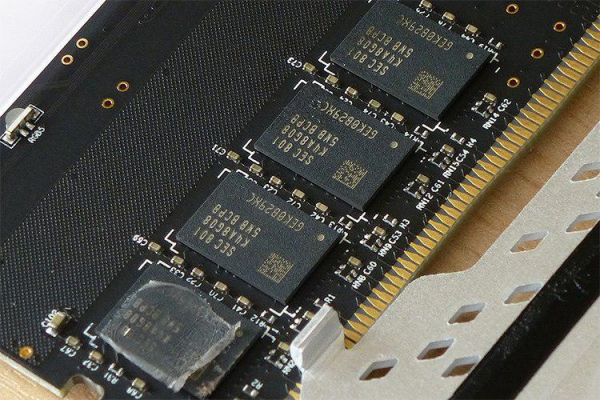
Samsung B-die chips and the memory modules based on them have gained wide recognition for their versatility and overclocking potential. They scale excellently in frequency, respond well to increased supply voltage, and allow operation with extremely aggressive timings. A particularly important advantage of the modules based on Samsung B-die chips is their simplicity and broad compatibility with various memory controllers, which makes them especially favored by owners of systems based on Ryzen processors.
However, the production of B-die chips utilizes a rather old 20nm manufacturing process, so Samsung's desire to cease production of such semiconductor devices in favor of more modern alternatives is quite understandable. Recently, the company announced the start of production of DDR4 SDRAM chips using 1z-nm class technology (third generation), while chips manufactured using the 1y-nm process (second generation) have been in production for over a year and a half. This is the direction the manufacturer is urging to take. B-die chips have officially been designated EOL (End of Life) status, marking the end of their lifecycle.
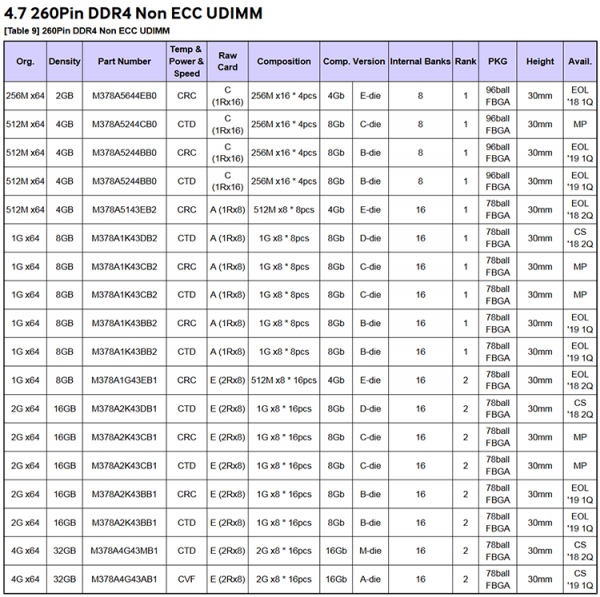
Instead of the legendary Samsung B-die chips, other offerings are set to gain more distribution. Production stages have reached the M-die chips, which are produced using a 1y nm process. The A-die chips, manufactured with even more advanced 1z nm technology, have also reached the qualification production stage. This means that M-die memory will be available for sale very soon, while modules based on A-die chips will be accessible to users within six months.
The main advantage of the new memory chips with updated cores, in addition to modern processes and potentially higher frequency potential, is their increased capacity. They enable the production of single-sided DDR4 memory modules with a capacity of 16 GB and double-sided modules with a capacity of 32 GB, which was previously impossible.
It's worth noting that significant changes in the lineup of available DDR4 SDRAM memory modules can be expected this summer. Along with the new Samsung chips, memory sticks are also set to start using E-die chips from Micron and C-die chips from SK Hynix. It is quite likely that all these changes will lead to increases not only in the average density but also in the frequency potential of typical DDR4 SDRAM modules.
Source: 3dnews.ru
