

We are publishing an article by our colleague
Recently, I managed numerous projects in the retail sector at Gazpromneft gas stations in areas such as loyalty, franchising, retail automation systems, and many others. Currently, I lead the sales architecture direction, developing the corporate IT landscape. Additionally, I am passionate about classical education; I have obtained a PhD and hold certifications in Agile — PSPO, PSM, SPS, among others, and I am also studying for an MBA at Kingston University. I sincerely believe that the development of any specialist should be tied to the acquisition of new knowledge, and the more diverse they are, the better. Hello! I am Alexander Voynovsky, and I won’t be stopped — I continue to learn. Below is an article on how to obtain a PMP certification.

Regardless of the industry you work in, a professional approach is essential for quality work, timely delivery, proper financial control, and risk management. It is crucial for achieving high results. Research shows that over the next 10 years, the demand for project managers will grow faster than the need for other workers. By 2027, it is expected that the number of project managers in seven project sectors will increase by 33%, adding nearly . Therefore, studying project management standards is becoming increasingly popular. Among IT project management standards, the most widely used is the PMI PMBOK GUIDE. The popularity of PMBOK PMI is due to the accessible representation of knowledge in project management and PMI's active policy to support the standard. PMI's certification program offers various programs for practitioners with different levels of education and experience:
Certified Associate in Project Management (CAPM)
Agile Certified Practitioner (PMI-ACP)
Risk Management Professional (PMI-RMP)
PMI Scheduling Professional (PMI-SP)
Portfolio Management Professional (PfMP)
Program Management Professional (PgMP)
Project Management Professional (PMP)
PMI Professional in Business Analysis (PMI-PBA)
I recently completed the certification for the Project Management Professional (PMP) standard, and I would like to share the experience gained during my preparation and exam process, as well as discuss the events awaiting you afterwards.
The exam certifies knowledge according to the PMBOK project management standard. If you try to answer the question: how much does the certification help in further employment, you can type the word PMP into recruitment resources and you'll immediately discover a pool of job vacancies where the certification is mandatory or adds advantages in employment. Personally, studying the standard allowed me to improve my skills in working with stakeholders, managing project scope, scheduling, and cost, expand my knowledge in resource management, as well as work correctly with risks and effectively build communications. Overall, this knowledge helps to broaden the competencies of a project manager and consequently their competitiveness in the job market.

Time to prepare for the exam
In my opinion, for it is difficult to prepare for the exam. I asked colleagues who have taken the exam how much time they needed to prepare — usually, before taking the exam, they took 2-3 weeks off to fully immerse themselves in the process. In my case, I did not have the opportunity to take leave, and I prepared every evening, spending just over a month on my preparation.
Which books to use for preparation?
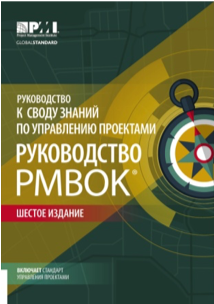
1. Project Management Standard — PMI PMBOK 6th EditionThis is the most current version of the standard available. It contains the most up-to-date information. When preparing for the exam, it is recommended to read this version specifically. The guide has increased by a third compared to the previous edition and also includes the Agile Practice Guide, which provides 183 pages of information on agile methodologies. The new version features numerous changes, particularly in terms of Agile. A lot of emphasis has been placed on flexible and adaptive methodologies, which have permeated almost all management processes. There have been changes to the titles of certain processes within the standard, and three new sections have been added: implementing responses regarding risk management, managing project knowledge in project integration management, and resource control in resource management. PMI has included a new section dedicated to defining the ever-expanding role of the project manager, which also mentions the PMI talent triangle, encompassing leadership, strategic, and technical project management skills. Project managers can now combine methodologies when implementing the project management processes described in the standard.
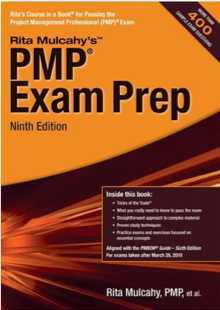
2. The real primary and main tool for exam preparation is the book "PMP Exam Prep: Rita’s Course in a Book for Passing the PMP Exam" (author Rita Mulcahy Ninth Edition). It is specifically the Ninth Edition because only in this book are the changes of the 6th edition of PMBOK taken into account. I ordered the book from America as it was not available in Russia at the time of my preparation. It clearly and accessibly describes the knowledge areas, methods, and tools, highlighting what to pay special attention to. Additionally, it includes 400 sample questions for exam preparation. In my opinion, and that of my colleagues, this book should be a key tool for exam preparation. Be sure to complete the exercises in the book; it really helps.
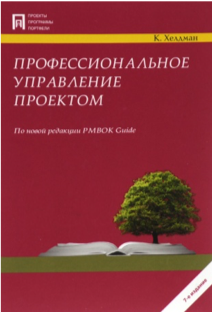
3. "Professional Project Management" (author Kim Heldman). The book is in Russian. It contains basic information. Initially, I tried to prepare using it, but after completing my training and studying Rita Mulcahy in detail, I realized that the material in it is quite weak and I only used it as a tool for practicing questions. The questions seem rather superficial. How much? — You will understand after reading Rita Mulcahy. The narrative structure is made up of situations from a project manager's life and differs from the structures of the two knowledge area books mentioned above, which complicates learning and remembering the material. Nevertheless, I recommend reading it at least once and not dismissing it as an exam preparation tool, if only because it includes practice questions on which you can train.
Video materials and mobile applications for preparation
There are many materials on Youtube concerning project management, both for exam preparation and materials that explain nuances regarding project management standards. They are convenient to use to listen to during commutes for reinforcing the material. Not all the materials presented below are created according to the latest standards, but I reiterate, they will definitely be useful for better understanding knowledge areas and project management:
I personally did not use foreign videos, as I consider reading books and domestic materials sufficient for understanding project management standards and exam preparation. However, if you ever feel like it, there is a vast amount of material available online under the PMP tag. You can use mobile applications — it’s very convenient for regular practice. According to online recommendations, two of the most useful and high-quality ones are: and .
Stages of exam preparation
There is no universal preparation method — each of us chooses our own path, but if we try to systematize the approach, it looks like this:
1. Complete training in project activities at one of the educational institutions. This is necessary to gain access to the exam.
2. Study the PMBoK 6th edition standards in a group during classes or at home. This will take you at least two to three weeks.
Be sure to memorize all inputs and outputs of the processes or understand them very well.
You must memorize all formulas.
3. Study Rita’s Course. Read all the theory and solve examples from all the tests in the book. Remember that this book is in English, which will slow down your study of the material.
4. Watch videos online and read additional literature. This will help you dive deeper into the subject matter.
5. Practice with tests from various sources to reinforce the material and improve your skills.
As I already mentioned, you should allocate about a month to prepare for the exam and study the materials listed until you can clearly understand the knowledge areas in the standard. If you can explain each section, with formulas and processes, you are ready and it’s time to move on to the exam, but before that, you will need to apply for admission.
Submitting an application to take the exam and auditing the application at PMI.
To apply, you need to register on the website and fill out the form. You will submit your application — specifying your project experience in terms of hours, task areas, and completed work, information about your courses, as well as your educational background. Certification requirements will depend on your education:
Without a higher education
- 7,500 hours of project management work or participation in it (60 calendar months)
- 35 hours of project management training or a CAPM certificate.
With a higher education
- 4,500 hours of project management work or participation in it (36 calendar months)
- 35 hours of project management training or a CAPM certificate.
You can choose any type of courses, starting from classroom training with instructors to online courses, but they must be from registered PMI providers (Registered Education Providers).
The submitted application will be reviewed, and within a certain period, you will receive a response indicating whether you are eligible to take the exam. In some cases, applications are subject to an audit regarding the accuracy of the information you submitted. The selection of applications for audit occurs randomly. If your application is selected for an audit, you will receive an informational email requiring confirmation of the details related to your education, project activities, and work experience as indicated by you. For the audit, you will fill out a template form with information supporting the validity of your practical experience along with your supervisor's visa at the time of the project execution. You will also need to attach a copy of your diploma and its translation into English, as well as documents obtained from your studies with the scores. Everything needs to be sent by mail to PMI. After some time, you will receive a letter confirming the successful completion of the audit, after which a code for exam access will be sent to your email. You can take the exam three days after this, but not later than one year. Let's proceed to payment.
Exam payment and selection of a testing location
The cost of the first attempt at the PMP exam for PMI members will be $405, while for non-members it will be $555. Therefore, by paying for PMI membership, you save money. PMI membership is not mandatory for certification at the PMP level. The cost of PMI membership is $129 per year.
For testing locations, please refer to the website:. In Russia, the exam can be taken electronically in Moscow, Saint Petersburg, Novosibirsk, Vladivostok, Krasnodar, Nizhny Novgorod, Rostov-on-Don, Omsk, Khabarovsk, Tula, Yekaterinburg, Saratov, Kaliningrad, etc.
The candidate needs to visit the testing center website and select the date and time for the exam. The PMP exam is conducted from Monday to Saturday, inclusive, twice a day (in the morning and at noon).
I registered a month in advance, but there were very few convenient dates available for registration in my city. The exam can be taken in English or Russian. If a question in Russian seems unclear, you can read it in English. Personally, I recommend taking it in your native language. Many acquaintances said that you must take it in English, but I took it in Russian and switched to English probably no more than 10 times. If your plans change, you can cancel or reschedule your exam if you have already registered. To do this, you must contact Pearson VUE 48 hours before the exam.
Procedure and conditions for certification
Once all procedures are completed and the material is studied, it’s time for the exam. Don’t forget your passport; it will be needed for registration. You must arrive at the testing center 15 minutes before the scheduled time. If you are more than 15 minutes late, you will not be allowed to take the exam. You will be photographed, sign on a special tablet, and the procedure will be explained to you. Before you can sit at the computer for the exam software, the certification center staff will ask you to show your pockets and check for any cheat sheets.
Personal belongings are not allowed in the testing room (bags, books, notes, phones, watches, wallets, etc.). There are locked boxes for all of this. You will have a whiteboard and marker for notes. I was personally asked not to write anything before the exam starts. You will be seated at a separate computer and given earplugs, which helps to focus very well. The entire exam is recorded on video, so I don’t recommend cheating.
The exam consists of 200 questions. You need to choose only one correct answer. The exam is allotted 4 hours (in fact, you will have little free time left). The questions are grouped into the following areas: initiation 13%, planning 24%, execution 31%, monitoring 25%, and project closure 7%.
During the exam, you have the option to mark questions for later review. I marked about 20-30 questions, which allowed me to think about them again at the end of the exam. Additionally, while reviewing the marked questions, I found two questions where I forgot to select any answer. So definitely make a final review at the end. Around the 50th question, you really start to feel tired and anxious; this is normal.
The result of the exam will be two scenarios:
- If you pass, it will display PASS. You will receive a result printout (this is not a certificate, but be sure to keep the paper). It will show your status as well as performance across domains in the following classifications: Above Target, Target, Below Target, Needs Improvement.
- If you fail, it will display FAIL. You can retake the exam three times within a year. If you fail after the third attempt, you will have to wait a year from the last unsuccessful attempt to get permission to take the test again.
Exam results are updated in your PMI account after some time; you will have to wait for a bit. In my case, it was more than a week, after which your status will update and you will have the opportunity to download the electronic version of the certificate. The original certificate will be mailed to you within a month.
Status Renewal
The Project Management Professional (PMP) certificate is valid for three years from the date of the exam, after which it must be renewed by obtaining 60 PDUs (Professional Development Units) according to the following scheme:
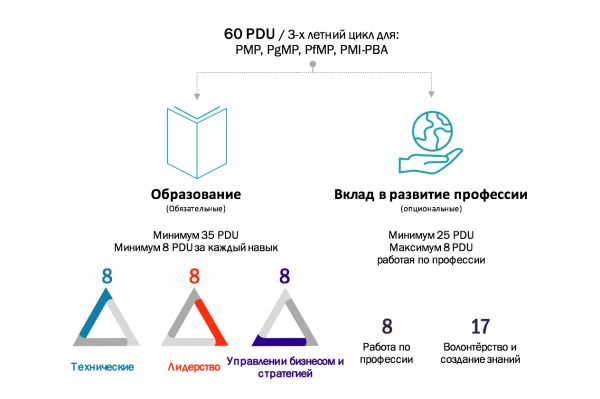
Education
The first category of tools for obtaining PDUs includes educational events aimed at enhancing knowledge in one of the areas of the PMI Talent Triangle: technical competencies, leadership competencies, or business and strategic management competencies.
Courses and Training
Training in courses, either in person or online, accreditation is important
Organizational Sessions
Participation in educational sessions or events aimed at development in the areas of the PMI Talent Triangle.
Digital Media / Webinars
Self-study of materials online or through webinars, podcasts, or interactive videos.
Reading
Self-study of informational materials, popular science books, articles, official documents, or blogs
Informal learning
Activities include mentoring, group discussions, meetings, and training sessions or other structured discussions.
Contribution to professional development
The second category includes activities that allow sharing knowledge and skills and applying them as a means to promote professional growth.
Professional activity
Working in a certified role on a project.
Content creation
Activities that allow sharing knowledge and skills, applying them as a means to promote professional growth, such as writing books, articles, official documents or blogs, creating webinars, or presentations.
Presentation
Preparation of presentations for specialized conferences, speeches related to your certification
Knowledge dissemination
Dissemination of professional knowledge for the training and development of others.
Volunteering
Activities related to your certification that contribute to the enhancement of knowledge or practice in the profession.
To earn PDU, you must fill out a form in your personal account on the PMI website. Activities conducted or attended before obtaining certification do not count towards PDU. The cost for certification renewal will be $60 if you are a PMI member and $150 if you are not. If you fail to meet the requirements for certification renewal, your status will be suspended.
Standard and exam updates
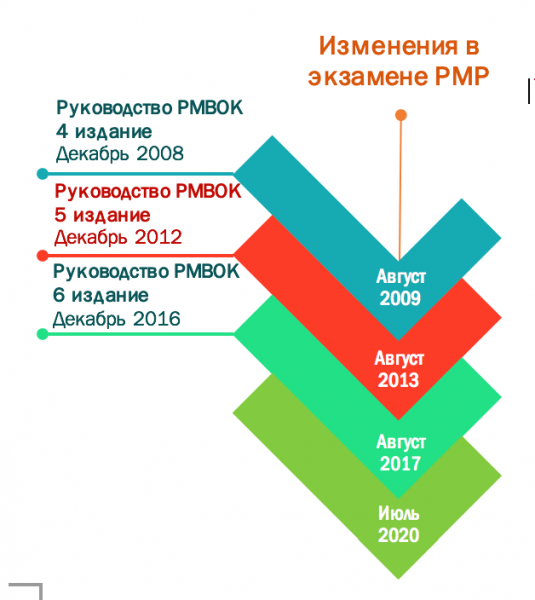
The standard is updated and developed periodically. The content of materials and the exam itself may change. In July 2020, the Project Management Institute (PMI) plans to change the Project Management Professional (PMP) exam.
In the updated exam, questions will be divided into three areas:
- People. This section will assess knowledge and skills in effective project team management.
- Processes. This area is dedicated to the technical aspects of project management.
- Business environment. This examines the connection between projects and the organization's strategy.
You can read more about these changes at the following link:
That's all for now. I hope this article helps to fully clarify the nuances of the activities related to Project Management Professional (PMP) certification.
Source: habr.com
