

Following the long-awaited beta release of Haiku R1 at the end of last year, the developers of the open-source operating system have finally moved on to optimizing its performance. First and foremost, this involves speeding up the system as a whole.
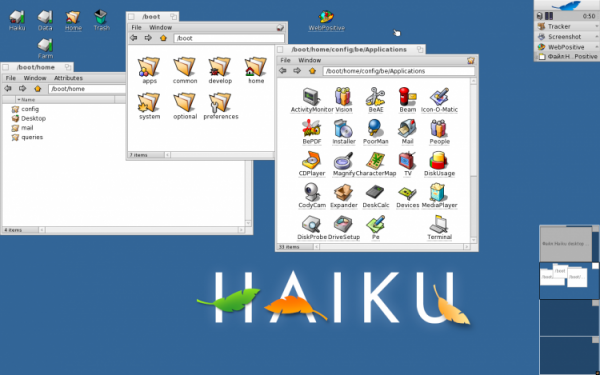
Now that the overall instability of the system and kernel crashes have been resolved, the authors have started to address the speed issues of various internal components. Specifically, this pertains to increasing memory allocation speed, disk writing, and so on.
According to According to the official blog, one of the optimization directions has been to reduce memory fragmentation, which has improved the system's performance. The developers have also enhanced the functionality of the file system, so operations like emptying the trash will no longer slow down the system. It turned out that a two-second timeout between writes had been hard-coded by default to prevent disk overload. This has been changed to a dynamic timeout, which resolved the issue.
There are other changes as well, which can be further explored in the developers' blog. Meanwhile, it is worth noting that Haiku aims for binary compatibility with BeOS and should support software from that system.
Source: 3dnews.ru
