

The release of web browser Firefox 107 has taken place. Additionally, an update to the long-term support branch — 102.5.0 has been released. The Firefox 108 branch will soon enter beta testing, with its release scheduled for December 13.
Key innovations in Firefox 107:
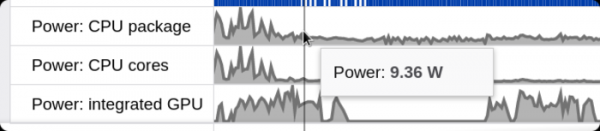
- The profiling interface (Performance tab in the developer tools) has added the ability to analyze power consumption on Linux and macOS systems with Intel processors (previously, power consumption profiling was only available on Windows 11 systems and Apple computers with M1 chips).

- CSS properties ‘contain-intrinsic-size’, ‘contain-intrinsic-width’, ‘contain-intrinsic-height’, ‘contain-intrinsic-block-size’ and ‘contain-intrinsic-inline-size’ have been implemented, allowing developers to specify an element size independent of the influence of child elements (for instance, when increasing the size of a child element may stretch the parent element). The proposed properties allow the browser to immediately determine the size without waiting for the rendering of child elements. If the value ‘auto’ is set, the last rendered size of the element will be used for fixing the size.
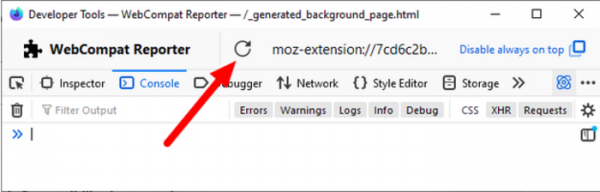
- The web developer tools have simplified debugging of extensions based on the WebExtension technology. An option ‘—devtools’ has been added to the webext utility (webext run —devtools), allowing the browser window with the developer tools to automatically open, for example, to identify the cause of an error. Inspecting pop-up windows has been made easier. A Reload button has been added to the panel to refresh the WebExtension after changes have been made to the code.

- Performance of Windows builds in Windows 11 22H2 has been enhanced when handling link transitions in IME (Input Method Editor) subsystems and Microsoft Defender.
- Improvements in the Android version:
- A Total Cookie Protection mode has been added, which was previously applied only when opening websites in private browsing mode and when selecting a strict mode for blocking unwanted content. In Total Cookie Protection mode, a separate isolated storage is used for each site's cookies, preventing cookies from tracking users across sites. All cookies set by third-party blocks (iframes, js, etc.) loaded onto the site are tied to the site from which those blocks were sourced and are not transferred when accessing those blocks from other sites.
- Proactive loading of intermediate certificates is ensured to reduce the number of errors when accessing websites via HTTPS.
- In website texts, content enlargement is enabled when text is highlighted.
- Support for image picker panels introduced in Android 7.1 has been added (Image keyboard, a mechanism for sending images and other multimedia content directly into text editing forms in applications).
In addition to new features and bug fixes, Firefox 107 addresses 21 vulnerabilities. Ten of these vulnerabilities are marked as critical. Seven vulnerabilities (grouped under CVE-2022-45421, CVE-2022-45409, CVE-2022-45407, CVE-2022-45406, CVE-2022-45405) are caused by memory-related issues such as buffer overflows and access to already freed memory areas. These issues could potentially allow an attacker to execute code when specially crafted pages are opened. Two vulnerabilities (CVE-2022-45408, CVE-2022-45404) allow bypassing notifications about full-screen mode operation, for example, to simulate the browser interface and mislead users during phishing attempts.
Source: opennet.ru
