

The Qt Company has released the Qt 6.9 framework, continuing to enhance stability and functionality in the Qt 6 branch. Qt 6.9 supports platforms including Windows 10+, macOS 12+, Linux (Ubuntu 22.04/24.04, openSUSE 15.5, SUSE 15 SP5, RHEL 8.10/9.4, Debian 11.6), iOS 16+, Android 9+ (API 23+), webOS, WebAssembly, INTEGRITY, VxWorks, FreeRTOS, and QNX. The source code for Qt components is provided under LGPLv3 and GPLv2 licenses. Qt 6.9 has achieved interim release status, with public support lasting 6 months (+ an additional 6 months for commercial users).
Key Changes in Qt 6.9:
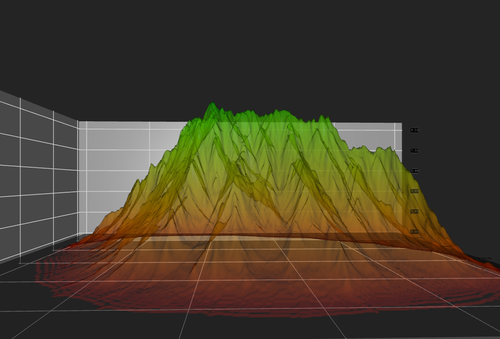
- Development of the Qt Graphs module, designed for creating 2D and 3D charts, as well as visualizing large collections of rapidly changing data, has continued. The module utilizes Qt Quick 3D and the RHI (Rendering Hardware Interface) rendering engine, supporting various 3D APIs (OpenGL, Vulkan, Metal, and Direct 3D). The new version introduces support for transparency in the QML type Surface3D, implements the QSpline3DSeries class for rendering data as 3D splines, and adds further customization options for chart layouts, axes, and labels. It is now possible to embed graphs in applications based on Qt Quick 3D using the 'importScene' property in View3D-based scenes. Input parameter configuration in 2D charts has been simplified. QGraphsView now supports precise positioning of the rectangular area (plotArea) for graph display.

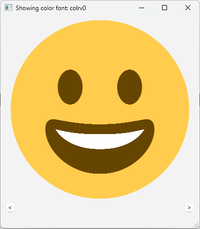
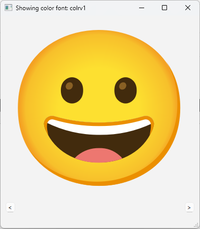
- The ability to identify emoji codes in text and use proper colored fonts for their display has been implemented. A new API for selecting the font family for emoji has been added to QFontDatabase. Currently, fonts in CBDT and COLRv1 formats are supported. Emoji parsing can be disabled if desired.

- An API has been added for creating interfaces where UI elements blend with content and do not distract the user (content spans the entire window space without highlighting a header). The Qt.ExpandedClientAreaHint flag has been introduced to expand the application's interface area to the full window, while the 'SafeArea' property in Qt Quick delineates areas with functional elements such as headers, footers, and menus that should not overlap with internal UI components.

- The Qt SVG module has added initial support for CSS animations, currently applicable only to the properties 'color', 'fill', 'stroke', and 'transform'.
- Work has been done to improve performance.
- On systems with hybrid CPUs featuring separate high-performance and energy-efficient cores, QThread has added the ability to hint the scheduler on which type of CPU cores the specified thread should run on.
- For applications using QQuickPaintedItem with OpenGL, the FramebufferObject rendering mode is allowed, which utilizes hardware acceleration.
- In the RHI backend (Rendering Hardware Interface) for OpenGL ES, an extension has been implemented that supports multisampled rendering, enhancing the performance of Qt Quick and Qt Quick 3D on modern GPUs.
- In the RHI backend for Direct 3D, a separate thread has been added to track the completion of vertical synchronization (vblank), reducing latency in interactive interfaces.
- In all RHI backends, except OpenGL, support for Variable Rate Shading (VRS) has been added, enabling VR applications based on Quick 3D XR to render with consideration of the user's gaze direction.
- A new RectangularShadow element has been introduced in Qt Quick, which reduces CPU load when using shading and glow effects in the interface.
- Memory consumption in the QHeaderView class has been significantly reduced when resizing and regrouping sections are disabled.
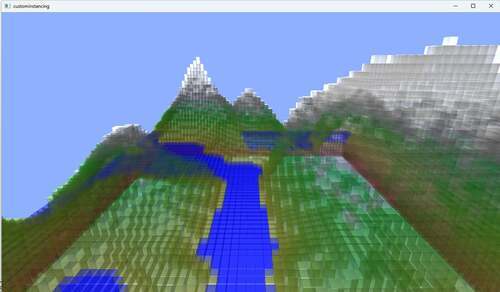
- In Quick 3D, the 'Weighted Blended' technique has been implemented, allowing for the rendering of transparent objects without performing separate depth-sorting operations. This technique prevents artifacts that occur due to incorrect sorting when objects overlap. In terms of CPU load and memory consumption, the new method is identical to the old one.

- The Qt Network Authorization module has been added, providing an API for authentication using OAuth1 and OAuth2 protocols, which can be used to access online services without revealing the user's password.
- Work has been done to enhance the security of the Qt HTTP Server module. The QHttpServerConfiguration now includes the ability to limit the maximum number of incoming requests. In QHttp2Configuration, support has been added for clients using HTTP/2 to set the maximum number of concurrently created streams.
- In the QML Language Server implementation server The LSP (Language Server Protocol) for QML provides information about the structure of QML, allowing for a hierarchical representation of QML structure in code editors and integrated development environments.
- A new ContextMenu component has been added to Qt Quick, simplifying the binding of context menus to elements triggered by platform-specific events, such as right mouse clicks. Default context menus have been added for the TextField and TextArea components.

Source: opennet.ru
