

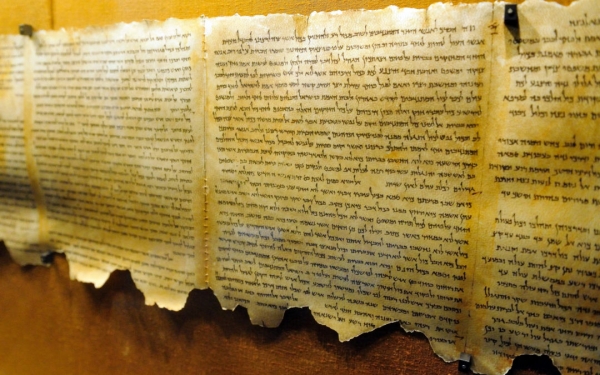
In modern museums and archives, ancient texts, manuscripts, and books are kept under specific conditions that preserve their original form for future generations. The most striking example of timeless manuscripts is the Dead Sea scrolls (Qumran scrolls), first discovered in 1947 and dating back to 408 BC. Some of the scrolls have only survived in fragments, but there are also those that remain virtually untouched by time. This raises an obvious question — how did people over 2000 years ago manage to create manuscripts that have survived to this day? This is what researchers at the Massachusetts Institute of Technology aimed to find out. What did scientists discover in the ancient scrolls, and what technologies were used to create them? We will learn about this from the researchers' report. Let's go.
Historical Background
In the relatively recent year of 1947, Bedouin shepherds Muhammad ed-Dhib, Juma Muhammad, and Khalil Musa set out to search for a lost sheep, which led them to the Qumran caves. Whether they found the lost animal is not recorded in history, but they discovered something much more valuable from a historical perspective — several clay jars containing ancient scrolls.
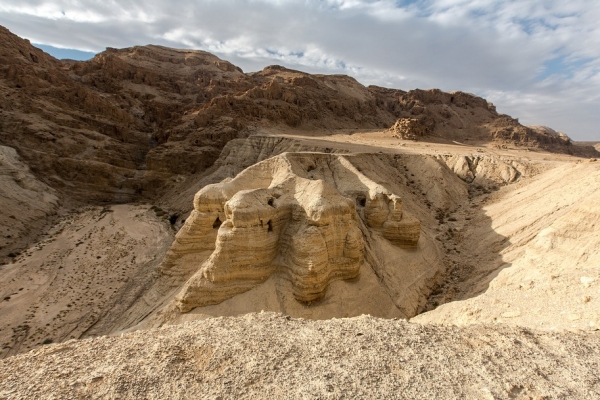
The Qumran Caves.
Muhammad took several scrolls and brought them to his village to show to his tribesmen. Some time later, the Bedouins decided to pass the scrolls to a merchant named Ibrahim Ija in Bethlehem, but he considered them trash, assuming they were stolen from a synagogue. The Bedouins did not abandon their attempts to sell their find and went to another market, where a Syrian Christian offered to buy the scrolls from them. As a result, an unnamed sheikh joined the conversation and advised them to consult an antiquities dealer named Khalil Eskander Shahin. The outcome of this somewhat convoluted story of finding a market for the scrolls was their sale for 7 Jordanian dinars (just over $314).
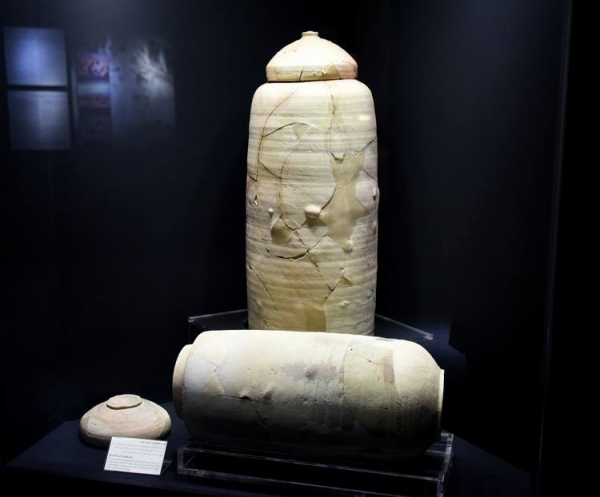
The jars in which the scrolls were found.
The invaluable scrolls might have gathered dust on the shelves of an antiques dealer if not for the attention of Dr. John C. Trever from the American School of Oriental Research (ASOR), who compared the stories in the scrolls with those in the Nash Papyrus, the oldest known biblical manuscript at the time, and found similarities between them.
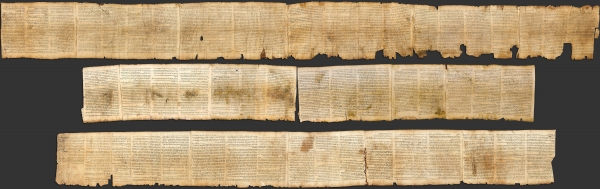
The Isaiah Scroll, containing almost the complete text of the Book of the Prophet Isaiah. The length of the scroll is 734 cm.
In March 1948, during the height of the Arab-Israeli War, the scrolls were transported to Beirut (Lebanon). On April 11, 1948, ASOR head Millar Burrows officially announced the discovery of the scrolls. From that moment, a full-scale search began for the cave (designated Cave 1) where the first scrolls were found. In 1949, the Jordanian government issued permission for searches in the Qumran area. On January 28, 1949, the cave was found by Belgian observer of the United Nations Captain Philippe Lippens and Captain of the Arab Legion Akashim al-Zebn.
Since the discovery of the first scrolls, 972 manuscripts have been found, some of which were complete while others were only available as separate fragments. The fragments were quite small, and their number exceeded 15,000 (referring to those found in Cave 4). One researcher attempted to piece them together until his death in 1979 but was never able to complete his work.
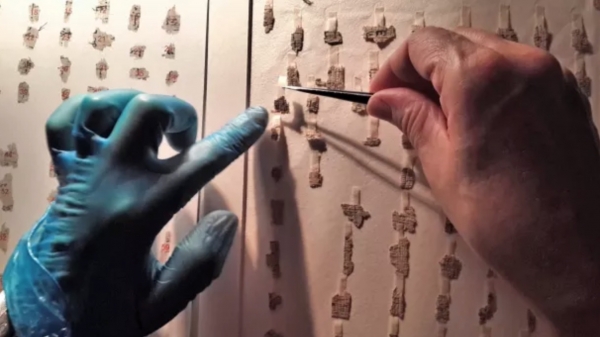
Fragments of the scrolls.
Content-wise, the Dead Sea Scrolls consisted of biblical texts, apocrypha, pseudepigrapha, and literature of the Qumran community. The language of the texts was also diverse: ancient Hebrew, Aramaic, and even Greek.
The texts were written using ink, and the material for the scrolls consisted of parchments made from the skins of goats and sheep; manuscripts were also found on papyrus. A small number of the scrolls were created using the technique of engraving text on thin sheets of bronze, which were then rolled up and placed in jars. Unrolling such scrolls without their inevitable destruction due to corrosion was impossible, so archaeologists cut them into pieces, which were later assembled into a single text.
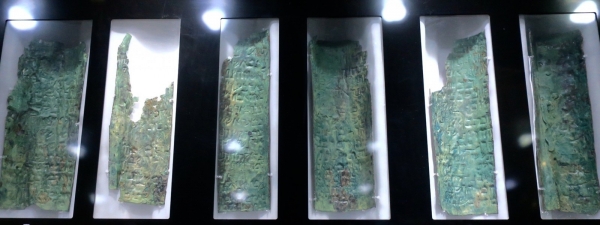
Fragments of the copper scroll.
While the copper scrolls demonstrated an impartial and even cruel nature of the passage of time, there were also those over which time seemed to have no power. One such specimen is an 8-meter-long scroll, notable for its thinness and bright ivory color. Archaeologists call it the "Temple Scroll," due to references in the text to the First Temple that Solomon was to build. The parchment of this scroll has a layered structure, consisting of a collagen base material and an atypical inorganic layer.
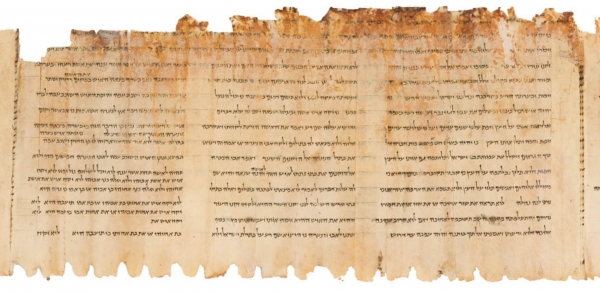
Temple Scroll. The entire Temple Scroll can be better examined through .
In today's work, scientists conducted an analysis of the chemical composition of this unusual inorganic layer using X-ray and Raman spectroscopy and discovered salt deposits (sulfate evaporites). This finding indicates a unique method of creating the analyzed scroll, capable of revealing the secrets of preserving ancient texts, which can also be applied in our time.
Analysis Results of the Temple Scroll
As noted by scientists (and as we can see from the photos), most of the Dead Sea scrolls are quite dark in color, with only a small portion being light. In addition to its bright appearance, the Temple Scroll has a multilayered structure with text written on an inorganic ivory-colored layer that covers the skin used as the base of the scroll. On the reverse side of the scroll, one can notice hair remnants left on the skin.
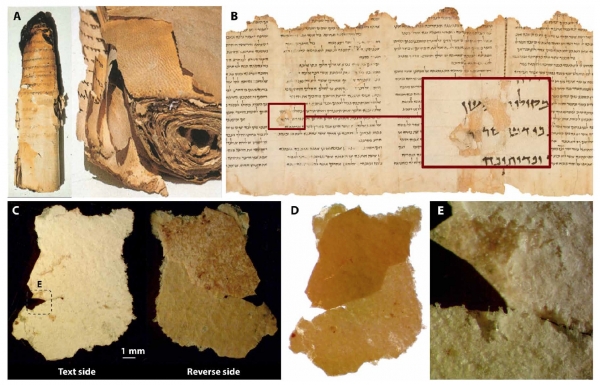
Image No. 1: A — appearance of the scroll, B — area where the inorganic layer and text are missing, C — text side (left) and reverse side (right), D — light reveals the presence of an area where the inorganic layer is absent (lighter patches), E — Enlarged optical microphotograph of the area highlighted by a dotted line in 1C.
Traces of hair follicle*, visible on the reverse side of the scroll (1A), indicate that part of the text on the scroll was written on the inner side of the skin.
Hair follicle* — an organ found in the dermis of the skin composed of 20 different types of cells. The main function of this dynamic organ is to regulate hair growth.
There are 'bare' areas on the text side where there is no inorganic layer (1C, to the left), revealing the yellowish collagen base layer. Areas were also found in places of twisting, where the text along with the inorganic layer was 'printed' on the back side of the scroll.
µXRF and EDS analysis of the scroll
After a visual inspection of the scroll, the researchers conducted µXRF* and EDS* analysis.
XRF* (X-ray fluorescence analysis) is a spectroscopy method that allows determining the elemental composition of a substance by analyzing the spectrum produced when the investigated material is exposed to X-ray radiation. µXRF (micro X-ray fluorescence analysis) differs from XRF significantly by having a smaller spatial resolution.
EDS* (energy-dispersive X-ray spectroscopy) is a method for elemental analysis of solid substances based on the analysis of the energy of the emission of its X-ray spectrum.
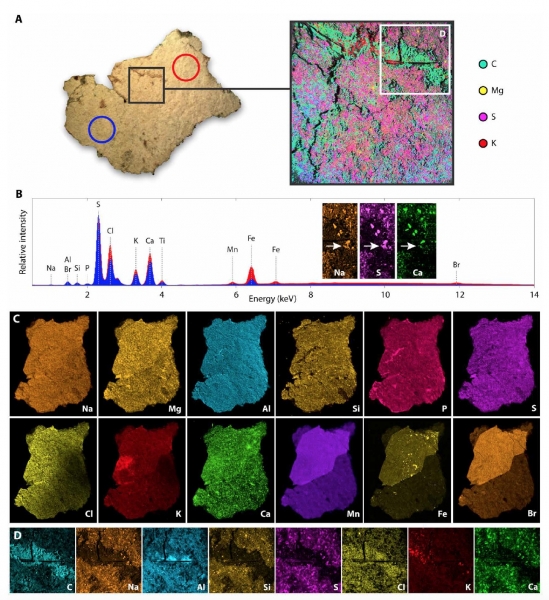
Image #2
The Temple scroll is characterized by its heterogeneity (2A) in terms of chemical composition, which is precisely why the researchers decided to apply such precise analysis methods like µXRF and EDS on both sides of the scroll.
The total µXRF spectrum of the areas of interest (sections of the scroll where the analysis was conducted) showed a complex composition of the inorganic layer, consisting of multiple elements, the main ones being (2C): sodium (Na), magnesium (Mg), aluminum (Al), silicon (Si), phosphorus (P), sulfur (S) chlorine (Cl), potassium (K), calcium (Ca), manganese (Mn), iron (Fe) and bromine (Br).
The µXRF elemental distribution map showed that the main elements Na, Ca, S, Mg, Al, Cl, and Si are distributed throughout the fragment. It can also be assumed that aluminum is fairly evenly distributed across the entire fragment; however, the researchers are not ready to assert this with 100% certainty due to the strong similarity between the K-line of aluminum and the L-line of bromine. The presence of potassium (K) and iron (Fe) is explained by contamination of the scroll, rather than the intentional incorporation of these elements into its structure during creation. There is also an increased concentration of Mn, Fe, and Br in the thicker areas of the fragment where the organic layer was not separated.
Na and Cl show a similar distribution across the studied area, meaning the concentration of these elements is sufficiently high in areas where the organic layer is present. However, there are differences between Na and Cl. Na is distributed more evenly, while Cl does not match the structure of the cracks and small delaminations in the inorganic layer. Thus, the correlation maps of Na-Cl distribution may indicate the presence of sodium chloride (NaCl, i.e., salt) only within the organic skin layer, which is a result of the skin processing during parchment preparation.
Subsequently, the researchers conducted scanning electron microscopy (SEM-EDS) on the areas of interest in the scroll, allowing for quantitative determination of the chemical elements on the surface. EDS provides high lateral spatial resolution due to the relatively small depth of electron penetration. To achieve this effect, a low-vacuum scanning electron microscope was used, as it minimizes damage caused by vacuum and enables elemental mapping of non-conductive samples.
The analysis of the EDS element maps (2D) shows the presence of particles in the area of interest of the inorganic layer, which predominantly contains sodium, sulfur, and calcium. Silicon was also detected in the inorganic layer, but not in the Na-S-Ca particles found on the surface of the inorganic layer. Higher concentrations of aluminum and chlorine were identified between the particles and in the organic material.
The element maps of sodium, sulfur, and calcium (insert at 2B) demonstrate a clear correlation between these three elements, and the arrows indicate the particles where sodium and sulfur were observed, but with little calcium.
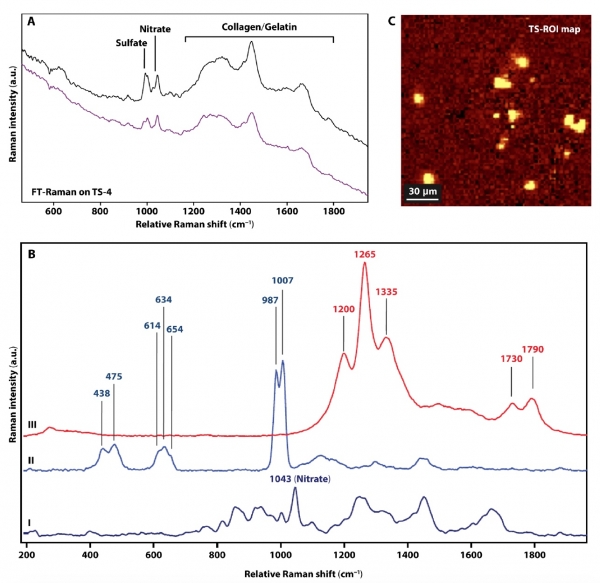
Image #3
µXRF and EDS analysis indicated that the inorganic layer contains particles rich in sodium, calcium, and sulfur, along with other elements in smaller quantitative amounts. However, these research methods do not allow for a detailed study of chemical bonds and phase characteristics; therefore, Raman spectroscopy was used for this purpose.
To reduce the background fluorescence typically observed in the combination scattering spectra, low-energy excitation wavelengths were applied. In this case, Raman spectroscopy at a wavelength of 1064 nm allows for the collection of data from relatively large particles (400 µm in diameter) (3A). Both spectra on the graph demonstrate three main elements: a double peak of sulfate at 987 and 1003 cm-1, a peak of nitrate at 1044 cm-1, and proteins typical of collagen or gelatin.
To clearly distinguish between the organic and inorganic constituents of the studied fragment of the scroll, near-infrared radiation at 785 nm was applied. In the image ( 3B ), the spectra of collagen fibers (spectrum I) and inorganic particles (spectra II and III) are distinctly visible.
The spectral peak of collagen fibers includes characteristic features of nitrate at 1043 cm-1, which can be associated with the vibration of NO3− ions in NH4NO3.
The spectra of particles containing Na, S, and Ca indicate that the inorganic layer contains particles from mixtures of sulfate-containing minerals in varying proportions.
For comparison, the spectral peaks of air-dried synthetic mixtures of Na2SO4 and CaSO4 fall at 450 and 630 cm-1, which differ from the spectra of the studied sample (3B). However, if this same mixture is dried by rapid evaporation at 250 °C, the combination scattering spectra will coincide with the spectra of the Temple Scroll in its sulfate fragments.
Spectrum III is associated with very small particles in the inorganic layer with a diameter of about 5-15 µm (3C). These particles exhibited very intense combination scattering at the excitation wavelength of 785 nm. The characteristic triplet spectral signature at 1200, 1265, and 1335 cm-1 reflects vibrational units of the type 'Na2-X.' This triplet is characteristic of sulfates containing Na, and is often found in minerals such as thenardite (Na2SO4) and glauberite (Na2SO4·CaSO4).
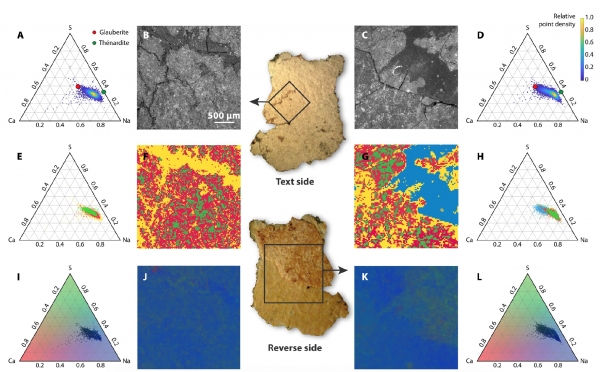
Image No. 4
Subsequently, the researchers applied EDS to create an elemental map of large areas of the Temple Scroll on both the text side and the reverse side. In turn, scanning the method of backscattering reveals a relatively heterogeneous composition. For instance, near a large crack on the text side (4B) and the darker reverse side (4C) revealed quite a heterogeneous composition. For example, next to a large crack on the text side (4BOne can observe clear differences in electronic density between the inorganic layer and the underlying collagen material.
Next, a quantitative determination of all elements present in the fragment of the scroll (Ca, Cl, Fe, K, Mg, Na, P, S, Si, C, and O) was conducted in atomic ratio format.
The triangular diagrams above show the ratio of three elements (Na, Ca, and S) in the research area measuring 512 by 512 pixels. The graphs on 4A and 4D display the relative density of points on the diagrams, with the color gradient indicated to the right of 4D.
After analyzing both diagrams, it was concluded that the ratios of calcium to sodium and sulfur in each pixel of the studied area (from the text side and the reverse side of the scroll) correspond to glauberite and tenardite.
Subsequently, all EDS analysis data were grouped according to the ratios of the main elements using a fuzzy C-means clustering algorithm. This allowed for the visualization of the distribution of various phases on both the text side and the reverse side of the scroll fragment. These data were then used to determine the most likely separation of 5122 data points from each dataset into a predefined number of clusters. The data for the text side were divided into three clusters, while the data for the reverse side were split into four. The clustering results are presented as overlapping clusters on the triangular diagrams (4E and 4H) and as distribution maps (4F and 4G).
The clustering results show the distribution of dark organic material on the reverse side of the scroll (blue color on 4K) and where cracks in the inorganic layer on the text side expose the underlying collagen layer (yellow color on 4J).
The following colors were assigned to the main examined elements: sulfur - green, calcium - red, and sodium - blue (triangular diagrams 4I and 4L, as well as distribution maps 4J and 4K). As a result of the 'coloring', we can clearly see differences in element concentrations: sodium - high, sulfur - moderate, and potassium - low. This trend is observed on both sides of the scroll fragment (text and reverse).
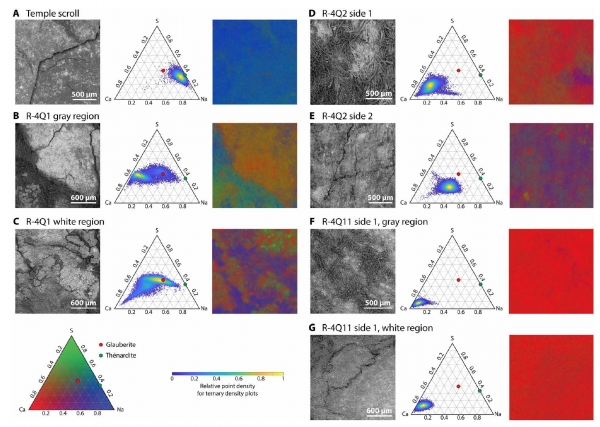
Image No. 5
The same method was used to display the concentration of Na-Ca-S in another area of the investigated fragment of the scroll, as well as in three other fragments from cave number 4 (R-4Q1, R-4Q2, and R-4Q11).
The researchers note that only the fragment R-4Q1 from cave number 4 matches the diagrams and element distribution maps of the Temple Scroll. In particular, the results show a ratio for R-4Q1 that corresponds to the theoretical Na-Ca-S ratio of Glauber salt.
Raman measurements of fragment R-4Q1, collected at an excitation wavelength of 785 nm, show the presence of sodium sulfate, calcium sulfate, and calcite. Analysis of the collagen fibers in R-4Q1 showed no presence of nitrate.
Therefore, the Temple Scroll and R-4Q1 are extremely similar in elemental composition, indicating the use of the same methodology in their creation, apparently related to evaporite salts. The two other scrolls obtained from the same cave in Qumran (R-4Q2 and R-4Q11) show calcium to sodium and sulfur ratios that significantly differ from the results of the Temple Scroll and fragment R-4Q1, suggesting a different production method.
In conclusion, it can be said that the inorganic layer on the scroll contained a number of minerals, most of which are sulfate salts. In addition to gypsum and its analogs, terneardite (Na2SO4) and Glauber salt (Na2SO4·CaSO4) were also identified. Naturally, one might assume that some of these minerals could be the result of decomposition of the primary layer of the scroll, however, it can be confidently stated that they were definitely not present in the caves themselves where the scrolls were found. This conclusion is further supported by the fact that the sulfate-containing layers on the surfaces of all examined fragments found in different Qumran caves do not match the mineral deposits found on the walls of these caves. The conclusion is that evaporite minerals were incorporated into the structures of the scrolls during their production.
The researchers also note that the concentration of sulfates in the water of the Dead Sea is relatively low, and Glauber salt and terneardite are usually not found in the Dead Sea region. A logical question arises — where did the creators of these ancient scrolls obtain Glauber salt and terneardite?
Regardless of the origins of the materials used to create the Temple Scroll, the method of its creation differs significantly from that used for other manuscripts (for example, R-4Q1 and R-4Q2 from Cave 4). Given this difference, scholars suggest that the scroll was created using the common methods of the time but was later modified with an inorganic layer, which allowed it to remain preserved for over 2000 years.
For a more detailed understanding of the nuances of the research, I recommend checking out the and related to it.
Epilogue
A people who do not know their past have no future. This phrase applies not only to historically significant events and individuals but also to technologies that were used centuries ago. Some may think that we no longer need to know how these scrolls were created 2000 years ago, as we have our own technologies that can preserve texts in their original form for many years. However, firstly, isn't it curious? Secondly, many of today's technologies, as banal as it may sound, were employed in one form or another in ancient times. And, as we already know, even back then, humanity was filled with brilliant minds whose ideas can inspire modern scientists towards new discoveries or the improvement of existing ones. Learning from the past should not be seen as shameful; moreover, it cannot be considered useless, as the echoes of the past always resonate in the future.
Friday off-topic:
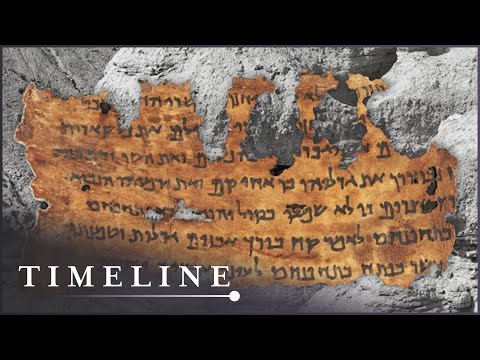
A documentary film (Part I) that tells the story of the Dead Sea Scrolls — one of the most important archaeological discoveries in human history. ().
Thank you for your attention, stay curious, and have a great weekend, everyone! 🙂
Thank you for staying with us. Do you enjoy our articles? Would you like to see more interesting materials? Support us by placing an order or recommending us to your friends. 30% discount for Habr users on a unique entry-level server designed by us for you: (options available with RAID1 and RAID10, up to 24 cores and up to 40GB DDR4).
Dell R730xd for half the price? Only with us in the Netherlands! Dell R420 — 2x E5-2430 2.2GHz 6C 128GB DDR3 2x960GB SSD 1Gbps 100TB — from $99! Read about how
Source: habr.com
