

Those who don't listen to metal have not been blessed with wisdom!
— Folk wisdom
Hello, %username%.
I'm back again. Today, I'll keep it short because I have to get up in six hours and travel.
Today, I want to talk about metal. But not the kind that’s music — we can chat about that over a beer another time, not here. And not even about metals — but rather about the metals that have fascinated me throughout my life due to their properties.
Since all participants in this top chart have their unique superpowers, there won’t be any ranks or winners. Instead, we will have — a metal top ten! So the order does not imply anything.
Let's go.
1. Mercury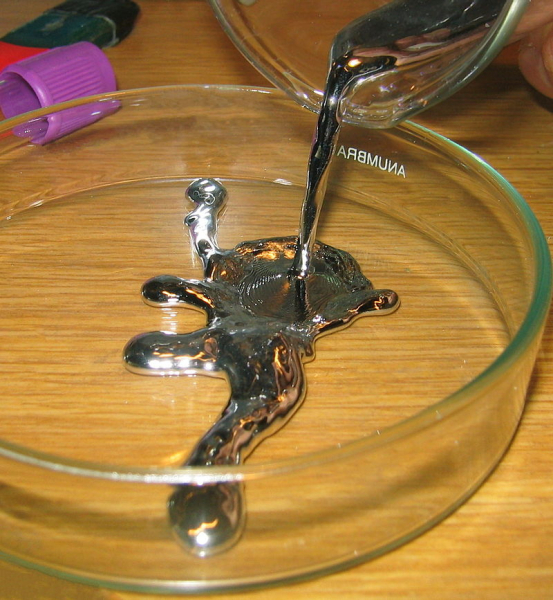
Mercury is the most liquid metal: its melting point is -39 °C. Regarding its toxicity — and it is indeed very toxic — , so I won’t repeat myself.
Since ancient times, mercury has almost been worshipped — no wonder, it’s 'liquid silver'! Alchemists believed that the famous philosopher's stone was hidden somewhere within mercury; for instance, Jabir ibn Hayyan thought that since mercury is a liquid metal, it is 'absolute': it is free from any impurities found in solid metals. Sulfur — another subject of fascination for Hayyan — is an element of fire, capable of producing pure 'absolute' flame, which is why all other metals (given that in the 8th century there weren't many — just seven) were formed from mercury and sulfur.
Whether in the 8th century or now — if you mix mercury and sulfur, you get black mercury sulfide (and this, by the way, is one way to deactivate spilled mercury) — but definitely not metal. Hayyan explained this unfortunate failure by saying that all it lacks is some kind of 'ripener' that would turn the black goo into metal. Naturally, everyone rushed to search for this 'ripener' to obtain gold. The quest for the philosopher's stone was officially declared open.
%username%, you might be laughing at the alchemists right now — but they really did achieve something! In 1947, American physicists produced the only stable gold isotope Au-197 through the beta decay of the Hg-197 isotope. From 100 mg of mercury, they obtained a whopping 35 micrograms of gold — and it’s currently displayed at the Museum of Science and Industry in Chicago. So the alchemists were right — it’s possible! Just, man, it’s expensive…
By the way, the only alchemist who did not believe in the possibility of obtaining gold from other metals was Abu Ali al-Husayn ibn Abd Allah ibn al-Hasan ibn Ali ibn Sina — and for the dark nonbelievers — simply Avicenna.
Interestingly, another metal — gallium — closely rivals mercury in appearance. Its melting temperature is 29 °C. In school, I was shown an impressive trick: a piece of some metal is placed on the hand...
... and here’s what happens.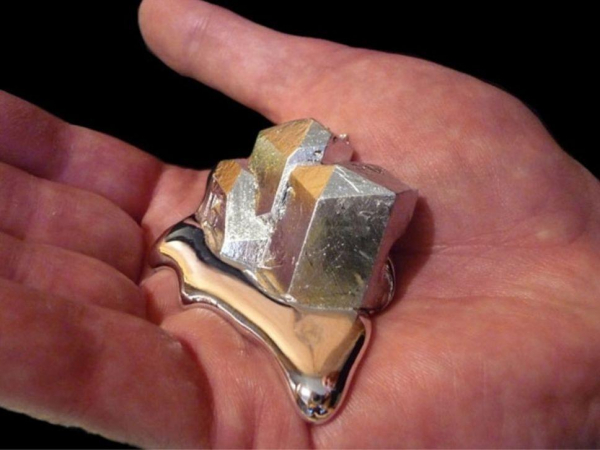
By the way, gallium can now be bought on AliExpress to perform such a trick. I'm not sure, though, if it will make it through customs.
2. Titanium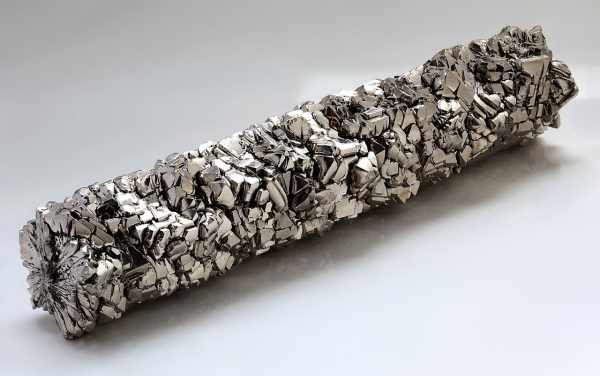
Real titanium is nothing like mercury! It is the hardest metal! Well, back in my childhood and youth, titanium was used to write on all those windows in public transport. Because it scratched — and left a fine metallic powder behind.
Everyone knows that titanium is used in aviation due to its hardness and lightness. Let me share some interesting applications.
When heated, titanium starts to absorb various gases — oxygen, chlorine, and even nitrogen. This is used in noble gas purification systems (like argon) — it’s blown through tubes filled with titanium sponge and heated to 500-600 °C. By the way, at this temperature, the titanium sponge interacts with water — oxygen is absorbed, hydrogen is released, but usually, hydrogen in inert gases doesn’t bother anyone, unlike water.
Titanium dioxide TiO2 is used in paints (for example, titanium white), as well as in the production of paper and plastics. Food additive E171. By the way, during the production of titanium dioxide, the elemental composition is strictly controlled — not to reduce impurities, but to add 'whiteness': it's necessary that the coloring elements — iron, chromium, copper, etc. — are kept to a minimum.
Titanium carbide, titanium diboride, titanium carbonitride — they compete with tungsten carbide in hardness. The drawback is that they are easier to manufacture.
Titanium nitride is used for coating tools, church domes, and in the production of costume jewelry, as it has a color resembling gold. All these 'medical alloys' similar to gold are coated with titanium nitride.
Interestingly, persistent scientists have recently created an alloy that is harder than titanium! However, to achieve this, they had to mix palladium, silicon, phosphorus, germanium, and silver. The result was quite expensive, so titanium prevails once again.
3. Tungsten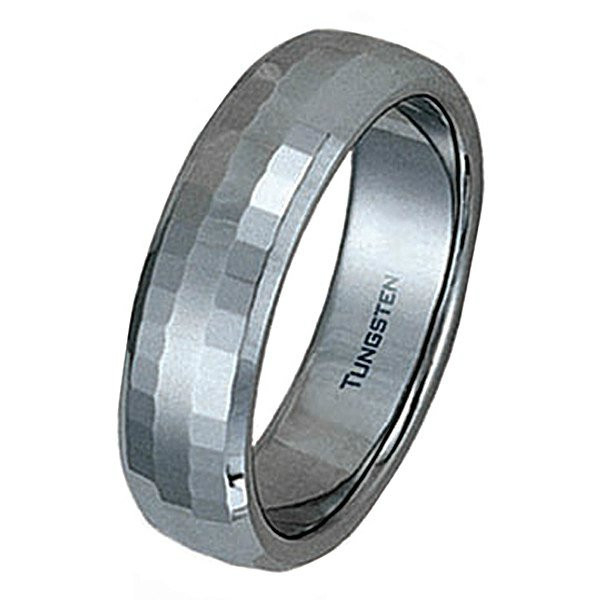
Tungsten is also the opposite of mercury: the highest melting point metal with a melting temperature of 3422 °C. It has been known since the 16th century, although not the metal itself, but the mineral wolframite, which contains tungsten. Interestingly, the name 'Wolf Rahm' in the language of the tough Germans means 'wolf cream': the Germans who melted tin greatly disliked the impurities of wolframite that complicated the smelting process, turning tin into a frothy slag ('devouring tin like a wolf eats a sheep'). The metal itself was isolated later, about 200 years after.
What you see in the photo is not tungsten itself, but tungsten carbide, so if you're wearing a ring like that, %username%, don't get too carried away. Tungsten carbide is a heavy and extremely hard compound; therefore, it is used in various components that undergo impact, by the way, 'victor' refers to 90% tungsten carbide. Additionally, tungsten carbide is added by good people as a tip for armor-piercing shells and bullets. But it's not the only one; I'll tell you about another metal later.
By the way, even though tungsten is heavy, it turns out that its protective properties are less heavy when compared to traditional and cheaper lead at equal protective capabilities or more efficient at equal weight. Due to the high melting point and hardness of tungsten, which complicate its processing, more plastic tungsten alloys with other metals or a suspension of powdered tungsten (or its compounds) in a polymer base are used in such cases. This makes it lighter and more effective—but only more expensive. So in case of fallout, %username%, get yourself tungsten armor!
By the way, on my 'eternal ring,' I managed to get a stain from some chemical—I don't even know what it was. So it's only 'eternal' for ordinary people)))
4. Uranium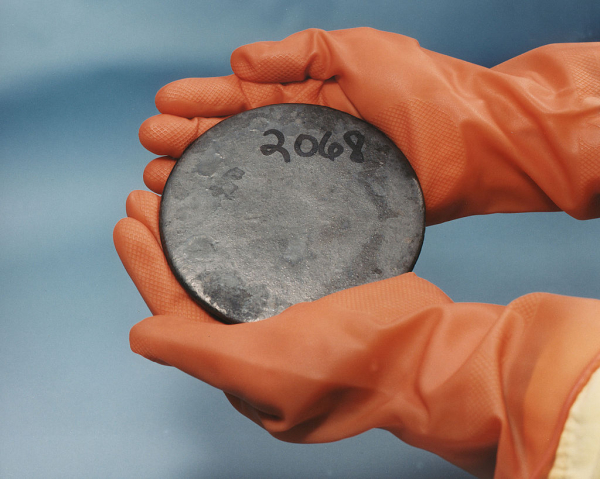
The only naturally occurring metal used as fuel. Well—nuclear fuel.
When I was still a schoolboy, but had access to the university (I won't say why!), I was always amused by the reaction of foreign students when they were shown uranyl acetate crystals under a microscope. It's quite a striking reaction. When they heard the word 'uranyl,' they seemed blown away. Everyone laughed.
I find it funny and sad that now a large part of our people also think that uranium is frightening, dangerous, and horrific. The decline in education is evident.
In fact, even in ancient times, natural uranium oxide was used to make yellow glassware. For instance, a piece of yellow glass containing 1% uranium oxide was found near Naples and dates back to 79 AD. It does not glow in the dark and is not radioactive. I was in Zholtye Vody in Ukraine, where uranium concentrate is mined. Nobody there glows or is radioactive. The explanation is simple: natural uranium is weakly radioactive—no more than granites and basalts, as well as tailings and the metro. The uranium that is uranium—it's the isotope U-235, of which there is only 0.7204% in nature. It's so scarce that for nuclear physicists, this isotope needs to be extracted and concentrated ('enriched')—it's just not possible to run a reactor otherwise.
By the way, there used to be more U-235 in nature—it's just decayed over time. And since there was more of it, a nuclear reactor could be built quite easily. Literally. This actually happened in Gabon at the Oklo deposit about 2 billion years ago: water was flowing through the ore, and water is a natural neutron moderator, which are released during the decay of uranium-235—thus, the energy from the neutrons was just enough for them to be captured by the nucleus of U-235—and a chain reaction started. The uranium burned for several hundred years until it was depleted...
This was discovered much later, in 1972, when an analysis of uranium from Oklo at the uranium enrichment plant in Pierrelatte (France) revealed an anomaly in the isotopic composition of uranium. The U-235 isotope concentration was found to be 0.717% instead of the normal 0.720%. Uranium is not like sausage; underweight is strictly punished: all nuclear facilities are subjected to stringent controls to prevent the illicit use of fissionable materials for military purposes. As a result, scientists began to investigate and found a couple more elements, such as neodymium and ruthenium, and realized that U-235 had been stolen before us; it simply burned up, as in a reactor. Thus, nature invented the nuclear reactor long before we did, just like everything else.
Depleted uranium (that's when U-235 is removed and given to the nuclear workers, leaving U-238) is heavy and hard, somewhat resembling tungsten in properties, which is why it is used where one needs to strike. There's a story from former Yugoslavia: they used armor-piercing shells with a core containing uranium. The population had issues, but not due to radiation: fine uranium dust entered the lungs, was absorbed — and resulted in problems: uranium is toxic to the kidneys. So, it's nothing to fear from uranium acetate! However, this is not specified in Russian law — leading to ongoing issues with the import of chemical agents containing uranium — because for officials, there is only one kind of uranium.
And there is also uranium glass: a small addition of uranium gives it a beautiful yellow-green fluorescence.
And it's beautiful!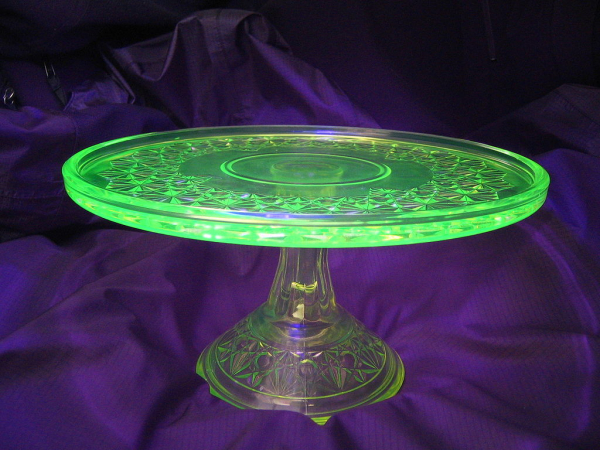
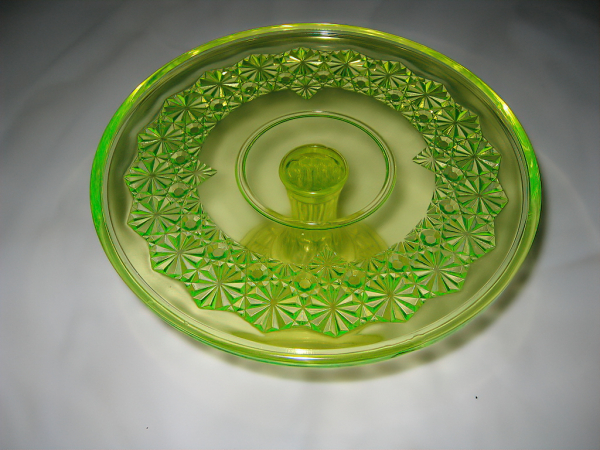
By the way, it's very helpful to offer guests apples or a salad, and then turn on a bit of ultraviolet light to show how beautiful it is. When everyone finishes admiring, casually drop: "Well, of course, this is uranium glass..." And take a bite of an apple from the vase...
5. Osmium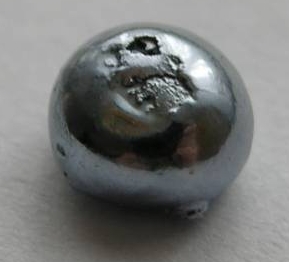
Well, since we've talked about heavy uranium-tungstens, it's time to name the heaviest metal at all — that's osmium. Its density is 22.62 g/cm³!
However, osmium, being the heaviest, is not prevented from being volatile: in the air it gradually oxidizes to OsO4, which is volatile—and by the way, very toxic. Yes—this is a platinum group element, but it oxidizes quite readily. The name 'osmium' derives from the ancient Greek ὀσμή—'odor'—precisely for this reason: the chemical reactions of dissolving the alkaline alloy of osmium in water or acid are accompanied by the release of an unpleasant, persistent smell of OsO4, which irritates the throat, similar to the smell of chlorine or rotten radish. This smell was noted by Smithson Tennant (more about him later), who worked with osmium—and so he named the metal. And I know that osmium should be in powder form and needs to be heated for the process to proceed vigorously—but in any case, I don’t wish to stay near this metal for long.
By the way, there is also the isotope Os-187. It is very scarce in nature, and therefore it is isolated from osmium using centrifuges through mass separation—just like uranium. The separation takes about 9 months—yes, yes, it’s quite possible to give birth by then. Therefore, Os-187 is one of the most expensive metals; its content determines the market price of natural osmium. But it is not the most expensive one; I will tell you about that below.
6. Iridium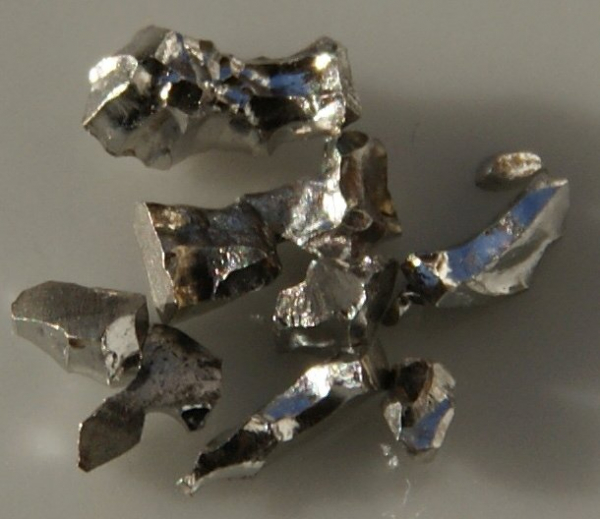
Since we are talking about the platinum group, it is worth mentioning iridium as well. Osmium took the title of the heaviest metal from iridium—but they diverged in small details: the density of iridium is 22.53 g/cm³. Osmium and iridium were even discovered together in 1803 by English chemist S. Tennant—both were present as impurities in natural platinum brought from South America. Tennant was the first among several scientists to obtain a sufficient amount of the insoluble residue after treating platinum with aqua regia and to identify the previously unknown metals within it.
But unlike osmium, iridium is the most, damn, resistant metal: in the form of a ingot, it does not dissolve in any acids or their mixtures! Not at all! Even the formidable fluor only reacts with it at 400-450 °C. To dissolve iridium, it has to be alloyed with alkaline substances—preferably in a stream of oxygen.
The mechanical and chemical strength of iridium is used in the Chamber of Weights and Measures — the kilogram standard is made from a platinum-iridium alloy.
Currently, iridium is not considered a banking metal, but there are already changes in this regard: in 2013, iridium was first used in the production of official coins by the National Bank of Rwanda, which issued a coin made of pure 999 metal. The iridium coin had a denomination of 10 Rwandan francs. And damn, I would like to have such a coin!
By the way, I once read some sci-fi story in 'Young Technicians' in my deep youth, where a guy exchanged sand for iridium at a 1:1 rate with some aliens in a basement. They needed silicon, you see! I can’t remember the title or the author of the story. Thanks. — V. Shibaev. Cable 'from there'.
7. GoldOh well — everyone saw it

In life, it often happens that there is a factual champion and a formal one. If iridium is the factual champion in chemical stability, then gold is the formal one: it is the most electronegative metal, 2.54 on the Pauling scale. However, this does not prevent gold from dissolving in acid mixtures, so as usual — the laurels went to the wealthier party.
Indeed, at the moment, thanks to China and Russia moving away from the policy of accumulating gold and foreign exchange reserves in US dollars to the policy of actually accumulating gold, gold is the most expensive banking metal: in price, it has long surpassed platinum — and in fact, the entire platinum group. So keep your money in a gold savings bank, %username%!
As the alchemical method of gold extraction proved to be expensive, this metal is obtained at refining plants. Coins are then produced at mints. As someone who has been to both places, I can say that workers in such enterprises, when entering areas with precious metals, either change clothes—ensuring that their work attire has not a single pin or clip—or must comply with the so-called 'naked mode'—yes, you understood correctly: there is an entrance for boys and an entrance for girls—you will get dressed inside. If you have a metal implant, you will need a stack of certificates, a multitude of permits, and they check each time that the implant is in the correct place.
By the way, what do you think—how are the entrances organized at the banknote printing facility? The paper doesn't ring, does it!
The answer is here, but think a little for yourself.After work, no one is allowed to leave, including management, until all products are counted. Yes—everything is strict. However, no one minds when, in tough times, salaries are paid in products.
8. Lithium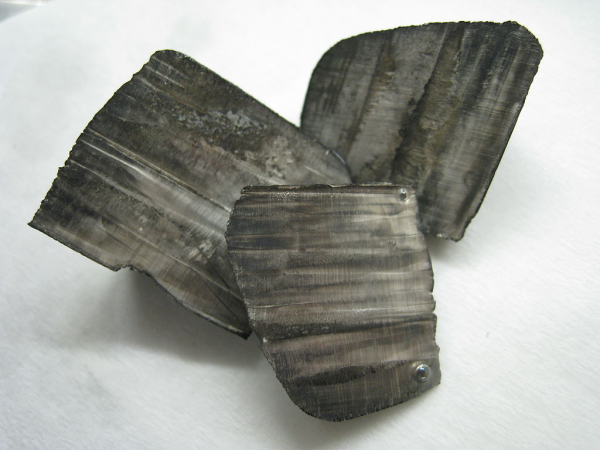
Unlike heavy osmium and iridium, lithium is the lightest metal with a density of just 0.534 g/cm³. It is an alkali metal, but the least reactive in the group: it doesn't explode in water but interacts calmly, and it doesn't oxidize significantly in air, making it difficult to ignite; after 100 °C, it is so well covered with oxide that it no longer oxidizes further. Therefore, lithium is the only alkali metal that is not stored in kerosene—why, when it is sufficiently inert? Fortunately, because of its low density, lithium would float in kerosene.
Natural lithium consists of two isotopes: Li-6 and Li-7. Since the atom itself is so small, an extra neutron significantly influences the orbital radius and the energy of the electron excitation, meaning the atomic spectrum of these two isotopes differs—therefore, they can even be identified without any mass spectrometers—and this is the only exception in nature! Both isotopes are very important in nuclear energy; by the way, deuteride Li-6 is used as thermonuclear propellant in thermonuclear weapons—and I won’t say another word on this topic!
Lithium is also used by psychiatrists as a mood stabilizer for the treatment and prevention of mania. When I was a student working part-time at the department, a lady came to us with blood plasma where lithium had to be measured. At some point, I decided to delve into the literature (the internet didn’t exist yet) to understand why lithium was being measured at all. And I found out… On her next visit, I casually asked her whose blood it was anyway. When she replied that it was hers, I made sure to avoid meeting her in person as much as possible.
Well, lithium is lithium; it can even be found in water sometimes. By the way, in Lviv, there’s quite a bit of it in the water.
9. Francium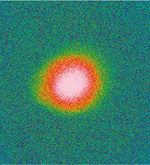
Francium has a whole set of titles. First of all, francium is the rarest metal. Its entire content is completely radiogenic: it exists as an intermediate product of the decay of uranium-235 and thorium-232. The total estimated content of francium in the Earth's crust is about 340 grams. So, the spot in the picture above is not a photo of a black hole in profile, but around 200,000 atoms of francium in a magneto-optical trap. All isotopes of francium are radioactive; the longest-lived isotope, Fr-223, has a half-life of 22.3 minutes. That’s why francium is so scarce.
Nevertheless, francium has the lowest electronegativity of all known elements, measured at 0.7 on the Pauling scale. Accordingly, francium is also the most chemically active alkali metal and forms the strongest alkali — francium hydroxide, FrOH. And don’t ask, %username%, how all this was measured with an element that is virtually nonexistent and whose quantity halves every 22.3 minutes while the researcher continues to glow brighter. So, all of this is interesting and engaging, but francium is practically not used anywhere.
10. Californium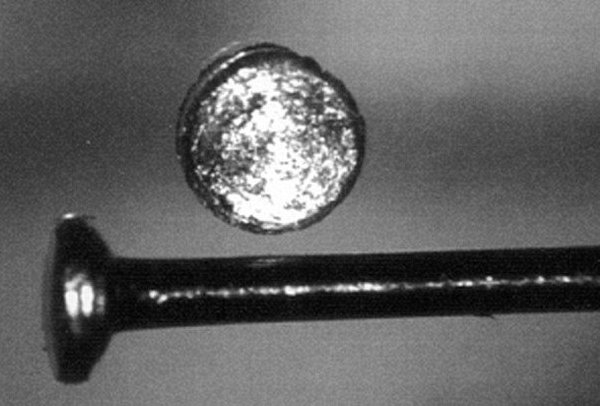 />
/>
California does not exist in this world, and it is produced in two places: Dimitrovgrad in Russia and the Oak Ridge National Laboratory in the USA. To produce one gram of californium, plutonium or curium undergo prolonged neutron irradiation in a nuclear reactor — from 8 months to 1.5 years. The entire decay series is as follows: Plutonium-Americium-Curium-Berkelium-Californium. Californium-252 is the end result of the chain — this element cannot be turned into a heavier isotope, as its nucleus seems to say, 'thank you, I'm full' and responds weakly to neutron bombardment.
On the way to transforming plutonium into californium, 99.7% of the nuclei decay. Only 0.3% of the nuclei are held back from decay and go through the entire process. Additionally, the product needs to be separated! The isotope is extracted through extraction, extraction chromatography, or due to ion exchange. To give it a metallic appearance, a reduction reaction is performed.
Producing one gram of californium-252 requires 10 kilograms of plutonium-239.
The annual amount of californium-252 produced is 40-80 micrograms, and experts estimate that the global supply of californium does not exceed 8 grams. Therefore, californium, specifically californium-252, is the most expensive industrial metal in the world, with its price per gram varying from 6.5 to 27 million dollars over the years.
A logical question arises: who actually needs it? You can't make a necklace out of it, nor can you give it to your loved one as a ring. The thing is, Cf-252 has a high neutron multiplication factor (over 3). One gram of Cf-252 emits about 3⋅10^12 neutrons per second. Yes, it's potentially possible to make an atomic bomb from it, but it’s cheaper to use uranium and the same plutonium, so californium itself is used as a neutron source in various research, including in industrial conveyor belt neutron activation analyzers. By the way, %username%, I personally saw this californium in the form of a small ampule taken out of a large radiation protection barrel and quickly placed in the necessary spot of the analyzer.
It is clear that for such money californium must be a poison, albeit not as potent as , but neutrons are also quite interesting. However, it does come at a high cost, of course.
Well, it seems that's everything — I have about four hours left to sleep before the journey. I hope it was interesting and that I wasn't scribbling for nothing.
I wish you, %username%, to be as strong as titanium, as light as lithium, unwavering as iridium, and valuable as californium! And, of course, to have plenty of gold in your pocket.
(you can impress with this toast at the next celebration — no need to thank me)
Source: habr.com
