

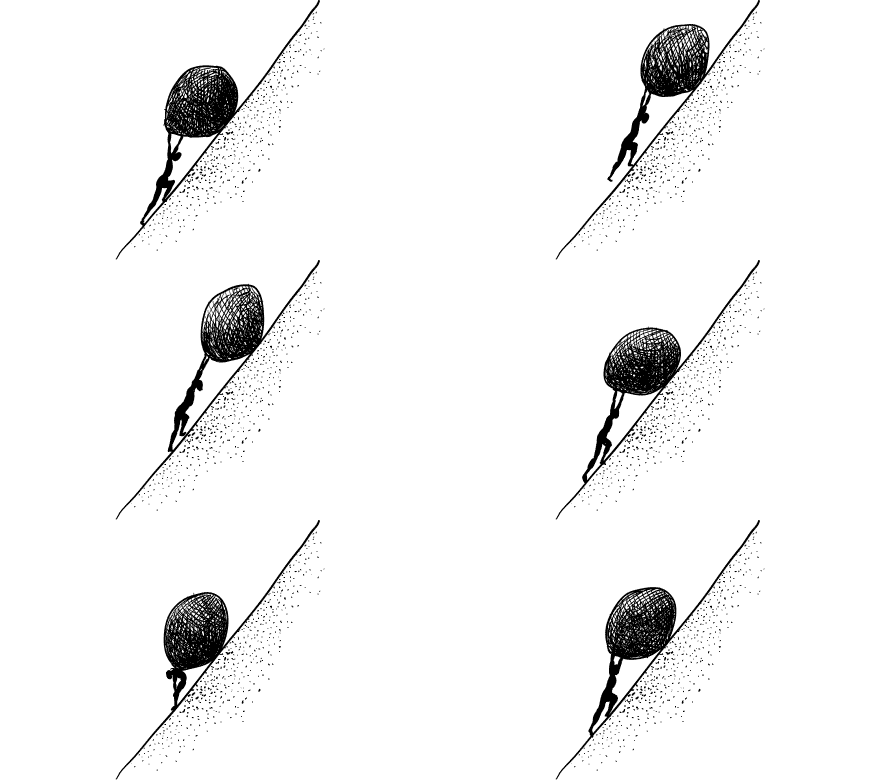
In 1942, Albert Camus wrote a book called 'The Myth of Sisyphus'. It addresses a truly significant philosophical problem: Given the circumstances of our existence, should we simply end our lives? Here is the answer:
Camus first describes those moments in our lives when our perceptions of the world suddenly stop functioning, when all our efforts seem pointless, including our typical daily routine (work-home-work). When you suddenly feel alienated and detached from this world.
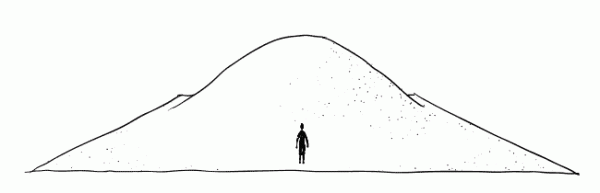
In these frightening moments, we clearly realize the absurdity of life.
Reason + Absurd World = Absurd Life
This absurd sensitivity arises from a conflict. On one hand, we make rational plans for life, and on the other hand, we confront an unpredictable world that does not align with our ideas.
So what is the absurd? To be rational in an irrational world.
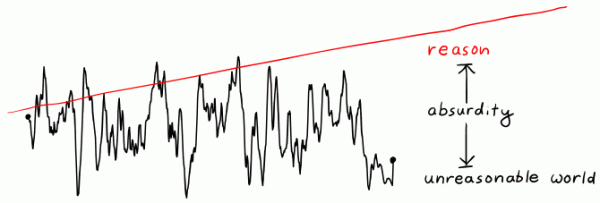
This is the fundamental conflict. When our rational perceptions of the world clash with reality, we experience tension.
The main issue is that we can boldly call our perceptions of the world 'eternal', yet we know that our lifespan is limited. We all will die. Yes, you too.
Therefore, if reason and the irrational world are the key components, we can 'cheat' and evade the problem of the absurd by simply eliminating one of the two components, as Camus argues.
Denial of the irrational world
One way is to ignore the meaninglessness of our existence. Despite the obvious evidence, we can pretend that everything is stable and live according to distant goals (retirement, important discoveries, an afterlife, human progress, etc.). Camus states that if we do this, we will not be able to act freely, as our actions will be tied to these eternal plans that are most often doomed to crash against the rocks of the irrational world.
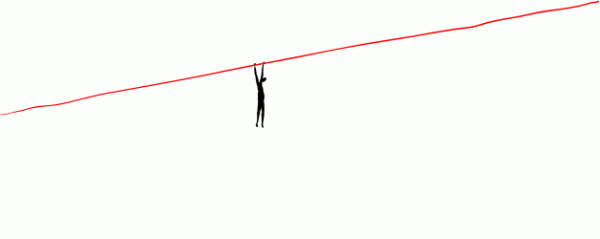
From this perspective, clinging to our rational models would be pointless. We would be forced to live in denial, we would simply have to believe.
Abandonment of rational justifications
The second strategy to avoid absurdity is to discard reasoning. Camus mentions different variations of this strategy. He hints at philosophers who either declare reasoning to be a useless tool (Shestov, Jaspers) or claim that this world follows divine reasoning that humans simply cannot comprehend (Kierkegaard).
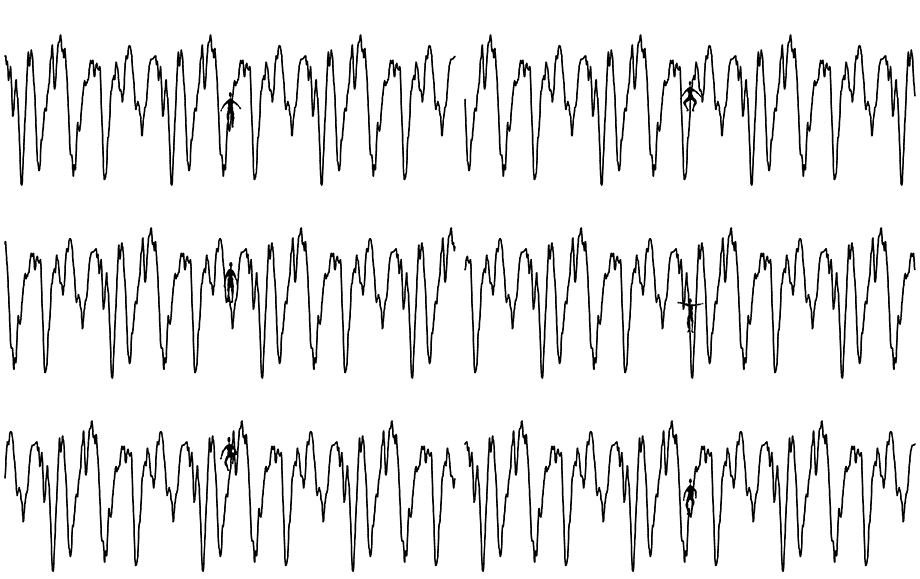
Both approaches are unacceptable to Camus. He describes any strategy of ignoring the problem of absurdity as "philosophical suicide."
Rebellion, freedom, and passion
If "philosophical suicide" is not an option, what about actual suicide? Camus cannot justify suicide from a philosophical standpoint. Suicide would be a loud gesture of acceptance — we would have accepted the contradiction between our human reason and the irrational world. And committing suicide in the name of reason is not quite reasonable.
Instead, Camus suggests the following:
1. Constant revolution: we must always revolt against the circumstances of our existence and thus never allow absurdity to die. We should never accept defeat, even in the struggle against death, although we know that it is ultimately unavoidable. Continuous rebellion is the only way to be a part of this world.
2. Reject eternal freedom: instead of becoming slaves to eternal models, we should listen to the voice of reason, but be aware of its limitations and flexibly apply it to the current situation. In simple terms: we must find freedom here and now, rather than hope for eternity.
3. Passion. Most importantly, we must always have a passion for life; we need to love everything in it and strive to live not just as well as we can, but as fully as we can.
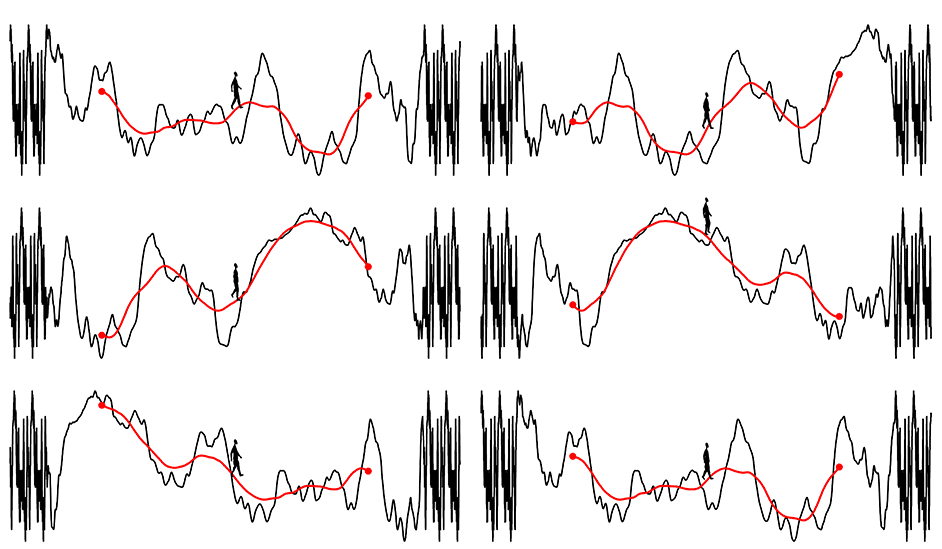
The absurd person is aware of their mortality but still does not accept it, knows the limitations of their reasoning but still values it. Gaining life experience, they experience both pleasure and pain, yet still try to acquire as much experience as possible.
The art of absurdity — Creativity without the concept of "tomorrow"
Albert Camus dedicates the third part to an artist who fully comprehends the absurd. Such an artist will never attempt to explain or solidify eternal ideas, nor will he strive hard to create an inheritance that withstands the test of time. These actions deny the irrational nature of the world.
Instead, he favors the absurd artist who lives and creates in the moment. He is not tied to a single idea. He is the Don Juan of ideas, ready to abandon work on one painting just to spend one night with another. From the outside, these painful efforts towards something so ephemeral seem meaningless — and that’s the essence! Artistic expression begins where reason ends.
Why Sisyphus is a Happy Man
We all know the ancient Greek story of Sisyphus, who rebelled against the gods and was consequently punished. He was sentenced to push a boulder up a hill, only to watch it roll back down, and then try to lift it again. And again. And so for all eternity.
Camus concludes his book with a remarkable, bold statement:
“Sisyphus should be imagined as happy.”
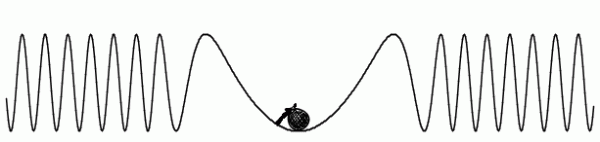
He argues that Sisyphus is an ideal model for us, as he harbors no illusions about his meaningless situation yet still revolts against the circumstances. Each time the boulder rolls down the slope, Sisyphus makes a conscious decision to try again. He continues to push this rock and recognizes that this is the essence of existence: to be truly alive, to keep pushing.
Source: habr.com
