

In 2013, Microsoft had already dominated the technology industry for three decades, achieving incredible success with its OS. The company gradually began to lose its leading position, not because its model stopped working, but because Google's Android followed in Windows' footsteps while being completely free. It seemed that Android would become the leading OS for smartphones.
This, obviously, did not happen: Apple not only created and maintained a sufficiently large app ecosystem for iOS but also continued to profit from nearly the entire smartphone industry. Due to varying reports, it's impossible to determine the exact share, but most experts agree that it ranges from 70% to 90% over the last five years.
As we know, Apple is a company with a strict product integration, at least concerning its operating system and hardware. It turned out that integration is not a drawback of the operating system, but a huge advantage in the market, allowing, with a monopoly on MacOS, the sale of millions of devices for years despite issues like a faulty keyboard or other shortcomings.
Advantages of Integration
Firstly, integration provides an excellent UX. Business schools teach to assess only financial costs, but when analyzing vertical integration, this approach is inadequate. There are other, more difficult costs to quantify. Modularization entails expenses in terms of a degraded user experience that cannot be prevented or measured. Businesspeople and analysts often ignore these, but consumers do not. Some users value quality, aesthetics, attention to detail, and are willing to pay amounts that far exceed the financial costs of vertical integration.
Not all consumers value (or can afford) what Apple offers. In fact, they are a clear majority. But the idea that Apple will begin losing consumers just because Android is 'good enough' and cheaper contradicts consumer behavior. Over the last fifteen years, the company has focused on creating disruptive innovations that alter the value equation in the market.
Apple differentiates its offerings through design that cannot be quantified. However, it certainly appeals to consumers who are both buyers and users.
Secondly, integration maximizes the likelihood of success for new products, including the iPhone. Before the iPhone's arrival, mobile operators primarily offered the same services: voice messaging, SMS, and data transmission. This increased substitution elasticity allowed Apple to follow a 'divide and conquer' strategy, and for that, they needed just one operator.
Apple reportedly began negotiations for the iPhone with Verizon (a major American telecommunications company), but it turned out that Verizon had already retreated before AT&T (then known as Cingular) due to the aggressive investments of the latter and the use of new technologies. Verizon was increasing its subscriber base mainly at the expense of AT&T. Verizon did not see the need to change its strategy, which involved strong branding and complete control over the phones on its network. AT&T, meanwhile, was on the flip side of the coin: they were losing, and this, in turn, significantly impacted their BATNA — they were more willing to compromise when it came to branding and user experience, and therefore, the iPhone's launch with AT&T occurred on Apple's terms.
It was then that Apple's advantage in user experience and the resulting customer loyalty paid off: for the first time, customers were willing to endure the headaches and costs associated with switching carriers just to gain access to a specific device. Over the next few years, Verizon began to lose customers to AT&T, even though their service level was vastly superior. Four years after the iPhone's launch, it finally started supporting Verizon without operator branding and control over the user interface. In other words, Verizon ultimately agreed to the same deal they had declined in 2006 because Apple’s customer loyalty left them no choice.
Thirdly, integration leads to monopoly: only Apple devices operate on iOS. Many agree that Apple has perfected its manufacturing model. Most of the company’s corporate employees work in California designing and selling iconic devices that are produced in Chinese factories built and operating under Apple’s strict standards (including a large number of onsite employees), and then delivered worldwide to consumers eager for the best-in-class smartphones, tablets, computers, and smartwatches.
What makes this model so effective and profitable? It's that Apple has differentiated its devices through software. Software is a completely new type of product, as it is infinitely differentiable and simultaneously available in unlimited quantities. This means that the theoretical price of software is $0. However, by combining the distinctive qualities of software with hardware, which requires real assets and goods for its production, Apple can set high prices for its products.
The results speak for themselves: in the recent 'unsuccessful' quarter, Apple’s revenue reached $50.6 billion. The company made $10.5 billion in profit. Over the past nine years, the iPhone alone has generated $600 billion in revenue and nearly $250 billion in gross profit. This is arguably the best product (at least commercially) ever created by humankind.
Today, the prevailing opinion has changed: integration is seen as the best system. Just look at Apple’s success! Indeed, when looking at the company, it is hard not to agree with such conclusions, but it should be noted that a number of potential downsides to integration have recently come to light.
Troublesome keyboard
Recently, an important event occurred at Apple: the company released a laptop with an updated keyboard. Previously, the key mechanism easily malfunctioned even from small dust and debris. Since not all MacBook models are yet equipped with the new keyboard, there is still an article on Apple's website recommending the cleaning of laptop keyboards with compressed air. It goes without saying that this is abnormal — just like keys malfunctioning on thousands of devices worldwide for several years.
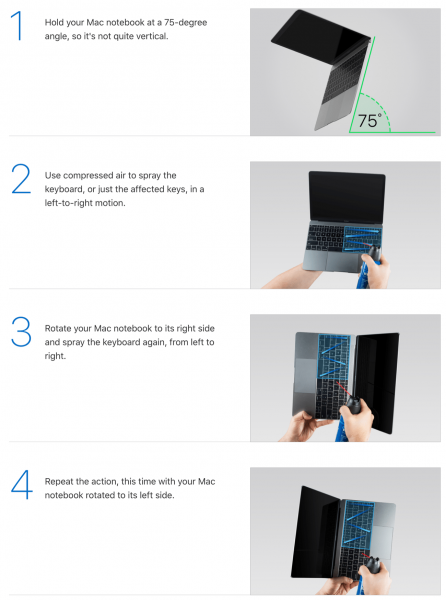
Apple first introduced its notoriously known butterfly keyboard mechanism in April 2015, and it was only replaced in 2019. However, during this time, the company sold "Macs" worth $99 billion, with the majority of these devices being laptops. This is indeed a credit to integration!
Or, to put it another way, the power (and lack thereof) of monopoly. No, Apple does not have a monopoly on computers, but the company does have a monopoly on MacOS. Only they sell the hardware that runs on MacOS, so millions of customers continued to purchase computers that (especially in the last couple of years) suffered from a number of serious issues.
To be blunt, Apple has committed no crimes. At the same time, it’s hard to imagine that the butterfly keyboard would have continued to be used for four and a half years if there had been serious competitors. Integration can provide excellent user interaction, but once the integrated product loses competition, it begins to decline.
NFC and Innovations
The second issue relates to news from Germany. The Verge reported:
In Germany, Apple may be forced to open access to iOS for all payment services competing with Apple Pay. The country's parliament voted to implement corresponding measures on Thursday, according to Zeit Online. The bill was enacted in the form of an amendment to anti-money laundering legislation, and it will need to be approved by the upper house of parliament before it officially takes effect next year.
If this bill is approved, Apple will have to allow other companies to use the NFC chips in iPhones in Germany. Until now, it has tightly restricted access to them. Zeit Online notes that this change could lead to individual banks offering NFC payments through their own apps rather than through Apple’s service. It is reported that Apple will be allowed to charge for access to the NFC chip, but it will not receive the 0.15% it currently receives from every transaction in Apple Pay.
Thanks to its control over the iPhone overall and specifically over the built-in NFC chips, Apple can give Apple Pay a significant advantage over competing payment applications (which are forced to use inconvenient QR codes). This means that Apple can leverage its strong position in the smartphone market to capture the payment market. It is worth emphasizing (especially in the context of this article) that this integration can stifle innovation.
NFC stands for "Near-Field Communication." This technology is a protocol for communication between two electronic devices that are within 4 centimeters of each other. There are three use cases for NFC chips on smartphones:
- Smart card emulation, where NFC devices operate like payment cards. Apple Pay is an example of such a use case alongside transit accounts and smart keys.
- Data reading/writing. An active NFC device reads or writes data to a passive NFC device (for example, an NFC sticker powered by the magnetic field generated by the active device).
- Data transfer in P2P format between two NFC devices.
In short, NFC allows two devices to exchange data without any prior setup, making the range of use cases much broader than, say, Bluetooth… and yet the only NFC technology that most of you have likely used is for payments. Why?
Perhaps Apple should be blamed for this. Android devices have been equipped with NFC chips since 2010, while the iPhone only got them in 2014, and they were only used for Apple Pay. Two years later, Apple enabled reading some NFC tags, and just two months ago allowed writing to NFC tags.
The problem lies in the fact that the NFC chip on the iPhone is closed: it is integrated with iOS, and Apple maintains firm control. Considering that the company charges 0.15% on every Apple Pay transaction (and due to previous attempts to charge third parties for integration into its ecosystem or for creating accessories), it is fair to assume that such limited use of the technology is related to financial concerns. The development of NFC has been hampered by Apple's complete control over iPhone chips.
Control over the App Store
The third issue is described in a recent Washington Post article:
On Friday, Apple removed all vaping-related apps from its App Store, joining experts who call vaping a "health crisis" and a "youth epidemic." Some of the 181 vaping apps removed by Apple allow users to control temperature or other settings on vaping devices. Others provide users access to social networks or games. Selling vape cartridges through apps has never been allowed in the App Store.
"We continually assess apps and stay informed about trending news to evaluate health and wellbeing risks to users," said Apple representative Fred Sainz. Apple cited evidence from the Centers for Disease Control and Prevention and other organizations linking vaping and e-cigarette use to fatalities and lung injuries.
Of course, such a decision is welcome — especially considering the issue that arose from vapes this year and widespread concerns about it becoming a gateway to tobacco use. Again, considering that the crisis seemingly stemmed from counterfeit cartridges, the ability to connect to your smartphone could bring real benefits to people.
However, there are more sophisticated devices with USB support and even Bluetooth, allowing users to control heating parameters, adjust indicators, and update firmware. Bluetooth devices are accompanied by apps on mobile platforms iOS and Android, enabling patients to measure and monitor their usage. Like with PAX, they identify the substance loaded into the device and display its contents—for example, a list of cannabinoids, terpene blends, and other ingredients. The apps also allow users to verify the authenticity of the substances.
These apps—and, consequently, the functionality of the devices—are no longer available to iPhone users. You cannot achieve this level of functionality in a browser—not because they have been deemed illegal, but because the company owners made that decision. Their opinion is law, as the App Store is integrated into the iPhone. Apple has a monopoly on which apps may or may not be installed on the device.
Let's be honest: you might not be affected by the ban on vape apps. But what if the company bans an app that covers rallies in Hong Kong, or an app that tracks drone strikes? In both cases, you could argue that the company is merely adhering to the standards of the countries in which it operates, but the underlying reason for raising the issue of app removal is Apple’s control.
Apple's approach to the App Store also raises questions of competition and innovation. The company uses its control over the app approval process to charge fees on the sale of digital goods and/or provide advantages for its own products. Apple’s restrictions on business models for developers make it difficult for high-performance applications to emerge.
Of course, Apple’s stringent control over the App Store brings significant benefits not only to the company itself but also to developers. Many customers fear malware on Windows, preferring Mac products. However, this approach has its downsides.
Integration vs. Monopoly
This article is not legally accurate. In particular, the term 'monopoly' has been used very loosely. Apple employs a remarkable approach (from a business standpoint) — by integrating hardware and software, it has managed to achieve monopoly profits that cannot be classified as a monopoly. However, while 'integration' leads to positive outcomes, it does not equate to 'monopoly'. Note the advantages of integration, which the article began with, combined with its drawbacks:
- The exceptional user experience of integrated Apple products ultimately resulted in the company using a subpar butterfly keyboard for four years.
- Apple’s ability to leverage its user base to launch new products and features has resulted in the company slowing down the development of NFC applications.
- Apple's ability to achieve high profits from software-differentiated devices is increasingly bolstered by attempts to charge fees for digital goods and/or give its own services a competitive advantage.
Apple's example helps to draw a line between healthy integration, which in itself is not harmful, and monopolistic profit-seeking.
Source: habr.com
