

Google has released the third beta version of the open mobile platform Android 17, marking the stabilization of the platform and the cessation of changes to the API ahead of the upcoming release. A program for preliminary testing has been proposed to evaluate the new capabilities of the platform. Firmware builds have been prepared for devices such as Pixel 6/6a/6 Pro, Pixel 7/7a/7 Pro, Pixel 8/8a/8 Pro, Pixel 9/9a/9 Pro/9 Pro XL/9 Pro Fold, Pixel 10/10 Pro/10 Pro XL/10 Pro Fold, Pixel Fold, and Pixel Tablet. The release of Android 17 is scheduled for the second quarter of 2026.
Among the changes in Android 17 Beta 3:
- The Dynamic Code Loading (DCL) security mechanism has been expanded for use with native libraries loaded through the System.load() method, not just files in DEX and JAR formats. DCL helps prevent the injection of malicious code into dynamically loaded executable files by setting access rights that allow only reading for such files.
- The Certificate Transparency mechanism is now enabled by default, maintaining a public log of all issued and revoked certificates.
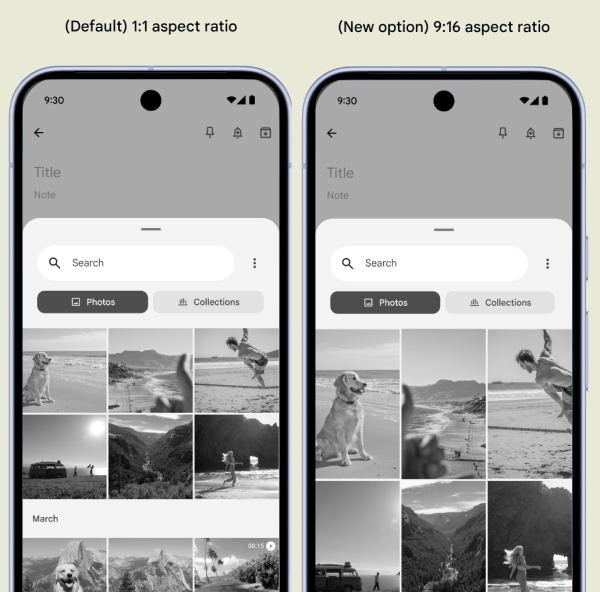
- The PhotoPickerUiCustomizationParams API has been added to change the photo selection interface, allowing it to match the style of the invoking application. For example, the aspect ratio of photo thumbnails can be changed from 1:1 (square) to 9:16 (portrait).

- Support has been added for the RAW14 image format, used in professional digital cameras and providing storage for 15 bits per color channel.
- An API has been provided to equipment manufacturers to create extensions for cameras, allowing the use of specific features in applications, such as the Super Resolution detail enhancement mechanism, noise suppression modes, and AI quality optimizers.
- An API has been added to obtain information about the type of camera (built-in camera, USB web camera, or virtual camera).
- Support for hearing aids connected via Bluetooth Low Energy (BLE) has been added. Such devices are categorized as TYPE_BLE_HEARING_AID, allowing applications to differentiate between hearing aids and headphones, as well as to manage the playback of system sounds separately (for example, notification sounds, calls, and alarms can be played through the phone's built-in speaker rather than the hearing aid).
- A software encoder for the HE-AAC (High-Efficiency Advanced Audio Coding) audio format has been added, supporting both low and high bitrates.
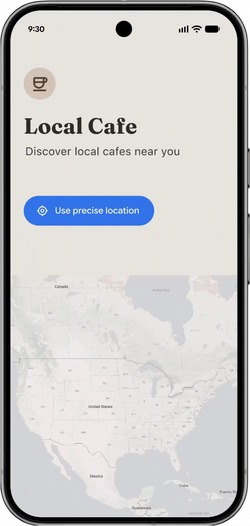
- The USE_LOCATION_BUTTON permission has been added, allowing the integration of a system button in the application interface to grant access to precise location data. The button is rendered by the system and opens access to the location only for the duration of the current session when pressed by the user.

- Separate settings have been added to enable the display of passwords entered on physical keyboards and touch screens. By default, password characters entered via a physical keyboard are hidden immediately.
- The ability to certify APK packages with a digital signature based on a hybrid algorithm combining a classical algorithm with the ML-DSA algorithm, resistant to quantum computer cracking, has been provided.
- The display of application widgets on external screens has been improved by taking DPI differences into account during scaling.
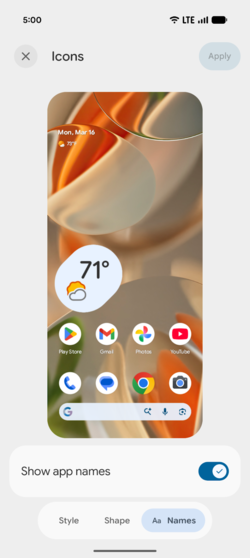
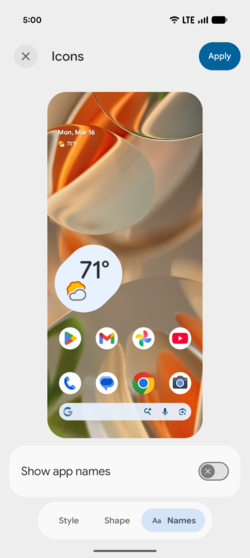
- A setting has been added to hide the names of applications under their icons.

- Interactive pinned windows have been implemented, which, unlike traditional Picture-in-Picture mode windows, remain interactive when pinned on top of other applications in desktop mode.
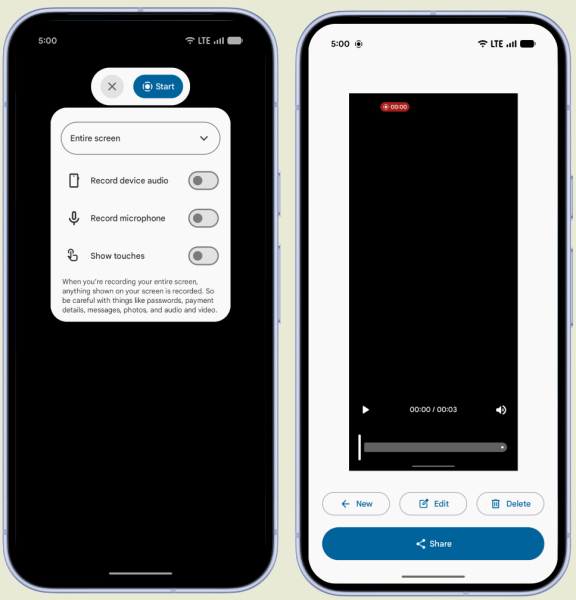
- The toolbar design for recording screencasts has been updated.

- A request ACTION_VPN_APP_EXCLUSION_SETTINGS has been added, allowing the system settings screen to be invoked to grant the application network access bypassing the tunnel. VPN-tunnel.
- Support for features available in OpenJDK 25 language and Java classes has been added.
Source: opennet.ru
