

In the art of management, there are many conflicting recipes, and the best managers in the world follow their own rules. Are they right, and why is the hiring process structured the way it is in leading companies? Should you strive to overcome your shortcomings at all costs? Why do self-managed teams often fail? Where should a manager spend more time — on the best or the worst employees? What are those strange questions in Google interviews? Is the boss right when he tells me how to do my job? How can I evaluate how good I am as a manager?
If you are interested in the answers to these questions, you should read the book by Marcus Buckingham and Curt Coffman, "First, Break All the Rules: What the World's Best Managers Do Differently." This book could be my go-to, but I don't have time to reread it, so I've made a summary that I want to share with you.

The book (, ) was born as a result of empirical research conducted by the Gallup Institute over 25 years, involving more than 80,000 managers, and their scientific processing. Time magazine included the book in the list of .
Quoting the publication, I provide links to other books or materials that intersect with the ideas of this book, as well as some of my conclusions and reflections. In particular, I found that the book by Google’s Vice President of People Operations, L. Bock, is practically an example of implementing ideas from the book under consideration.
Chapter 1. The Scale
Many companies wonder how to attract the best employees and how to retain them afterward. There are companies where everyone wants to work. Some companies, on the contrary, are not very popular. The Gallup Institute has created a tool that allows you to assess the advantages of one employer over another.
As a result of many years of research, the Gallup Institute identified 12 questions that determine the ability to attract, engage, and retain the most valuable employees. These questions are listed below.
- Do I know what is expected of me at work?
- Do I have the materials and equipment I need to do my job right?
- Do I have the opportunity at work to engage daily in what I do best?
- Have I received thanks or approval for my work well done in the last seven days?
- Do I feel that my immediate supervisor or someone else at work cares about me as a person?
- Is there someone at work who encourages my growth?
- Do I feel that my opinion is valued at work?
- Do the tasks (goals) of my company allow me to feel the significance of my work?
- Do my colleagues consider it their duty to perform their work well?
- Does one of my best friends work at my company?
- Has anyone at work talked to me about my progress in the last six months?
- Did I have opportunities for learning and growth at work over the past year?
The answers to these questions determine employee satisfaction with their workplace.
The authors state that there is a correlation between the answers to these questions (i.e., employee satisfaction) and the commercial success of the organizational unit. The personality of the immediate supervisor has the greatest influence on these questions.
The order of questions is important. The questions are arranged in increasing order of importance: first, the employee realizes what their individual tasks and contribution consist of, then they understand how they fit into the team, and then they comprehend how they can grow within the company and innovate. The initial questions address more basic needs. Higher needs can be met, but without satisfying the basic needs, such a structure will not be sustainable.
Recently, we have started conducting surveys to assess employee engagement at LANIT. These surveys overlap significantly with what is written in this book.
Chapter 2. The Wisdom of the Best Managers
The foundation of the success of the best managers lies in the idea outlined below.
People hardly change. Don't waste time trying to imbue them with what they lack by nature. Instead, strive to identify what is inherently in them.
The role of a manager consists of four main activities: selecting people, articulating expectations from their work, motivating, and developing them.
Each manager may have their own style. It shouldn't matter to the company how a manager achieves results – the company should not impose a single style or set of rules.
You often come across the following misguided recommendations for managers:
- selecting the right people based on their experience, intelligence, and aspirations;
- articulating expectations by outlining all the steps for the subordinate;
- motivating the person by helping them identify and overcome their weaknesses;
- developing the employee by providing opportunities to learn and advance in their career.
Instead, the authors suggest remembering that people do not change and using the following four keys.
- Employees should be selected based on their abilities, not merely their experience, intelligence, or willpower.
- When articulating expectations, it is necessary to clearly define the desired outcome, rather than detailing the work step by step.
- In motivating a subordinate, focus should be on their strengths, not their weaknesses.
- A person should be developed by helping them find their place, rather than just climbing the next rung on the career ladder.
Chapter 3. First Key: Choose Based on Talent
What is talent?
The authors explain that by the age of 15, a person's brain is formed. During this time, connections between neurons are established, resulting in something akin to a network of highways. Some connections resemble fast highways, while others are like abandoned roads. This network of highways or system of mental pathways serves as a filter through which a person perceives and reacts to the world. It shapes behavioral patterns, making each individual unique.
A person can acquire new knowledge and skills. However, no training can turn an individual's desolate mental road into a fast highway.
The mental filter determines the talents inherent to a person. Talent is found in the actions you frequently take. According to the authors, the secret to performing work perfectly lies in ensuring an employee's talents align with their role.
For any task to be executed flawlessly, talent is essential, as certain thoughts, feelings, or actions recur in every job. This means that the best nurses have talent just like the best drivers, teachers, maids, and flight attendants. No mastery is possible without talent.
Companies often rely on stereotypes, evaluating candidates based on their experience, intelligence, and drive. While these factors are certainly important and useful, they do not take into account that only in-demand talents are prerequisites for successfully fulfilling any role. An NHL forward requires specific talents, a priest needs different ones, and a nurse requires yet another set. Given that talent cannot be acquired, it is more important to select based on talent.
Can a manager change a subordinate?
Many managers believe they can. The authors of the book argue that people change very little, and trying to instill in people qualities that do not come naturally to them is a waste of time. It is much better to identify and develop what individuals already possess. Ignoring personal characteristics is pointless; they should be fostered.
Consequently, it follows that greater emphasis should be placed on the hiring process rather than relying on training programs. In the book in chapter 3, it is stated that Google spends "twice as much on recruiting as the average company when considering the percentage of the budget allocated to personnel expenses." The author is convinced: "If you redirect resources to increase recruitment efficiency, you will get a higher return than from almost any training program."
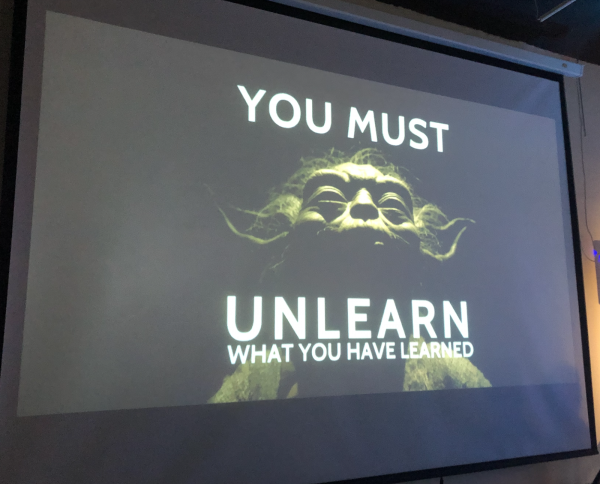
I heard an interesting thought in at DevOpsPro 2020: before you can learn something new, you must not only understand the essence of the innovation but also first forget (or unlearn) the old ways. In light of the authors' suggestion that each of us has 'mental pathways', the process of unlearning can be quite challenging, if not impossible.
How can you develop a person?
First of all, you can help uncover hidden talents.
Secondly, you can assist in acquiring new knowledge and skills.
Skill is a tool. Knowledge is what a person has an understanding of. Knowledge can be theoretical or experiential. Experiential knowledge must be learned by reflecting on past experiences and extracting their essence. Talent is like fast highways. For example, for an accountant, it is a love for precision. Authors categorize talents into three types: achievement talents, thinking talents, and interaction talents.
Skills and knowledge help deal with standard situations. The strength of skills lies in their transferability. However, if talent is absent, in the case of an unusual situation, a person is unlikely to cope. Talent cannot be transferred.
An example of experiential knowledge is the culture of writing postmortems, i.e. honest and open analyses of situations when something went wrong.
For information on the postmortem culture at Google, see and . Writing a postmortem is a sensitive moment for the participant in the process, and only in companies where a culture of openness and trust is genuinely built can an employee feel safe learning from their mistakes. In companies without such a culture, employees repeatedly make the same mistakes. And mistakes do happen at Google. .
The postmortem culture at Etsy is .
Competencies, habits, life attitudes, energy.
In life, we use many terms without fully understanding their meaning.
The notion of 'competence' emerged in the British Army during World War II to define the best officers. Today it is often used to describe the characteristics of good managers and leaders. Competencies consist partially of skills, partially of knowledge, and partially of talents. All of this is intermingled; some characteristics can be taught, some cannot.
Most habits are talents. You can develop, combine, and strengthen them, but the key strength is to recognize your talents rather than deny them.
Life attitudes, such as positivity, cynicism, etc., are talents. These attitudes are neither better nor worse than others. Different professions are better suited to different life attitudes. But again, it is important to understand that changing them is almost impossible.
A person's inner energy remains unchanged and is defined by their mental filter. Energy is defined by the talents they achieve.
When describing human behavior, authors advise focusing on the precise definition of skills, knowledge, and talents. This will help avoid attempts to change what essentially cannot be changed.
Anyone can change: everyone can learn, and everyone can become a bit better. The concept of skills, knowledge, and talents simply helps managers understand when radical change is possible and when it is not.
At Amazon, for example, the entire hiring process revolves around . The interview process is structured in such a way that each interviewer is assigned to assess the candidate's alignment with one or more principles.
It is also very interesting to read the annual from Amazon founder Jeff Bezos, where he consistently refers to the core principles, explaining and developing them.
What myths can we debunk?
Myth 1. Talent is a unique (rare) quality. In reality, everyone has their own talents. Often, people just fail to find their applications.
Myth 2. Some roles are so easy that no talents are required to perform them. Managers often judge everyone by themselves and believe that everyone aspires to rise, while viewing some roles as unprestigious. However, authors argue that many people possess talents for unprestigious professions and take pride in them, such as housekeepers, etc.
How to find talents?
First, it is necessary to understand what talents you need. This can be difficult to figure out, so you might start by focusing on key factors in each of the main talent categories (achievements, thinking, interaction). Focus your attention on these during the interview. Inquire about the presence of these talents when requesting references. No matter how great a candidate's resume is, do not compromise by accepting the lack of essential talents.
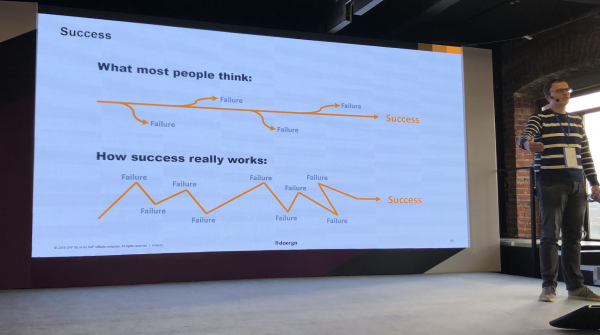
To understand what talents you need, study your best employees. Stereotypes can hinder you. One of the main stereotypes is that the best is the opposite of the bad. Authors believe this is not the case, and you cannot understand success by turning defeat inside out. Success and failure are surprisingly similar, while a neutral result is an anomaly.
In the book in chapter 3, it is written: "The ideal approach to recruiting is not just hiring celebrated names in your field, the best sales specialist or the smartest engineer. You need to find those who will succeed specifically in your organization and inspire everyone around them to do the same."
See also and .
Chapter 4. The Second Key: Set the Right Goals
Remote Control
How do you make subordinates fulfill their duties if you cannot monitor them constantly?
The problem is you are responsible for the work of your subordinates, but they perform the work themselves without your direct involvement.
Any organization exists to achieve a specific goal – to obtain results. The main responsibility of a manager is to achieve results, not to unlock the team's potential, etc.
To focus an individual on results, it is essential to set the right goals and strive for their achievement. If goals are clearly formulated, there will be no need to 'move legs with hands'. For instance, a school principal can concentrate on ratings and student grades, while a hotel manager focuses on impressions and customer reviews.
Each subordinate will better define the means to achieve results based on their own characteristics. This approach encourages performers to take responsibility for their actions.
In the book The author writes, "Let's give people a bit more trust, freedom, and authority than is comfortable for you. Are you nervous? That means you haven't given enough." L. Bok also believes that, of course, there are examples of successful companies with low levels of freedom, but in the future, all the best, talented, and motivated specialists will prefer to work in companies with a high level of freedom. Therefore, giving freedom is pragmatic. Of course, this depends on your planning horizon and the categories you think in.
Common Misconceptions
Why do many managers try to define methods rather than goals? Some experts believe there is only one right way to solve each problem.
All attempts to impose a "single right way" are doomed to fail. Firstly, it is ineffective: the "single right way" may conflict with the unique pathways in each person's mind. Secondly, it is destructive: having ready-made answers hinders the development of a unique working style for which a person is responsible. Finally, this approach negates learning: each time you establish a rule, you relieve the person of the need to choose, and choice, with all its unpredictable consequences, is a source of learning.
Some managers believe that their subordinates are not talented enough. In reality, they are likely hiring without considering the specifics of the role, and when people start struggling, they write volumes of instructions. Such a policy is possible but ineffective.
Some managers think that their trust must be earned: they are biased against people from the start.
Many believe that not all goals can be formulated.
Indeed, many results are difficult to define. However, the authors believe that those managers who have adopted such an approach simply gave up too early. In their opinion, even the most immeasurable aspects can be identified as a result. It may be challenging, but it is better to spend time defining the outcome than writing endless instructions.
How can you ensure your goals are correct? Try to answer the questions: what is good for your clients? What is good for your company? Does the goal align with the individual characteristics of your employees?
Chapter 5. The Third Key: Focus on Strengths
How do the best managers realize the potential of each employee?
Focus on strengths and do not dwell on weaknesses. Instead of trying to eradicate flaws, develop virtues. Help each person achieve more.
Myths about transformations
The idea that people possess equal potential and that each of us can unlock it with hard work is a myth. It contradicts the fact that everyone has individuality. Another common myth is that you must work hard on weaknesses and eliminate flaws. In reality, you cannot improve what does not exist. People often suffer in relationships when they are pushed to improve, criticized for their mistakes, etc.
"By misunderstanding the differences between knowledge and skills that can be taught, and talents that cannot be taught, these 'mentors' start to 'guide a person on the true path.' In the end, everyone loses – both the subordinate and the manager, since there will be no results regardless."
The best managers strive to identify each subordinate's strengths and help them develop. They are convinced that the key is to match the person to the right role. They do not operate by rules. And they spend much of their time on their best employees.
The key is to distribute roles
"Every person can do at least one thing better than thousands of other people. Unfortunately, not everyone finds a use for their abilities." Matching roles according to outstanding abilities is one of the unwritten laws of success for the best managers.
Good managers, when joining a new team, do the following:
They ask each employee about their strengths and weaknesses, their goals and dreams. They study the team dynamics, observing who supports whom and why. They notice the little details. Then, of course, they divide the team into those who will remain and those who, based on these observations, will need to find other opportunities. But importantly, they add a third category — 'relocatable individuals.' This refers to people with exceptional, yet somehow untested, abilities. By moving each of them to a different position, the best managers give these talents the chance to flourish.
Management Outside the Rules
The best managers break the golden rule daily – treat people the way you want to be treated. 'The best managers believe you should treat a person the way they would like to be treated.'
How to Identify Needs? 'Ask the subordinate about their goals, what they want to achieve in their current position, what career heights they are aiming for, and any personal goals they would like to share.'
'Feel out what types of recognition the employee needs: do they prefer public acknowledgment or private praise, written or verbal feedback? What audience suits them best? Ask them about the most valuable recognition of their success they have ever received, and why it left a lasting impression. Find out how they evaluate your relationship. How do they enhance their skills? Did they have mentors or colleagues in the past who helped them? How did they do it?'
All this information should be carefully recorded.
On Motivation:
Spend more time with your best employees.
'The more energy and attention you invest in talented people, the greater the return. In simple terms, the time you spend on the best is your most productive time.'
Investing in the best is fair, as the top performer deserves more attention based on their results.
Investing in the best is the best way to learn, as failure is not the opposite of success. Spending time figuring out failures will not lead you to a successful solution.
"Learning from the experiences of others is undoubtedly valuable, but what you really need is to study your own top performers. How can you achieve this? Spend as much time as possible with your most successful employees. Start by asking them how they achieve their success."
Don't fall into the trap of average thinking. "Set high standards when calculating the best result. You risk significantly underestimating the potential for improvement. Focus on top performers and support their development."
What are the reasons for poor performance? The authors believe that the main reasons may be the following:
- lack of knowledge (which can be addressed through training),
- improper motivation.
If these reasons are absent, the problem lies in a lack of talent. "But there are no perfect people. No one possesses all the talents required for complete success in any given role."
How do you mitigate weaknesses? You can create a support system or find a complementary partner.
If a person participates in training, it at least helps them understand their tasks and identify which qualities they possess and which they do not. However, the authors believe it would be a mistake to try to reshape oneself into an exemplary manager. You cannot acquire talents that you do not have. Instead, try to find a complementary partner, for instance, Bill Gates and Paul Allen, Hewlett and Packard, etc.
Conclusion: you need to find a way to leverage your strengths rather than getting stuck trying to develop qualities that you lack.
However, often companies hinder such partnerships by focusing on skill expansion, developing weaknesses, etc. One illustrative example is the attempt to create a self-managed team based on the importance of the team alone while disregarding individual qualities. The authors believe that an effective team must still be founded on individuals who understand their strengths and maximize them.
Sometimes it happens that nothing works with a person. Then the only option may be to reposition the performer and transfer them to another role.
This section closely relates to Chapter 8 of the book. .
Chapter 6. The Fourth Key: Find the Right Place
Struggling, we blindly claw our way up
According to accepted stereotypes, a career should progress along a prescribed path. An employee must constantly climb higher. Salary levels and privileges are tied to career levels. This is known as the principle of job promotion.
In 1969, Laurence Peter warned in his book "The Peter Principle" that if one follows this path blindly, ultimately everyone will rise to their level of incompetence.
This system of job promotion is based on three false premises.
First, the belief that each subsequent rung on the ladder is merely a more complex version of the previous one is erroneous. Just because a person excelled in their duties at one level does not mean they will replicate their success after moving slightly higher.
Second, higher rungs must be regarded as more prestigious.
Third, it is believed that the more diverse the experience, the better.
"Create heroes in every role. Ensure that any role performed excellently is recognized as a worthy profession."
"If a company wants all its employees to demonstrate expertise, it must find ways to inspire them to enhance their skills. Defining skill levels for each role is an extremely effective way to achieve this goal." The skill level system is an alternative to the corporate ladder. However, this will not work if the reward system is tied only to the corporate ladder and ignores the skill level system.
"Before you begin developing a compensation scheme, consider one nuance. Excellent performance in a simple role is more valuable than mediocre work at a higher level of the traditional corporate ladder. A good flight attendant is more valuable than a mediocre pilot." "For all positions, you must create a scheme where rewards for high skill levels at lower positions align with rewards for low skill levels at higher positions on the corporate ladder."
Given that employees can leave for another company at any moment, and that employees should take control of their own careers, what is the manager's role?
Managers level the playing field
"To successfully perform their role, managers need methods such as creating new heroes, establishing tiers of mastery, and a range of rewards. These methods foster a work atmosphere where money and prestige are distributed throughout the company. When every employee knows that there are multiple pathways available to them, financial well-being and prestige no longer become the deciding factors in decision-making. Now anyone can choose a career based on an understanding of their own talents."
The manager holds up a mirror
The best managers communicate with employees regularly, discussing results and plans. "The best managers also use the 360-degree method, psychological profiles of employees, or customer surveys."
About feedback:
- Chapter 7
Authors highlight three main characteristics of such communication: the regularity of conversations, every conversation begins with a review of completed work, and communication is face-to-face.
Since time immemorial, managers have questioned: "Should I communicate closely with subordinates? Or do friendly relations lead to disrespect?" The most progressive managers answer yes to the first question and no to the second. "The same applies to spending leisure time with your employees: if you don't want to, you don't have to. However, if it doesn't contradict your style, a joint lunch or outing to a bar can benefit work, provided that 'you evaluate your subordinates based on their professional performance.'"
If an employee does something wrong, such as being late, the first question from the best managers is 'Why?'
In a study Google tried to identify what influences team effectiveness. In their view, the most important factor is the creation of an atmosphere of trust and psychological safety within the team. This means that employees are not afraid to take risks and know they will not be ostracized for making mistakes. But how can psychological safety be achieved? In the article An example is provided where a manager shares with the team about their serious illness, thus elevating the conversation to another level. Thankfully, not everyone has serious illnesses. From my experience, a great way to unite a team is through sports. If you've trained together and managed to achieve results, then your communication at work will transform entirely (see, for example, how we participated in or ).
Managers ensure protection
The career ladder implies that there is no way back. This discourages people from learning more about themselves and experimenting. A good approach to ensure security for an employee is through a probation period. The employee should understand that the probation period allows them to return to their previous position if things don't work out in the new role. It should not be a source of shame, and it should not be viewed as a failure.
The Art of Demanding Love
Firing people is not easy. How should one behave when someone consistently fails to meet their responsibilities? There is no universal solution.
The best managers evaluate their subordinates' work in terms of achieving the best results, so demanding love does not allow for compromises. When asked, 'What level of performance is unacceptable?' these managers respond, 'Any performance that hovers around the average level without any trend toward improvement.' When asked, 'How long should such a performance level be tolerated?' they answer, 'Not very long.'
'The best managers do not hide their feelings. They understand that only the presence or absence of talent creates consistent patterns. They know that if all methods to combat poor performance have been tried and the person still fails to meet their responsibilities, it means they lack the talents necessary for the job. Continuous underperformance is 'not about stupidity, weakness, disobedience, or disrespect. It's a matter of mismatch.'
Employees may refuse to face the truth. But the best managers must strive to give the employee what fits them best, even if it means firing them.
This section closely relates to Chapter 8 of the book. .
Chapter 7. Keys in Action: A Practical Guide
“Every talented manager has their own style, but they are all united by one goal—to channel the talents of their subordinates towards achieving commercial results. And the four keys—talent selection, identifying the right goals, focusing on strengths, and finding the right role—help them in this.”
How to Identify Talent in an Interview?
The goal is to uncover recurring behavior patterns. Therefore, a good way to identify them is to ask open-ended questions about situations they may face in their new job and allow the person to express themselves through their choices. “What frequently appears in their answers reflects how they would act in real situations.”
A very good question is one like: “Give an example of a situation when you...”. Here, preference should be given to responses that immediately come to mind. “Details are less important than having a specific example that spontaneously came to the candidate's mind.” “Therefore, base your conclusions on whether the example was specific and spontaneous.”
“Quick learning is a key indicator of talent. Ask the candidate about a job where they were able to grasp things quickly.”
“What brings a person joy is the key to their talents. So ask the candidate what gives them the most satisfaction, what situations empower them, and in what circumstances they feel comfortable.”
Another way is to identify questions that the best employees answer uniquely. For example, teachers should appreciate when students challenge their words. These questions can be attempted to be identified in conversations with their most successful subordinates.
At Amazon (and many other top companies), the hiring process is based on so-called behavioral questions—see the In-person Interview section. Furthermore, these questions revolve around the company values formulated as .
I also recommend the book and For those who want to understand how the hiring process works for technical specialists and product managers at companies like Google, Amazon, Microsoft, and others.
Performance Management
To stay on top of things, the authors recommend meeting with each employee at least once a quarter. These meetings should be straightforward, focused on the future, and achievements should be recorded.
Questions to ask an employee after hiring or at the beginning of the year
- What did you enjoy most about your last job? What brought you here? What keeps you in the company? (If the person has been there for a long time).
- What do you consider to be your strengths (skills, knowledge, talents)?
- And what about weaknesses?
- What are your goals in your current job? (Specify numbers and deadlines).
- How often would you like to discuss your achievements with me? Will you tell me how you feel about your work, or do you prefer that I ask you questions?
- Do you have any personal goals and plans you would like to share with me?
- What was the best recognition you ever received? What did you like about it?
- Have you ever had partners or mentors with whom you were more productive? Why do you think that collaboration was beneficial for you?
- What are your career goals? What skills would you like to acquire? Are there specific tasks you would like to tackle? How can I assist you?
- Is there anything else related to the effectiveness of our collaboration that we haven't touched upon?
Next, regular meetings should be held with each employee to discuss achievement planning. During the meeting, the following questions will be discussed first (10 min).
«A. What actions have you taken? This question implies a detailed description of the work done over the past three months, including numerical indicators and deadlines.
In. What new things have you discovered? This may include new knowledge gained from training, preparing presentations, meetings, or simply from books read. No matter where that knowledge came from, ensure that the employee tracks their own learning.
C. Who have you managed to build partnerships with?
Then future plans are discussed.
D. What is your primary goal? What is the employee planning to focus on in the next three months?
E. What new discoveries do you plan? What new knowledge is the employee looking to gain in the next three months?
F. What partnerships do you want to build? How is the employee planning to expand their connections?
It’s worth recording and reviewing the responses to the questions at each meeting. "When discussing successes, challenges, and goals, try to focus on strengths. Formulate expectations that will suit this person specifically."
Next, the employee may wish to discuss alternative career paths.
"For this, use the five questions related to career development.
- How can you describe your success in your current job? Can you measure it? Here’s what I think about this (your comments).
- What about your work makes you who you are? What does this say about your skills, knowledge, and talents? My opinion (your comments).
- What do you find most appealing about your current job? Why?
- What work aspects pose the biggest challenges for you? What does this say about your skills, knowledge, and talents? How can we address this?
- Do you need training? A role change? A support system? An additional partner?
- What should your ideal role look like? Imagine you are already in that role: it’s Thursday at 3 PM—what are you doing? Why do you like this role so much?
Here’s what I think about this (your comments).
"No manager can force a subordinate to work productively. Managers are catalysts."
Every employee should:
Whenever possible, look in the mirror. Use all the feedback provided by the company to better understand who you are and how others perceive you."
"Reflect. Spend 20-30 minutes each month thinking about everything that happened in the last few weeks. What have you achieved? What have you learned? What do you love and what can you not tolerate? How does all this characterize you and your talents?
- Discover new things within yourself. Over time, your understanding of your own skills, knowledge, and talents will expand. Use this enhanced understanding to pursue roles that suit you, become a better partner, and choose the direction of your learning and development.
- Expand and strengthen connections. Identify the types of relationships that suit you best and start building them.
- Track achievements. Keep a record of the new discoveries you make.
- Make a difference. By coming to work, you inevitably impact your company. Thanks to you, your workplace can become a little better or a little worse. Let it be better.
Recommendations for companies
A. Focus on results. The main task is to articulate the set goal. It is each person's responsibility to find the most suitable means to achieve this goal. Managers should be accountable for the results of employee surveys with 12 questions (see the beginning of the post). These results are important indicators.
B. Value perfect execution in every job. In strong companies, each perfectly executed job is respected. It is also important to work on skill levels and acknowledge personal records monthly or quarterly.
C. Learn from the best employees. Strong companies learn from their best performers. Such companies make it a practice to study perfect execution.
D. Train on the language of top managers.
- Train leaders to use the four keys of top managers. Emphasize the differences between skills, knowledge, and talents. Ensure that managers understand that talent, which is a renewable model of thinking, feeling, and acting, is required for perfect execution of any job, and that talent cannot be taught.
- Change the recruitment process, job descriptions, and resume requirements based on the critical role of talent.
- Review your training system to reflect the distinctions between knowledge, skills, and talents. A good company understands what can be taught and what cannot.
- Remove all corrective elements from the training program. Send your most talented employees to acquire new knowledge and skills that align with their talents. Stop sending less talented individuals to training where they need to be 'pulled up.'
- Provide feedback. Remember, comprehensive assessments, individual profiles, or a performance incentive system will only be useful if they help a person better understand themselves and leverage their strengths. Do not use them to identify shortcomings that need to be fixed.
- Implement a performance management program.
* * *
The book, I admit, initially puzzled me. But after contemplating it, I formed a complete picture and began to better understand why certain things worked or didn’t work in my relationships with employees and what steps to take next. I was surprised to discover that I understand how the hiring process works in the best companies in the world, why sports thrive in our company, and what I need to adjust in my team.
I would appreciate it if you could share links to examples of successful company practices in the comments that resonate with the ideas in the book.
Source: habr.com
