

The AOSP (Android Open Source Project) repository, where the source codes of the Android platform are developed, has begun incorporating changes that enable support for devices with RISC-V architecture-based processors.
The set of changes for RISC-V support was prepared by Alibaba Cloud and includes 76 patches covering various subsystems, including the graphics stack, audio system, video playback components, the bionic library, the dalvik virtual machine, frameworks, Wi-Fi and Bluetooth stacks, the developer toolkit, and various third-party modules, including models for TensorFlow Lite and machine learning modules for text recognition, sound classification, and image recognition.
Of the total set of patches, 30 patches related to the system environment and libraries have already been integrated into AOSP. Over the next few months, Alibaba Cloud intends to submit additional patches to AOSP, providing RISC-V support in the kernel, Android Runtime (ART), and the emulator.
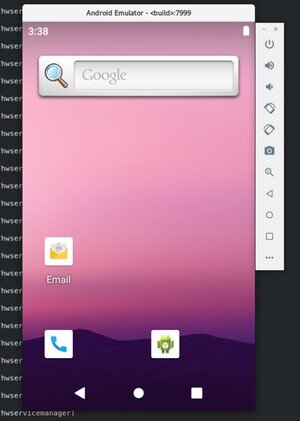
To support RISC-V in Android, a special Android SIG working group has been established within RISC-V International, which other companies interested in working on the Android software stack for RISC-V processors can join. The promotion of RISC-V support in the core of Android is carried out in collaboration with Google and community representatives.
The proposed changes for Android were prepared under the initiative to expand the application areas of devices based on the RISC-V architecture. Last year, Alibaba opened developments related to RISC-V XuanTie processors and began actively promoting RISC-V not only for IoT devices and server systems but also for consumer devices and various specialized chips, covering a range of applications from multimedia systems to signal processing and accelerators for machine learning.
RISC-V provides an open and flexible instruction set architecture that allows for the creation of microprocessors for various applications without requiring royalties or imposing conditions on usage. RISC-V enables the development of completely open SoCs and processors. Currently, based on the RISC-V specification, numerous variations of microprocessor cores, around a hundred SoCs, and chips are being developed by various companies and communities under different open licenses (BSD, MIT, Apache 2.0). Support for RISC-V is available starting from Glibc 2.27, binutils 2.30, gcc 7, and Linux kernel 4.15.
Source: opennet.ru
