

The Social Democratic Party of Germany and the European Green Party, which have taken leading positions in the city councils of Munich and Hamburg ahead of the next elections in 2026, have prepared a coalition agreement that outlines a reduction in reliance on Microsoft products and the initiative to transition the IT infrastructures of government institutions to Linux and open-source software.
A 200-page document describing the management strategy for Hamburg over the next five years has been prepared and agreed upon by the parties, but it has not yet been signed. In the IT sector, the document stipulates that, to avoid dependence on individual providers, emphasis will be placed on open standards and applications under open licenses, provided that technologic and financial resources permit. Additionally, the document establishes the principle of 'public money — public code,' implying that code developed with taxpayer money must be open, except for components involving confidential and personal data.
Similar agreements have been drawn up in Munich, Schleswig-Holstein, Thuringia, Bremen, and Dortmund. The agreement in Hamburg is notable because the city administration has historically been more aggressively oriented towards the use of Microsoft products. According to the head of the Hamburg-Mitte branch of the Green Party, the city wants to become an example of digital independence and will expand the use of open-source software in digital management systems, as well as create its own code that will remain open.
Including a project to create an open cloud office suite , which is planned to be used in the local parliament. The project is assigned to a non-profit organization , specializing in the development of IT systems for government institutions. Phoenix will evolve as a modular product that can be deployed in both rented cloud environments and on its own hardware. Among the pre-existing modules that have been in pilot use since April are tools for video conferencing and messaging. The provision of modules with a word processor, accounting system, and calendar planner has been delayed due to the COVID-19 pandemic.
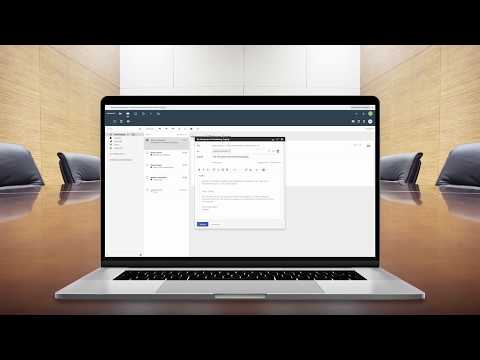
The overall plans include modules for organizing collaborative work (email, address book, calendar planner), shared storage with version control and file exchange services, an office suite (word and spreadsheet processors, presentation editor), communication services (chat, video/audio conferencing), and application modules. The interface appearance of Phoenix, aside from rebranding and a few minor details, is identical to that of the platform. with integration . Last year, the developers of Nextcloud talked about the implementations of this platform in government institutions in France, Germany, Sweden, and the Netherlands.
Notably, in a German publication Heise Online, a Microsoft spokesperson stated that the company sees nothing wrong in the desire to expand the use of open-source software in government institutions and does not view such a step as an attack on itself. Moreover, he stated that Microsoft is now actively using and developing open-source software and welcomes fair competition.
Recall that the process of replacing proprietary software with free alternatives began in Munich in 2006, and by 2013, 93% of all workstations were on Linux (using the , based on Ubuntu). In 2017, after a change in the city council, the movement towards open-source software was halted by the new mayor with the support of the leading political parties at the time (the Social Democrats and the Christian Social Union), alongside Microsoft's decision to relocate its German headquarters to Munich (the return to Windows was seen as a sort of demonstration of loyalty to this company). The result was the development plan until the end of 2020 for new client software for government agencies based on the Windows platform. Munich is now reviving the project to implement Linux and open source software.
Source: opennet.ru
