

The release of Chrome OS 119 is now available, based on the Linux kernel, with an upstart system manager, ebuild/portage build tools, open components, and Chrome browser 119. The user environment of Chrome OS is confined to the web browser, using web applications instead of traditional software. However, Chrome OS includes a full multi-window interface, desktop, and taskbar. The source code is distributed under the Apache 2.0 open license. Chrome OS 119 is available for most current models of Chromebooks. For use on regular computers, the Chrome OS Flex edition is offered.
Key changes in Chrome OS 119:
- The ability to customize advanced keyboard shortcuts using the Alt key has been added, simulating Home, End, Page Up, and Page Down, as well as simulating a right-click using 'Alt+left click.' These actions can now be configured in the settings and allow choosing between Alt+Click or Search+Click.
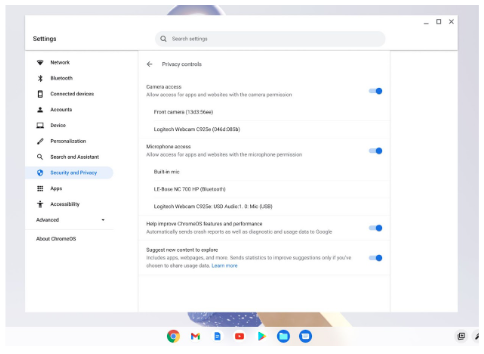
- Global settings for microphone and camera access have been added, allowing users to completely disable the microphone and camera for all applications.

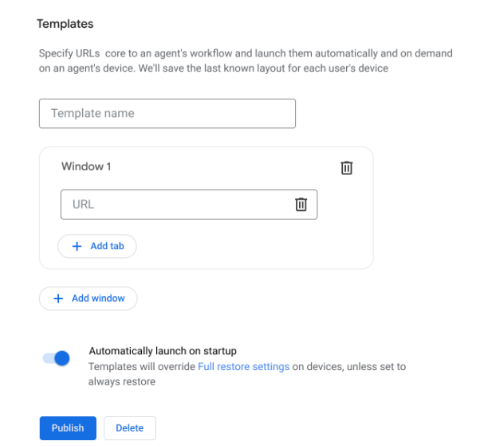
- Administrators can now define groups of applications, windows, and utilities that automatically launch when the device is powered on or when explicitly accessed by the user.

- Users of Chromebook Plus devices can synchronize files from Google Drive (from My Drive) onto local storage for offline use.
- A vulnerability (CVE-2023-21216) in the PowerVR GPU driver has been fixed, which was caused by accessing a memory area that had already been freed (Use-after-free). Vulnerabilities in Chrome (CVE-2023-5996, Use-after-free in WebAudio), the Imagination GPU driver (CVE-2023-35685), the Linux kernel (CVE-2023-4244, CVE-2023-5197, use-after-free in nf_tables), and Android Runtime have also been addressed.
Source: opennet.ru
