

The release of Chrome OS 120 is now available, based on the Linux kernel, featuring the upstart system manager, ebuild/portage build tools, open components, and Chrome browser version 120. The user environment of Chrome OS is limited to the web browser, with web applications replacing standard programs; however, Chrome OS includes a full multi-window interface, desktop, and taskbar. The source code is distributed under the Apache 2.0 open license. Chrome OS 120 is available for most modern Chromebook models. A version of Chrome OS Flex is offered for regular computers.
Key changes in Chrome OS 120:
- The 'Nearby Share Self Share' feature has been added, allowing users to share files between multiple devices associated with the same account. Data reception is confirmed automatically on all Android or ChromeOS devices linked to the same Google account, even if the device screen is off.
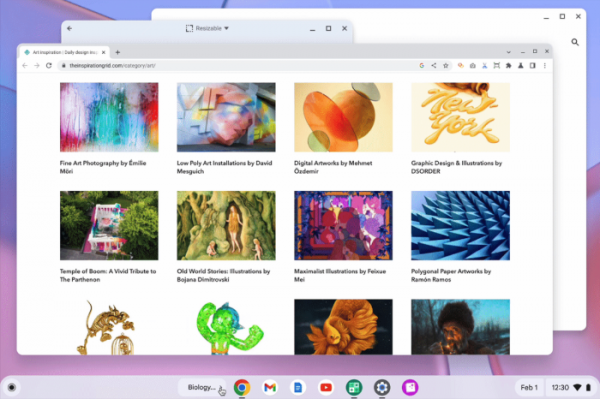
- A new Virtual Desk button has been integrated into the panel for quick switching between virtual desktops, creating new desktops, visually assessing desktop contents, and grouping their order.

- The ability to move an image with the mouse from the notification area of the screen capture or the download completion notification has been provided.
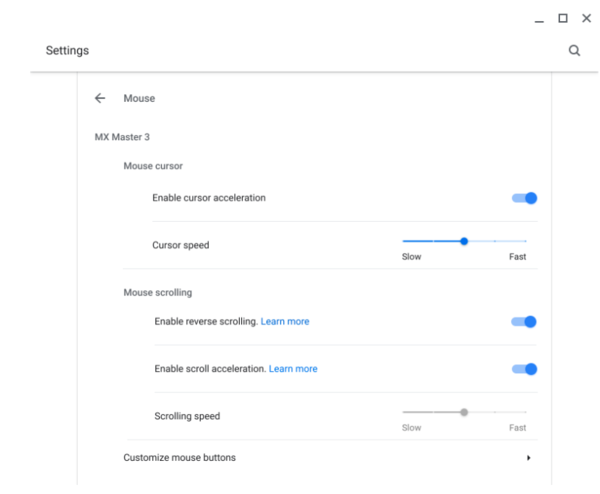
- New settings have been introduced to change scroll speed and disable mouse scroll acceleration.

- The option to simulate a right-click by pressing the left mouse button while holding the Alt key has been added. Settings for the Home, End, and Page Up keys have also been provided.
- It is now possible to resize the 'picture-in-picture' window using pinch zoom.
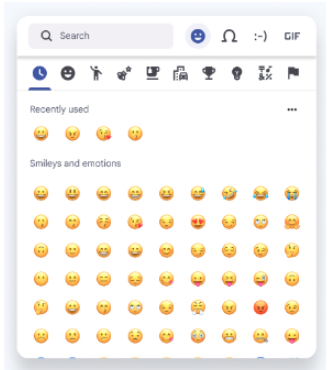
- A new interface design for inputting Emoji and animated GIFs has been proposed.

- The ability to remap the F11 and F12 keys, which are absent on the keyboard, to trigger corresponding actions in applications has been added.
- In the 'Settings > Apps > Manage your apps' section, users can view additional details about installed applications, such as version number, space occupied on the storage, and installation method information.
- Support for the following devices has been discontinued in ChromeOS Flex: HP Compaq 6005 Pro HP, Compaq Elite 8100, Lenovo ThinkCentre M77, HP ProBook 6550b, HP 630, and Dell Optiplex 980.
- Support for the MPEG4 Part 2 video codec and AVI media container has been declared obsolete. Prior to the release of ChromeOS 125, this codec and container can be restored via the setting 'chrome://flags/#cros-legacy-media-formats'.
- Two vulnerabilities (CVE not assigned) in the driver for PowerVR GPUs have been fixed, caused by accessing a freed memory region (Use-after-free). Vulnerabilities in Chrome have also been addressed (CVE-2023-7024 — buffer overflow in WebRTC, CVE-2023-6508, CVE-2023-6509 — Use-after-free in Media Stream and Side Panel Search) and in the Linux kernel (CVE-2023-39191 in the eBPF subsystem).
Source: opennet.ru
